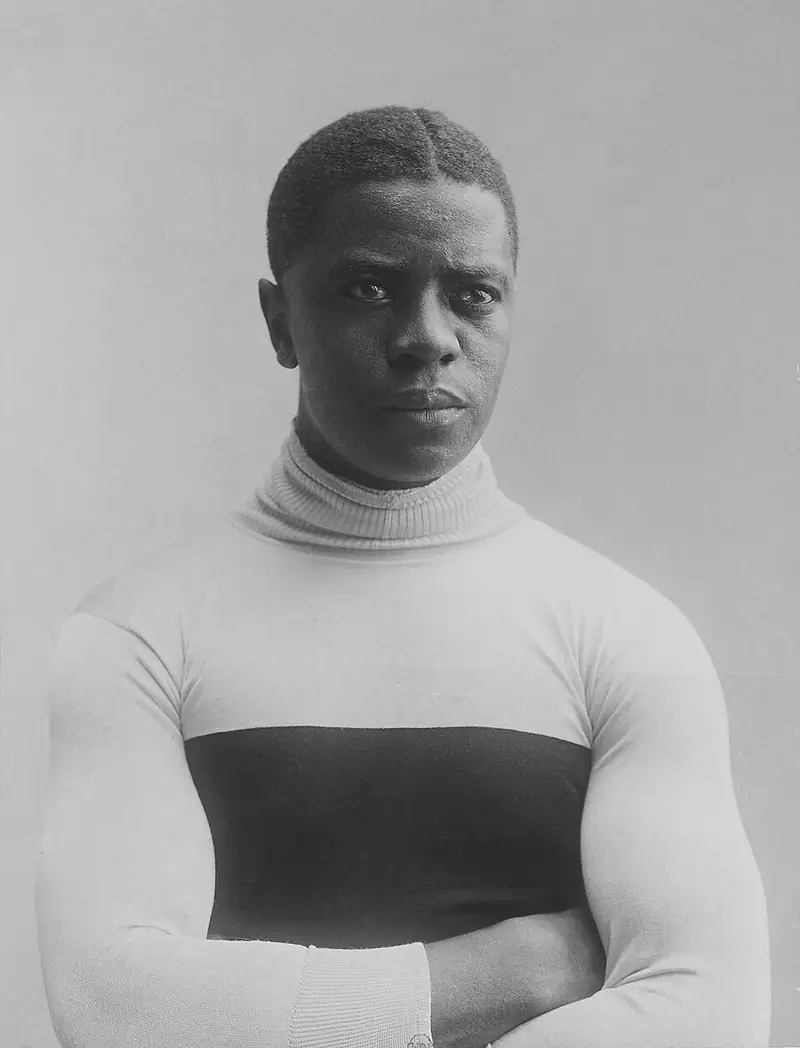
01 The 1890s
The boom
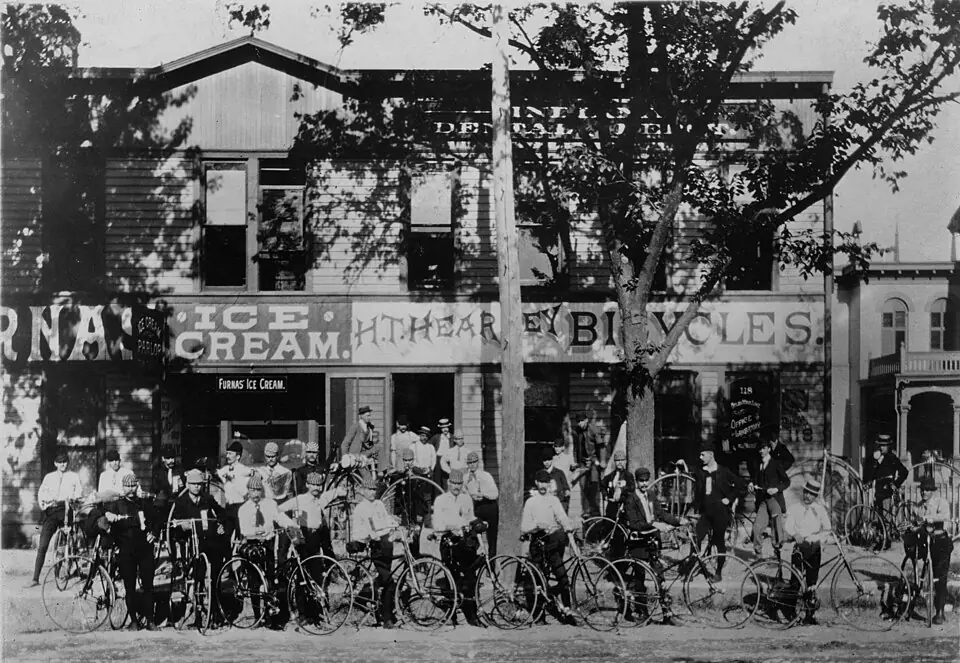
The safety bicycle arrived with two equal wheels, a chain drive, and air in the tires, and America bought them by the million.
Hundreds of American factories were making them.
Bicycle clubs lobbied state governments to pave the roads, years before anyone owned a car.
Then the boom ended almost as fast as it started.
Two machines
Switch between them. Drag or use the arrow keys to turn the model. The teal line marks the saddle height next to a six foot pole.
The high wheeler went fast because its wheel was huge. The safety went fast because of the chain. That one change is why millions of people could ride.
Full story
The machine that did it was the safety bicycle. Two wheels of the same size, a chain to the rear wheel, and after 1888 a pneumatic tire. It replaced the high wheeler, which had been dangerous and had required athleticism to mount, and it could be ridden by anyone.
What followed was a genuine mania. Hundreds of American firms went into bicycle manufacturing, output ran into the millions of machines across the decade, and prices fell as production scaled. Figures from the period vary widely by source and by year. The honest summary is that this was one of the largest consumer manufacturing booms of the century.
The social effects were immediate and were discussed constantly at the time. Young people could travel without a chaperone and without a horse. Women's clothing changed to make riding possible, and that change was argued about in newspapers across the country.
The League of American Wheelmen, founded in 1880, became the organizing body. It sanctioned racing, published a magazine, and from the early 1890s ran the Good Roads movement, lobbying state legislatures to pave roads for cyclists. The federal government created an Office of Road Inquiry in 1893 in response to that pressure. The roads the automobile would later inherit were argued for by people on bicycles.
The boom broke around the turn of the century. The market filled up, the industry merged, and the automobile arrived to take both the road and the attention.
02 Board tracks and six day races
The sport
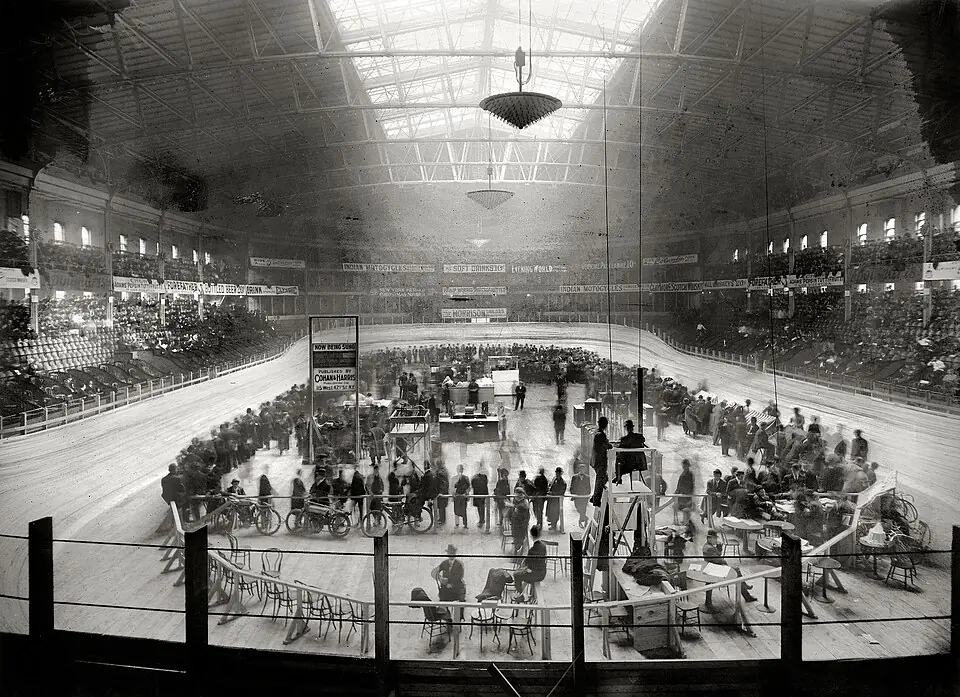
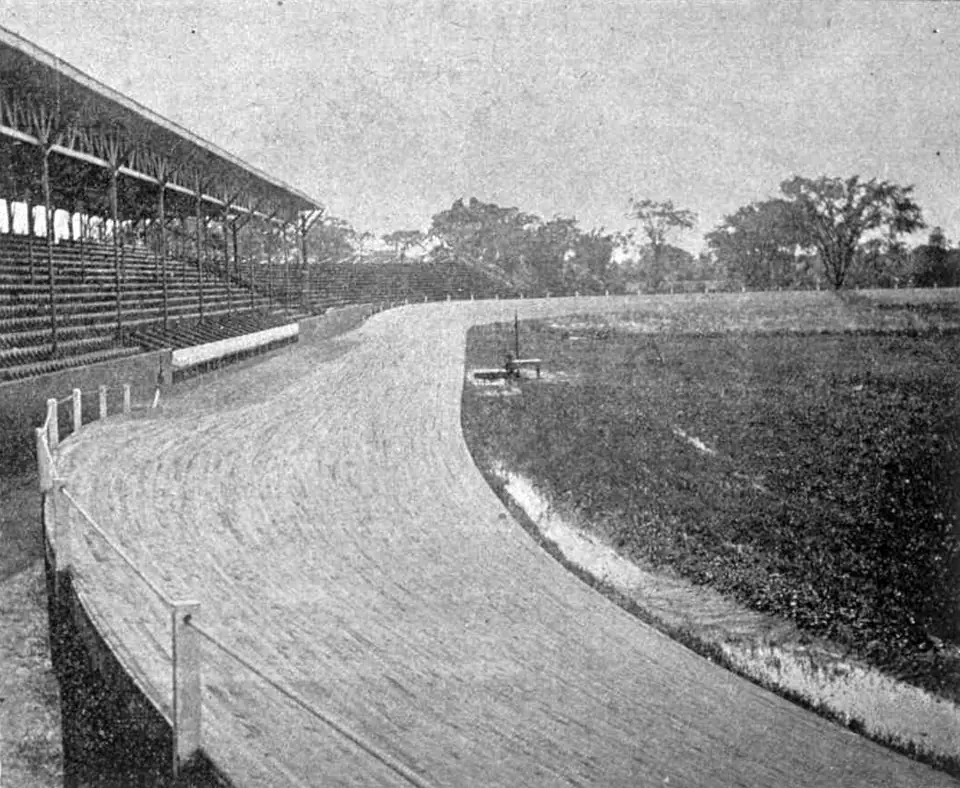
Racing happened on banked wooden ovals, indoors, at night, in front of very large crowds.
The six day race at Madison Square Garden ran around the clock, and men rode until they hallucinated.
Sprinters were the stars and the purses were serious money.
This was one of the biggest spectator sports in the country before baseball took its place.
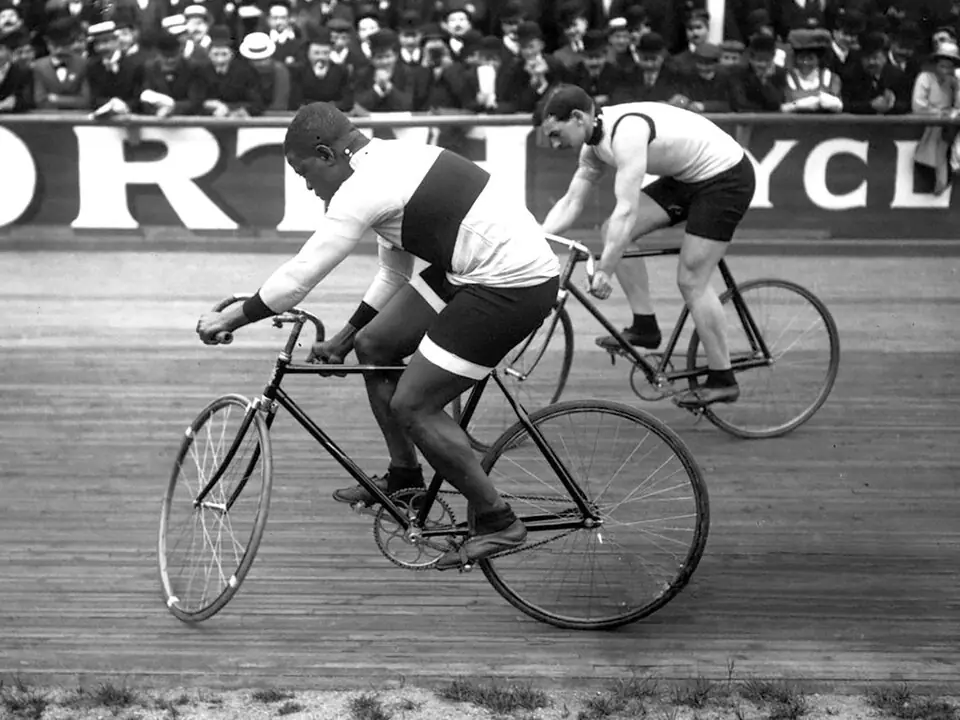
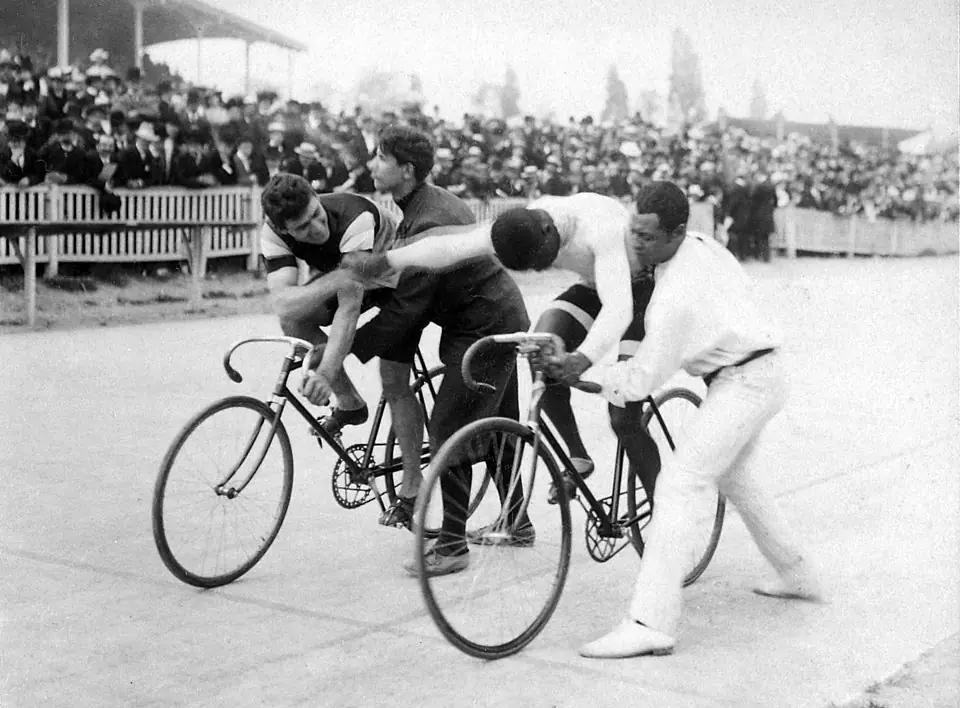
Two of the fastest men alive, side by side, neither one wanting to go first.
In a match sprint nobody wants to lead into the last lap, because the rider in front breaks the wind for the rider behind. So sprinters crept, balanced, and waited for the other man to blink.
That tactic matters later. A rider who can be trapped against the rail while the others wait has nowhere to go.
Full story
Track racing in the 1890s ran on banked board ovals, many of them indoors, lit at night, with capacity crowds. Madison Square Garden held the biggest events in the country.
The six day race was the marquee event and it was exactly what it sounds like. Riders circled the track for six days, sleeping in short snatches or not at all, and the winner was whoever covered the most distance. Riders finished these races in states of collapse and hallucination. Public alarm about that eventually forced rule changes that limited daily hours and introduced two man teams.
Sprinting was the glamour event. A match sprint is short, tactical, and violent, and the sprinters were the names the public knew and the riders who commanded appearance money.
Money in the sport was real. Top sprinters earned purses and appearance fees that compared well with any professional athlete in America at the time. Manufacturers paid riders to appear on their machines, because a win on Saturday sold bicycles on Monday. Racing was advertising, which is why the manufacturers cared who was allowed to race.
03 1894
The membership clause
The League of American Wheelmen governed the sport, sanctioned the races, and lobbied for the roads.
At its 1894 assembly it voted to admit white members only.
The clause said nothing about who could race. It did not have to.
One season
Read down the calendar. Then group it by who decided.
A composite season, built from the kinds of decisions documented across Taylor's American career. It is not a copy of one year's calendar.
| Date and place | Who controlled the entry | Did he start | What was given as the reason |
|---|
The 1894 membership clause governed who could join the League. No rule ever stated that he could not race.
No single row here bars him from the sport. Every row narrows it.
Full story
The League of American Wheelmen was the governing body. It issued racing licenses, sanctioned meets, kept records, and ran the sport's calendar. At its national assembly in 1894 the League adopted a clause restricting membership to white riders, a change pushed hardest by southern delegates.
The clause governed membership. It did not, on its face, forbid a Black rider from entering a race.
What it did was hand every other actor in the sport a reason. A promoter could decline an entry and point at the sanctioning body. A regional association could decline to sanction a meet that admitted him. A group of riders could agree privately not to start against him, and no rule addressed private agreements. A southern track could refuse him outright and face no consequence, because the League had already said what it thought.
Taylor raced anyway, because promoters in the North wanted him. He drew crowds. A meet with the fastest sprinter in the country on the card sold more tickets than a meet without him, and money argued on his side in exactly the places where the League's clause had the least local support.
The result was a career in which the question of whether he could start was answered separately, race by race, by whoever happened to be deciding.
04 On the track
What was done to him while he rode
Riders boxed him against the rail so he could not get out.
Riders threw water and ice in front of his wheel.
At Taunton, Massachusetts, in 1897, a rider named W. E. Becker pulled him off his machine after the finish and choked him unconscious on the track, in front of the crowd.
Becker was fined
$50
Taylor kept racing.
Full story
Match sprinting is a contact sport at speed on a banked wooden surface, and the tactics available to riders who wanted to stop one particular rider were many and mostly impossible to police. Boxing a rider in against the rail so that he cannot find a line through is legal riding. Doing it by prior agreement among several riders is not, and it is also not provable.
The documented incidents in Taylor's career run past that into assault. Riders crowded him deliberately. Objects were thrown onto the track in front of him. He received threats.
The incident at Taunton, Massachusetts in 1897 is the one that is fully documented. After a race, the rider W. E. Becker pulled Taylor from his bicycle and choked him until he lost consciousness, in front of spectators. Becker was fined fifty dollars.
Taylor raced for another thirteen years.
05 Montreal, August 1899
World champion
He won the world one mile sprint championship at Montreal in August 1899.
He was twenty years old.
He was the first African American to win a cycling world championship, and one of the first Black world champions in any sport.
Five years after the League voted that he could not be a member of it.
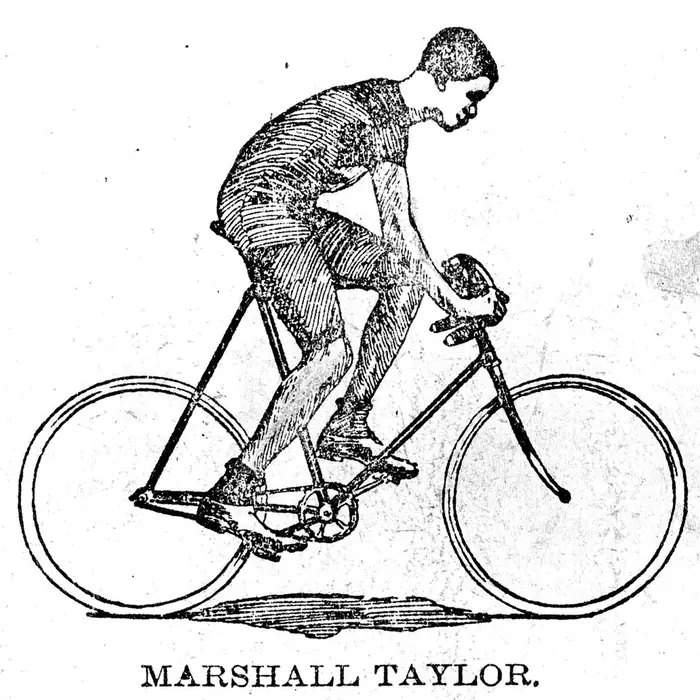
The nickname came from a bicycle shop in Indianapolis. As a boy he did riding tricks out front in a soldier's uniform to pull in customers. The name Major stuck for life.
Louis Munger, a white former racer and bicycle maker, hired him, coached him, and moved him to Worcester, Massachusetts, because racing in Indiana had closed to him.
Full story
The world championships of 1899 were held at Queen's Park in Montreal. Taylor won the one mile sprint title and became world champion.
He was twenty years old. He had turned professional in December 1896, at a six day race at Madison Square Garden, and had come up under Louis Munger, a former racer and bicycle manufacturer who had employed him in Indianapolis and then moved him to Worcester, Massachusetts, in part because the racing climate in Indiana had become impossible.
In 1900 he won the American sprint championship.
He set records at several distances during these years, and by the plain measure of results he was the fastest sprinter in the world.
06 The Sunday problem
The races he would not enter
He was a devout Baptist and he did not race on Sundays.
A great deal of the sport's money and a great many of its championship points were on Sunday cards.
That cost him titles.
A championship season
Two controls. They do the same arithmetic and they do not mean the same thing.
A model season built to show the arithmetic. The riders and numbers are illustrative, not one year's real standings. A missing meet is counted at the rider's own average from the meets he did ride.
| Place | Rider | Meets entered | Meets available | Points |
|---|
He did not ride on Sundays. Some meets did not admit him. Only one of those was his decision.
Same arithmetic. Two different facts. The table cannot tell them apart and you can.
Full story
Taylor was a serious Baptist and he refused to compete on Sundays throughout his career. He held to it in the United States and he held to it in Europe, where Sunday racing was the norm and where promoters lost money on it.
The cost was measurable. American championship series awarded points across a calendar of meets, and Sunday cards were part of that calendar. A rider who sat out every Sunday started every season behind.
In 1900 he won the American sprint championship anyway.
In other seasons the arithmetic went against him, and accounts of the standings from the time often note that he had ridden fewer scoring events than his rivals.
He held to it and he paid for it, and he wrote about it later as a choice rather than as a grievance.
07 1901 to 1904
Europe
He crossed to Europe and raced the national champions of France, Germany, Belgium, Denmark, and Italy.
He beat most of them.
Crowds turned out in numbers that surprised him, and he wrote afterward about being received differently than at home.
He still would not ride on Sundays. Promoters lost money on it and accepted it, because he sold out the other days.
Full story
Taylor toured Europe repeatedly in the first years of the century, racing in France, Germany, Belgium, Denmark, Italy, and elsewhere, and meeting the reigning champions of those countries in match sprints. He won the large majority of them. He also raced in Australia across several seasons.
Promoters advertised him heavily and crowds were large. His own account of these years, written long afterward in his autobiography, describes public treatment noticeably different from what he met on American tracks.
Europe was not a place without racism. The point is narrower. The rider was the same and the result was different, which tells you the American result came from American decisions rather than from anything about him.
Sunday was the main race day in Europe, so his refusal cost promoters more there than at home. They worked around it, because a full house on Saturday was worth more than an empty argument about Sunday.
08 What happened to the sport
The boom broke
The bicycle market filled up and prices collapsed. Manufacturers merged or failed.
The automobile took the roads the cyclists had lobbied for and took the newspaper coverage with them.
Board tracks closed. Six day racing shrank to a novelty and then to almost nothing.
The League dropped its whites only clause eventually, long after it had stopped mattering to the sport.
Full story
The American bicycle industry consolidated sharply at the end of the 1890s. A large combination formed in 1899 absorbed a great many independent manufacturers. Overproduction, falling prices, and a full market did the rest.
Public attention moved to the automobile, which used the paved roads the cycling lobby had spent a decade demanding, and which gave newspapers a better story.
Professional track racing did not vanish overnight. Six day racing survived into the middle of the twentieth century as a shrinking spectacle, and board tracks ran in some American cities for years. But the sport's place in American life in the 1890s, as a mass spectator sport tied to a mass consumer industry, did not return.
Taylor retired in 1910, at thirty two, after a career of roughly fourteen years.
The League's membership restriction was eventually removed. By then the League no longer governed American racing and the removal changed nothing about anyone's career.
09 1932 and 1948
How it ended
He lost his money in bad investments and in publishing his own book.
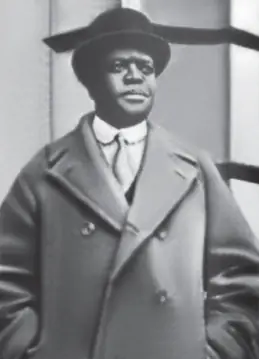
He died in Chicago on June 21, 1932, at fifty three, and was buried in an unmarked grave in a welfare plot.
In 1948 a group of former professional riders raised the money to move him, with a contribution from the bicycle maker Frank Schwinn.
They put a marker on him sixteen years after he died.
Full story
Taylor published his autobiography in 1928 at his own expense, under the title The Fastest Bicycle Rider in the World, and sold it himself. It did not earn back what it cost.
He lost the rest of his money in investments during the same years. His marriage ended. He moved to Chicago and lived at a YMCA.
He died on June 21, 1932, at the age of fifty three, and was buried in an unmarked grave in the welfare section of Mount Glenwood Cemetery outside Chicago.
In 1948 a group of former professional riders, with money from Frank Schwinn of the Schwinn Bicycle Company, had his remains moved to a marked grave in a more prominent part of the same cemetery, with a plaque.
10 Terms
Nine words you already met
Every term below appeared in something you just read. Each one names a thing you already watched happen.
Where you met it: the League of American Wheelmen
Where you met it: adopted in 1894
Where you met it: the decision makers in the entry list
Where you met it: heat 4
Where you met it: why northern promoters wanted him on the card
Where you met it: the force that opened tracks to him
Where you met it: it built the roads the automobile inherited
Where you met it: the bicycle industry at the end of the 1890s
Where you met it: heat 6, and why Sundays mattered
11 Note repair
Check what you wrote down
Six statements. Each one is the version people usually leave with. Each one is wrong. Open each one and compare it with the record.