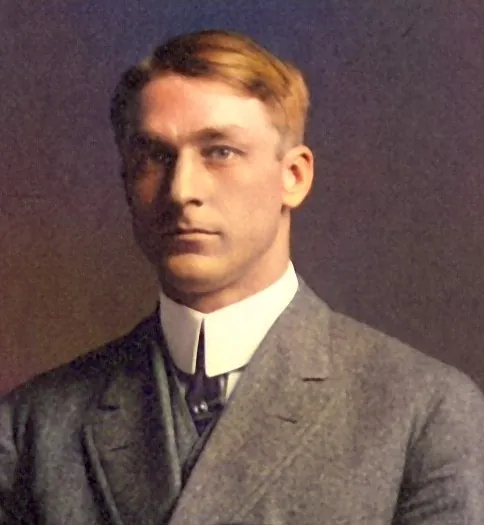
Robinson thought he was being recruited for a new Black league. Branch Rickey, the 63 year old president of the Dodgers, told him the truth: he wanted Robinson to break baseball's color line. Then for much of a three hour meeting, Rickey acted out what was coming. He played a hotel clerk refusing a room. He played a white player sliding in with spikes high. He hurled racial insults. He was watching to see what Robinson would do.
Are you looking for a Negro who is afraid to fight back?
Robinson, I'm looking for a ballplayer with guts enough not to fight back.
Both lines as Robinson remembered them in his own later accounts.
WHY NOT JUST FIGHT BACK
If someone spat insults at you every day, you'd want to answer. Anybody would. So why would Rickey ask Robinson not to?
Because it wasn't really about Robinson. Plenty of owners and sportswriters wanted integration to fail. If Robinson threw one punch, they'd say it proved Black players couldn't control themselves, and the door could stay shut for another twenty years. Rickey figured silence was the only move that gave the other side nothing to use. Here's the hard part to sit with: the plan worked, and it was unfair. The man getting abused was the one asked to behave perfectly. He agreed to three years of it, from 1946 through 1948. He'd faced a court martial rather than move seats on a bus, so you can guess what that promise cost him.
Holding the promise.
Tap through the season. Each moment is a test of the bargain.
Why did Rickey do it?
The evidence points three ways. Split ten points among the motives based on the evidence on the right. There is no score here. The point is to commit to a weighing you could defend.
Conscience
Rickey told a story from 1904, when he coached at Ohio Wesleyan. A Black player on his team, Charles Thomas, was refused a hotel room on a road trip, and Rickey found him rubbing his hands as if to scrub off his skin. Rickey said he never forgot it. He was also a devout Methodist who would not attend games on Sundays.
Money
Brooklyn had a large Black population, and Black fans packed ballparks to see Robinson. Rickey also paid the Kansas City Monarchs nothing for Robinson, and dismissed the Negro Leagues as more like a racket than real leagues.
Winning
The Negro Leagues held stars no other owner would sign. Rickey was famous for building winners cheaply through his farm system. Brooklyn won the pennant in 1947.
Silent versus free.
Rickey released Robinson from the promise after the 1948 season. Compare the rookie who could not answer back with the player who finally could.
Rickey paid the Monarchs nothing. Who lost when Robinson won?
- Jackie Robinson, I Never Had It Made, Putnam, 1972. The Rickey meeting and the Chapman series.
- Jules Tygiel, Baseball's Great Experiment: Jackie Robinson and His Legacy, Oxford University Press, 1983.
- Stanley Woodward, New York Herald Tribune, May 9, 1947.
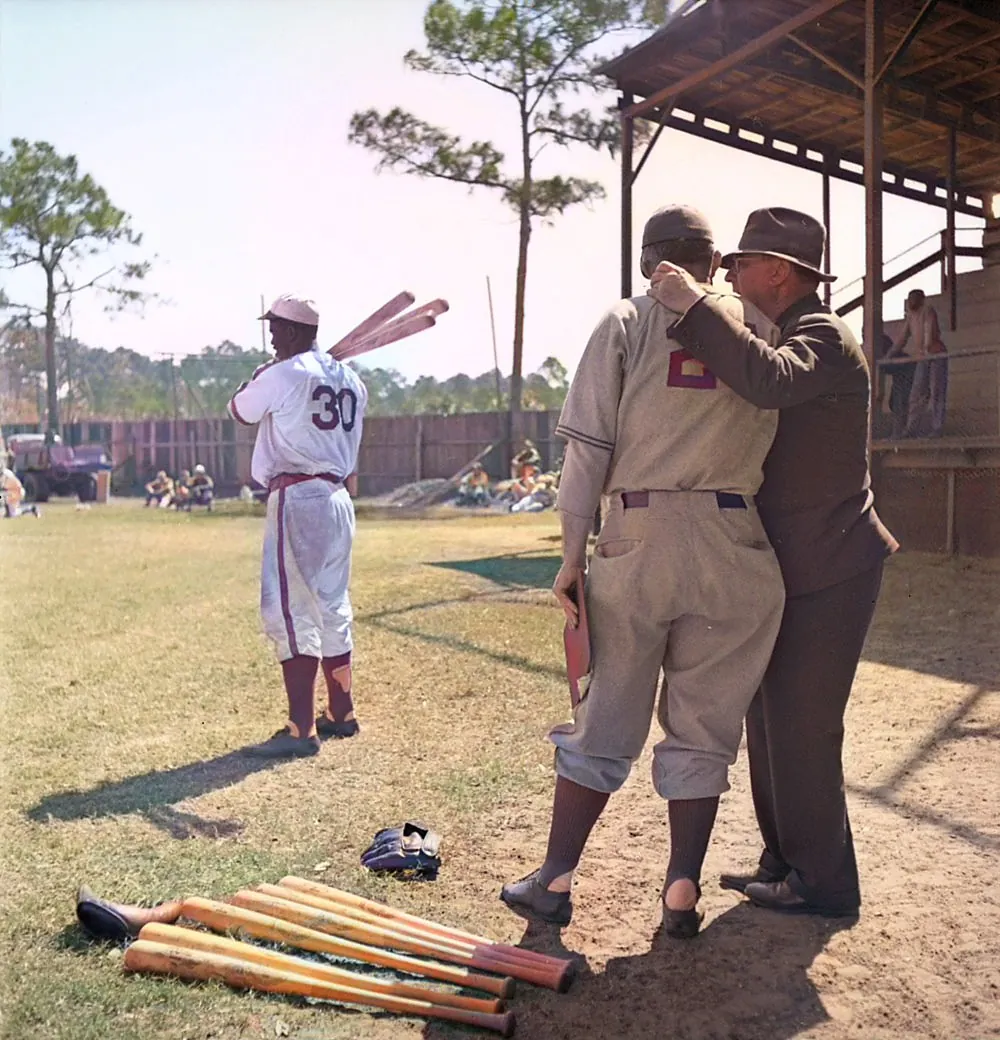
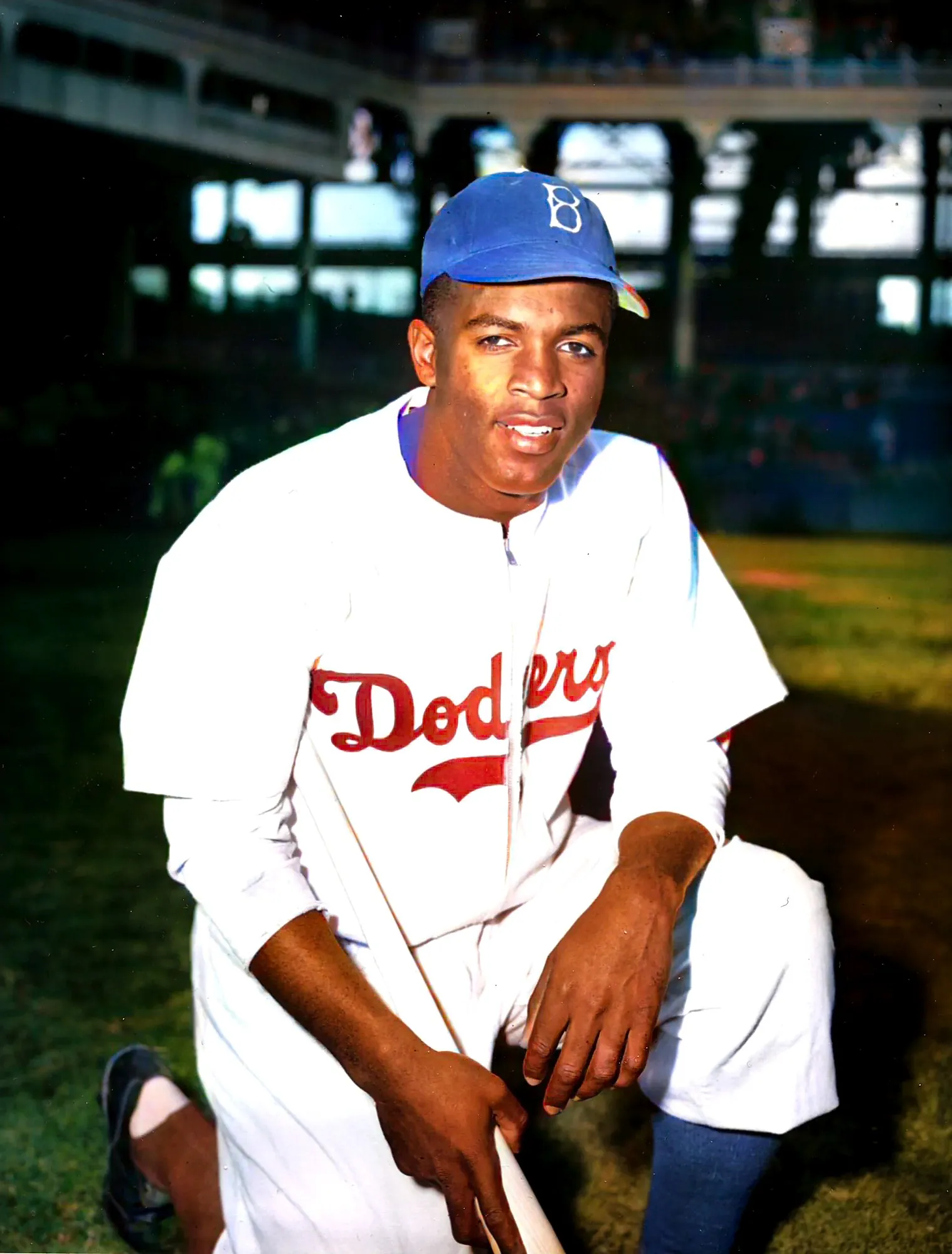
- Photographs: Branch Rickey / Robinson with the Montreal Royals, 1946 / Robinson with the Brooklyn Dodgers / Leo Durocher baseball card / Ebbets Field postcard. Public domain via Wikimedia Commons. Colorized for this lesson with the DDColor model.
- Season statistics from Baseball Reference. Opening day final score and attendance, April 15, 1947.