On June 22, 1938, a heavyweight championship fight lasted 124 seconds.
About 70,000 people were inside Yankee Stadium and around 70 million more were listening on the radio. The winner was a 24 year old Black man from Detroit, and that night white America cheered for him. This investigation asks what the country wanted from Joe Louis, and what it gave him back.
Read every source. Answer in complete sentences. Cite sources by letter.
Part One · The SourcesFour sources, 1908 to 1981
A
The RulesDetroit, 1926 to 1937
Joe Louis Barrow was born in 1914 to Alabama sharecroppers. In 1926 the family moved to Detroit, where he worked at Ford's River Rouge plant and learned to box at the Brewster Recreation Center.
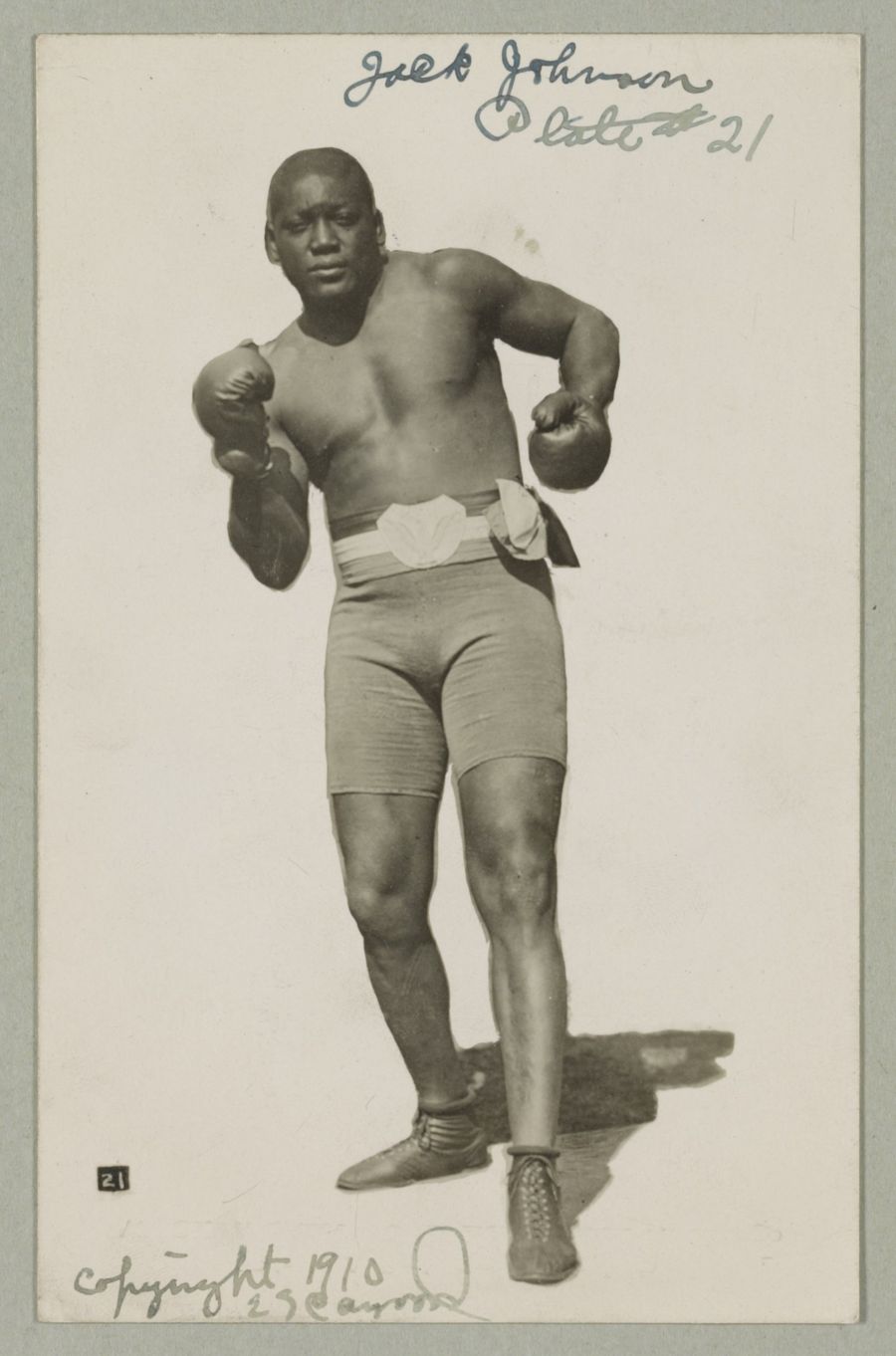
Every Black fighter of his time boxed in the shadow of Jack Johnson, the first Black heavyweight champion. Johnson grinned at the white men he beat and married white women. The novelist Jack London wrote that someone had to remove that smile from Johnson's face. After Johnson lost the title in 1915, no Black fighter got a title shot for 22 years.
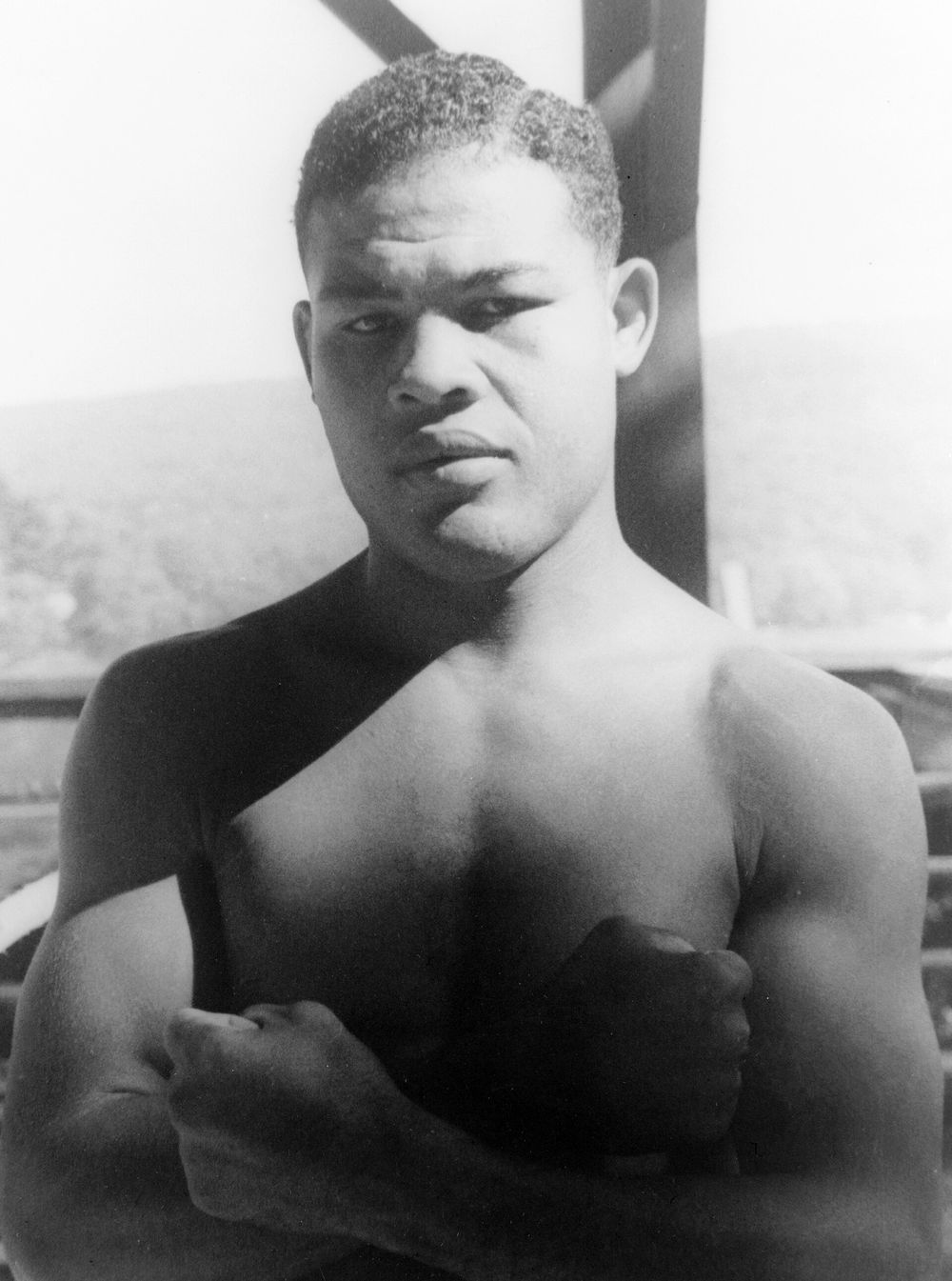
Jack Johnson, heavyweight champion from 1908 to 1915.Jack Johnson, 1910 · Library of CongressJoe Louis at his training camp. Never gloat was one of his rules.Joe Louis, September 15, 1941 · Carl Van Vechten, Library of Congress
Louis's managers, two Black businessmen named John Roxborough and Julian Black, did not want a second Johnson. The Smithsonian lists four of the rules they gave him.
The RulebookSort each rule
For each rule, decide what it was really about.
Never be photographed with a white woman
Nothing here touches a fight. Johnson's marriages to white women were a main reason white newspapers attacked him.
Never gloat over a fallen opponent
It happens in the ring, but it is aimed at the audience. Johnson's smile is what London wanted wiped away.
Never engage in fixed fights
This is the rule most about boxing itself. A fixed fight would also have handed his critics an easy story.
Live clean and fight clean
Half ring, half everything else. His managers wanted a champion no newspaper could use against Black fighters.
A1Pick one rule from the rulebook. Explain what it was meant to protect Louis from.
A2Louis followed these rules because of Jack Johnson. Was that fair to Louis? Explain.
B
The First FightJune 19, 1936 · Yankee Stadium
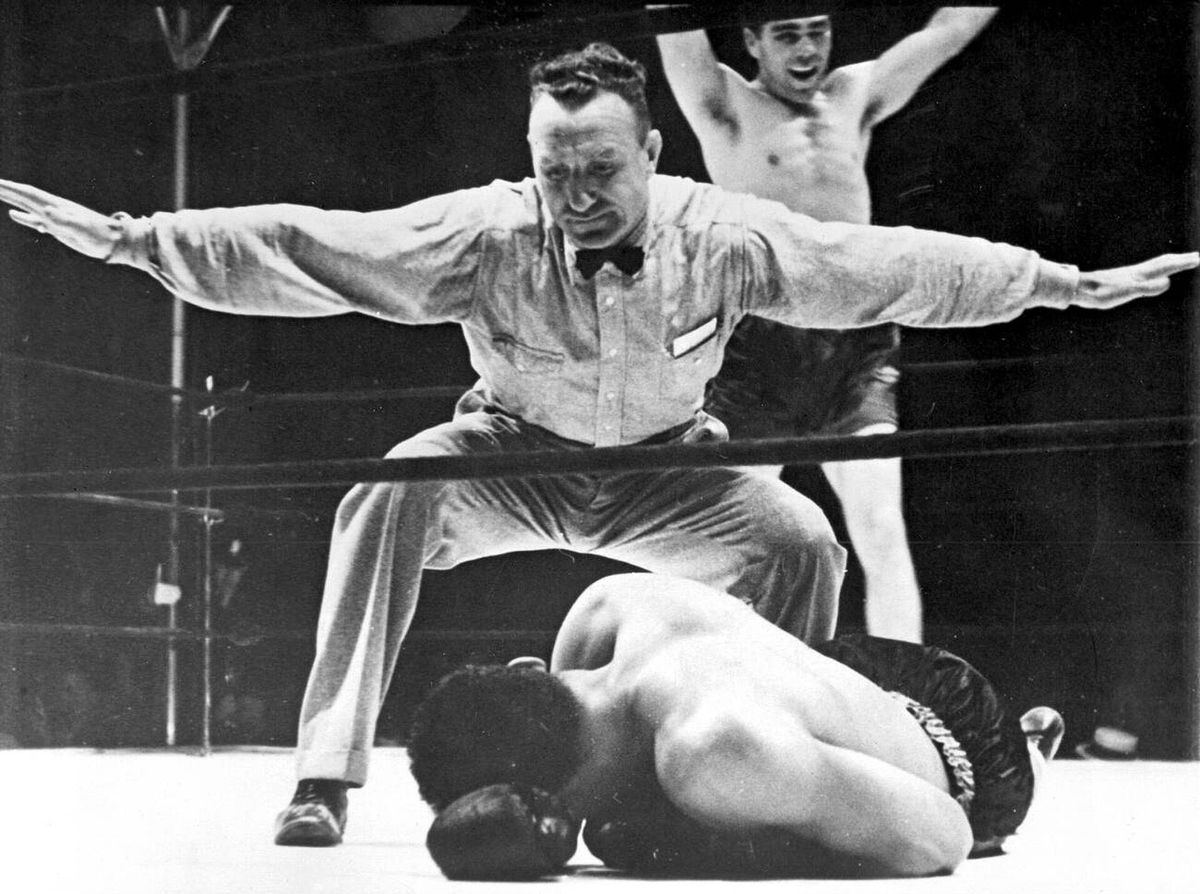
Louis was 22 and had won all 27 of his professional fights. Max Schmeling was 30, a former champion from Germany. Schmeling had studied films of Louis and noticed that he dropped his left hand after every jab. He knocked Louis down in the fourth round and knocked him out in the twelfth.
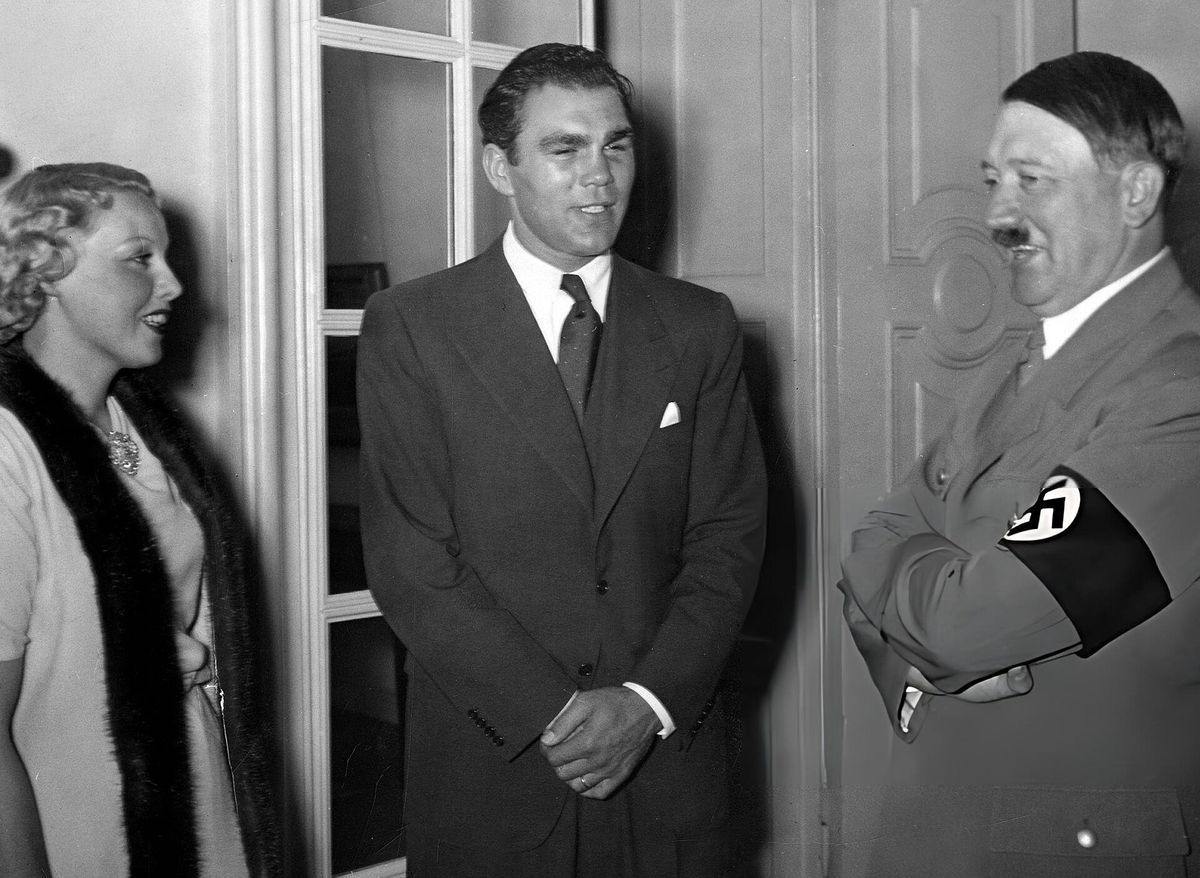
Round 12, 2:29.June 19, 1936 · John RooneyBack in Germany, Schmeling and his wife, the actress Anny Ondra, were received by Adolf Hitler.Berlin, July 6, 1936 · International News Photos
The Nazi government, which taught that Germans were a master race, sold the win as proof. Schmeling never joined the Nazi Party and kept his Jewish American manager.
I am a fighter, not a politician.
Max Schmeling
On June 22, 1937, Louis knocked out James Braddock in Chicago to become the first Black heavyweight champion since Johnson. He told reporters he did not want to be called champion until he beat Schmeling.
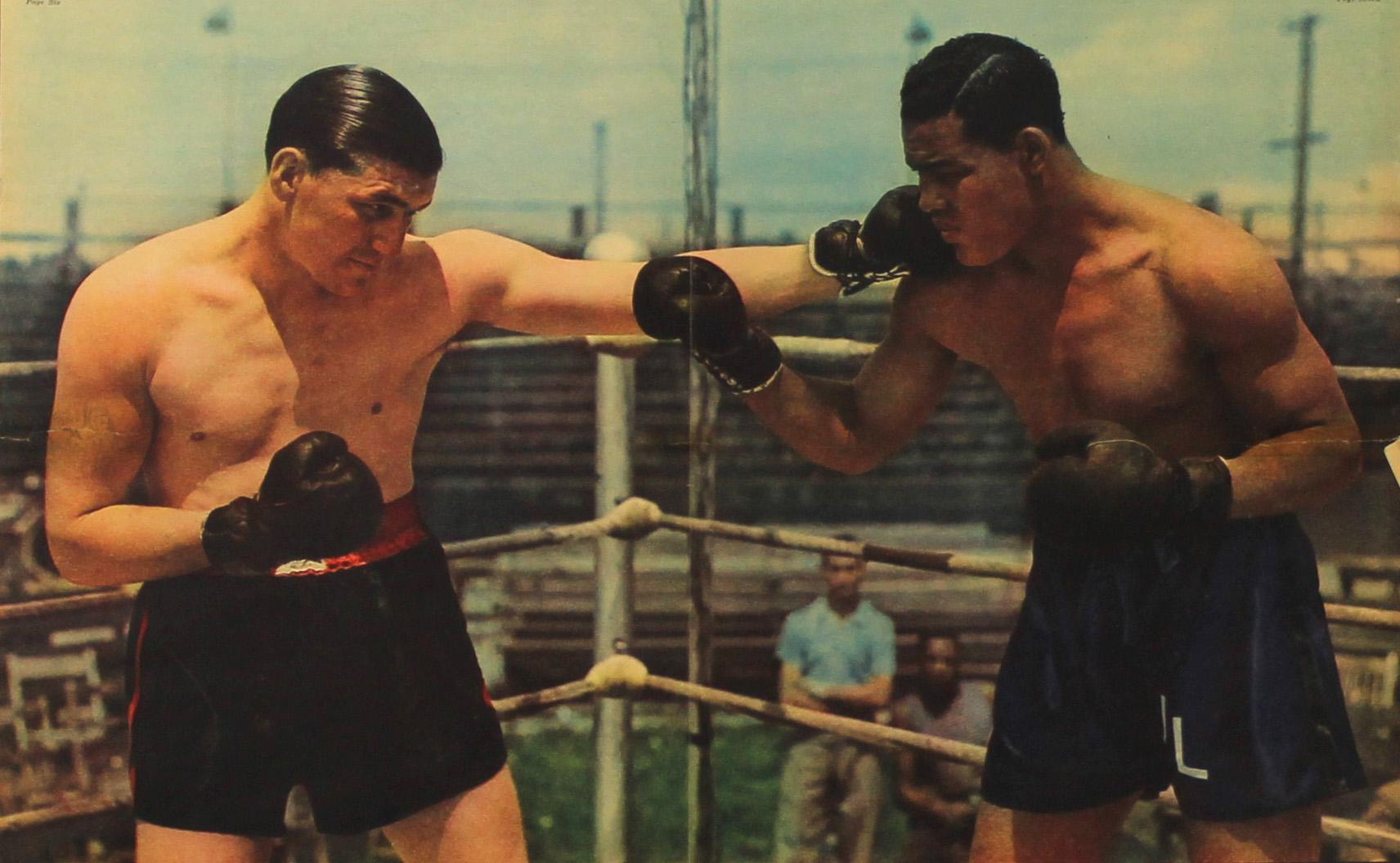
Louis and Tommy Farr before his first title defense, in one of the earliest color newspaper photographs.Harry Warnecke, New York Sunday News, August 1937
B1Schmeling said he was a fighter and not a politician. Use the Berlin photograph to explain why his win became political anyway.
B2Louis already held the title in 1937. Why did he still need to beat Schmeling?
C
The RematchJune 22, 1938 · Yankee Stadium
By 1938 Germany had taken over Austria, and the rematch was about more than a title. Louis later said President Roosevelt felt his arm at the White House and told him America needed muscles like his to beat Germany.
A crowd of 70,043 paid more than $1 million to get in. Schmeling went down three times, and the referee stopped the fight at two minutes and four seconds of the first round. Schmeling had thrown two punches.
Ring the BellFight time, 1936 and 1938
10 minutes
1936 · Schmeling wins35 minutes, 29 seconds
1938 · Louis wins2 minutes, 4 seconds
Your guess for 1936
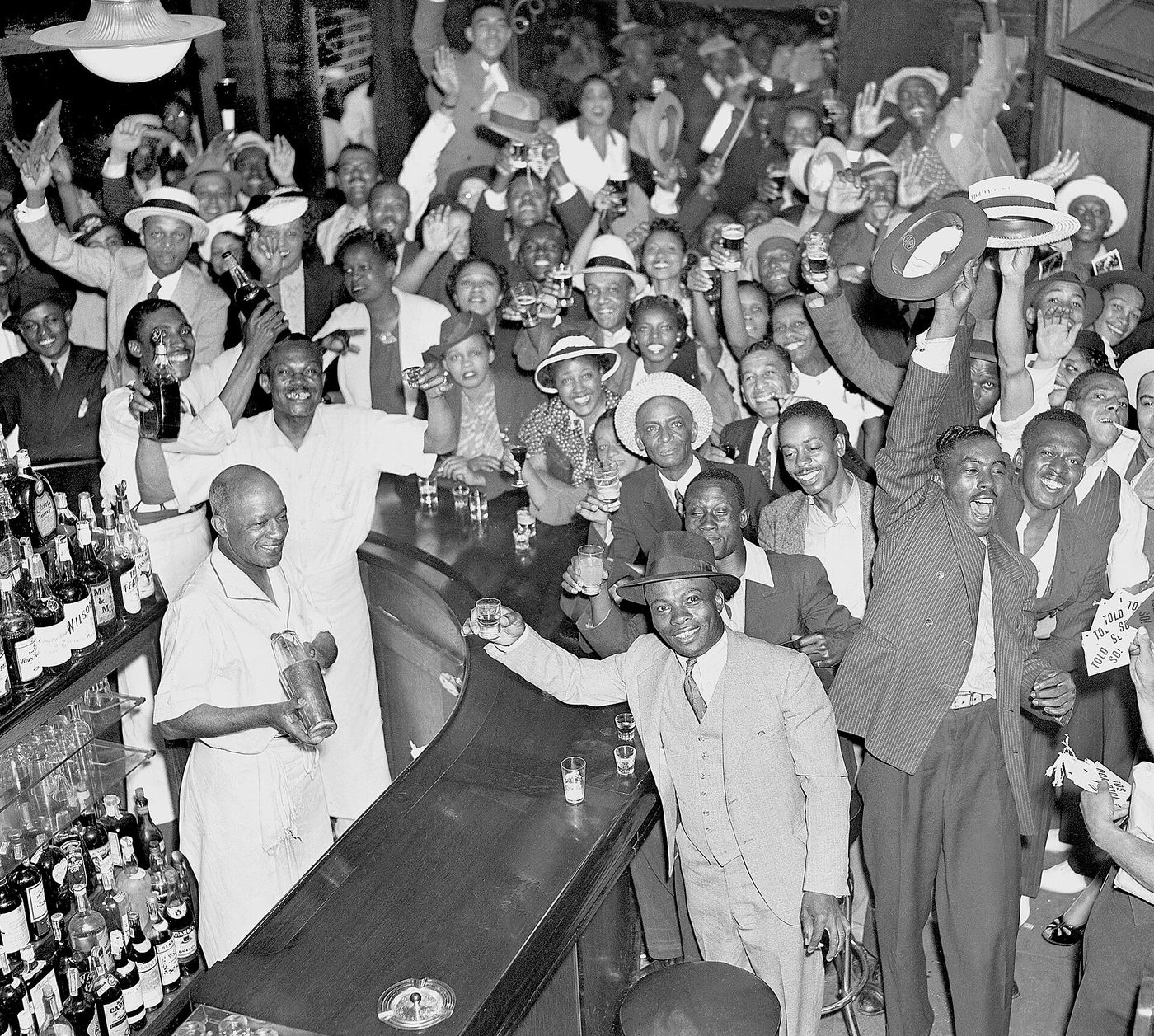
Harlem, minutes after the fight. Schmeling rode through these streets in an ambulance and later remembered only celebration, noise, and saxophones.New York, June 22, 1938 · photographer unknown
C1Use the bell chart. What does the difference between the two fights tell you about Louis in 1938?
C2Millions of white Americans cheered for a Black man that night. Did that mean the country had changed? Use a detail from another source.
D
The Bill1942 to 1981
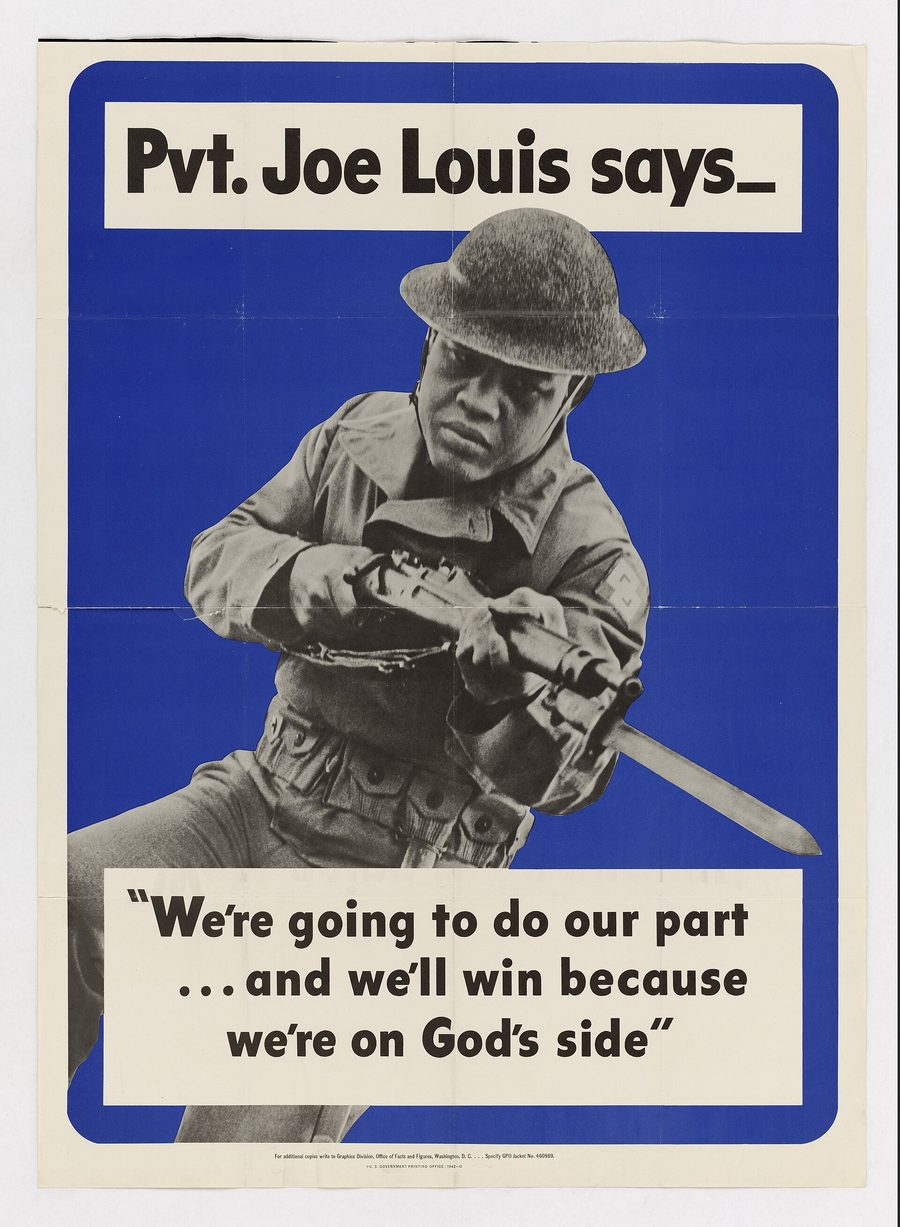
A month after Pearl Harbor, on January 9, 1942, Louis gave his purse from a title fight to the Navy Relief Society. At the time the Navy let Black men serve only as cooks and mess attendants. The next day he enlisted in a segregated Army. On March 10 he spoke at a Navy Relief show at Madison Square Garden, and the government turned his words into a recruiting poster. The words come down to us in two versions.
One Sentence, Two VersionsMarch 1942
As reported from the Garden that nightI'm only doin' what any red blooded American would. We're gonna do our part and we'll win 'cause we are on God's side.
As printed on the government posterWe're going to do our part . . . and we'll win because we're on God's side.
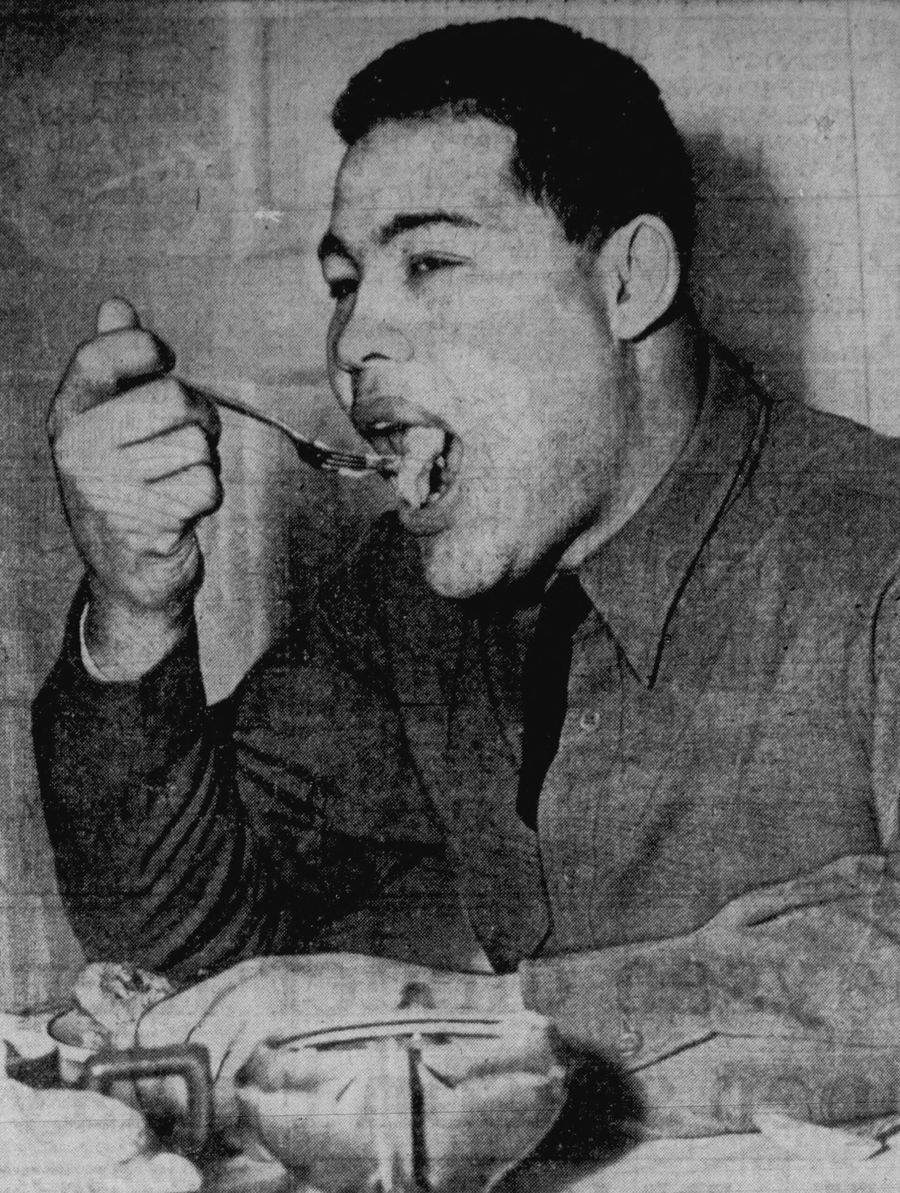
The poster.Office of War Information, 1942 · National ArchivesPrivate Louis in an Army mess hall.1942 · photographer unknown
He gave a second purse to Army Emergency Relief, fought about 100 exhibitions for troops, and rose to staff sergeant. Then the bill came.
Date
What happened
1950
The IRS said he owed more than $500,000 in back taxes, interest and penalties. He came out of retirement to pay it and lost to younger men
Late 1950s
Tax debt with interest passed $1 million. He tried professional wrestling
1970s
Worked as a greeter at Caesars Palace in Las Vegas. Schmeling visited and sent him money
Apr 12, 1981
Died. President Reagan waived the rules so he could be buried at Arlington. Schmeling helped pay for the funeral
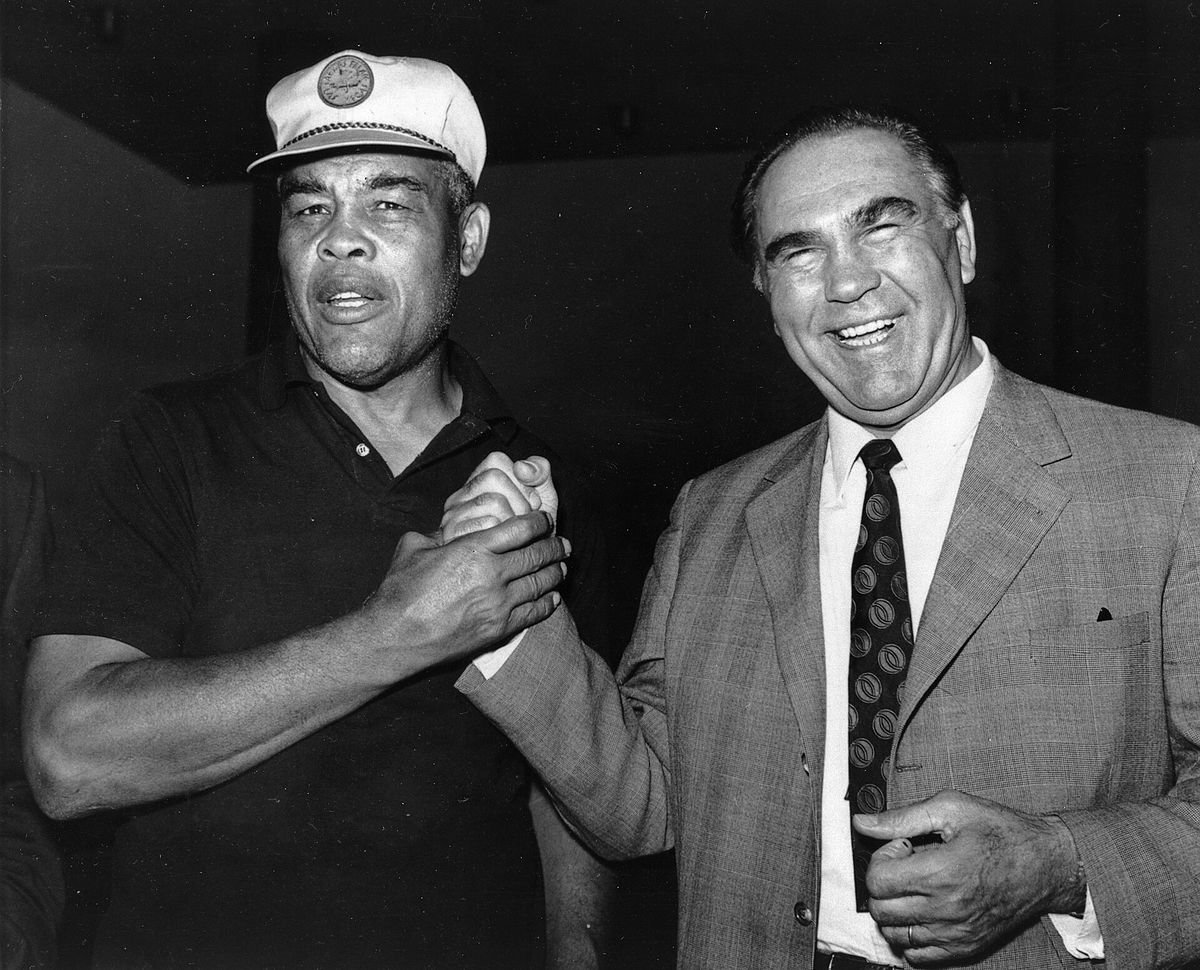
The old opponents in 1971. During the Kristallnacht attacks in November 1938, Schmeling hid two Jewish boys in his Berlin hotel room.May 12, 1971 · Associated Press
The sportswriter Jimmy Cannon meant this line as praise.
Joe Louis is a credit to his race, the human race.
Jimmy Cannon, sportswriter
D1Compare the two versions of his words. What changed between the Garden and the poster, and why would the government want him to sound that way?
D2Pick the fact in this source that bothers you most and explain why.
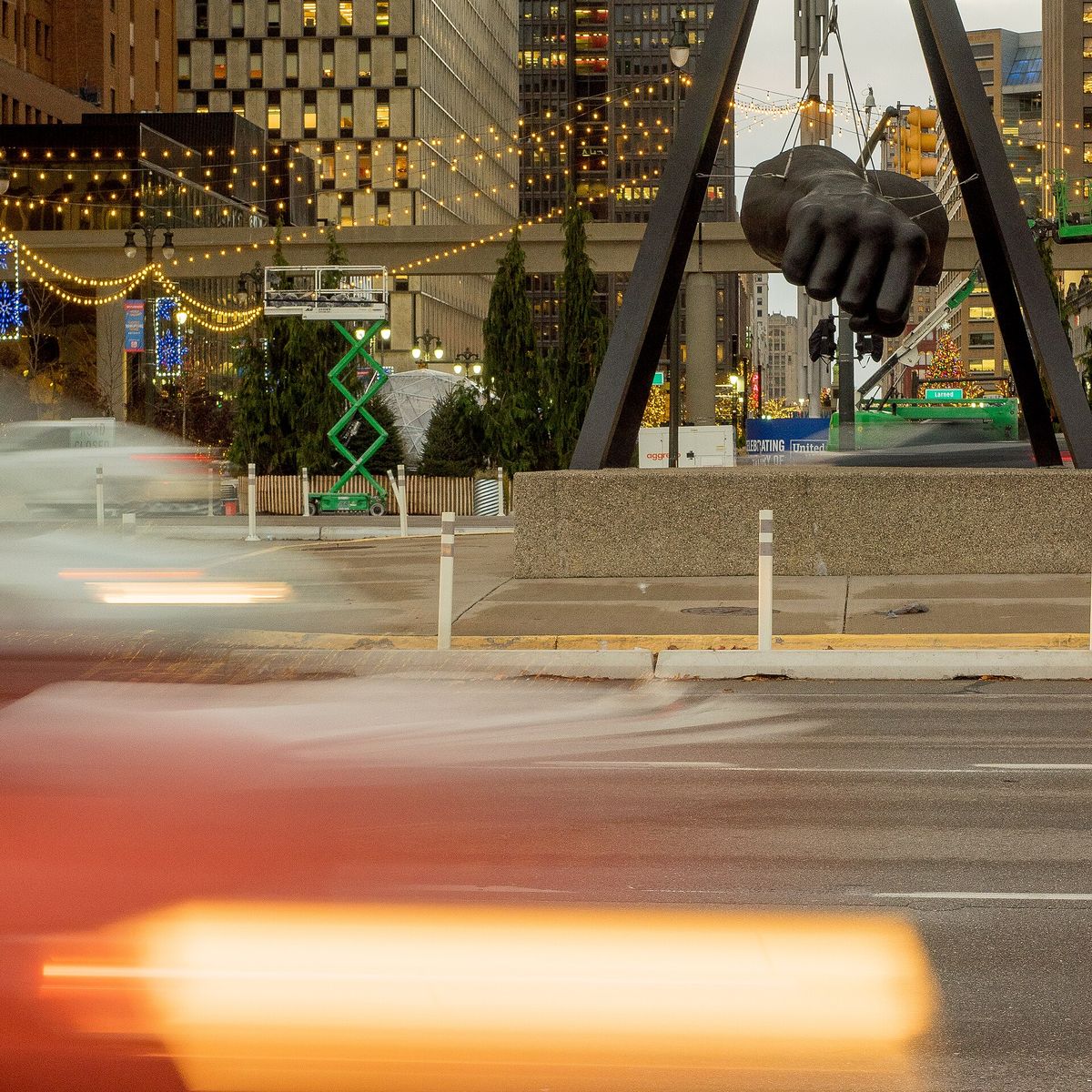
The Monument to Joe Louis, downtown Detroit, 1986.Sculpture by Robert Graham · photograph by ajay_suresh, CC BY 2.0
Part Two · The LedgerThree entries minimum per side
What the country asked of him
Evidence from the sources
1
2
3
4
What the country gave back
Evidence from the sources
1
2
3
4
Part Three · Take a Side200 words minimum · two sources minimum
Word count 0 / 200
When you finish, copy everything and paste it into the Classroom assignment. Your work saves in this browser as you type.
References
Margolick, D. (2005). Beyond glory: Joe Louis vs. Max Schmeling, and a world on the brink. Alfred A. Knopf.
Mead, C. (1985). Champion: Joe Louis, Black hero in white America. Charles Scribner's Sons.
National Museum of African American History and Culture. (n.d.). Joe Louis. Smithsonian Institution.
The National WWII Museum. (n.d.). Joe Louis: From boxing gloves to combat boots.