A name is the cheapest thing a person owns. Nobody pays for it. Nobody can see it. It weighs nothing.
In 1964 a 22 year old heavyweight champion changed his, and it cost him his title, his license to work, his passport, and three and a half years of the best athletic prime any fighter has ever had. Newspapers refused to print the new name. Another fighter refused to say it in the ring.
Read every source. Answer in complete sentences. Cite sources by letter.
Part One · The SourcesSix documents, 1964 to 1971
A
The NameMarch 6, 1964
On March 6, 1964, Elijah Muhammad announced over the radio that the new heavyweight champion would be known as Muhammad Ali. The fighter had been born Cassius Marcellus Clay Jr. in Louisville, Kentucky, on January 17, 1942. He was named after his father, who was named after a white Kentucky politician who had owned enslaved people before turning against slavery.
Cassius Clay is a slave name. I didn't choose it, and I didn't want it. I am Muhammad Ali, a free name.
Muhammad Ali, 1964
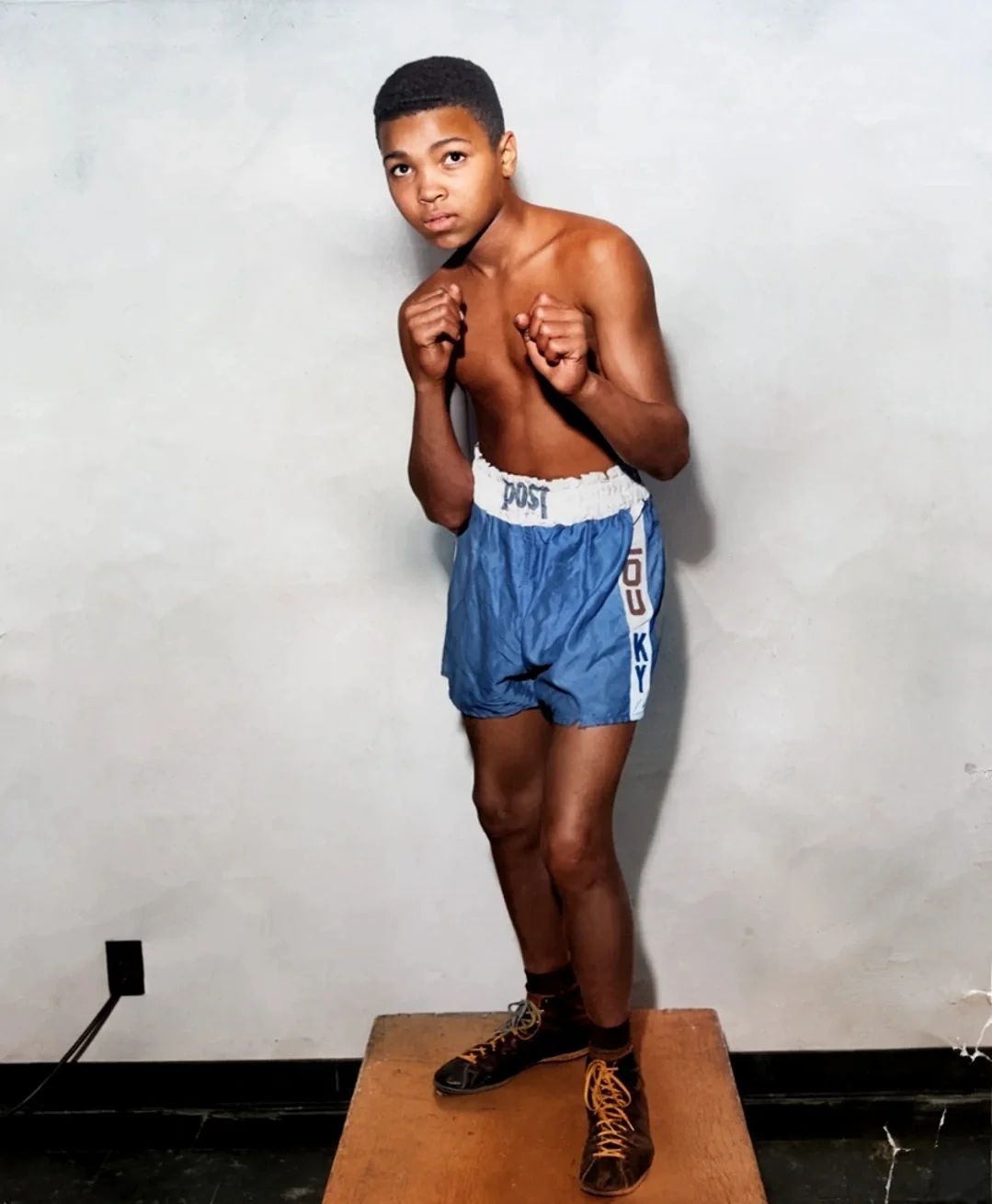
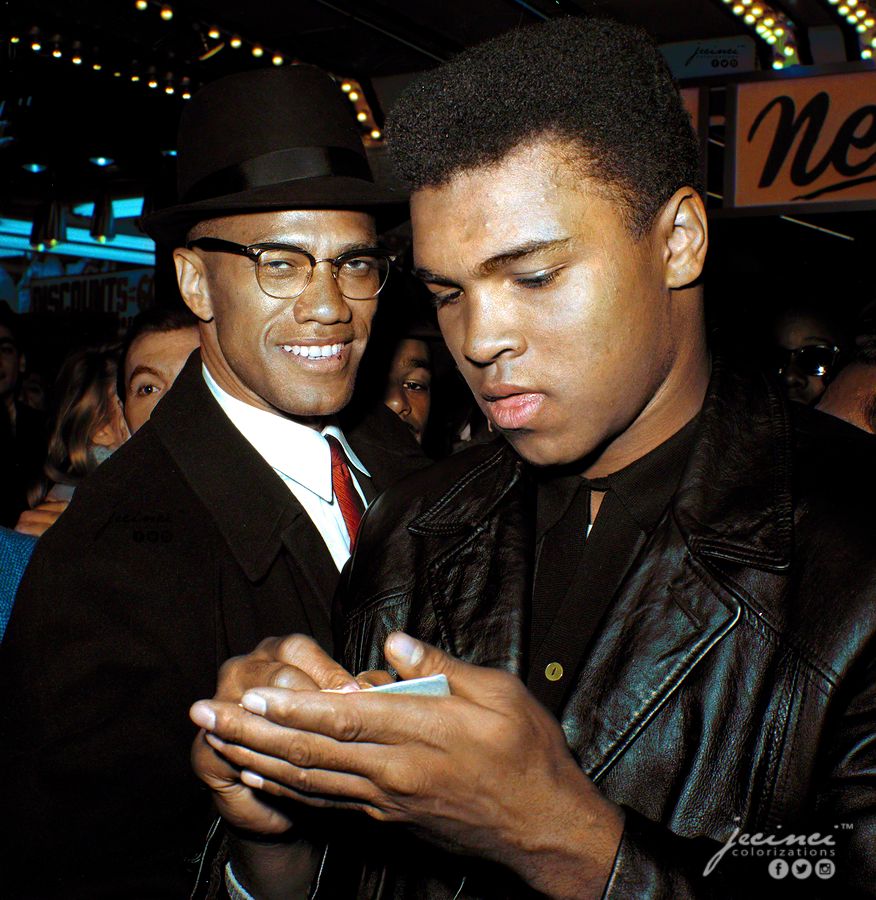
The trunks say Louisville. The name on the birth certificate came from a Kentucky politician whose family had owned enslaved people.Cassius Clay, Louisville, around age twelve · photographer unknown, later colorizedMalcolm X brought him into the Nation of Islam and was beside him in Miami the week he took the title. Within a year Ali cut him off, after Malcolm broke with Elijah Muhammad. Ali later called it one of the deepest regrets of his life.Malcolm X and Muhammad Ali, 1964 · colorization credited to jecinci
A1According to Ali, what is wrong with the name Cassius Clay? Quote the phrase he uses.
A2Ali said he would insist that people use the new name. Why does insisting matter more than simply changing it on paper?
B
The DraftFebruary 17, 1966
On February 17, 1966, Ali learned his draft status had changed to 1A, which meant he was eligible to be called into the Army. He had failed the qualifying test twice in 1964 and been classified 1Y, or not qualified. The Army lowered the passing score in 1965 and roughly 100,000 men who had previously failed became eligible.
Reporters came to his house in Miami that afternoon and asked him about it over and over. Late in the day he said:
I ain't got no quarrel with them Viet Cong.
Muhammad Ali, February 17, 1966, to reporters in Miami
B1What does the word "quarrel" mean here, and what is Ali saying he does not have?
B2He said this off the cuff on his front lawn. It ran on front pages across the country the next morning. Why would one sentence from a boxer become national news in February 1966?
C
The Reasoning1967
In 1967, as his induction date approached, Ali explained his position at greater length:
Why should they ask me to put on a uniform and go 10,000 miles from home and drop bombs and bullets on brown people in Vietnam while so called Negro people in Louisville are treated like dogs and denied simple human rights? No, I am not going 10,000 miles from home to help murder and burn another poor nation simply to continue the domination of white slave masters of the darker people the world over. This is the day when such evils must come to an end.
Muhammad Ali, 1967
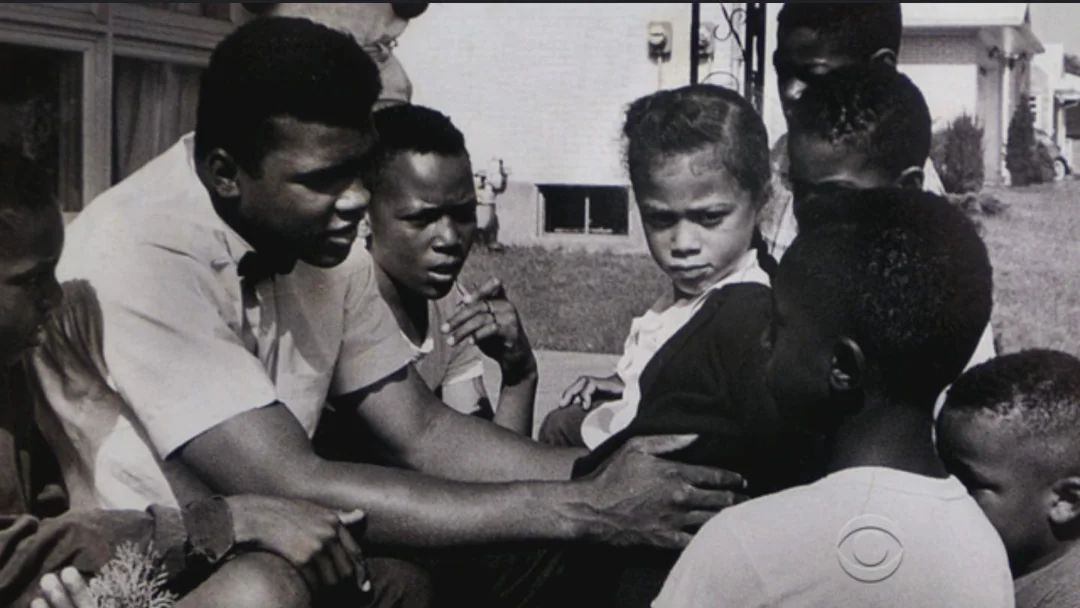
The people in the second half of that sentence were not an abstraction to him.Still from CBS News footage
C1Ali compares two places. Name both and explain what he says they have in common.
C2Ali was a minister in the Nation of Islam and applied for conscientious objector status, a legal category for people whose religion forbids them to fight. Based on this source, is his argument religious, political, or both? Defend your answer with a quote.
D
The FightFebruary 6, 1967 · Houston Astrodome
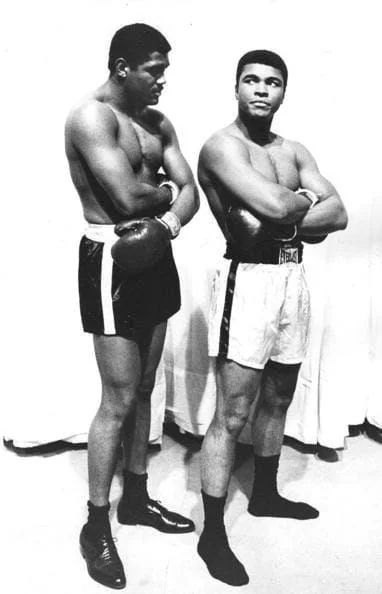
Ali fought Ernie Terrell, who held a share of the heavyweight title and had spent the buildup calling him Clay in press conferences and interviews. Ali told reporters a knockout would be too easy. He wanted the fight to last.
Terrell stood three inches taller and held a share of the title. He spent the buildup calling him Clay.Muhammad Ali and Ernie Terrell, 1967
It lasted 15 rounds. Ali won a unanimous decision. He hurt Terrell badly and never finished him. Ringside reporters described Ali landing combinations and shouting the same question into Terrell's face round after round:
What's my name? What's my name?
Ringside accounts, February 6, 1967
The Long WayHouston Astrodome · 15 rounds
A knockout asks the question once. Ali asked it fifteen times.
Terrell's face was damaged badly enough that he needed surgery on his eye afterward. Some sportswriters who had defended Ali for years turned on him after this fight. Jimmy Cannon, one of the most widely read columnists in America, called it "a kind of lynching."
D1Ali had the ability to knock Terrell out. He chose not to. What was he trying to accomplish by extending the fight to 15 rounds?
D2Explain why a columnist might watch this fight and call it cruel. Then explain why someone else might watch the same fight and call it justified. You must give both readings.
E
The Press1964 to the 1970s
Most American newspapers kept printing "Cassius Clay" for years after 1964. The New York Times held out until the 1970s. Editors argued that Clay was his legal name and that the paper should not take sides in a religious dispute.
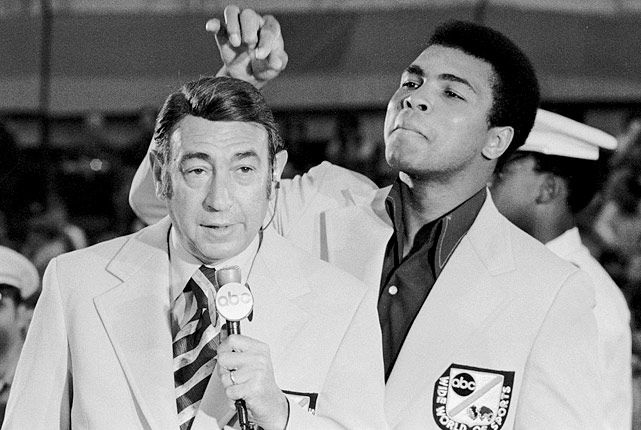
Howard Cosell, a broadcaster at ABC, used Muhammad Ali from the start. He took years of hate mail for it. Cosell later said the decision was simple to him, because a man gets to say what he is called.
Cosell used the name from the first week and absorbed years of hate mail for it. The two of them turned that into an act that ran for twenty years on live television.Muhammad Ali and Howard Cosell, ABC Wide World of Sports
E1Editors said they were staying neutral by printing Clay. Was that actually neutral? Explain your reasoning.
E2What was the cost to Cosell of using the name Ali, and what does that cost tell you about how ordinary Americans felt in 1967?
F
The BillApril 28, 1967 to June 28, 1971
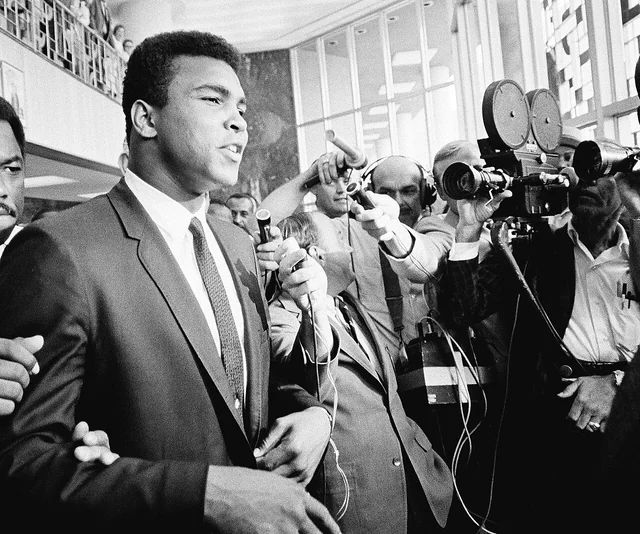
Every camera in the country was pointed at a 25 year old deciding whether to step forward.Muhammad Ali facing reporters, 1967
At the induction center in Houston on April 28, 1967, an officer read the roll. The name he called was Cassius Clay. Ali did not step forward. An officer took him aside and warned him that refusing was a felony carrying five years. The name was called again. He did not move.
Listen for the name the officer uses.Newsreel footage, Houston, April 28, 1967
Date
What happened
Apr 28, 1967
The New York State Athletic Commission suspended his boxing license within hours
Apr 28, 1967
The World Boxing Association stripped him of the heavyweight title
1967
His passport was taken. Every state commission denied him a license
Jun 20, 1967
Convicted in federal court in Houston of refusing induction. Sentenced to five years in prison and a $10,000 fine. The jury was six men and six women, all of them white
1967 to 1970
Did not fight. Ages 25 through 28
Oct 26, 1970
Fought again for the first time, against Jerry Quarry in Atlanta
Jun 28, 1971
The Supreme Court reversed the conviction 8 to 0 in Clay v. United States
The Stolen YearsPro career, 1960 to 1981
The hatched block is the part of his career that was taken. He never got those rounds back.
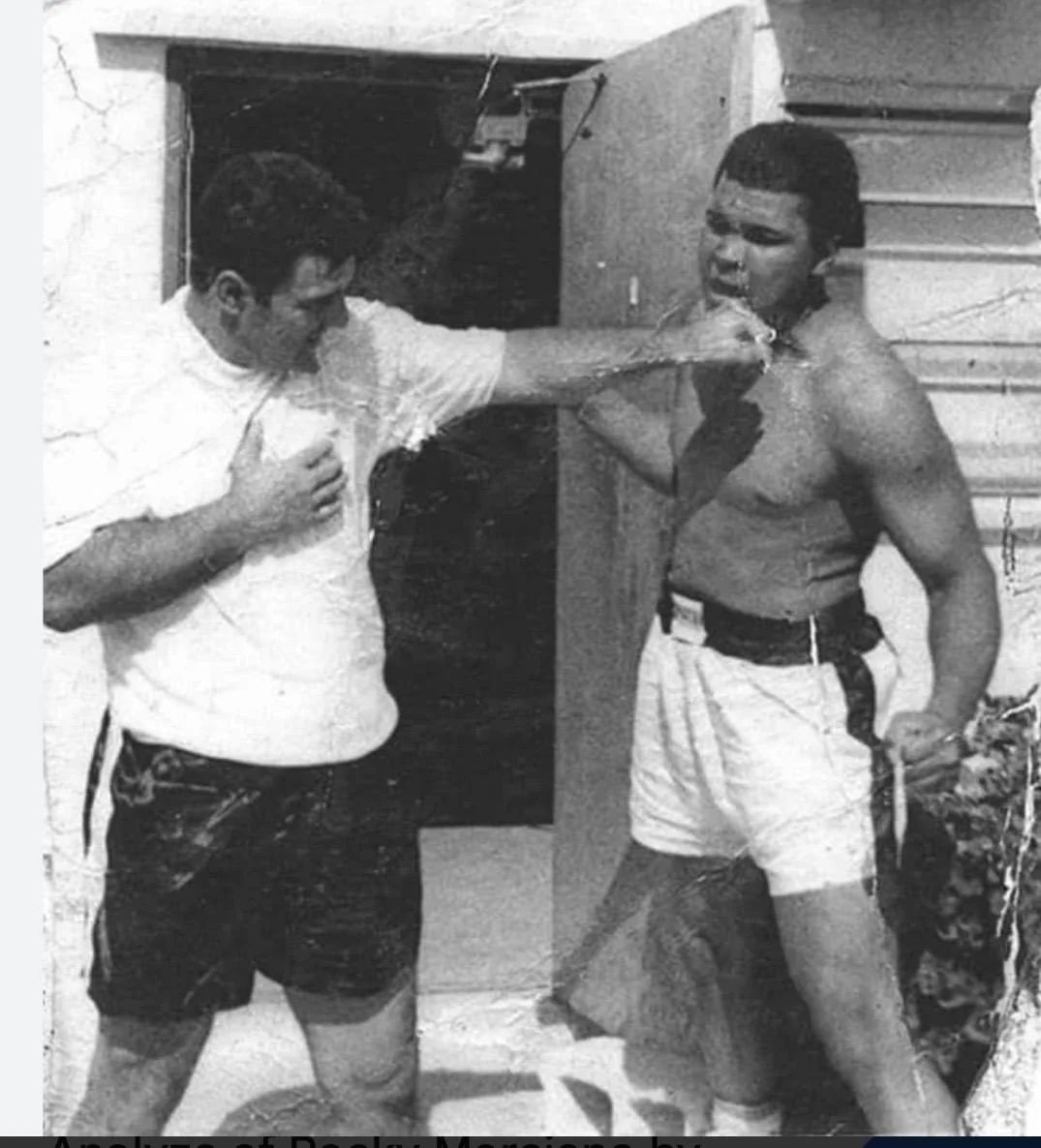
He was not idle, and he was not quiet. He lectured on college campuses for fees. In February 1969 he filmed a fake fight. A promoter fed punch statistics into an NCR 315 computer and staged a simulated bout between Ali and Rocky Marciano, who came out of retirement at 45, lost over 50 pounds, and wore a toupee. The two men sparred roughly 75 rounds in a Miami studio for the cameras. Two endings were filmed. American theaters saw Marciano knock Ali out in the 13th round. European audiences saw Ali win. Marciano died in a plane crash three weeks after filming and never saw it released.
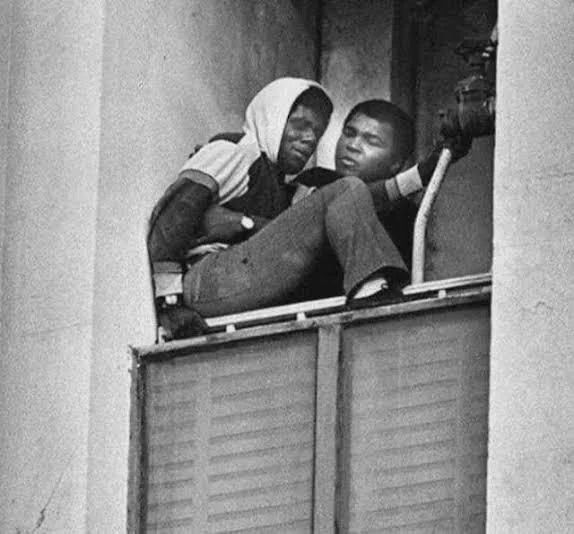
January 1981, ninth floor of the Dominguez Wilshire building in Los Angeles. A 21 year old man had been out on the ledge for hours and the police could not reach him. Ali lived a mile away, drove over, leaned out the window and talked to him for about twenty minutes. I am your brother, I want to help you. The man came inside and wept. Fourteen years after the country took his title for refusing to fight, the name was worth enough to a stranger on a ledge that he listened to it.Los Angeles, January 1981A 45 year old retired champion throwing a punch that counted for nothing, at a 27 year old who was not allowed to throw one that did.The Super Fight, Miami, February 1969 · Marciano died in a plane crash three weeks later
The best heavyweight of his generation spent his exile acting out a fight a machine had already decided, because no state in the country would license him to have a real one.
The Super Fight, filmed February 1969, released January 20, 1970
The VoteClay v. United States · June 28, 1971
Not one justice voted against him. Marshall stepped aside because he had been Solicitor General when the government built the case. The ruling came four years and two months after they took his license.
F1Ali was never sent to prison, but he still paid. List three specific costs from this chart that are not prison.
F2The Supreme Court ruled in his favor in 1971. Did that ruling give him back what he lost? Explain.
Part Two · The LedgerFour entries minimum per side
What the name cost him
Evidence from the sources
1
2
3
4
What he got for it
Evidence from the sources
1
2
3
4
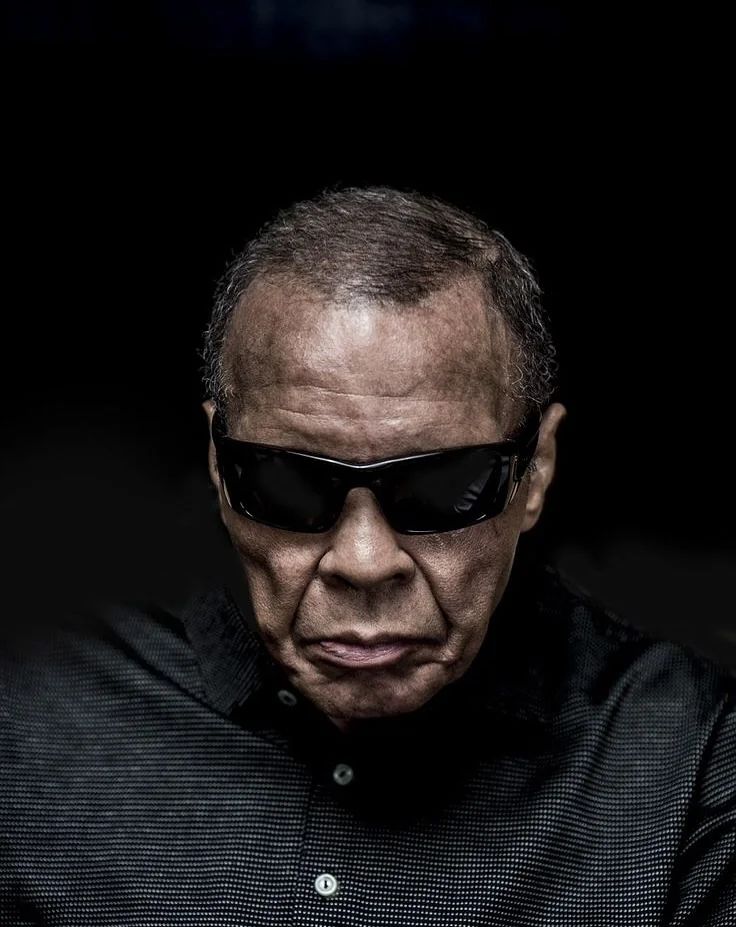
He fought until 1981. Three years later he was diagnosed with Parkinson's syndrome. He lived another thirty two years, and he never once said the name had not been worth it.Muhammad Ali, later life
Part Three · Take a Side250 words minimum · three sources minimum
Your argumentWord count 0 / 250
When you are finished, copy everything and paste it into the Classroom assignment. Your work saves in this browser as you type.
References
Clay v. United States, 403 U.S. 698 (1971).
Ezra, M. (2009). Muhammad Ali: The making of an icon. Temple University Press.
Hauser, T. (1991). Muhammad Ali: His life and times. Simon & Schuster.
Remnick, D. (1998). King of the world: Muhammad Ali and the rise of an American hero. Random House.