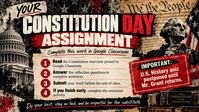
Mr. Grant is out today. Your job is straightforward: enter your name and period, choose the class you are in, use the Constitution evidence on this page, answer every question, then download your work and turn that file in through Google Classroom before you leave.
U.S. History: there is no Gilded Age quiz today. The quiz moves to Monday, September 21.
1 · ChooseSelect your course below.
2 · ReadUse the evidence cards and official source links.
3 · AnswerComplete every response box in your course.
4 · SubmitDownload your work and attach it in Google Classroom.
Start here: identify your work
Use your real first and last name and the period you are sitting in. Your answers save on this Chromebook while you work.
Visual Briefing · Use these as memory anchors
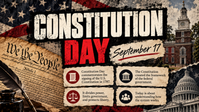
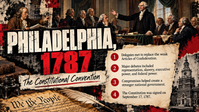
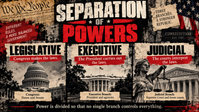
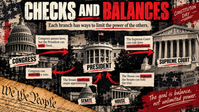
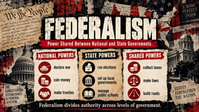
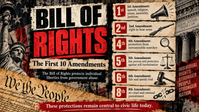
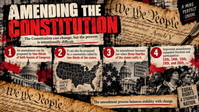
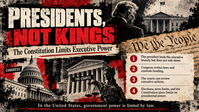
Constitution DayThe PreamblePhiladelphia · 1787Separation of PowersChecks & BalancesFederalismBill of RightsAmending the ConstitutionPresidents, Not KingsToday's Assignment
U.S. History 9
Power & the Gilded Age
The Constitution does not tell the country how to solve every problem. It creates a structure for deciding who has power, how laws are made, how power is limited, and how the system can change.
Think about which level of government has the power.Think about how federal power is divided and limited.
Preamble
States broad goals for the national government, including justice, domestic tranquility, defense, general welfare, and liberty.
Article I
Creates Congress and gives it legislative powers. Congress may regulate interstate and foreign commerce.
Articles II & III
Article II creates the presidency and executive power. Article III establishes the federal judicial branch.
Article V
Creates a formal process for amending the Constitution when the country decides the basic rules need to change.
10th Amendment
Powers not delegated to the United States, and not prohibited to the states, are reserved to the states or the people.
14th Amendment
Places important limits on state government, including due process and equal protection requirements.
Case File
What earns full credit: all five responses completed; specific constitutional evidence; explanations in your own words; at least one clear connection to this week's Gilded Age material.
Hidden History
What Does the Document Prove?
Hidden History rule for today: a primary source can prove some things, weaken other claims, and leave many questions unanswered. Your job is to separate those categories.
Ask what the source was created to do.Separate what the text actually says from later claims about it.
Articles I–III
The document divides federal authority among Congress, the president, and the federal courts.
Article V
The Constitution can be changed through a formal amendment process.
Article VI
The Constitution and valid federal laws are the supreme law of the land; public officials are bound by oath to support the Constitution.
Bill of Rights
The first ten amendments add protections involving expression, religion, criminal procedure, searches, due process, and other limits on government.
Evidence rule
If the Constitution is silent on a claim, silence does not automatically prove the claim true or false. It may simply be outside the document's subject.
Source check
Ask what a source was created to do, what authority it has, what it directly says, and what conclusions go beyond the source.
Claim Audit
What earns full credit: all six responses completed; each conclusion stays inside what the evidence can support; no claim is treated as proven just because it sounds possible.
Beyond the Scoreboard
Who Makes the Rules?
This week, boxing became a modern sport because rules, officials, media, promoters, and government created institutions around the fight. Today, compare that to the rulebook for government itself.
A system works differently when power is divided among roles.Good rule systems include a legitimate way to change the rules.
Articles I–III
The Constitution separates lawmaking, execution of laws, and judicial power into different branches.
Commerce power
Article I gives Congress authority over interstate and foreign commerce, which matters when economic activity crosses state lines.
10th Amendment
Powers not assigned to the federal government are generally reserved to the states or the people.
1st Amendment
Limits government interference with speech, press, religion, assembly, and petition.
Article V
The rules can be formally amended instead of requiring the whole system to be discarded whenever change is needed.
Sports connection
A rulebook matters only when people know the rules, officials enforce them, institutions accept them, and there is a process for resolving disputes or changing rules.
Rulebook Comparison
What earns full credit: all six responses completed; one accurate boxing connection; one accurate constitutional connection; reasoning explains why the evidence matters.
Before you leave: make sure every response in your course is answered, your name and period are entered above, click Download my work, and attach that downloaded text file to today's Google Classroom assignment.