the desk.

Hidden History · Mind Games · Lesson one

Down the Rabbit Hole

A country that never existed. A bridge sold to strangers. A painting that fooled a Nazi leader. A woman who said she was a lost princess.

How does an impossible story start to feel true?

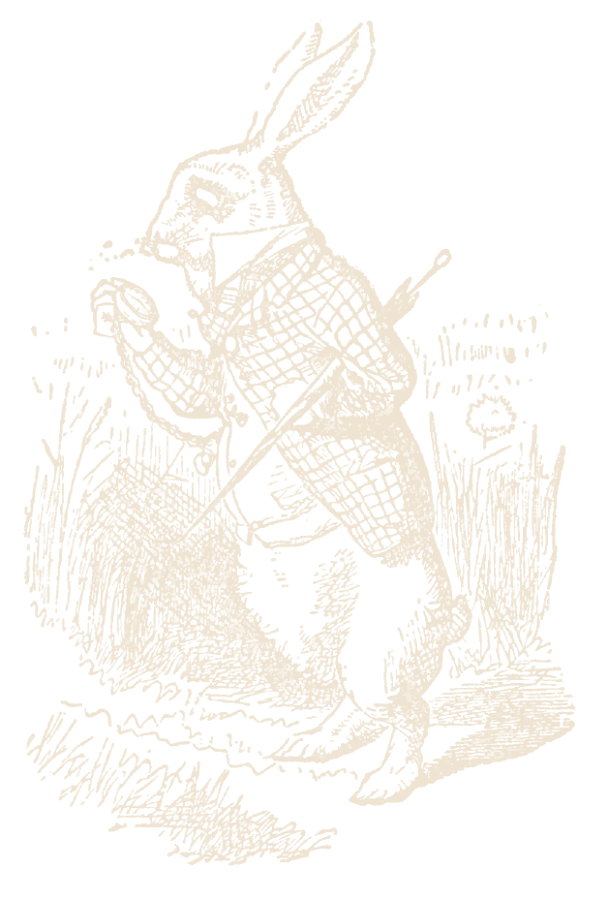
John Tenniel's engraving of the White Rabbit in a waistcoat, checking his pocket watch.
The White Rabbit. John Tenniel, 1865.
01

The game · Four real, one invented

Spot the con

Five stories. One of them never happened. Read each card and choose Real or Invented. When all five are in, lock them and the cards turn over to show the record.

This tests what feels believable, not what you already know. Nobody sees your guesses.

A♠♠London · 1822A♠

Card A · London, 1822

The country that never existed

Gregor MacGregor, a Scottish soldier back from the wars in South America, told London he ruled Poyais, a rich nation on the coast of Central America. He sold its land and its government bonds. In 1822 and 1823 two ships carried about 250 settlers there.

1823the settlers step ashore
Your verdict
B♣♣New York · 1928B♣

Card B · New York, 1880s to 1928

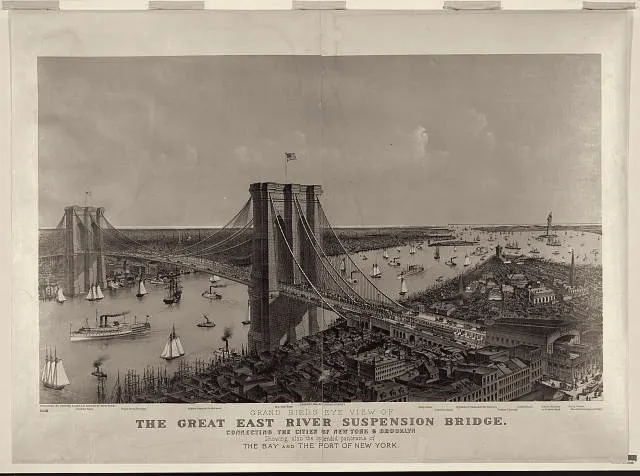
The man who sold the Brooklyn Bridge

George C. Parker convinced buyers they could own the Brooklyn Bridge and collect its tolls. Accounts say he also sold Grant's Tomb. A 1928 fraud conviction sent him to prison for life.

LifeParker died in Sing Sing prison in 1937
Your verdict
C♦♦Netherlands · 1937C♦

Card C · Netherlands, 1937 to 1947

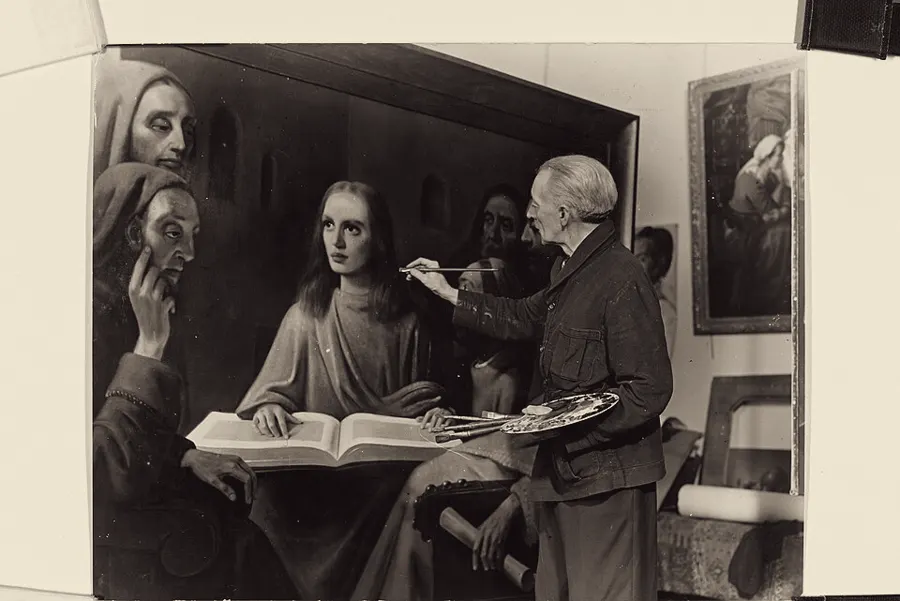
The painting that fooled Göring

Han van Meegeren painted new pictures in the style of Johannes Vermeer and sold them as lost masterpieces. Experts praised them. Hermann Göring, second only to Hitler in Nazi Germany, bought one. After the war van Meegeren was arrested for selling a Dutch national treasure to the enemy.

Onefake Vermeer in Göring's collection
Your verdict
D♥♥Berlin · 1920D♥

Card D · Berlin, 1920

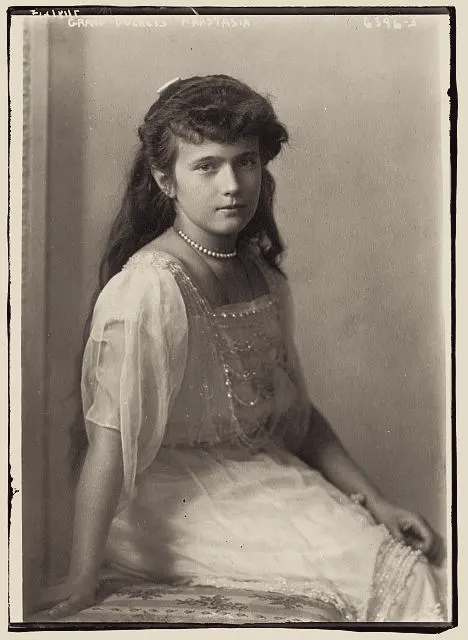
The lost princess

A young woman in a Berlin hospital came to believe, or claimed, that she was Anastasia, youngest daughter of the murdered Russian tsar. She became known as Anna Anderson. Her supporters fought for her claim for decades.

32 yearsin German courts, 1938 to 1970
Your verdict
E♣♣Detroit · 1958E♣

Card E · Detroit, 1958

The miracle in a bottle

A dealer named Raymond Kessler sold "Mileage Plus," a gas additive promising 40 percent better mileage. After 11,000 bottles, inspectors found nothing inside but water and green food coloring.

$2charged per bottle
Your verdict

The table is waiting

0 of 5 decisions made

Change any guess before you lock. Locked verdicts stay locked.

02

The evidence room · What the con artists left behind

Read their paperwork

Two cons left a paper trail you can still look at. One is a guidebook to a country that did not exist. The other is a newsreel of a forger standing trial.

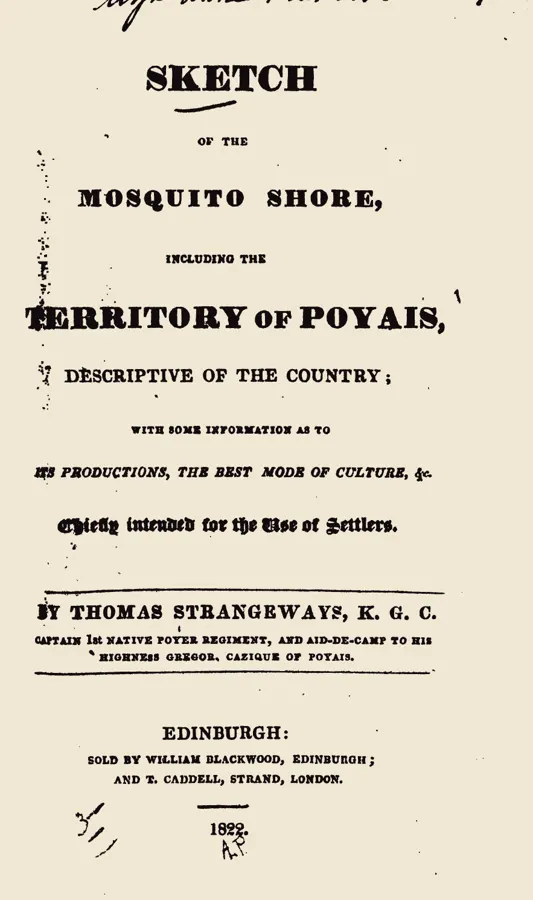
Title page of the 1822 book Sketch of the Mosquito Shore, including the Territory of Poyais, chiefly intended for the use of settlers.
Title page, Sketch of the Mosquito Shore, including the Territory of Poyais, Edinburgh, 1822. "Chiefly intended for the use of settlers." Internet Archive.
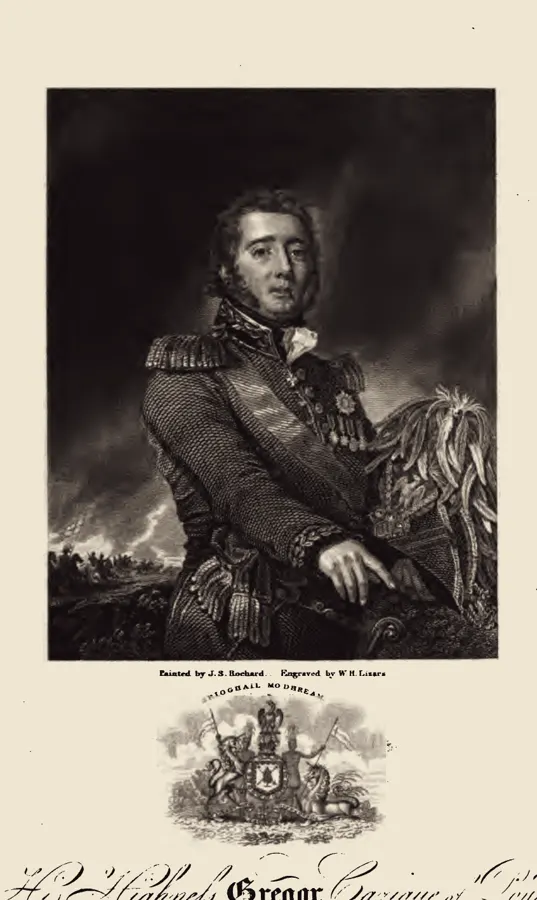
Frontispiece portrait of Gregor MacGregor with a royal crest.
The same book's frontispiece: "His Highness Gregor, Cazique of Poyais." A cazique is a chief.
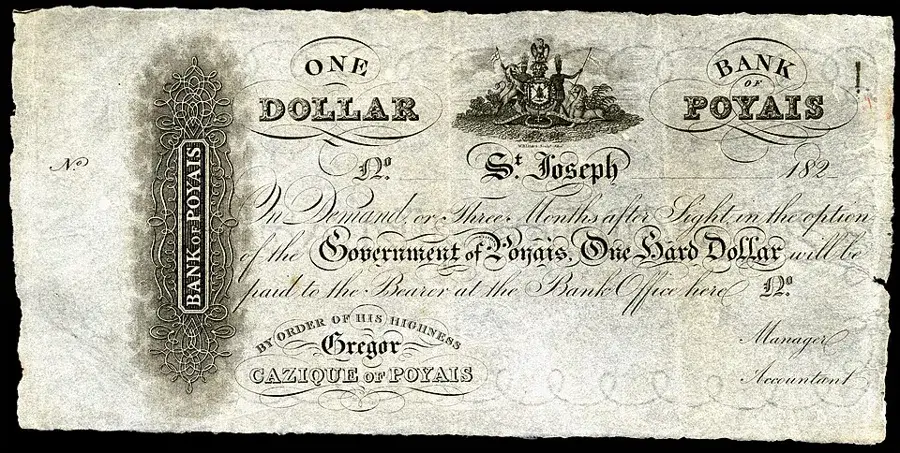
A printed one dollar banknote of the Bank of Poyais, payable at St. Joseph and signed for Gregor, Cazique of Poyais.
A one dollar note of the Bank of Poyais, 1820s. Before sailing, many settlers swapped their real pounds for notes like this one. Public domain.

Exhibit 1 · Poyais

What the settlers were sold

  • 01Land by the acre in a fertile country
  • 02A capital called St. Joseph, printed right on the money
  • 03Posts in its government and commissions in its army
  • 04A bank, a currency, and talk of rich gold mines

Each dot is one of about 250 people who sailed on the Honduras Packet in 1822 and the Kennersley Castle in 1823.

Polygoon newsreel, Netherlands, 1947, two minutes. The narration is in Dutch. The English track describes what is on screen. Public domain, Netherlands Institute for Sound and Vision via Wikimedia Commons.

Scene by scene

Police unload van Meegeren's paintings from a truck outside the Amsterdam courthouse and carry them inside. The fake Vermeers hang on the courtroom wall, including his Supper at Emmaus, which the Boijmans museum in Rotterdam had bought as a masterpiece. Van Meegeren walks through the city and into court. Judges in robes hear the case before a packed room.

Exhibit 2 · The forger on trial

The trial opened in Amsterdam on October 29, 1947. The paintings were brought into the courtroom as evidence against the man who had painted them.

The painting in Göring's hands is not, as you assume, a Vermeer of Delft, but a Van Meegeren! I painted the picture!Han van Meegeren to his interrogators, 1945, as reported by his biographers.

On November 12, 1947, the court convicted him of forgery and fraud and sentenced him to one year in prison. He died of a heart attack on December 30, before serving a day of it.

03

Economics flashback · The trap

Match the bias

Con artists do not have to invent human weaknesses. They use the shortcuts our brains already take.

Match each real case to the thinking shortcut that fits it best. Real cons usually have more than one cause, so look for the strongest fit.

Down another level · Psychological research

Who runs the con?

In 2002 the psychologists Delroy Paulhus and Kevin Williams studied three personality traits that overlap but are not the same. Together they became known as the Dark Triad. Tap a circle.

Machiavellianism Narcissism Psychopathy

Each trait gets a guide from Lewis Carroll's Wonderland. The guides are metaphors, not diagnoses.

These are personality traits measured on a scale in research. A score is not a diagnosis, and nobody in this lesson is being diagnosed.

Your first guide · The Cheshire Cat

Machiavellianism

Manipulating people on purpose, for advantage.

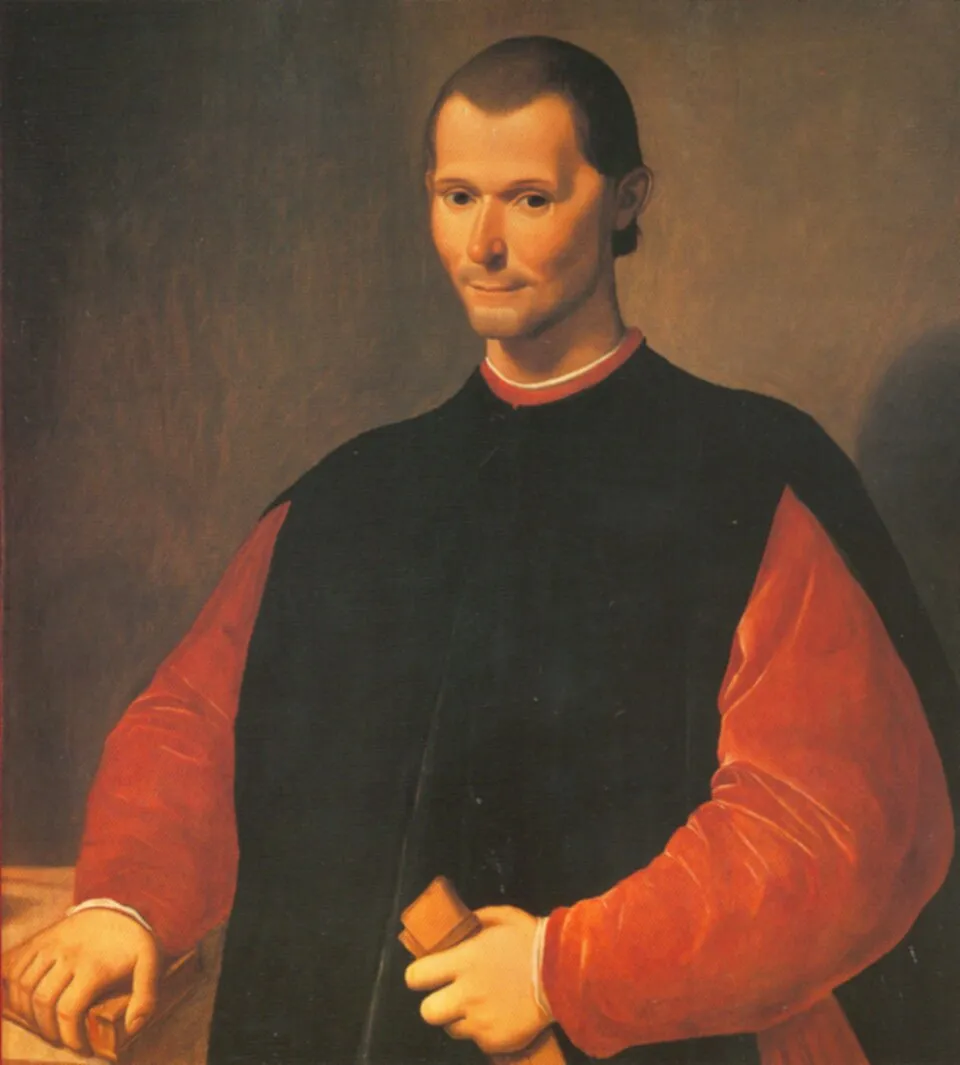
The name comes from Niccolò Machiavelli, the Florentine diplomat who wrote The Prince in 1513, a handbook on gaining and keeping power. In personality research, high Machiavellianism means a habit of calculated manipulation, strategic flattery and cynical distrust of others.

The tactic: control the options so the other person thinks the choice was theirs.

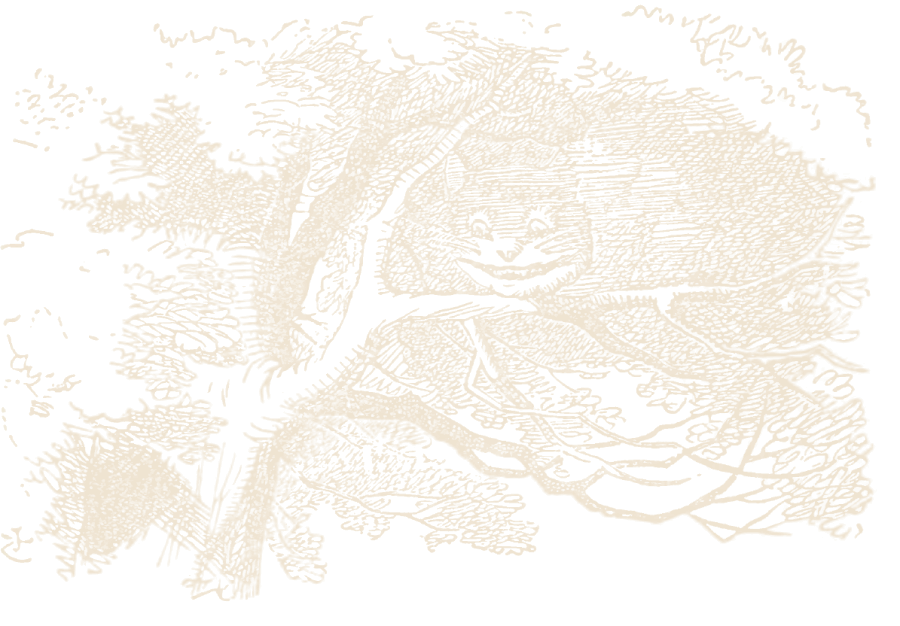
That depends a good deal on where you want to get to.The Cheshire Cat, Alice's Adventures in Wonderland, Lewis Carroll, 1865
Tenniel engraving of the Cheshire Cat in a tree, fading away until only its grin is left.
Portrait of Niccolò Machiavelli in a black robe.
Machiavelli, painted by Santi di Tito, late 1500s.

Your second guide · The Queen of Hearts

Narcissism

A hunger for admiration and special treatment.

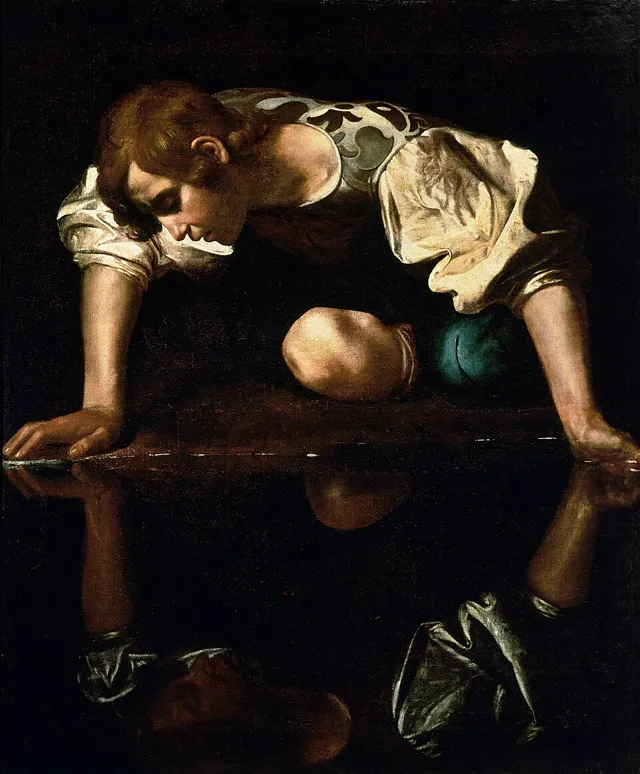
The name reaches back to the Greek myth of Narcissus, a young man who fell in love with his own reflection in a pool. In trait research, narcissism can include grandiosity, entitlement and an explosive reaction to criticism.

The tactic: make disagreement feel like disloyalty to someone who deserves absolute devotion.

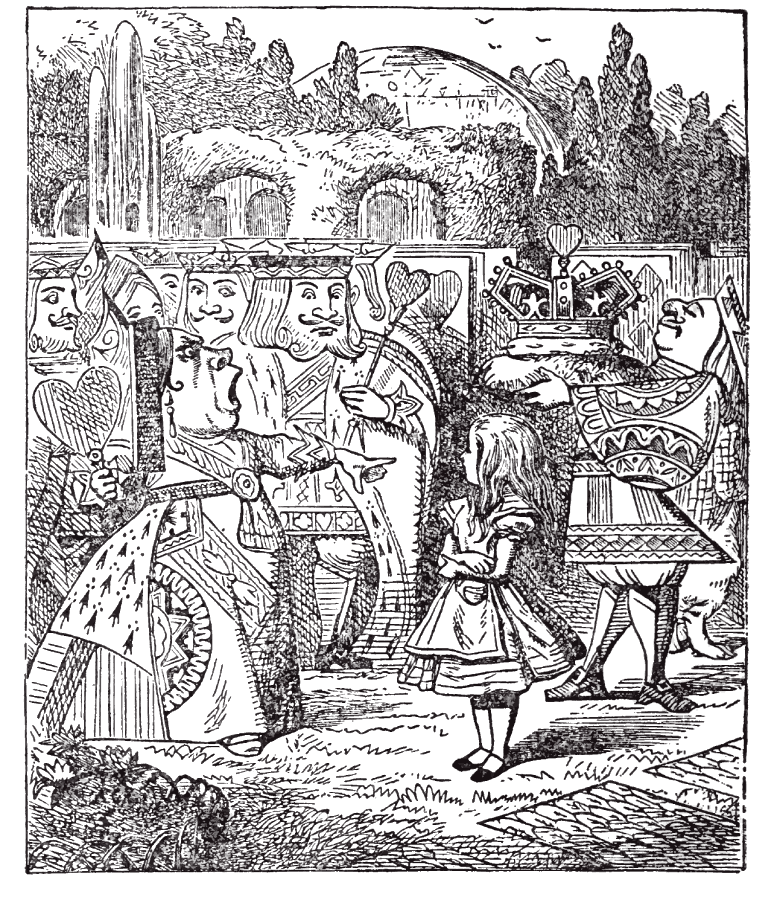
Off with his head!The Queen of Hearts, Alice's Adventures in Wonderland, Lewis Carroll, 1865
Tenniel engraving of the Queen of Hearts pointing furiously at Alice while the King and the playing card courtiers look on.
Caravaggio's painting of Narcissus kneeling over dark water, gazing at his reflection.
Narcissus, attributed to Caravaggio, about 1597.

Your third guide · The Walrus

Psychopathy

Surface charm with little fear or remorse.

The psychiatrist Hervey Cleckley's 1941 book The Mask of Sanity shaped how later researchers described psychopathic traits. Researchers study callousness, impulsiveness, low fear and shallow charm, among other tendencies.

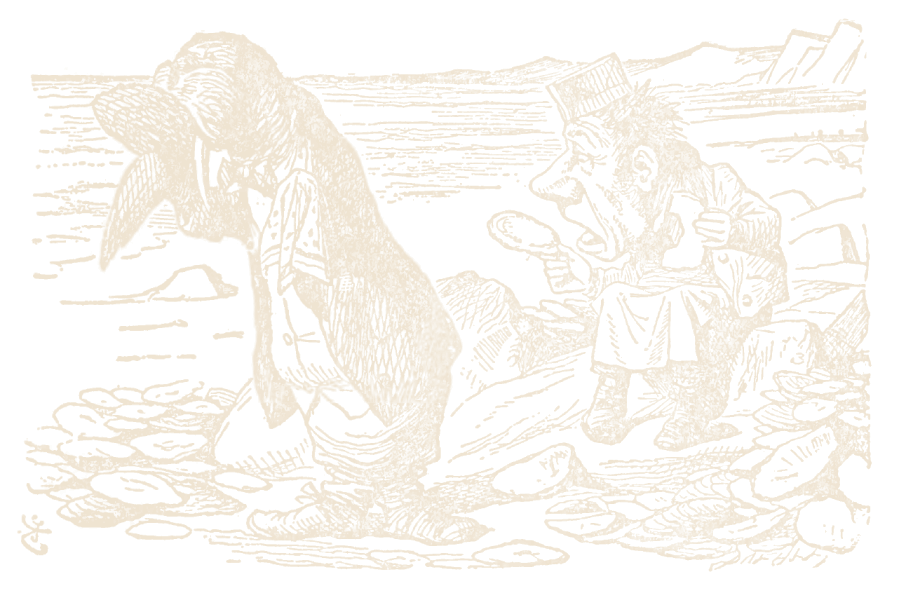
In the poem, the Walrus weeps over the oysters while he eats every one of them.

The tactic: a sympathetic performance is not proof of sympathy.

I weep for you, the Walrus said: I deeply sympathize."The Walrus and the Carpenter," Through the Looking Glass, Lewis Carroll, 1871
Tenniel engraving of the Walrus holding a handkerchief to his eyes, weeping, beside the Carpenter on a beach strewn with empty oyster shells.
04

Applied thinking · Invented situations

Read the signal

Look at the behavior, not at a guess about the person. These scenes are invented to spotlight one tactic each.

Scene 01 · The plan

The rehearsed compliment

Someone flatters a rival before a vote. They do not mean a word of it. They want support for their own proposal.

Scene 02 · The crown

The untouchable leader

A leader demands praise and treats every criticism as betrayal, even when the evidence against them is clear.

Scene 03 · The mask

The empty apology

A person gives a moving apology, then takes the same dangerous risk again and again without concern for who gets hurt.

No single behavior proves a personality disorder. These examples are simplified on purpose, and the traits overlap.

05

The bonus round · 2013

The fourth trait

What if the reward is someone else's suffering?

Erin Buckels, Daniel Jones and Delroy Paulhus studied everyday sadism, taking pleasure in cruelty. In one experiment, 71 participants chose one of four unpleasant jobs. One job was feeding live pill bugs into a modified coffee grinder. The bugs had names.

MuffinIkeTootsie

A hidden barrier kept every bug safe. The grinder made a crunching sound anyway. The study measured the human choice, not real harm.

26.8%

chose to kill the bugs. That is 19 of 71 people in one small study, not 26.8 percent of everyone.

Four jobs, 71 people

Kill the bugs26.8%
Help the killer26.8%
Clean toilets33.8%
Ice water pain12.7%

Buckels, Jones and Paulhus, Psychological Science, 2013, study 1. Rounded numbers.

People who scored higher on sadism were more likely to pick the bug job. Add sadism to the triad and researchers call it the Dark Tetrad.

06

Before you use a label · 1964

The Goldwater rule

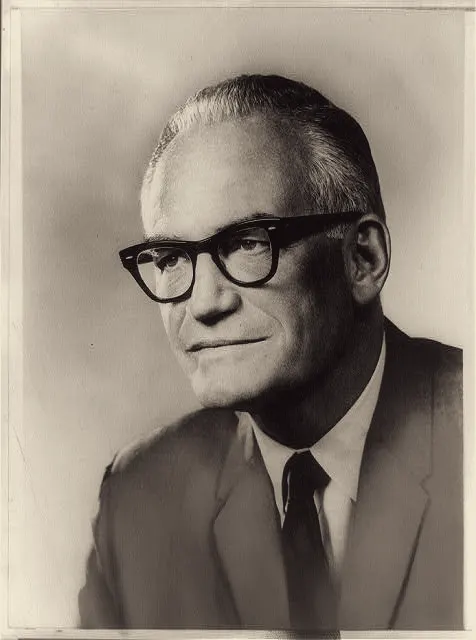
Head and shoulders portrait of Senator Barry Goldwater in black framed glasses and a suit.
Senator Barry Goldwater of Arizona, the 1964 Republican nominee for president. Library of Congress, U.S. News and World Report collection.

In July 1964 Fact magazine mailed one question to 12,356 psychiatrists: was Barry Goldwater psychologically fit to be president?

12,356psychiatrists who got the survey
2,417mailed an answer back
1,189said he was unfit, the number on the magazine's cover
657said he was fit
571said they did not know enough to say

In 1973 the American Psychiatric Association made it an ethics rule: psychiatrists should not give a professional opinion about a public figure they have not examined and who has not given permission.

Observe the actions. Do not diagnose the person.

We can study documented behavior, incentives and consequences. We do not diagnose historical figures, celebrities or classmates from stories.

07

Final chapter · Your judgment

Climb out

You met the con, the shortcut it used and the kind of person who might run it. Now practice the habit that breaks the trick.

The habit to keep

Ask for evidence before a verdict.

Confident stories are not proof. Neither are exact numbers, uniforms, official looking paper or famous names. MacGregor had all of them.

A good investigator checks the record

Sources and limits

  • Thomas Strangeways, Sketch of the Mosquito Shore, including the Territory of Poyais, Edinburgh, 1822, scanned at the Internet Archive. The Rothschild Archive on MacGregor's 1821 correspondence. Settler numbers from the ship records of the Honduras Packet and the Kennersley Castle, which vary slightly between accounts.
  • Han van Meegeren: Polygoon newsreel Proces van Meegeren, 1947, Netherlands Institute for Sound and Vision. Trial and sentence dates from the Amsterdam court record as reported by his biographers.
  • Anna Anderson: Wellcome Collection note on the 1994 DNA testing.
  • Paulhus and Williams, 2002, "The Dark Triad of personality," Journal of Research in Personality.
  • Buckels, Jones and Paulhus, 2013, "Behavioral Confirmation of Everyday Sadism," Psychological Science, study 1.
  • American Psychiatric Association on the Goldwater Rule. Survey counts as published by Fact in 1964 and recorded in Goldwater v. Ginzburg, Second Circuit, 1969.
  • Lewis Carroll, Alice's Adventures in Wonderland, 1865, and Through the Looking Glass, 1871, with John Tenniel's engravings, from a 1900 edition at the Internet Archive.

Limits. Card E is invented, and the other four follow the original lesson deck. The Parker sales come from later retellings. Exact Poyais death counts differ by source, so the page uses "at least 180" and "fewer than 50." Wonderland characters are literary metaphors, not diagnoses.

Images: Tenniel engravings, public domain. MacGregor portrait and Poyais title page, 1822, public domain. Poyais banknote, public domain via Wikimedia Commons. Brooklyn Bridge lithograph, about 1885, Grand Duchess Anastasia, Bain Collection, and Barry Goldwater portrait, Library of Congress. Van Meegeren, 1945, Rijksmuseum via Wikimedia Commons. Machiavelli by Santi di Tito and Narcissus attributed to Caravaggio, public domain.

Tenniel engraving of the White Rabbit checking his pocket watch.

Hidden History · Mind Games

The question is never just "Do I believe it?"

It is "What would prove it?"

Back to the beginning