Drawer I 1908 to 1912
The gravel pit
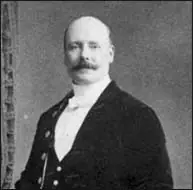
Charles Dawson lived in Lewes, Sussex, and worked as a solicitor and clerk to the magistrates in Uckfield. In his spare time he hunted fossils and antiquities, and he was a Fellow of both the Geological Society and the Society of Antiquaries.
His story went like this. Around 1908, workmen digging gravel beside the drive at Barkham Manor, near the village of Piltdown, broke open what they took for a fossil coconut. One of them handed Dawson a piece. It was part of a thick human skull.
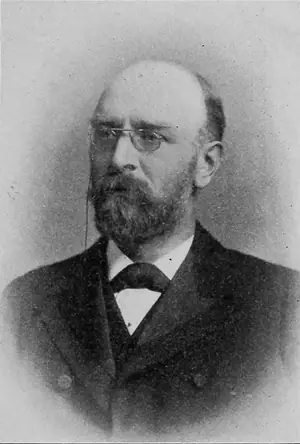
In February 1912 he wrote to his friend Arthur Smith Woodward, Keeper of Geology at the British Museum (Natural History) in London.
That summer the two men dug the pit together. Dawson turned up more skull pieces and half of a lower jaw with two molars still in it.
I have come across a very old Pleistocene (?) bed ... which I think is going to be interesting ... portion of a human (?) skull which will rival H. heidelbergensis in solidity.Charles Dawson to Arthur Smith Woodward, February 14, 1912. Natural History Museum archives.
waiting for the big 'find' which never seems to come alongDawson to Woodward, March 1909, three years earlier.
Full story
Amateur collectors mattered enormously in this period. Most fossils are found by people who are already outdoors for some other reason, and Dawson had been sending specimens to the museum for decades. A fossil mammal tooth he found had been named Plagiaulax dawsoni after him.
Woodward replied to the February letter but did not see the pieces until late May. A young French Jesuit studying near Hastings, Pierre Teilhard de Chardin, joined the digging that summer and found a fragment of a fossil elephant tooth.
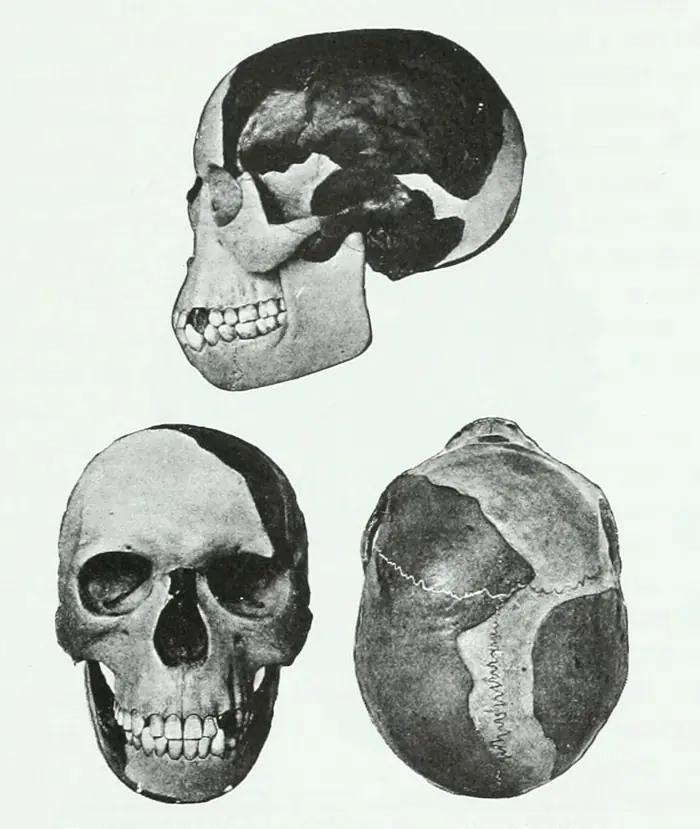
The braincase was unusually thick and the jaw was heavy and apelike. Woodward kept the whole affair as quiet as he could until he was ready to present it. No diary or notebook of the digging exists, so almost everything known about where each piece came from rests on what Dawson and Woodward later said.
Drawer II December 18, 1912
The announcement
The Geological Society of London met at Burlington House, and the room was packed. Dawson described the pit. Woodward described the bones.
He said they came from one creature, a human ancestor about 500,000 years old, with a braincase close to ours and a jaw close to an ape's. He named it Eoanthropus dawsoni, Dawson's dawn man.
The British press called it the earliest Englishman.
Two pieces were missing: the chin and the knob that hinges a jaw to a skull. Those were the two pieces that could have shown whether the jaw and the skull belonged together.
Full story
Objections were raised in the room that night, mostly about whether the jaw and the braincase came from the same individual. They had turned up separately, and the parts that would connect them were gone. Woodward's reconstruction answered the objection by assuming they did.
Within a year David Waterston of King's College London published in Nature that the pieces were an ape's jaw and a human skull that did not belong together.
Drawer III Why it was believed
It answered the question they were asking
Many scientists in 1912 expected the brain to have grown large first, with the jaw and teeth catching up later. Piltdown had a large brain and an ape's jaw.
Germany and France each had famous human fossils by 1912. Britain had nothing to compare.
The expectation in 1912
Open each find and read how fast it was accepted.
What an ancestor was expected to look like
- The brain came first. Brain growth came before human jaws, teeth, and posture.
- A mosaic. A modern braincase carried on a primitive face.
What each country already had
- Germany: Neanderthal, 1856, and the Mauer jaw, 1907.
- France: Cro Magnon, 1868, and La Chapelle, 1908.
- Britain: nothing of comparable importance.
Choose a find.
Every find was judged by the same rules on paper. What changed from find to find was how hard people looked.
The find that fit the expectation best was accepted fastest. The Taung child fit it worst, and the Taung child was real.
Drawer IV 1913 to 1914
The pieces kept arriving
Arthur Keith of the Royal College of Surgeons built his own reconstruction in 1913. His version had a bigger brain and human teeth. Woodward's had big apelike canines, even though no canine had been found.
On August 30, 1913, Teilhard de Chardin was sifting spoil at the pit and found a canine. It looked very much like the one Woodward had modeled in plaster. It turned up in gravel that had already been searched.
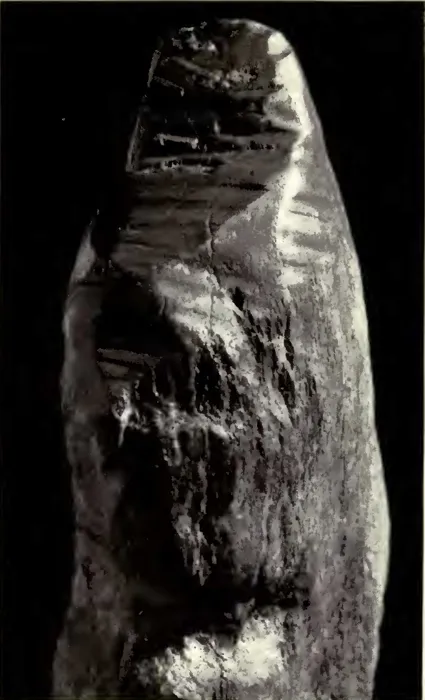
In 1914 the pit produced its strangest object, a slab of fossil elephant thigh bone carved into a long flat club. It looked so much like a cricket bat that people called it the cricket bat.
Every new find answered the last objection someone had raised.
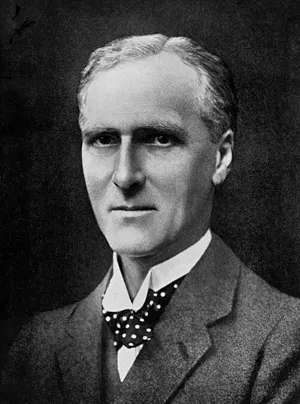
Such was the end of our long friendship.Arthur Keith, recalling his break with Grafton Elliot Smith, who sided with Woodward in their 1913 fight over the reconstruction.
Full story
The argument between Keith and the Woodward camp ran through the letters page of Nature in the autumn of 1913, six letters back and forth. It was a real scientific fight about how the pieces should be assembled. Nobody in it asked whether the pieces were genuine.
Teilhard left England soon after finding the canine and took no further part in the digging. The bone implement was the last significant find at the first site. The First World War began that August.
Drawer V The people who said no
It was not unanimous
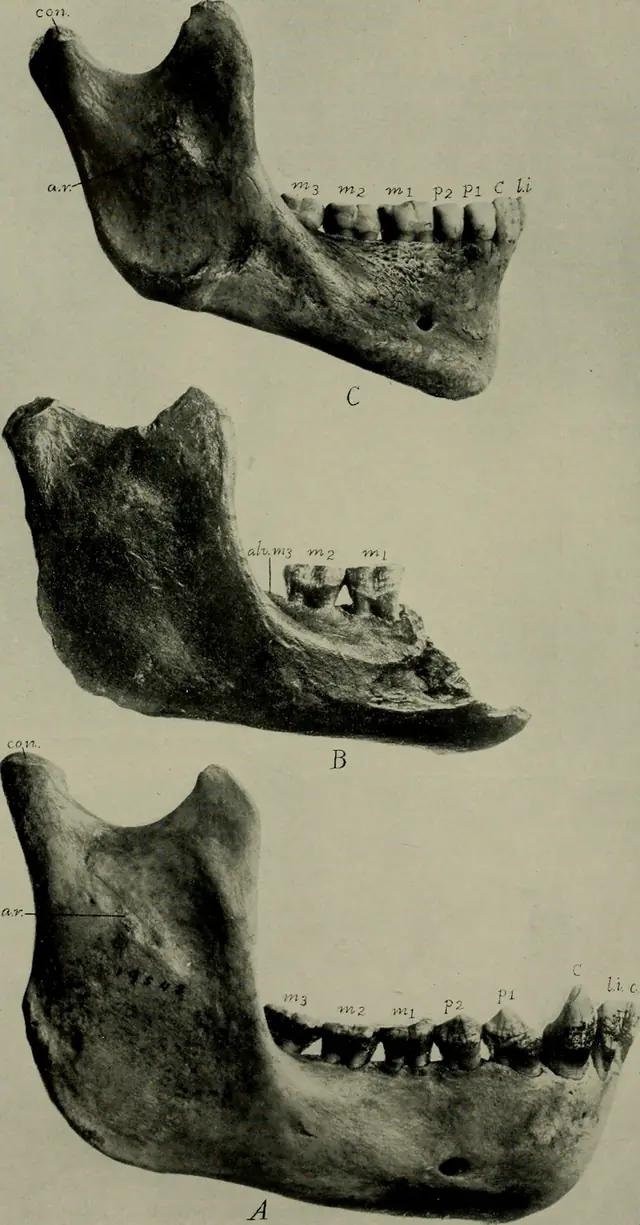
In 1915 Gerrit Smith Miller, a zoologist at the Smithsonian Institution in Washington, compared casts of the jaw with ape jaws. He concluded the jaw belonged to an ape and the skull to a human, and he published it.
Marcellin Boule, the leading authority on fossil humans in France, reached the same view. In New York, W. D. Matthew of the American Museum of Natural History called Miller's argument convincing and irrefutable.
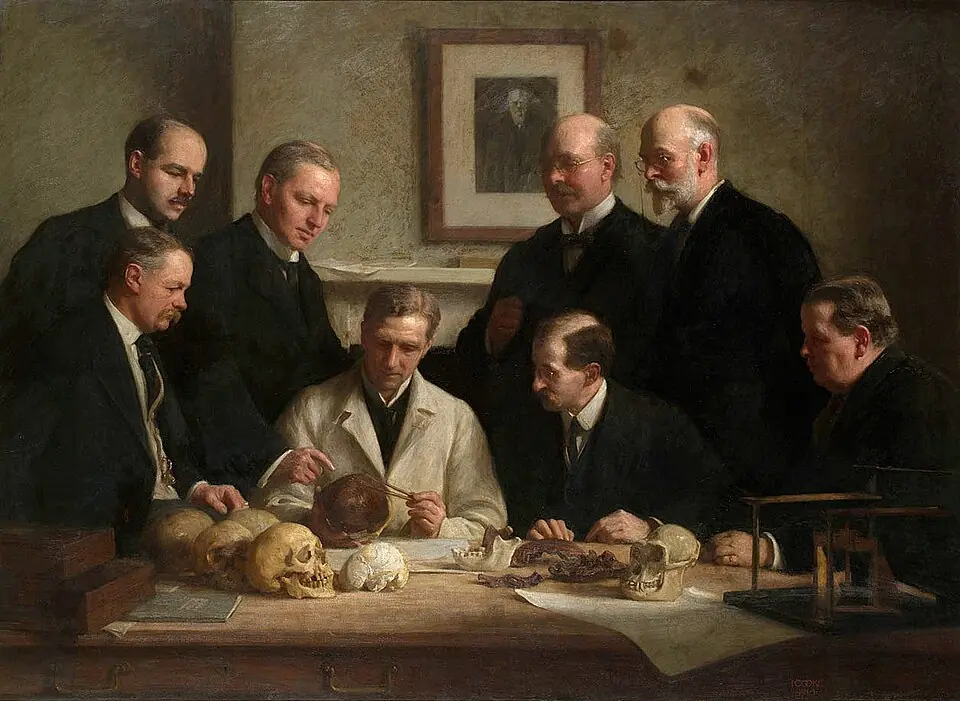
Most of these critics never handled the real bones. They studied plaster casts made at the museum in London by Frank Barlow, the technician painted standing at the back left of the Cooke portrait. A cast keeps the shape and loses the surface.
Miller and his allies had the right answer by 1916. Piltdown stayed in the textbooks for another thirty seven years.
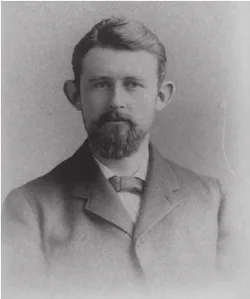
Deliberate malice could hardly have been more successful than the hazards of deposition in so breaking the fossils as to give free scope to individual judgment in fitting the parts together.Gerrit Smith Miller, "The Jaw of the Piltdown Man," Smithsonian Miscellaneous Collections, 1915.
Full story
Miller wrote that the breaks could hardly have been better placed if someone had made them on purpose, and then he blamed the gravel. Some historians think he privately suspected a hoax. Accusing respected men of fraud without proof would have damaged his own standing, so the critics argued anatomy and left the word forgery unsaid.
The objectors were mostly outside Britain, the real specimens were rarely shown to outsiders, and the weight of the British Museum sat on the other side.
Drawer VI 1915 to 1917
The second site
In 1915 Dawson sent Woodward two postcards. He had found more pieces of a second skull and another molar in a field about two miles from the pit.
Dawson died of blood poisoning on August 10, 1916. Woodward announced the second site to the Geological Society early in 1917.
A human skull and an ape jaw might land together in one gravel bed by bad luck. The same pairing in a second place looked like a real species. Even Keith came around.
Put the second site on the map
Choose each place. Read who was ever shown it.
Choose a place.
Schematic map. Towns and the river are placed from modern coordinates. The second field was never recorded, so it appears as a zone.
What makes a second find independent
Mark the conditions you think a real confirmation needs. Then look.
Nothing here is graded. Nobody sees your marks.
| The condition | Was it met at the second site |
|---|
Drawer VII 1913 to 1952
What got built on it
- 1913
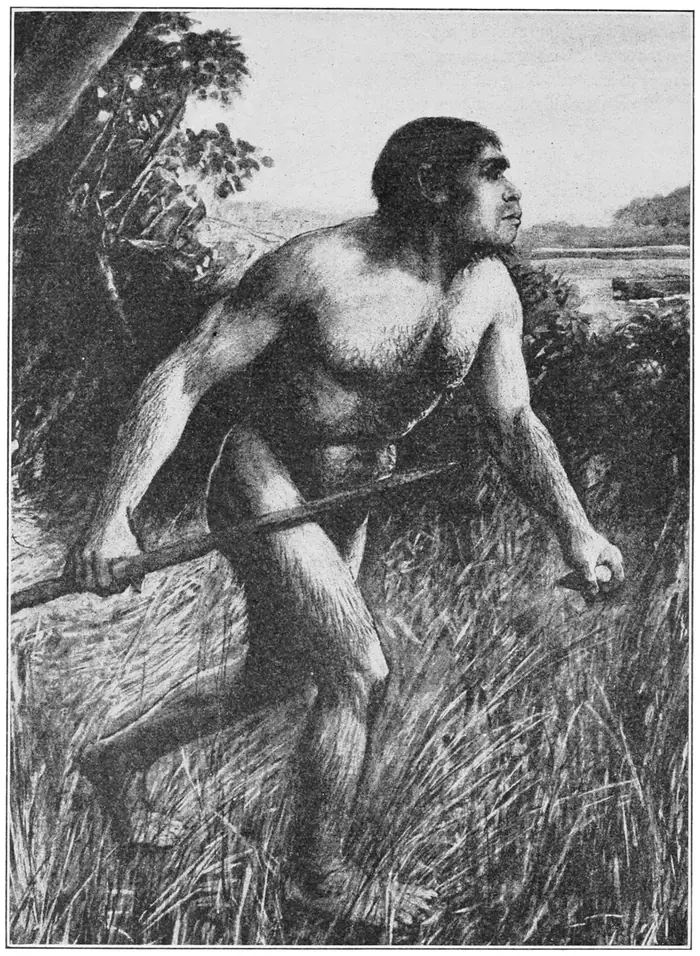
Popular Science Monthly prints an artist's picture of Piltdown Man hunting in tall grass.
- 1923
Max and Dave Fleischer release the film Evolution. Piltdown Man appears between the apes and the Neanderthals.
- 1924
Woodward retires and moves to Haywards Heath, close to the pit. He keeps digging there in his retirement and finds nothing more.
- 1935
Henry Fairfield Osborn, president of the American Museum of Natural History, calls Piltdown "a discovery of transcendent importance to the prehistory of man."
- July 1938
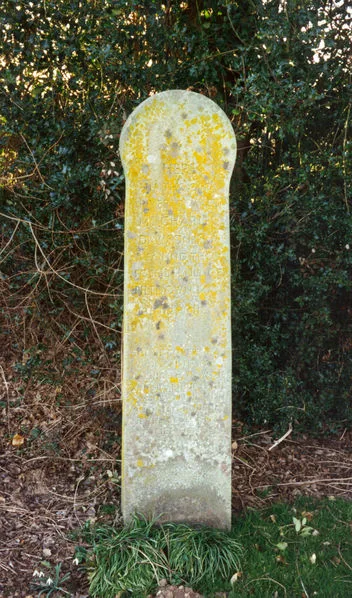
Keith unveils a stone monument at the pit, paid for mostly by Woodward. "The name of Charles Dawson," Keith tells the crowd, "is certain of remembrance."
- September 2, 1944
Woodward dies at 80. Nearly blind, he had dictated a book called The Earliest Englishman. It comes out in 1948.
- 1950 to 1952
The government's Nature Conservancy digs a permanent trench at the pit so visitors can see the gravel. In 1952 the pit becomes Britain's first geological National Nature Reserve.
Silent clip, 25 seconds, from Max and Dave Fleischer's Evolution, 1923, a science film shown in American theaters. The title card dates Piltdown Man to 100,000 years ago. Woodward had said 500,000. Public domain, from a print at the Internet Archive.
Transcript of the clip
Title card: "From skulls and skeletons found in Europe Science reconstructs the development of man." A skull resting in rock. Title card: "The Piltdown Man roamed England about 100,000 years ago." A sculpted bust of Piltdown Man turns toward the camera. The next title card begins the Neanderthal section.
Drawer VIII 1925
The fossil that was real
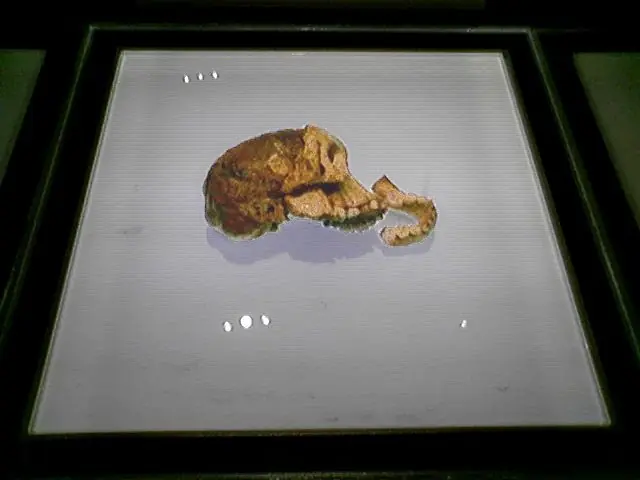
A limeworks quarry at Taung, South Africa, sent a fossil to Raymond Dart, a 31 year old anatomy professor in Johannesburg. It was the skull of a young child.
It had a small brain, humanlike teeth, and an opening for the spinal cord placed the way it is in creatures that walk upright. Dart described it in Nature on February 7, 1925, and named it Australopithecus africanus.
The answer from London came the next week, in the same journal. Keith, Elliot Smith and Woodward all doubted it was a human ancestor. A few months later Keith called the claim "preposterous."
The Taung child contradicted Piltdown, and the men judging it were the same men who had vouched for Piltdown.
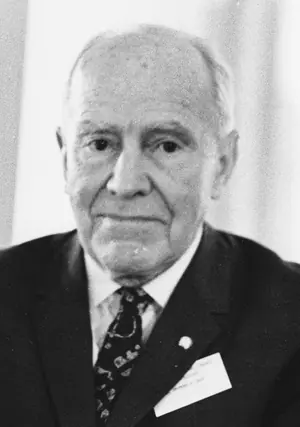
Professor Dart was right and I was wrong.Arthur Keith, letter to Nature, 1947, after more fossils like the Taung child turned up.
Full story
Grafton Elliot Smith called the Taung child "an unmistakable anthropoid ape." Woodward said it had little bearing on where human ancestors should be sought. Acceptance came slowly from the late 1940s, as Robert Broom found more fossils like it and Wilfrid Le Gros Clark examined them.
Piltdown was not the only reason Dart was dismissed. His paper was short, a child's skull is genuinely harder to read, and most of the field expected human origins in Europe or Asia. But a forged fossil had set the picture of what a correct answer should look like, and the correct answer did not match it.
Drawer IX 1949 to 1953
A test that measured time
Bone buried in the ground slowly soaks up fluorine from groundwater. Two bones that have lain in the same gravel for the same length of time should hold about the same amount.
Kenneth Oakley, a geologist at the museum, had already used this to show that the Galley Hill skeleton, another supposedly ancient Englishman, was a later burial. In 1949 he tested Piltdown.
The result said the bones were nowhere near 500,000 years old. But the 1949 method could not measure small amounts precisely, so it could not tell the jaw from the skull.
In July 1953, after a dinner at a London congress on human evolution, the Oxford anatomist Joseph Weiner drove home thinking about Piltdown. He realized nobody had ever tested what was inside the jaw.
The fluorine lab
The numbers below are the museum's own results, published in 1953 and 1955.
Before you run it. In 1953 C. F. M. Fryd, a chemist at the Department of the Government Chemist, measured the jaw with a method ten times more precise. Where will the jaw land?
Orange bands show how far off a single measurement could be. Fluorine is drawn on a scale where each step is ten times the last, so small amounts stay visible.
Drawer X November 1953
What it was made of
- 01Human skull pieces, probably medieval, only a few hundred years old, stained brown with iron and chromium salts.
- 02The lower jaw of an orangutan, broken off at the chin and at the hinge.
- 03Two molars filed flat by hand, with straight scratches visible under a microscope.
- 04A canine filed down and painted with Vandyke brown, an artist's paint. Its hollow center was packed with 19 grains of Piltdown gravel and sealed with a wedged pebble.
- 05When the jaw was drilled it gave off a smell of burning and came out in curled shavings, the way fresh bone does.
The New York Times · November 21, 1953
Piltdown Man Hoax Is Exposed
The museum's report came out that week.
The evidences of artificial abrasion immediately sprang to the eye. Indeed so obvious did they seem it may well be asked, how was it that they had escaped notice before?Wilfrid Le Gros Clark, who examined the teeth for the 1953 report.
That this House has no confidence in the trustees of the British Museum ... because of the tardiness of their discovery that the skull of the Piltdown Man is a partial fake.Motion put down in the House of Commons, November 1953, read out in the chamber on November 26. Hansard.
The museum made its own Piltdown jaw
In 1955 the museum took a female orangutan's jaw, broke it the same way, and filed down the molars. Drag across to compare it with the real Piltdown jaw.
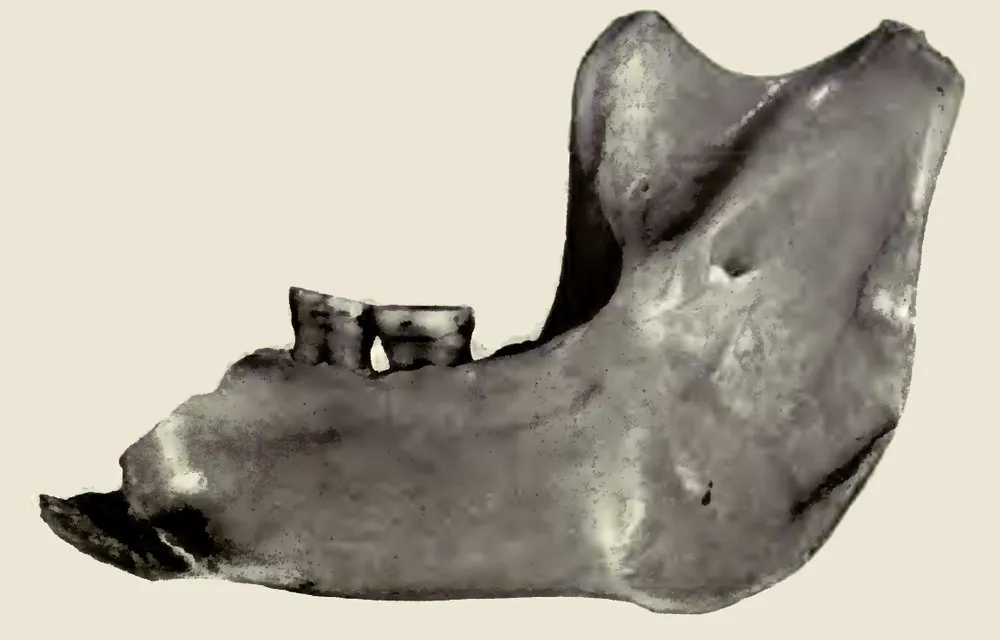
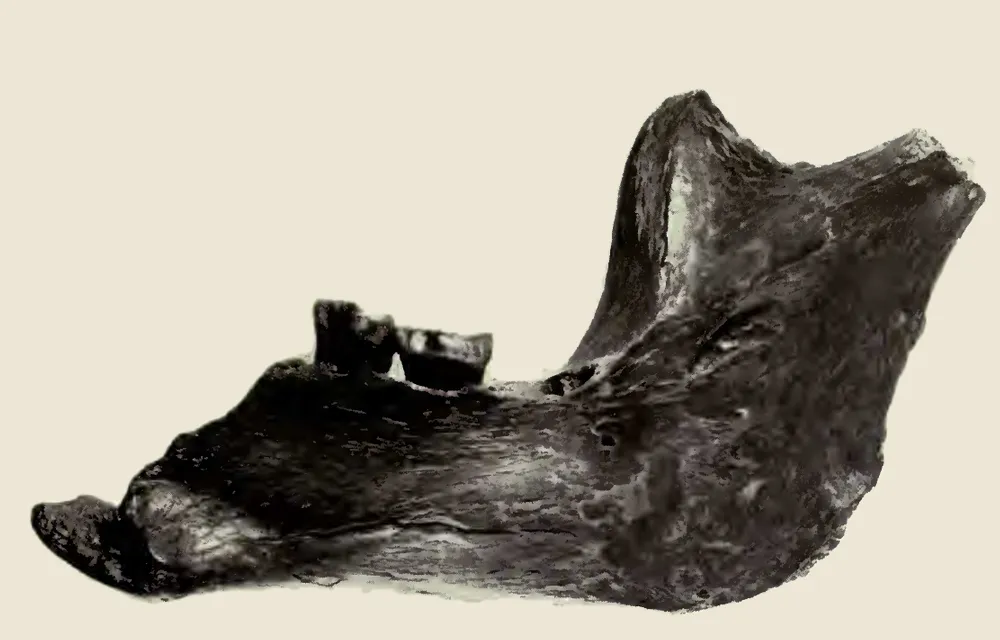 Piltdown jawOrangutan, broken and filed in 1955
Same view, inside face. Without the brown stain the two jaws are hard to tell apart. Plate 27, Bulletin of the British Museum (Natural History), Geology, 1955, via the Biodiversity Heritage Library.
The specimen
Five ways of looking at the same pieces. Drag to turn it, scroll or use plus and minus to zoom, arrow keys also turn it.
As modeled in 1913
The jaw on this card wears the 1953 photograph of the real Piltdown jaw on both faces. Everything white is plaster: the missing half of the jaw, the chin, the hinge, and most of the skull.
The white parts were the museum's guesses about the missing pieces.
Take it apart
Pull the plaster away. The orange marks show where the jaw is broken. The ghost shapes show what is gone: the chin, which tells ape from human at a glance, and the knob that hinges the jaw to the skull.
The 1955 report found that both were broken off deliberately.
The molars
Ape molars wear unevenly. These two are dead flat on top, and the two flat surfaces meet each other at an angle, as if each had been filed separately.
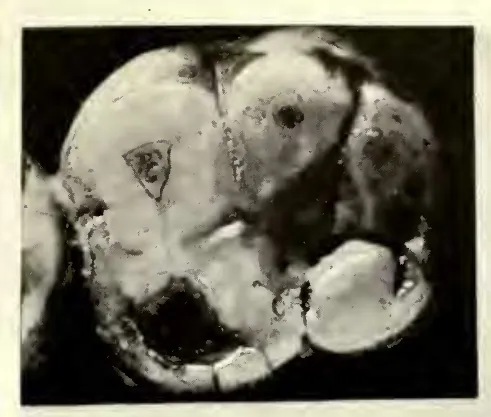 The second molar from above, magnified four times. 1953 report, plate 9.
Inside the canine
An X ray showed the hollow center of the canine packed with 19 loose grains of Piltdown gravel, all about the same size, with one hard pebble wedged in the opening. Gravel washed in by nature would include finer sand. The brown coat was artist's paint.
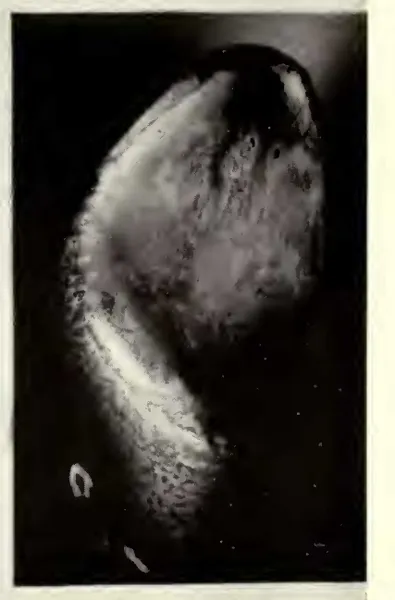
Drill it
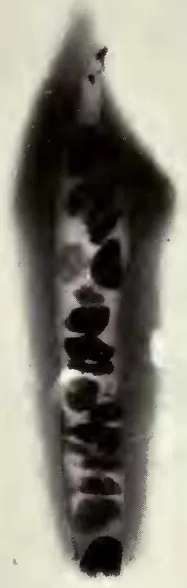
Under a drill, old bone crumbles into powder because the collagen inside has broken down. The skull pieces gave powder. The jaw gave long curls of shaving and a smell of burning, because it still held most of its collagen.
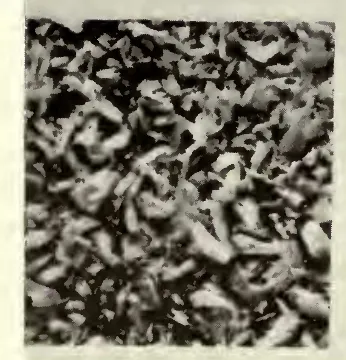
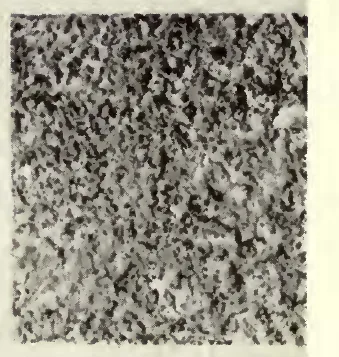
Orange marks only what a human hand altered.
A study model. The jaw's outline and surface come from the 1953 photograph. The skull pieces and canine are modeled from published drawings, not scanned.
Drawer XI 1953 to 2016
Who did it
Once the bones were exposed, the question became a whodunit. At least fifteen people were accused between 1955 and 1992. Nobody ever confessed.
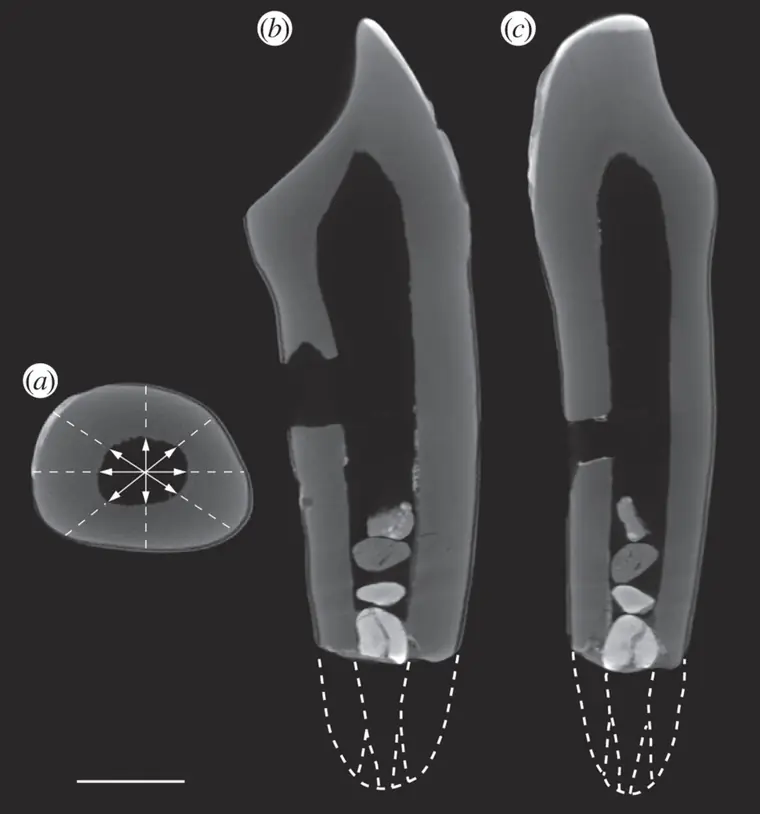
In 2016 a team led by Isabelle De Groote, with Chris Stringer of the Natural History Museum, tested every piece again with CT scans and DNA.
The suspect board
Read the case for and against each person. Mark anyone you would still suspect. Then apply the 2016 test.
Nothing was ever found at the site when Dawson was not there.De Groote and colleagues, Royal Society Open Science, 2016, on why their evidence points to Dawson.
Drawer XII What caught it
No confession, no witness
No document turned up and no witness came forward. The forgery was caught in a laboratory, starting with Oakley's fluorine numbers and Weiner's question about what was inside the jaw.
Dawson died in 1916 and was never questioned. Woodward died in 1944 still believing. Keith was 87 when the news came, and people close to him said it upset him terribly.
The 1938 monument still stands at Barkham Manor. Its words have never been changed.
Index Terms
Ten words you already met
Every term below names something you already watched happen in a drawer.
Met it: filed molars, painted canine, stained skull
Met it: a second field nobody else ever saw
Met it: the expectation board, Drawer III
Met it: the six conditions in Drawer VI
Met it: digging at the pit after 1914 never found another piece
Met it: what Miller and most critics studied
Met it: the fluorine lab, Drawer IX
Met it: the 1949 test could not separate jaw from skull
Met it: Miller, Boule and Matthew working from casts
Met it: the films, the monument, the reception of the Taung child
Index Note repair
Check what you wrote down
Six statements people often leave with. Each one is wrong. Open each and compare it with the record.