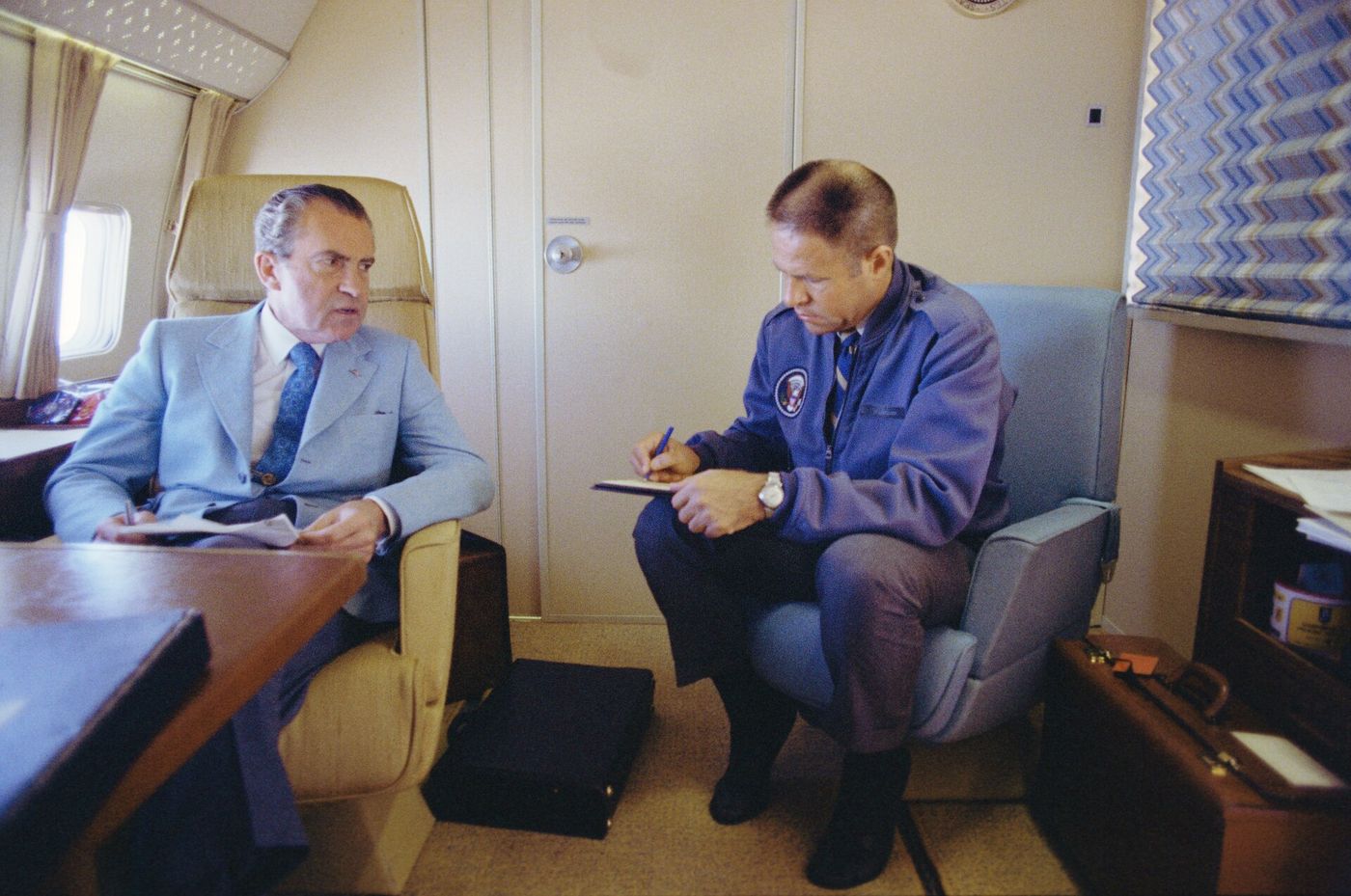
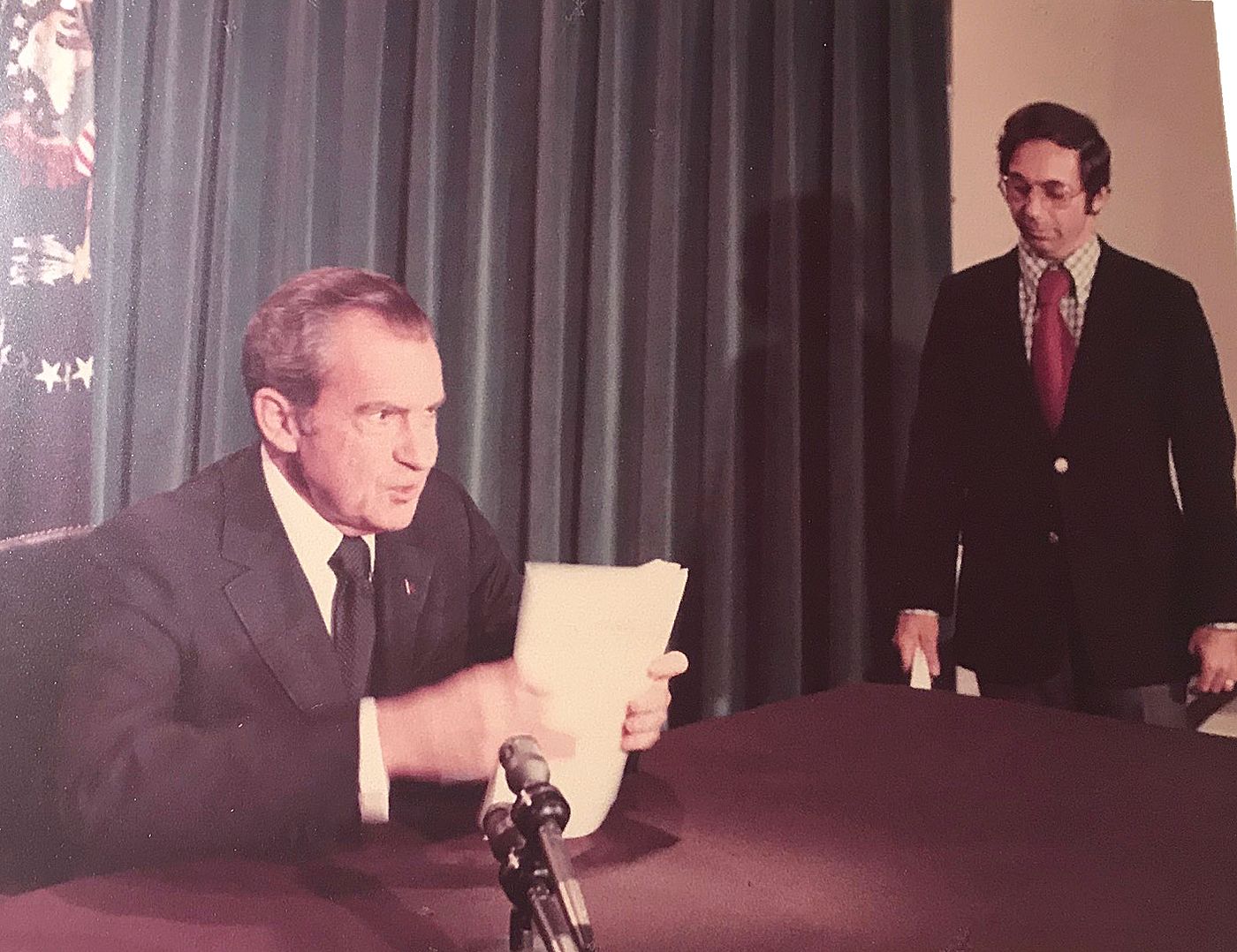
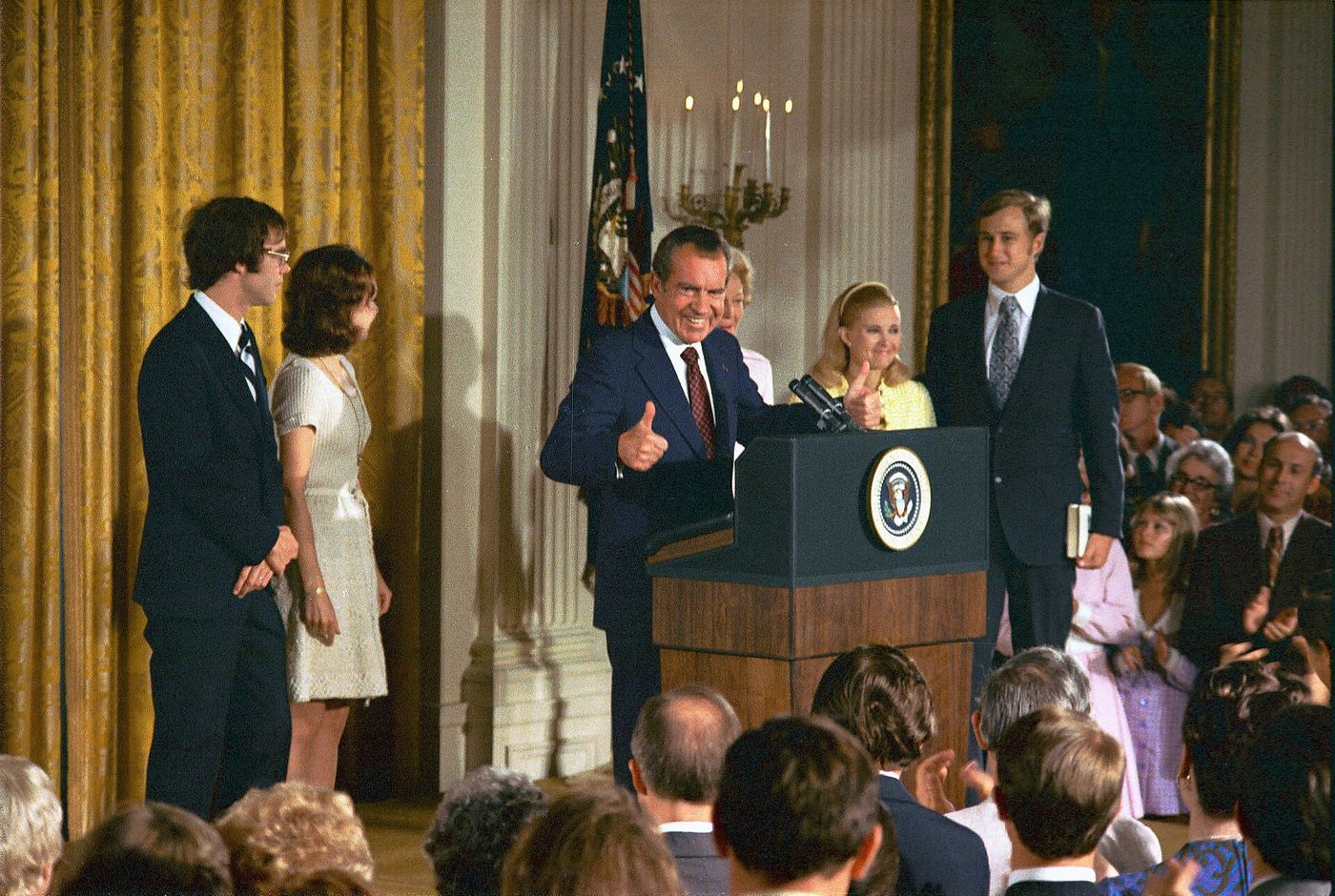
On June 17, 1972, five men were arrested inside the Democratic Party's offices at the Watergate building in Washington. The money in their pockets traced back to the committee working to reelect President Nixon. That November Nixon won 49 states.
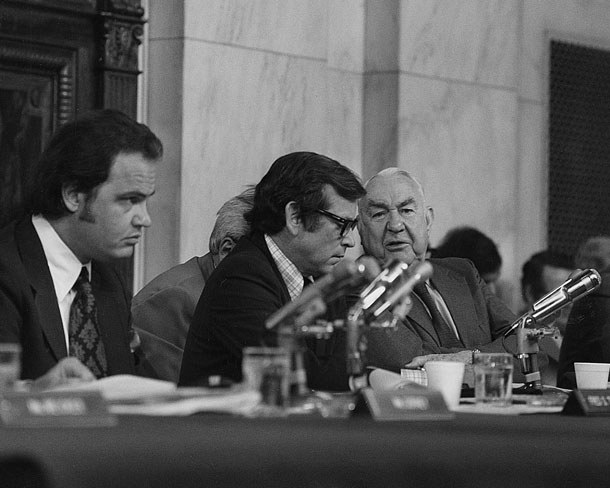
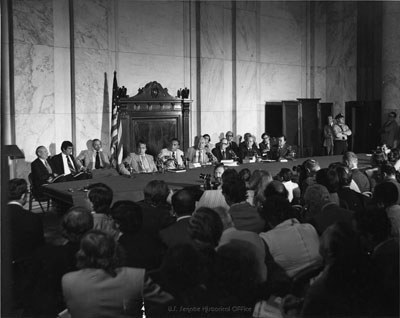
John Dean had been counsel to the President until Nixon fired him on April 30, 1973. On June 25 he spent the day reading a 245 page statement to the Senate Watergate Committee on live television. He said he had warned Nixon in the Oval Office on March 21, 1973.
I began by telling the President that there was a cancer growing on the Presidency and that if the cancer was not removed that the President himself would be killed by it.
John Dean, testimony to the Senate Watergate Committee, June 25, 1973
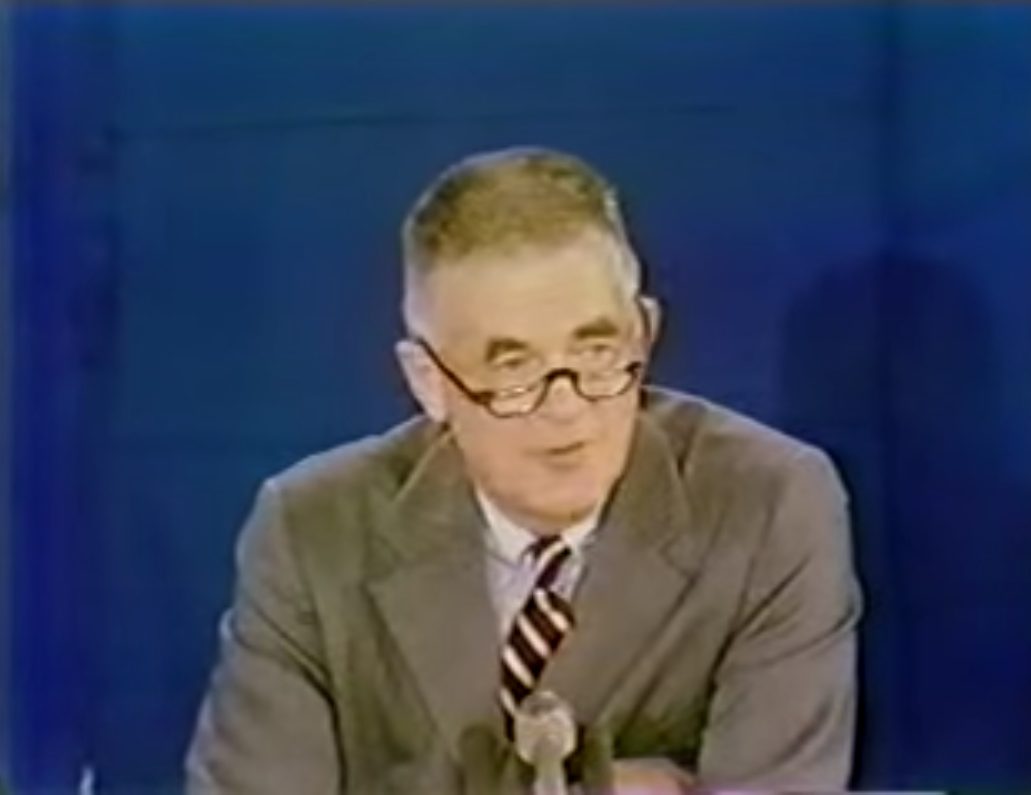
Dean had helped run the cover up himself, and the White House said he was blaming his boss to get a lighter sentence. Senator Howard Baker of Tennessee, the committee's top Republican, kept asking one question: what did the President know, and when did he know it?
Put these four kinds of evidence in order, strongest first. Use the arrows.
One defensible ranking, and why:
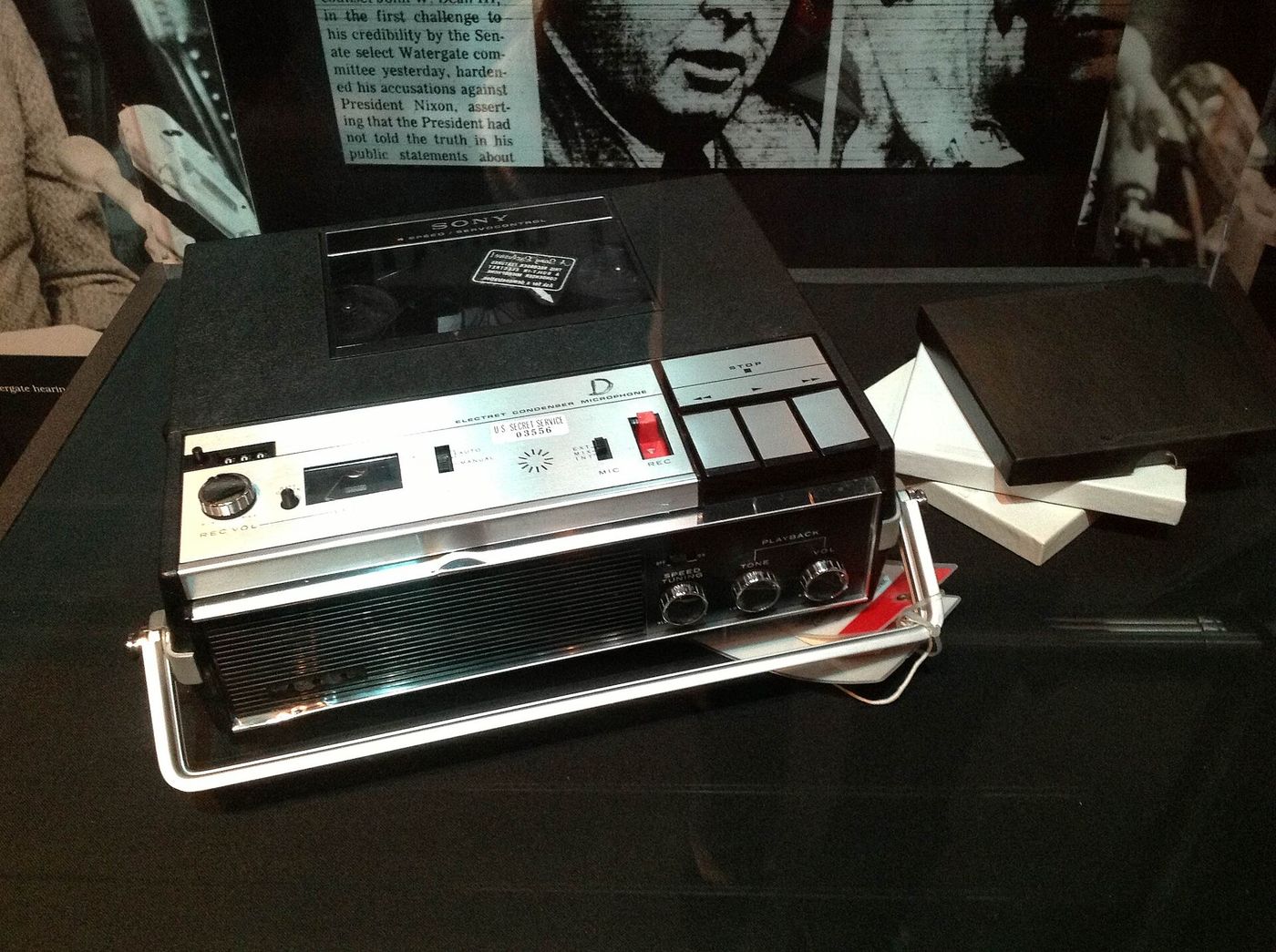
- A recording made the day it happened. It does not depend on anyone's memory or honesty, though it still needs a known date and known voices.
- Sworn testimony from someone in the room. Firsthand, and lying under oath is a crime. Memory still drifts.
- An anonymous source feeding tips to reporters. Useful for knowing where to dig, but nobody can question a person with no name.
- The accused person's public denial. It comes from the person with the most to lose. The bottom two are close.