On the night of March 8, 1971, most of America was listening to a boxing match.
Muhammad Ali and Joe Frazier, both undefeated, were fighting for the heavyweight title at Madison Square Garden. Fifteen miles outside Philadelphia, in the small town of Media, eight people who were not listening forced open a door on the second floor of a building across from the county courthouse. Behind it was an FBI office. By morning its filing cabinets were empty.
The FBI put 200 agents on the case and never arrested anyone. The burglars kept their secret for 43 years. What they found in those cabinets led to one of the biggest investigations of the FBI in American history.
Read every source. Answer in complete sentences. Cite sources by letter.
Part One · The BurglarySources A to C
A
The CasingWinter 1971
File 01
The plan belonged to William Davidon, a physics professor at Haverford College and a longtime antiwar activist. He was convinced the FBI was spying on peaceful protest groups. He was also convinced nobody would believe it without proof, and the proof was sitting in filing cabinets.
Somebody had to see the inside first. That job went to Bonnie Raines, 29, a mother of three children ages 8, 6 and 2. She called the FBI office in Media and asked for an interview, saying she was a Swarthmore College student researching careers for women in the FBI. She showed up in big glasses with her hair pinned up under a hat, and she never took off her gloves.
They were very gracious, and I think kind of flattered that I was interested in them.
Bonnie Raines, remembering the visit, 2014
She left with a map of the office in her head. There was no alarm and no guard. The filing cabinets were unlocked. A side door was blocked from the inside by a heavy cabinet.
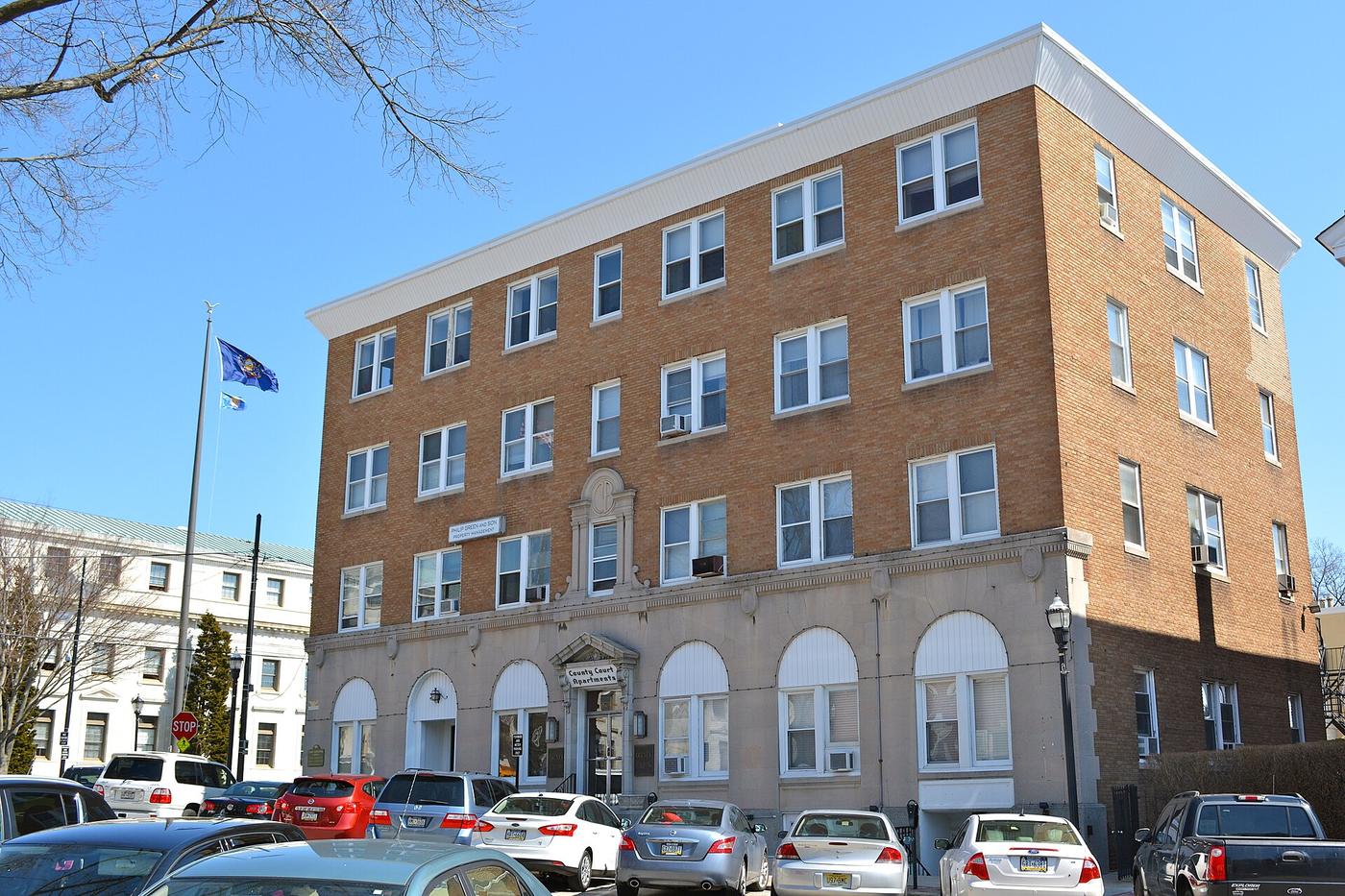
One Veterans Square. In 1971 the FBI rented rooms on the second floor, with apartments above. The Delaware County Courthouse stands at the left edge of the frame.One Veterans Square, Media, Pennsylvania, photographed 2014 · Smallbones, Wikimedia Commons, CC0
A1Bonnie Raines kept her gloves on for the entire visit. What was she trying not to leave behind, and why would it matter later?
A2The FBI was the most powerful police agency in the country. Using what she saw, explain why this particular office was an easy target.
B
The NightMarch 8, 1971
File 02
They picked the date on purpose. Ali and Frazier would be on the radio in every bar and living room, and the group hoped the building manager and the people in the upstairs apartments would be listening too.
Keith Forsyth, 21, was the lock picker. That evening he went to the main door and found a lock he had not expected, a kind he could not open.
I just about had a heart attack.
Keith Forsyth, on seeing the lock, 2014
The group talked about calling it off and voted to keep going. Forsyth moved to the side door, the one with the cabinet behind it. He picked its lock, snapped the deadbolt with a short crowbar and shoved the cabinet back far enough for a person to squeeze through. The others emptied the drawers into suitcases. They found revolvers in the office and left them where they lay.
Getaway cars carried four heavy suitcases to a Quaker farmhouse outside town. Around a table with sandwiches and beer, still wearing gloves, the eight of them started reading. Ralph Daniel, who pulled files out of the cabinets that night, remembered the moment fifty years later.
It was clear we had a gold mine.
Ralph Daniel, 2021
In New York, Frazier knocked Ali down in the fifteenth round and won a unanimous decision. The next day a caller read a statement to the Reuters news agency on behalf of a group nobody had ever heard of: the Citizens' Commission to Investigate the FBI.
B1The lock was a surprise, and the group voted to keep going anyway. What does that vote tell you about the people in the room?
B2The burglars were committing a felony, but they left the FBI's guns behind. Why would they make a point of that?
C
The FilesWritten 1970 · read March 1971
File 03
The suitcases held about 1,000 documents. Most of them were boring. One was an internal newsletter from the FBI's Philadelphia office, dated September 16, 1970, about how agents should deal with antiwar students and activists. Part of it is blacked out below. Guess what the reason was before you open it.
Declassify
FBI · PHILADELPHIA NEWSLETTER · SEPTEMBER 16, 1970 RE: NEW LEFT
There was a general consensus that more interviews with these subjects and hangers-on are in order for plenty of reasons, chief of which are it will enhance the paranoia endemic in these circles and will further serve to get the point across there is an FBI Agent behind every mailbox.
Tap the black bar to declassify
Another document, signed by Director J. Edgar Hoover on November 4, 1970, ordered agents to begin investigating Black student groups on college campuses.
Increased campus disorders involving black students pose a definite threat to the nation's stability and security and indicate need for an increase in both quality and quantity of intelligence information on Black Student Union (BSU) and similar groups...
J. Edgar Hoover, FBI Director, November 4, 1970
Open the DrawerEvery 100 files from Media
The FBI told the public its job was catching criminals. Before you open the drawer, guess how the files actually broke down.
Political surveillance · 40Manuals and routine forms · 30Bank robbery, murder, rape, interstate theft · 15Draft resistance and military desertion · 14Organized crime · 1
Inside the political files, who was being watched?
Left or liberal groups
200+
Immigrants
10
Right wing groups
2
Keep one limit in mind. Media was one small office outside Philadelphia. These numbers describe what agents in that office were doing, and they cannot tell you what every FBI office in the country was doing.
C1Read the declassified sentence. In your own words, what did the FBI want protesters to feel, and how would that feeling help the FBI?
C2Compare your guess to the drawer. Which number surprised you most, and what does it suggest about what the Media office cared about?
Part Two · The EnvelopesSources D and E
D
The MailMarch 1971
File 04
The burglars kept the originals hidden and mailed copies to five people. Three were reporters, at the Washington Post, the New York Times and the Los Angeles Times. Two were members of Congress: Senator George McGovern of South Dakota and Representative Parren Mitchell of Maryland. Every one of them was now holding stolen government documents.
At the Post, reporter Betty Medsger opened her envelope and showed it to her editors. The FBI confirmed the papers were real. Then Attorney General John Mitchell, the top law enforcement officer in the country, called two of the paper's editors and told them not to print a word. He warned that publishing
could endanger the lives or cause serious harm to persons engaged in investigative activities.
Attorney General John N. Mitchell, March 1971
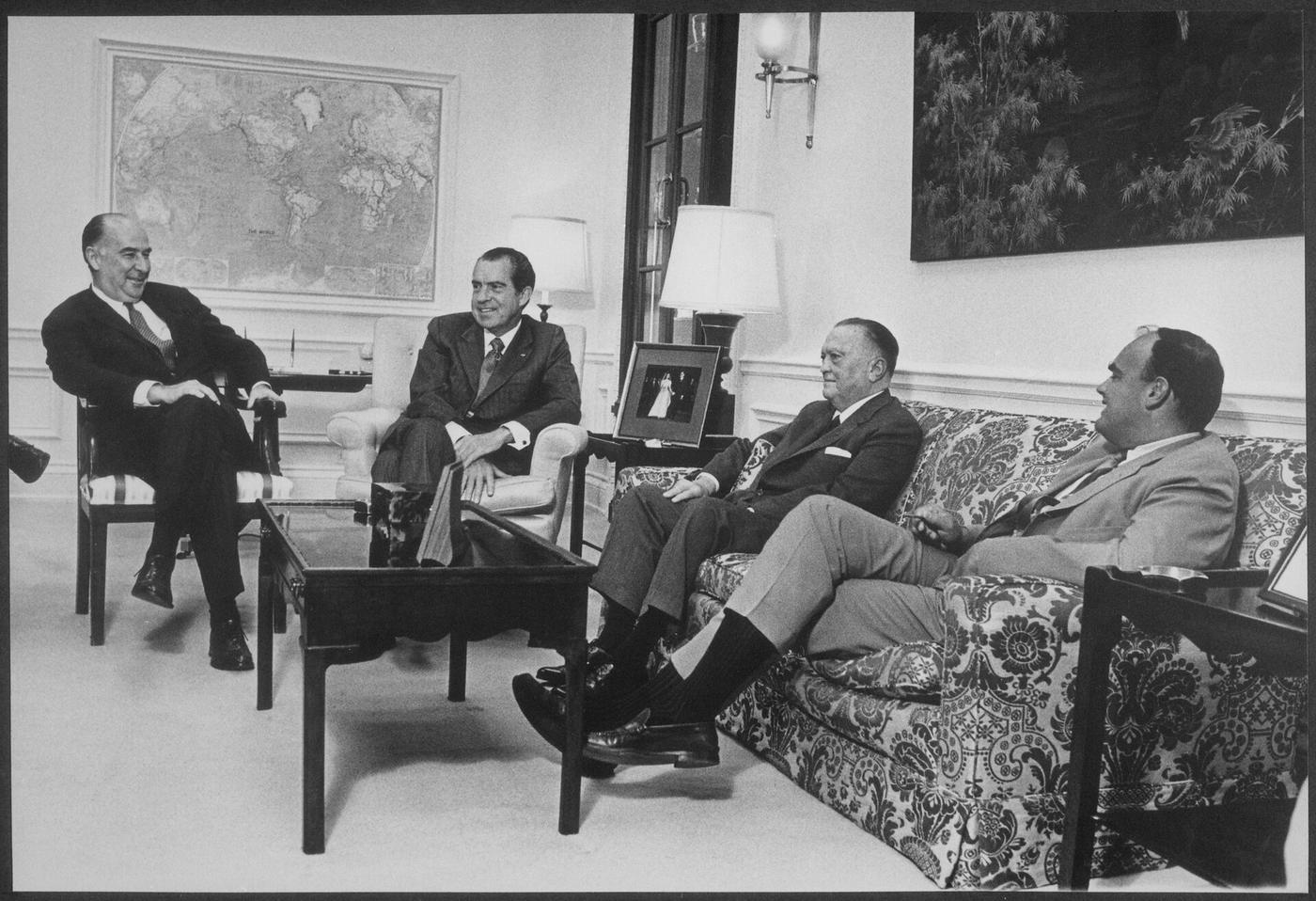
Eleven weeks after the burglary. From left: Attorney General John Mitchell, President Richard Nixon, FBI Director J. Edgar Hoover and White House adviser John Ehrlichman. Mitchell and Ehrlichman would both serve prison time for Watergate.The White House, May 26, 1971 · White House Photo Office, National Archives
Your Desk, 10 PMMarch 23, 1971
You run the paper. The FBI says the documents are real. The Attorney General says printing them could get people hurt. Your own lawyers say no. The presses start in a few hours. Make the call.
Senator George McGovern
Gave to FBI
Returned the documents to the FBI and did not make them public.
Rep. Parren Mitchell
Gave to FBI
Returned the documents to the FBI and did not make them public.
Los Angeles Times
Never arrived
Reporter Jack Nelson never received his envelope. It ended up in the hands of the FBI.
New York Times
Both
Gave the documents to the FBI but kept copies, and ran its own story the day after the Post.
Washington Post
Printed
Publisher Katharine Graham made the decision by about 10 PM. The front page on March 24, 1971 read: Stolen Documents Describe FBI Surveillance Activities.
2 of 5Printed the story
3 of 5Handed documents to the FBI
D1Both members of Congress returned the documents without making them public. Why might a politician be more nervous about holding stolen FBI files than a newspaper would be?
D2The Attorney General warned that publishing could get people hurt, and the Post printed anyway. Was that responsible? Defend your answer with a detail from this source.
E
The Word1971 to 1973
File 05
One document in the pile was a routing slip, the small form that tells a clerk where to send a file. Typed on it was a word nobody outside the FBI had ever seen.
Routing SlipFBI
ToFiles
Re
COINTELPRO
Recreated for this page
Carl Stern, who covered the Justice Department for NBC News, wanted to know what it meant. Officials refused to tell him. So he used the Freedom of Information Act, a 1966 law that lets any citizen request government records. The FBI refused again, and Stern sued. Judge Barrington Parker ruled in his favor, and on December 6, 1973, the Bureau handed over the files. That night NBC anchor John Chancellor told the country what the word meant.
Secret FBI memos made public today show the late J. Edgar Hoover ordered a nationwide campaign to disrupt the activities of the New Left.
John Chancellor, NBC Nightly News, December 6, 1973
The burglary produced the word. It took almost three more years, a reporter and a federal judge to find out what it meant.
E1The burglars found the word COINTELPRO but could not explain it. How did Stern get the answer, and why could he get something the burglars could not?
E2Stern broke no laws to get his documents. Why does it matter that a legal route to the truth existed?
Part Three · The ManhuntSource F
F
Medburg1971 to 2024
File 06
Hoover named the case MEDBURG and put about 200 agents on it. They had a sketch of the young woman who had come in for a research interview. They questioned John Raines, Bonnie's husband. They questioned Bob Williamson and Sara Shumer. They never questioned Bonnie. They left Davidon alone entirely, because he was already tied up in a separate federal case.
The Raineses had planned for the worst. If they went to prison, John's older brother and Bonnie's parents had agreed to raise the children.
Inside the Bureau, Hoover moved fast. He shut down 103 of the FBI's 538 small resident offices. On April 28, 1971, seven weeks after the burglary, the FBI formally ended every operation running under the name COINTELPRO. Ending the program on paper did not mean every kind of domestic spying stopped.
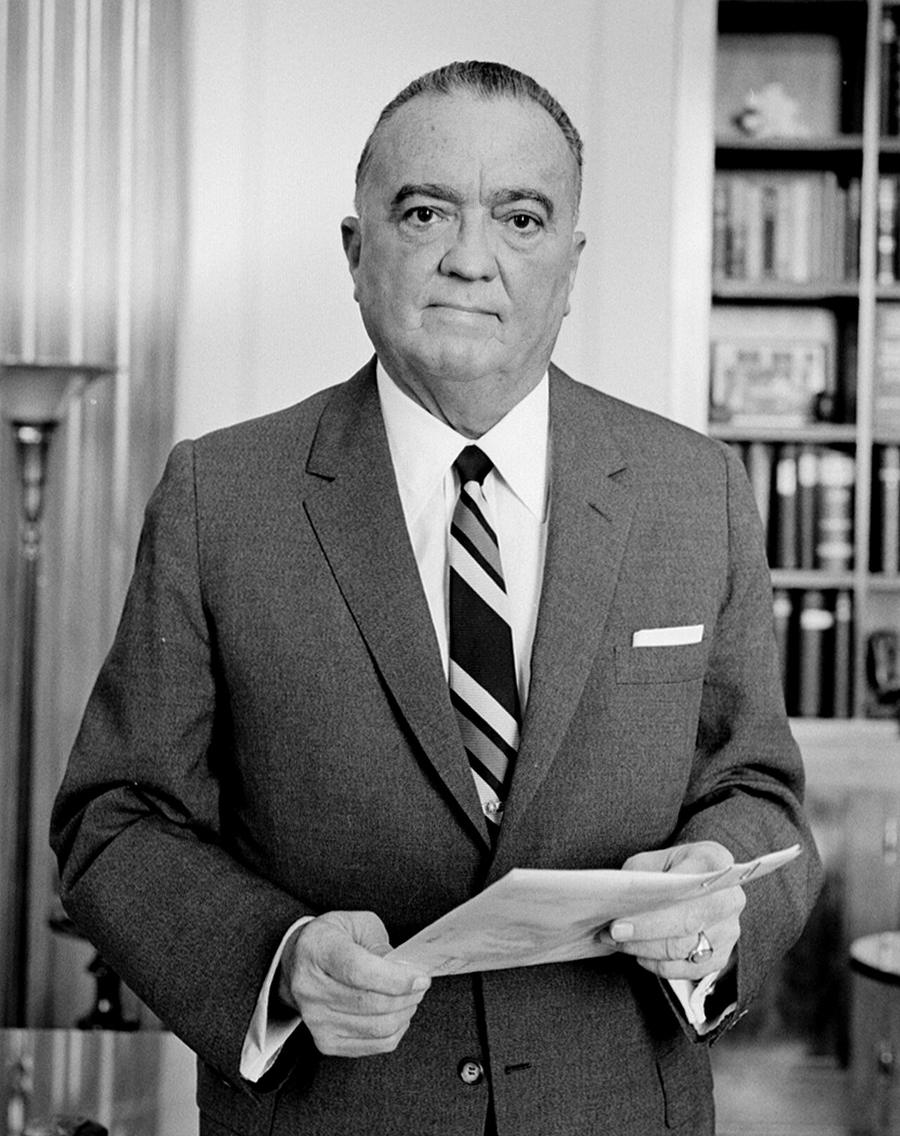
Hoover ran the Bureau from 1924 until he died on May 2, 1972. He never found out who robbed his office.J. Edgar Hoover, 1961 · Marion S. Trikosko, Library of Congress
The ClockDrag through 53 years
Federal law gave prosecutors five years to charge the burglars. After March 8, 1976, they could never be tried for it. Move the slider and watch the clock run out, then watch how long the names stayed hidden. The first six years move slowly. After 1977 the track speeds up.
March 8, 1971Date
1,827Days until they are safe
0 of 8Burglars publicly named
1971198520002024
F1The FBI had a sketch of Bonnie Raines and 200 agents on the case, and never questioned her. Give one reason a huge manhunt might still miss the person it is looking for.
F2Hoover ended COINTELPRO seven weeks after the burglary. Does that timing make the program look more defensible or less? Explain.
Part Four · What the Word OpenedSources G and H
G
The Committee1975 to 1976
File 07
In January 1975 the Senate created a special committee, chaired by Senator Frank Church of Idaho, to investigate the country's intelligence agencies. Its report on the FBI came out April 29, 1976. Using the Bureau's own paperwork, it found that between 1956 and 1971 the FBI approved 2,370 separate COINTELPRO actions against American groups and citizens.
Five ProgramsApproved by FBI headquarters, 1956 to 1971
Four programs were still running on the night of the fight. Seven weeks later all of them were shut down. The Black Nationalist program listed Dr. Martin Luther King Jr.'s Southern Christian Leadership Conference as a hate group.
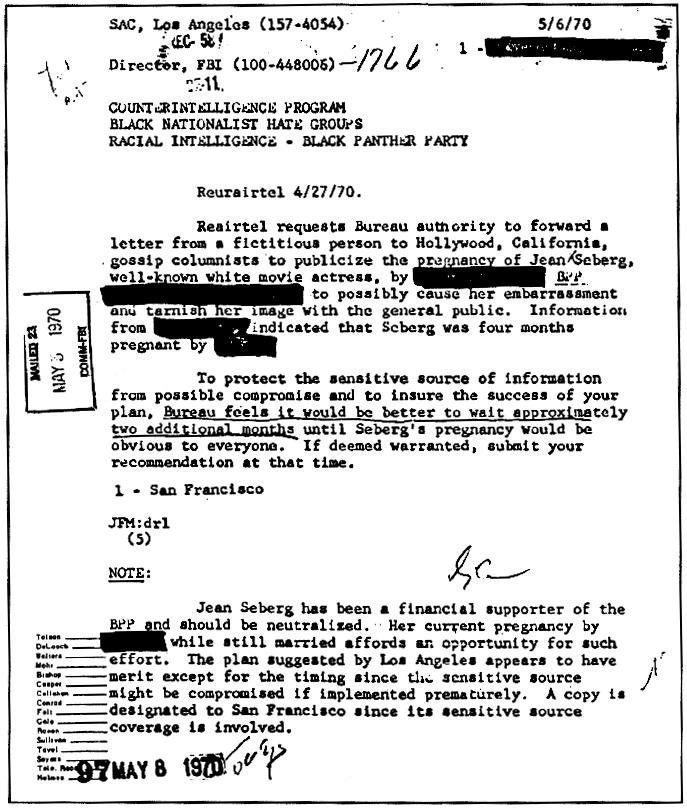
The documents also showed what an action looked like on paper. In April 1970 the Los Angeles office asked headquarters for permission to mail a letter from a made up person to Hollywood gossip columnists about the actress Jean Seberg, who gave money to the Black Panther Party. Headquarters wrote back that the plan had merit, and told agents to wait about two more months.
Read the first paragraph and the note at the bottom. The black bars are the FBI's own redactions.FBI memorandum, Director to Los Angeles, May 6, 1970 · released under FOIA
In November 1964 the Bureau had also mailed Dr. King an anonymous package with a letter and a recording. The committee confirmed the FBI sent it. King and the people closest to him read the letter as an attempt to push him toward taking his own life.
In May 1976 the new FBI Director, Clarence Kelley, said something no FBI director had said before.
We are truly sorry we were responsible for instances which are now subject to such criticism.
Clarence M. Kelley, FBI Director, May 1976
G1Find the phrase in the Seberg memo that says what the letter was supposed to do to her. Why does it matter that a plan like this was typed up, approved and filed?
G2Kelley apologized in 1976. Is an apology from a later director enough? What else would you expect an agency to do after something like COINTELPRO?
H
The Other Burglars1970 to 2005
File 08
In July 1970 President Nixon approved a secret plan, written by a young aide named Tom Huston, that would have let intelligence agencies open private mail and break into homes and offices. Hoover objected, and Nixon withdrew the plan within weeks.
A year later, after a government analyst leaked the Pentagon Papers to the New York Times in June 1971, the White House put together its own secret team to stop leaks. Its members called themselves the Plumbers. On June 17, 1972, six weeks after Hoover died, five men connected to that team and to Nixon's reelection committee were arrested inside the Democratic Party offices at the Watergate building. A security guard named Frank Wills had noticed tape holding a door latch open.
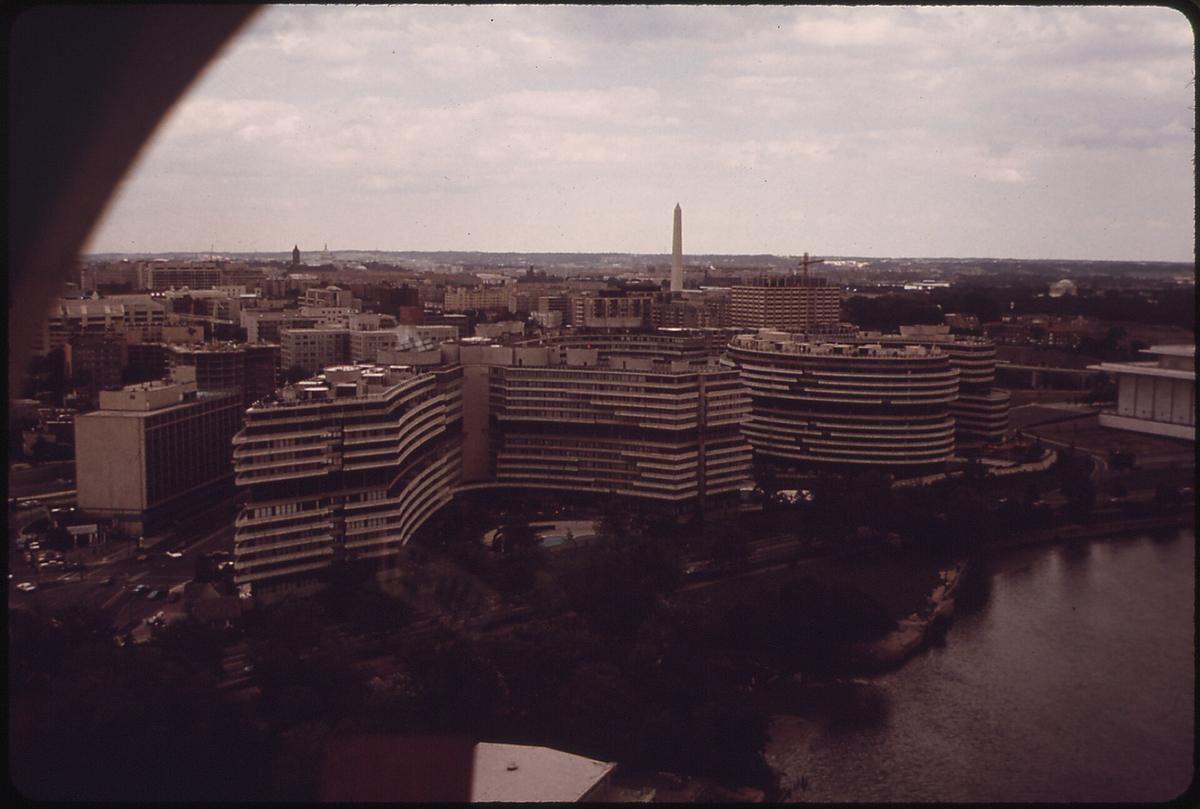
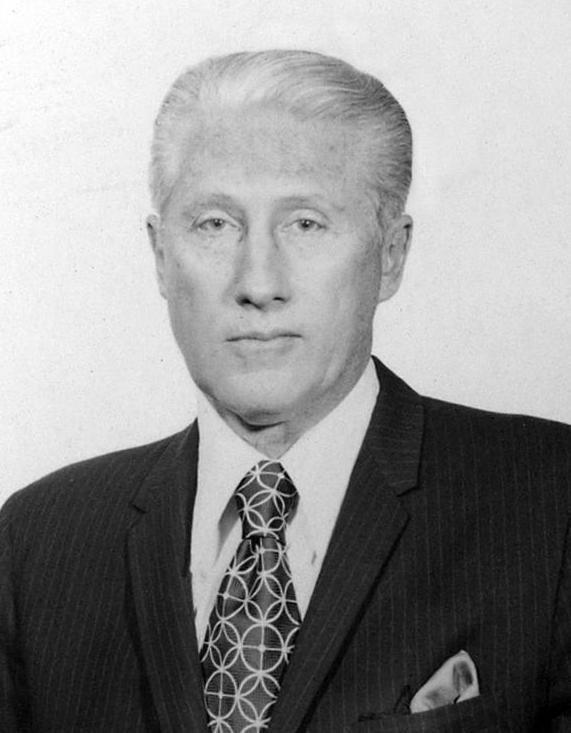
The Watergate complex, May 1973.Yoichi Okamoto · National ArchivesW. Mark Felt, number two at the FBI.FBI photograph, around 1972
The Media burglars were never caught. The Watergate burglars were arrested before dawn, and the investigation that followed ended with Nixon resigning on August 9, 1974.
One more twist. The second in command at the FBI during Watergate was Mark Felt. In 2005 he revealed that he was Deep Throat, the secret source who helped Washington Post reporters Bob Woodward and Carl Bernstein expose the cover up. In 1980 a federal jury had convicted Felt of approving FBI break ins, without warrants, at the homes of relatives and friends of antiwar radicals in 1972 and 1973. President Reagan pardoned him in 1981.
H1Both groups broke into offices to get files. Explain two differences between the Media burglary and the Watergate burglary. Think about who they worked for, what they wanted and how it ended.
H2Mark Felt helped expose Watergate and was also convicted of ordering illegal break ins. Does his crime change how you judge what he did as Deep Throat? Explain.
Part Five · The LedgerFour entries minimum per side
The case against the burglars
Evidence from the sources
1
2
3
4
What their files proved
Evidence from the sources
1
2
3
4
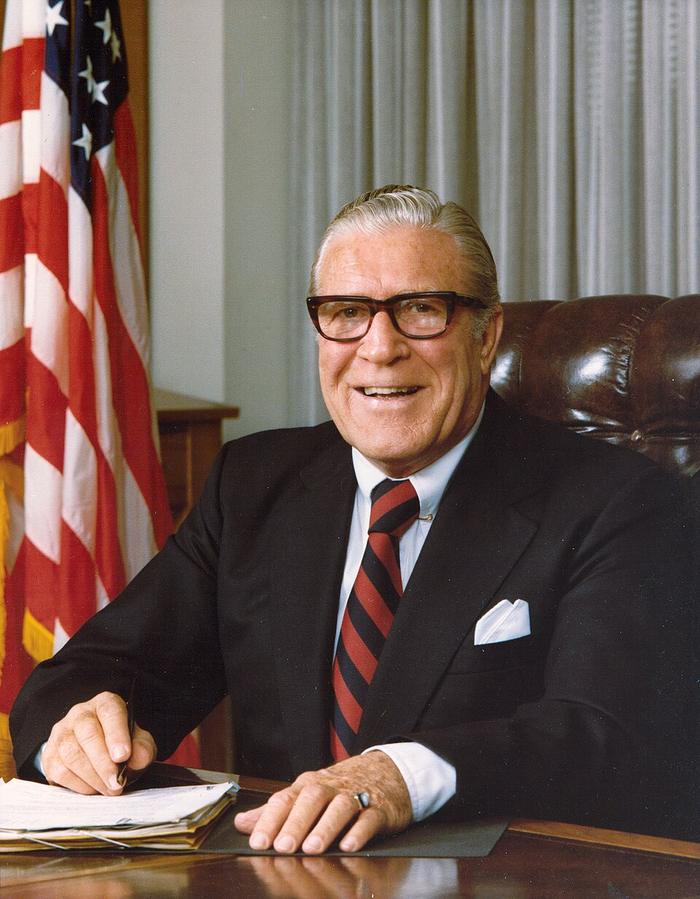
Clarence Kelley became director in 1973, after Hoover's death and a year of Watergate turmoil at the Bureau. His 1976 apology came five years after the burglary.Clarence M. Kelley · FBI photograph
Part Six · Take a Side200 words minimum · three sources minimum
Your argumentWord count 0 / 200
When you are finished, copy everything and paste it into the Classroom assignment. Your work saves in this browser as you type.
References
Daniel, R. (2021, March 7). Interview. In "Something had to be done": 50 years after FBI office burglary, San Rafael man admits role. San Francisco Chronicle.
Hamilton, J. (Director). (2014). 1971 [Film]. Maximum Pictures.
Medsger, B. (2014). The burglary: The discovery of J. Edgar Hoover's secret FBI. Alfred A. Knopf.
Medsger, B., Raines, B., & Forsyth, K. (2014, January 8). "It was time to do more than protest" [Interview]. Democracy Now!
Stern v. Richardson, 367 F. Supp. 1316 (D.D.C. 1973).
U.S. Senate Select Committee to Study Governmental Operations with Respect to Intelligence Activities. (1976). Final report, Book III: Supplementary detailed staff reports on intelligence activities and the rights of Americans. U.S. Government Printing Office.
Stolen reports reveal FBI undercover activities. (1971, March 26). The Harvard Crimson.