Mulberry Street, New York, about 1900 · Detroit Publishing Co., Library of Congress
US History 9 · Source Investigation
I Seen MyOpportunities
Tammany Hall and the Price of a Favor
New York 1858·Tweed 1871·Plunkitt 1905
If your apartment burned down in New York in 1890, the government offered you almost nothing.
Private charities helped some families, after an investigation that could take weeks. The person most likely to show up with a place to sleep and a new coat was a politician from Tammany Hall. He would not ask if you were a Democrat. He would remember you on Election Day.
The same organization stole tens of millions of dollars from the city. This investigation asks why so many people kept voting for it.
Read every source. Answer in complete sentences. Cite sources by letter.
Part One · The SourcesFour sources, 1858 to 1905
A
The CityNew York, 1890
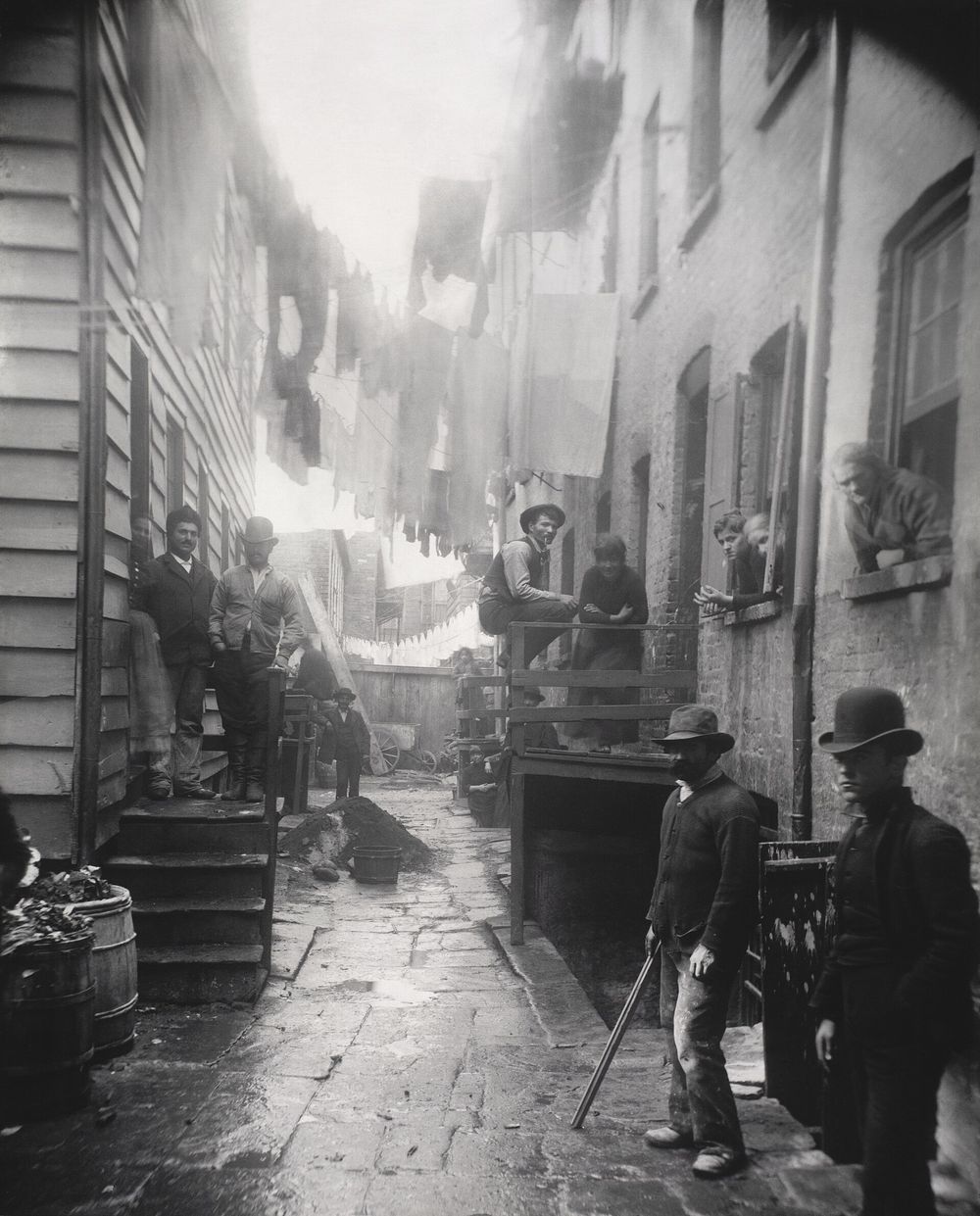
Factories and docks needed workers, and immigrants came by the hundreds of thousands. Most arrived with little money, spoke little English, and knew nobody. They crowded into tenements, narrow buildings where whole families shared one or two rooms.
Every 100 New Yorkers1890 census
Born in another country · 42Born in the United States · 58
The 1890 census counted 1,515,301 people in New York City. 639,943 of them were born in another country.
Bandits' Roost, an alley off Mulberry Street. The reporter Jacob Riis took this photograph to show readers how the poorest New Yorkers lived.Jacob Riis, 1888 · restoration by Adam Cuerden
The city's Democratic Party organization was called Tammany Hall, after the building where its leaders met. Tammany split the city into districts. Each district had a leader, and each leader had captains who knew every family on their blocks by name.
A1You just got off a ship in 1890 and need a job and a place to live. Use the source to explain why a Tammany captain might be the first person to help you.
B
The FavorGeorge Washington Plunkitt, 1905
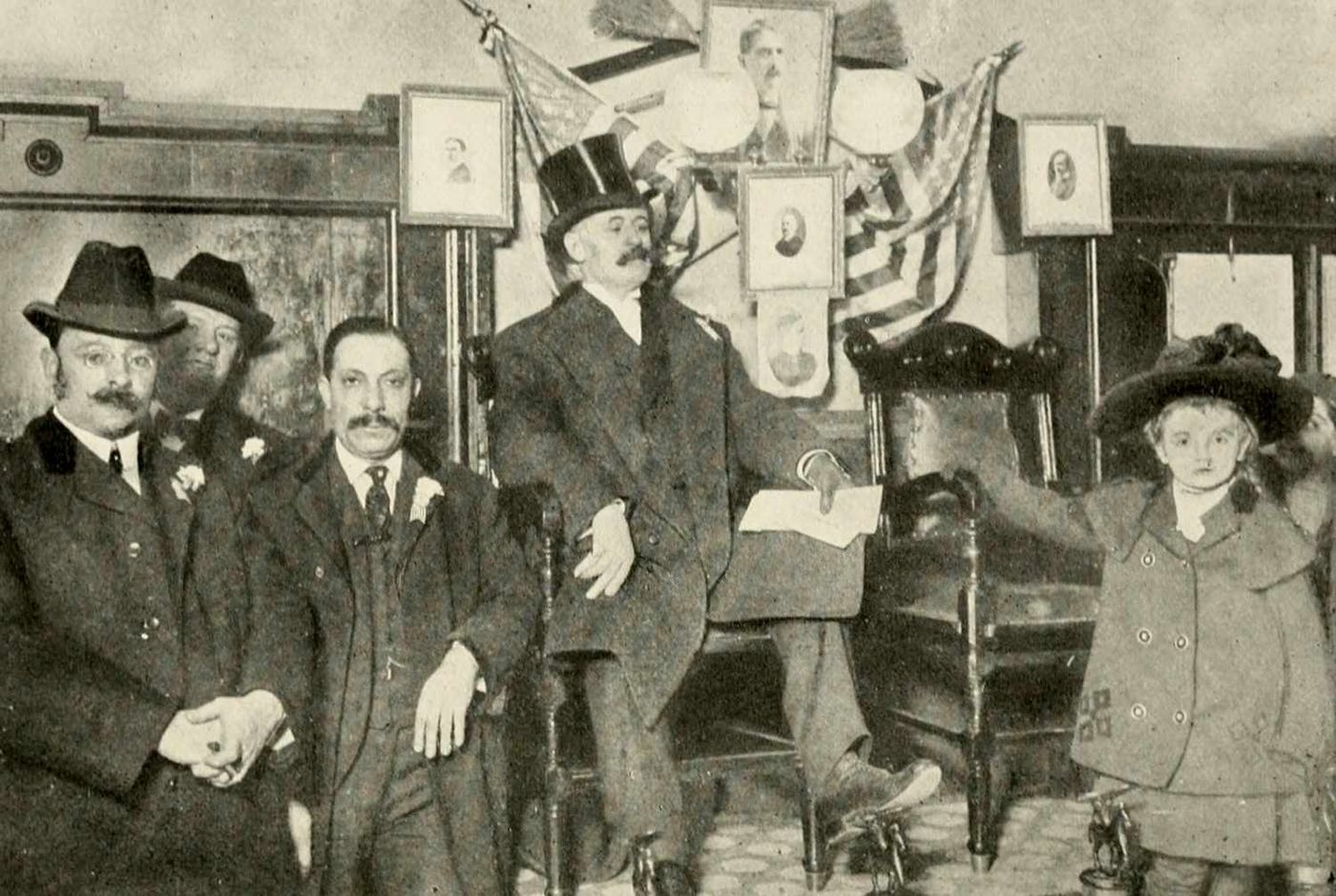
George Washington Plunkitt was a Tammany district leader on Manhattan's West Side. He was born in Manhattan in 1842 to an Irish family and got rich in politics. In 1905 a newspaper reporter named William Riordon published a book of Plunkitt's talks. Plunkitt gave them from his favorite spot, a shoeshine stand inside the county courthouse.
Plunkitt, in the top hat, at his shoeshine stand. Riordon called it his headquarters.From Plunkitt of Tammany Hall, 1905
Here is what Plunkitt said he did when a fire broke out in his district.
If a family is burned out I don't ask whether they are Republicans or Democrats, and I don't refer them to the Charity Organization Society, which would investigate their case in a month or two and decide they were worthy of help about the time they are dead from starvation.
George Washington Plunkitt, 1905
It's philanthropy, but it's politics, too, mighty good politics.
George Washington Plunkitt, 1905
Riordon printed a record of one ordinary day of Plunkitt's work. Open each hour.
One Day in the DistrictFrom Riordon's record, 1905
Opened 0 of 11
B1Pick two hours from Plunkitt's day. For each one, who got help, and what did Plunkitt get back? Use his words about philanthropy and politics in your answer.
C
The BossWilliam M. Tweed, 1858 to 1878
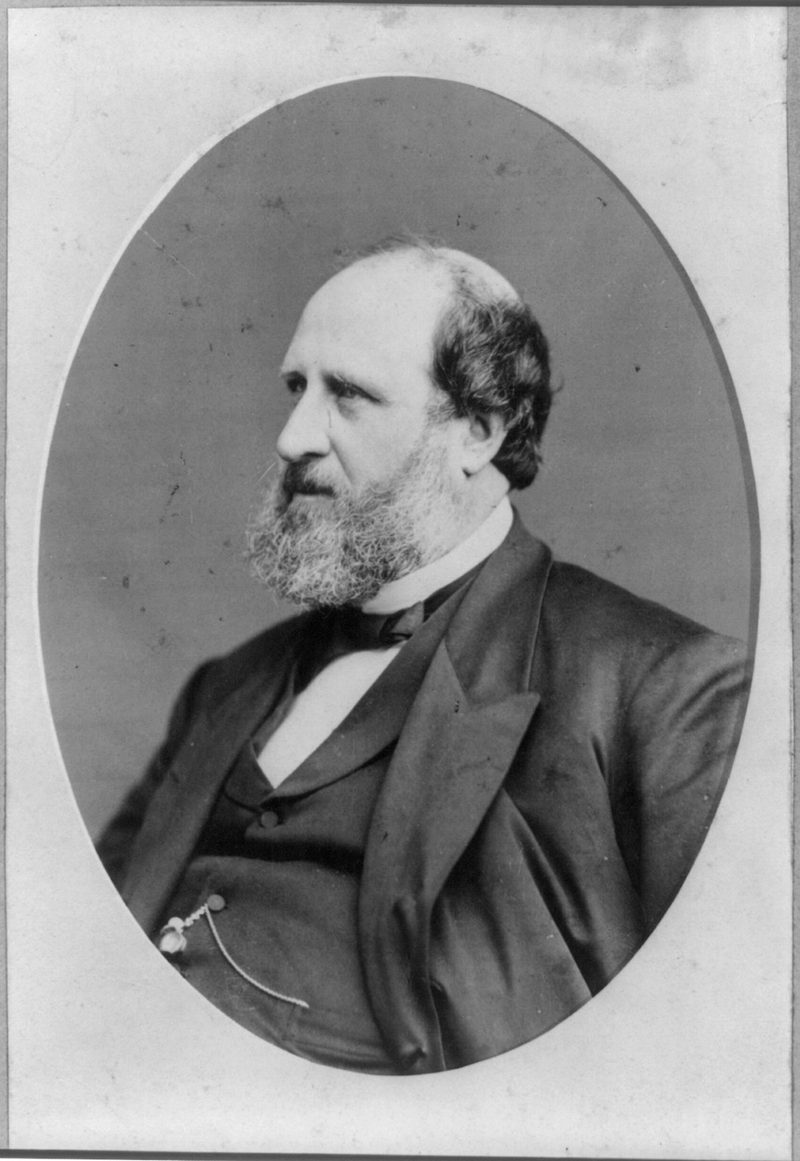
Before Plunkitt, Tammany belonged to William M. Tweed, called Boss Tweed. In the late 1860s Tweed and a few partners, known as the Tweed Ring, controlled the city's money. Their favorite project was a new county courthouse behind City Hall. In 1858 the city set aside $250,000 to build it.
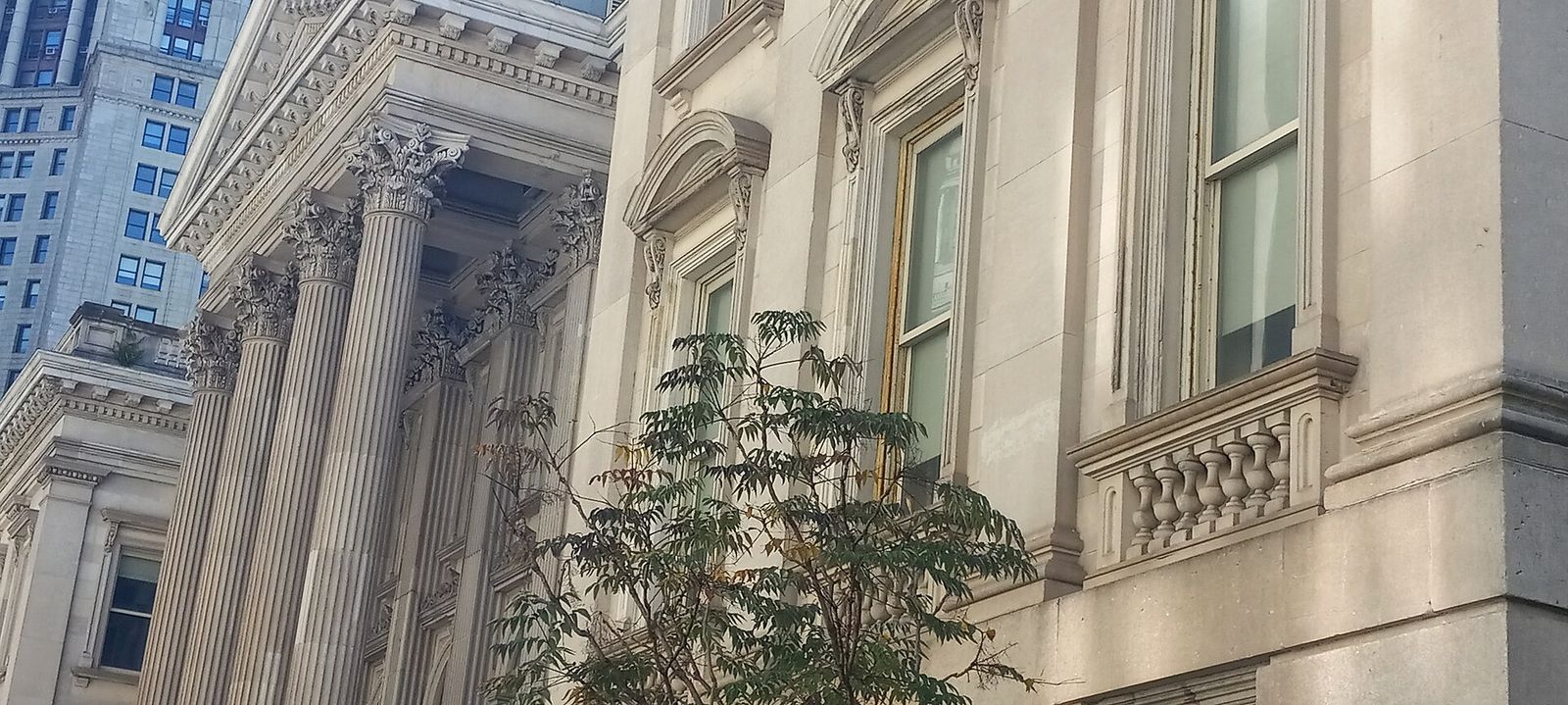
William M. Tweed.About 1870 · Library of CongressThe courthouse still stands on Chambers Street. Plunkitt's shoeshine stand was inside it.Tweed Courthouse, 2024 · Kidfly182, CC BY 4.0
Contractors who worked on the building sent the city huge bills. The Ring paid the bills with city money, and the contractors handed most of the extra back to the Ring. In July 1871 a county bookkeeper secretly copied the accounts, and the New York Times printed them. Open the invoices.
The Courthouse BillFrom the city's own accounts
Now add up the whole building. Each square is $250,000, the amount the city first set aside.
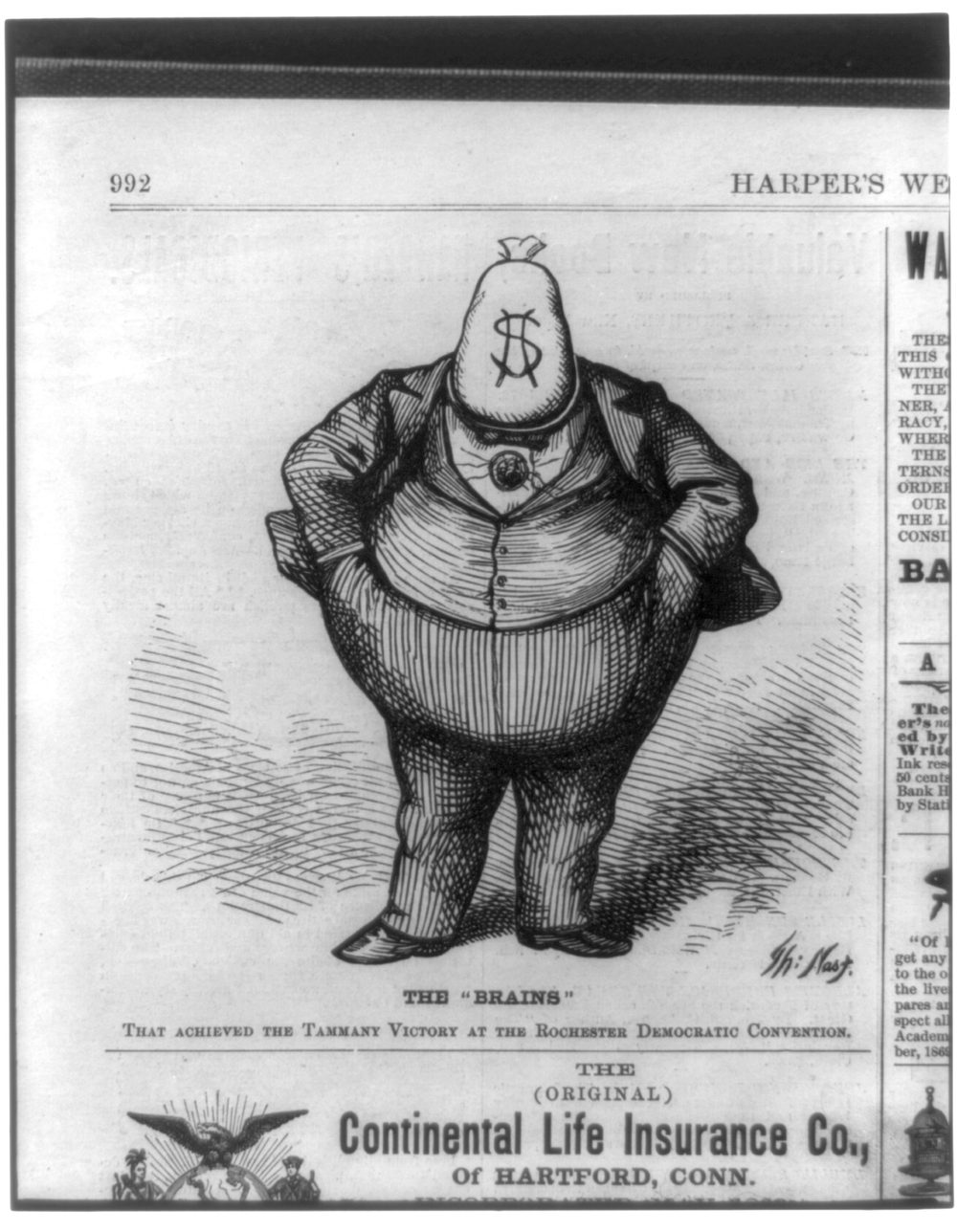
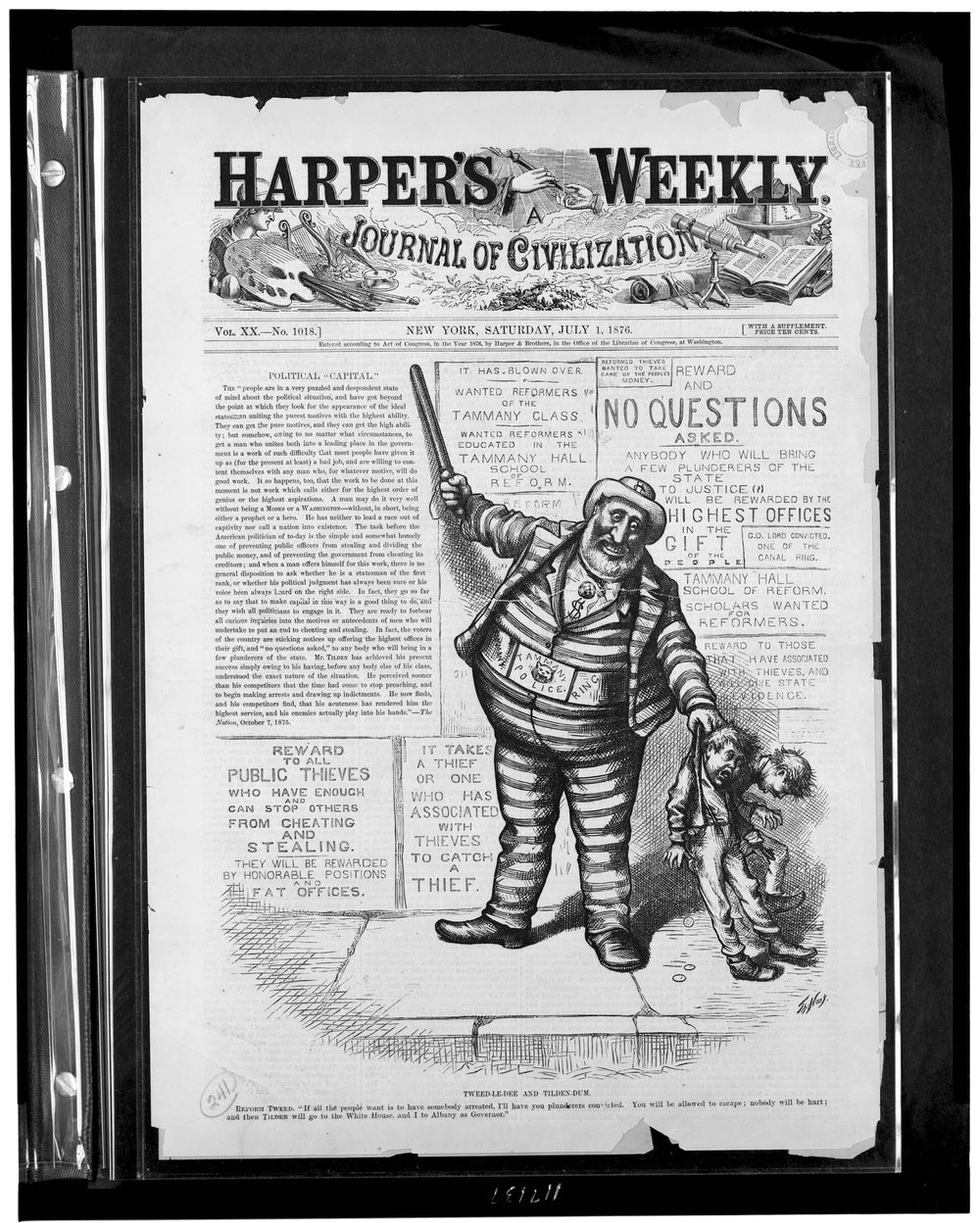
Thomas Nast, a cartoonist for Harper's Weekly, drew Tweed again and again. Many of Tweed's voters could not read English, but anyone could read a picture. Tweed is supposed to have said this about the drawings.
Stop them damned pictures. I don't care so much what the papers say about me. My constituents don't know how to read, but they can't help seeing them damned pictures!
Attributed to William M. Tweed, 1871
The Brains. Tweed with a moneybag for a head.Thomas Nast, Harper's Weekly, October 21, 1871Tweed in prison stripes. In 1876 officials in Spain used this drawing to recognize him.Thomas Nast, Harper's Weekly, July 1, 1876
Tweed was arrested in 1871 and convicted in 1873. He escaped from jail in December 1875, fled to Cuba and then Spain, and was caught when officials there recognized him from a Nast cartoon. He died in a New York jail on April 12, 1878. A city investigation later estimated the Ring stole between $25 million and $45 million. Tammany Hall kept running city politics for decades after him.
C1Explain in your own words how the Tweed Ring made money from the courthouse. Use one invoice as your example.
C2Why were Nast's pictures more dangerous to Tweed than newspaper stories?
D
Honest GraftGeorge Washington Plunkitt, 1905
Graft means using a government job to make money for yourself. Riordon's book says Plunkitt once held four public offices in the same year and was paid for three of them at the same time. He became rich, and he did not think he had done anything wrong. He explained the difference in his own words.
My party's in power in the city, and it's goin' to undertake a lot of public improvements. Well, I'm tipped off, say, that they're going to lay out a new park at a certain place. I see my opportunity and I take it. I go to that place and I buy up all the land I can in the neighborhood.
George Washington Plunkitt, 1905
When the city needed the land for its park, Plunkitt sold it to the city for much more than he paid. He called that honest graft. Stealing from the treasury or taking money from gamblers and saloonkeepers to leave them alone, he called dishonest graft.
I seen my opportunities and I took 'em.
George Washington Plunkitt, 1905
Honest or Dishonest?Plunkitt's rules against the law
Decide how Plunkitt would label each deal.
A city official learns a new park is coming, buys the land cheap, and sells it to the city for a big profit.
Plunkitt: honest. This is his own example. Today a public official who profits from secret government plans can be charged with breaking conflict of interest laws.
A police captain takes money from a gambling house every week so his officers leave it alone.
Plunkitt: dishonest. He said taking money from gamblers and saloonkeepers was the kind of graft he would never touch. It was a crime then and it is a crime now.
A district leader gives city jobs to the men who worked hardest for his party on Election Day.
Plunkitt: honest. He thought jobs were the reward for loyal party workers. New York passed a civil service law in 1883 requiring tests for many government jobs. Plunkitt called civil service reform a curse.
Plunkitt told Riordon that even if his worst enemy wrote the words on his tombstone, this was the most the enemy could say about him. He died on November 19, 1924, at 82.
George W. Plunkitt. He Seen His Opportunities, and He Took 'Em.
George Washington Plunkitt, 1905
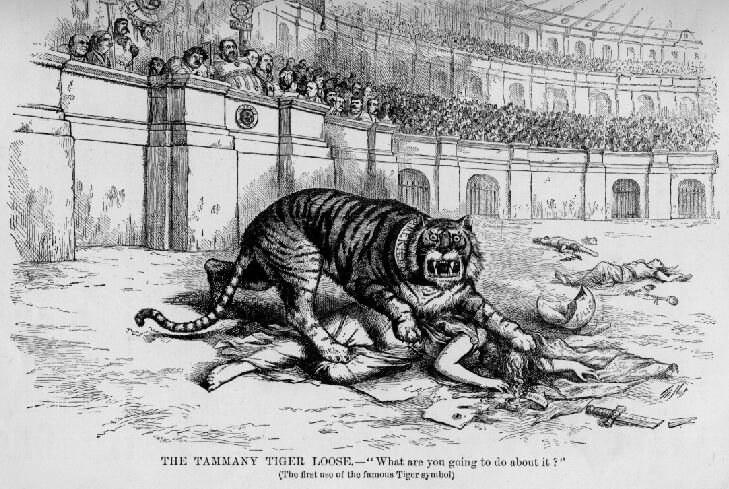
The Tammany Tiger Loose. Nast drew Tammany as a tiger tearing apart the Republic while Tweed watched like an emperor. The tiger became Tammany's symbol for as long as Tammany lasted.Thomas Nast, Harper's Weekly, November 11, 1871
D1Plunkitt said his park land deal was honest. Who lost money in that deal?
D2Plunkitt said this was the worst thing an enemy could put on his tombstone. Why did he think it was not an insult?
Part Two · The LedgerThree entries per side
What the machine gave
Evidence from the sources
1
2
3
What the machine took
Evidence from the sources
1
2
3
Part Three · Take a Side100 to 150 words · two sources
Word count 0 / 100 to 150
When you finish, copy everything and paste it into the Classroom assignment. Your work saves in this browser as you type.
References
Ackerman, K. D. (2005). Boss Tweed: The rise and fall of the corrupt pol who conceived the soul of modern New York. Carroll & Graf.
Riis, J. A. (1890). How the other half lives: Studies among the tenements of New York. Charles Scribner's Sons.
Riordon, W. L. (1905). Plunkitt of Tammany Hall: A series of very plain talks on very practical politics. McClure, Phillips & Co.
The house that Tweed built. (1965, October). American Heritage, 16(6).