GRANTDESK STORY · USH9 L014
Unions & Collective Bargaining
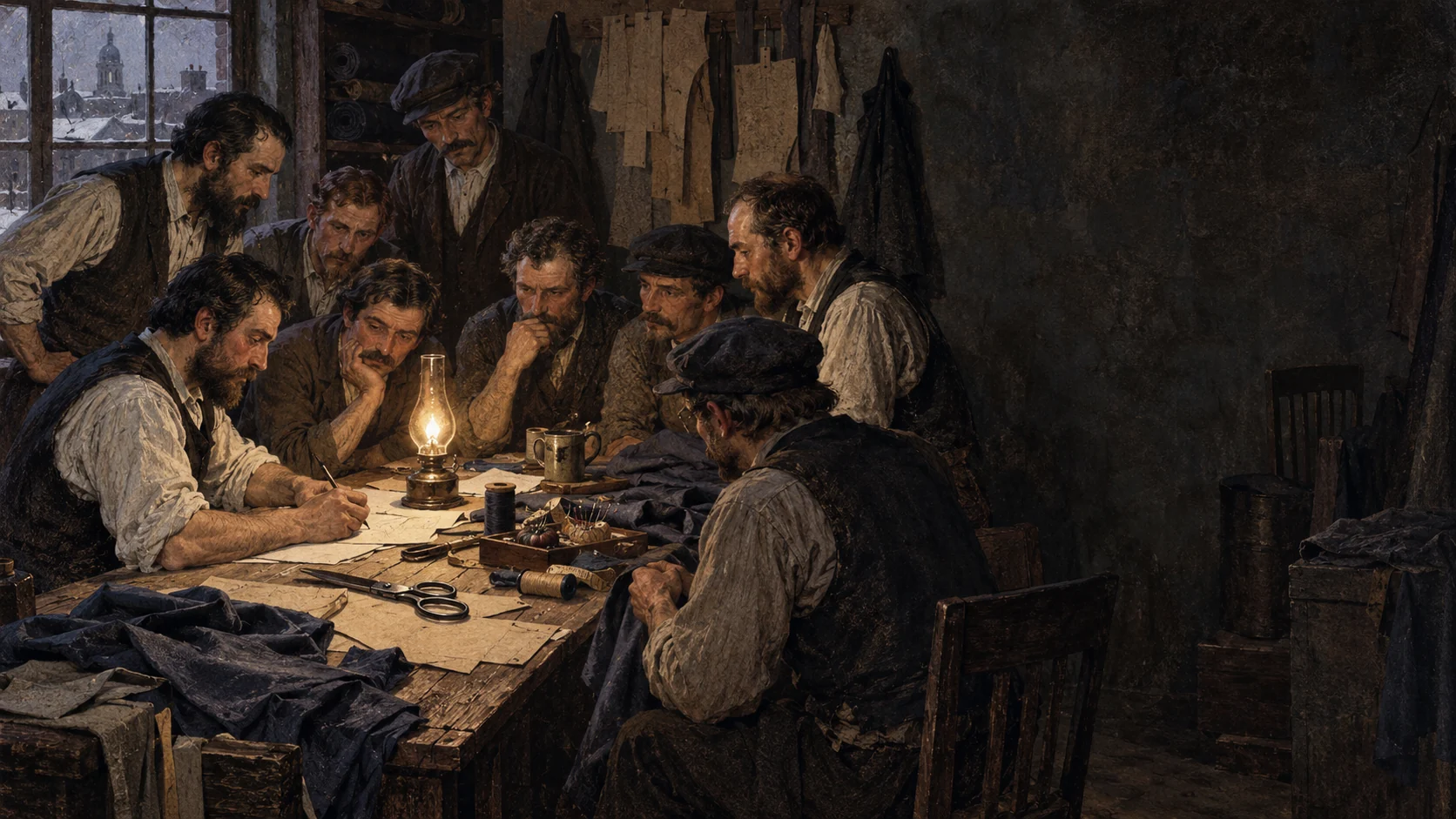
Illustrated reconstruction of Philadelphia garment cutters meeting privately in 1869
INDUSTRIAL AMERICA · 1869–1893

Unions & Collective Bargaining

A tiny secret labor society becomes the largest labor organization in the country, defeats one of America’s richest railroad owners, grows almost sevenfold—and then collapses with astonishing speed.

What changes when workers stop negotiating as individuals and begin acting together?
Scroll to enter the story ↓
I
ORIGINS

Why organize at all?

Before the Knights become powerful, the first thing to understand is the problem they were trying to solve: one worker had little leverage, and the law gave organized labor very little protection.

Garment cutters meeting around an oil-lit table
PHILADELPHIA · DECEMBER 1869

A movement starts in the dark.

The Knights of Labor began when Uriah Stephens and eight other Philadelphia garment cutters formed a secret labor organization. Secrecy made sense in a world where organizing could cost a worker his job.

The organization eventually tried something much bigger than protecting one trade: unite people divided by job, skill, race, sex, and region into one national movement.

The artwork is an illustrative reconstruction. Historical accounts most commonly identify nine founders in total: Stephens plus eight other garment cutters.
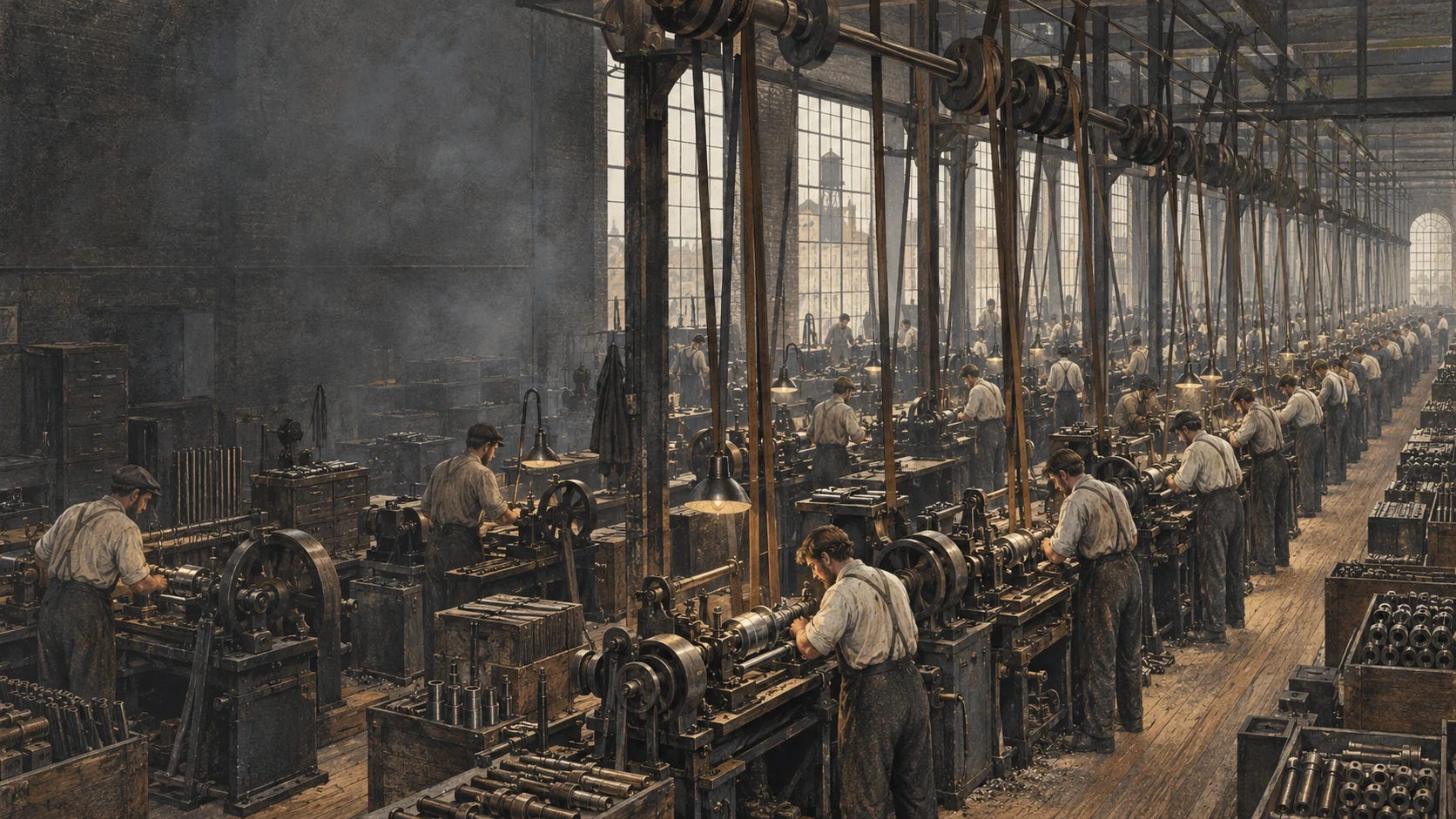
Long rows of workers operating similar machines in a nineteenth-century factory
THE BASIC LOGIC

One worker is replaceable.

A single employee can be fired or replaced without stopping an entire operation. Collective action changes the employer’s problem. Replacing a large share of a workforce at once requires time, recruiting, training, supervision, and money.

That is the logic behind collective bargaining: workers negotiate as a group rather than as isolated individuals. But solidarity immediately creates another question—who belongs in the group?

CONCEPT MODEL · NOT HISTORICAL DATA
1 workerAn individual personnel problem.

1 worker — An individual personnel problem.

What happens operationally
The line keeps running. One machine stands idle until a replacement is hired.
The employer’s problem
Hire one person. The cost is a day of output and an afternoon of paperwork.
The workers’ problem
The entire cost of refusing falls on one household.
In this story
C. A. Hall was one worker. On February 18, 1886 the Texas & Pacific fired him after a Knights meeting — a decision the company could make on its own.

10 workers — A disruption an employer may still absorb.

What happens operationally
One crew stops. Other shifts and nearby shops cover the gap.
The employer’s problem
Recruit ten replacements, or simply wait the ten out.
The workers’ problem
Small enough that every striker can be named, replaced, and refused work elsewhere.
In this story
This is the scale at which a single local assembly acts alone — and the scale at which Powderly usually preferred arbitration to a strike.

100 workers — Replacement now requires real recruiting and coordination.

What happens operationally
A whole shop stops, and the work that depends on that shop backs up behind it.
The employer’s problem
Finding, training and supervising 100 replacements costs weeks and wages before it produces anything.
The workers’ problem
It now takes a strike fund. Families can run out of money before the company runs out of patience.
In this story
Local Knights assemblies at roughly this scale won recognition from individual employers through the early 1880s.

1,000 workers — Operations become difficult to sustain without an organized response.

What happens operationally
Entire facilities go quiet and schedules slip across the whole company.
The employer’s problem
Replacement becomes a hiring campaign — and it pulls in courts, guards, and newspapers.
The workers’ problem
Coordination becomes the hard problem: a thousand people have to hold one position for weeks.
In this story
Roughly the scale that stopped traffic on Jay Gould’s Wabash system in 1885 and forced a settlement.

10,000 workers — The dispute becomes a system-level problem, not one personnel decision.

What happens operationally
A network stops. Freight, repair shops, and every connecting line stop with it.
The employer’s problem
You cannot replace ten thousand people across five states quickly. You negotiate — or you bring in force.
The workers’ problem
The leverage is real, and so is the exposure: injunctions, replacement labor, and armed enforcement all arrive at this scale.
In this story
The 1886 Great Southwest strike reached this scale across five states and still lost. Scale created the leverage; it could not by itself keep the trains from moving.
Illustration of leverage, not a formula for real strikes
THE LEGAL VACUUM

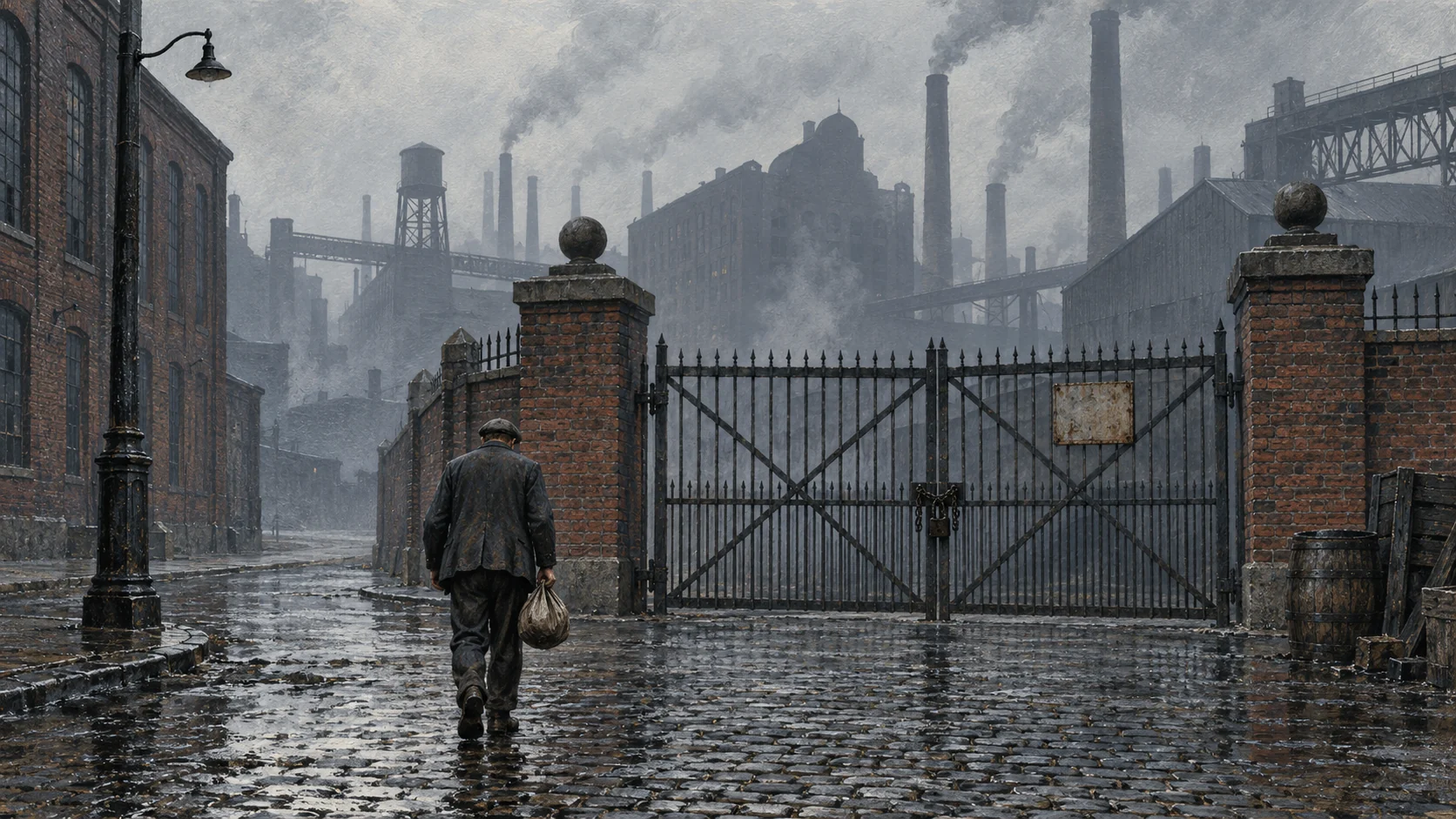
Nothing protected them.

01No federal right forcing an employer to recognize a union.
02No federal requirement that an employer bargain with workers’ chosen representatives.
03Union membership or organizing activity could cost a worker his job.
1935 · National Labor Relations ActDecades later, federal law would protect organizing and collective bargaining for many private-sector workers. The Knights operated in a different legal world.
A worker walking away from a closed factory gate
II
THE KNIGHTS OF LABOR

A union—and a social vision.

The Knights did not simply want a higher paycheck. They imagined a different relationship between workers, ownership, citizenship, and economic power.

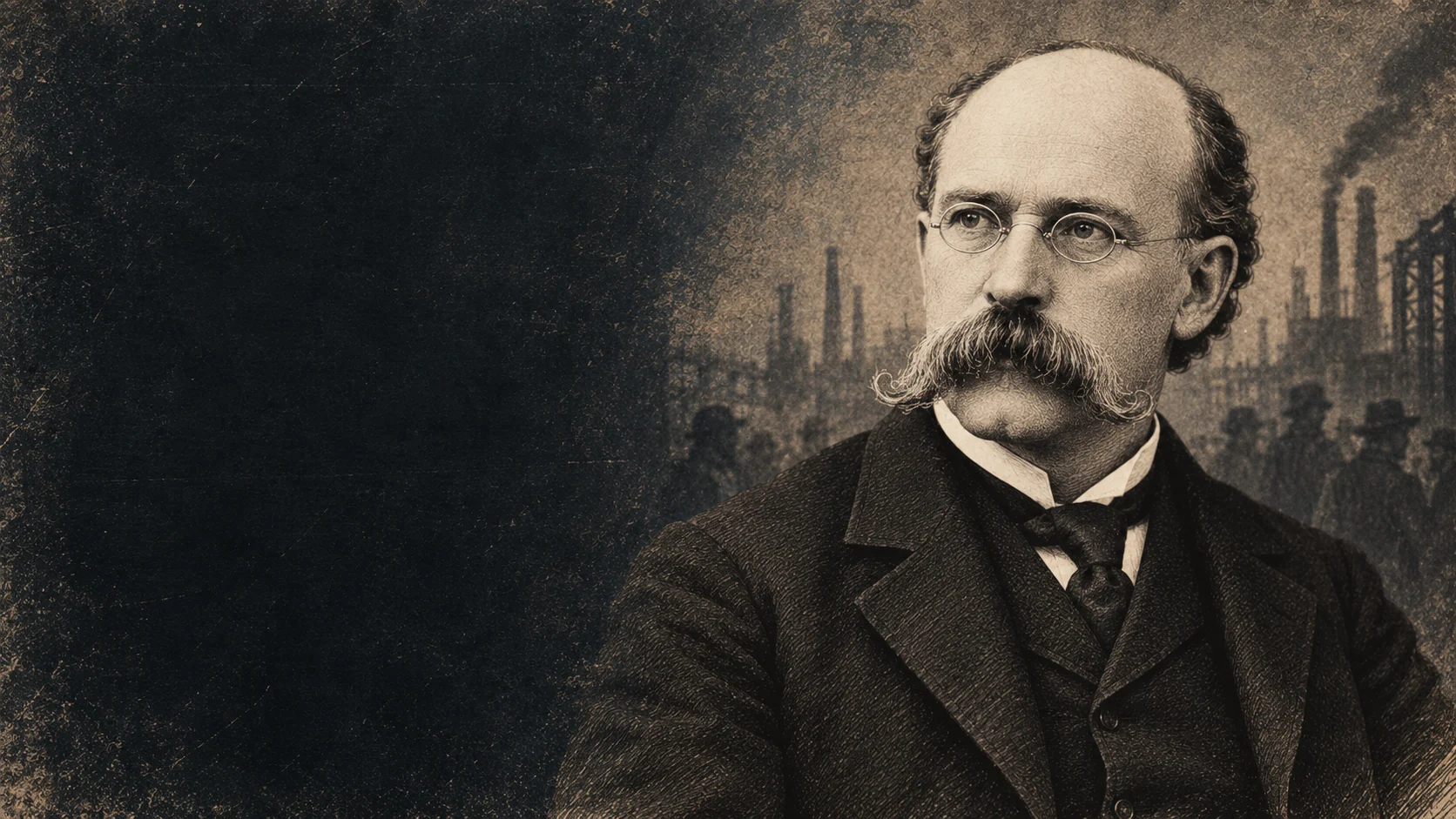
Stylized portrait derived from a historical image of Terence V. Powderly
GRAND MASTER WORKMAN

Terence Powderly

Powderly led the Knights from 1879 to 1893. He favored education, arbitration, cooperation, and reform more than constant striking. That caution became a central tension inside an organization whose local members sometimes wanted direct confrontation.

1878Elected mayor of Scranton, Pennsylvania.
1879Becomes Grand Master Workman of the Knights.
1885–86The organization reaches its greatest national influence.
1893Powderly’s leadership ends after years of decline.
Portrait treatment is a stylized interpretation built from historical reference imagery, not a claim that this is an untouched archival photograph.
MEMBERSHIP

Both halves are true.

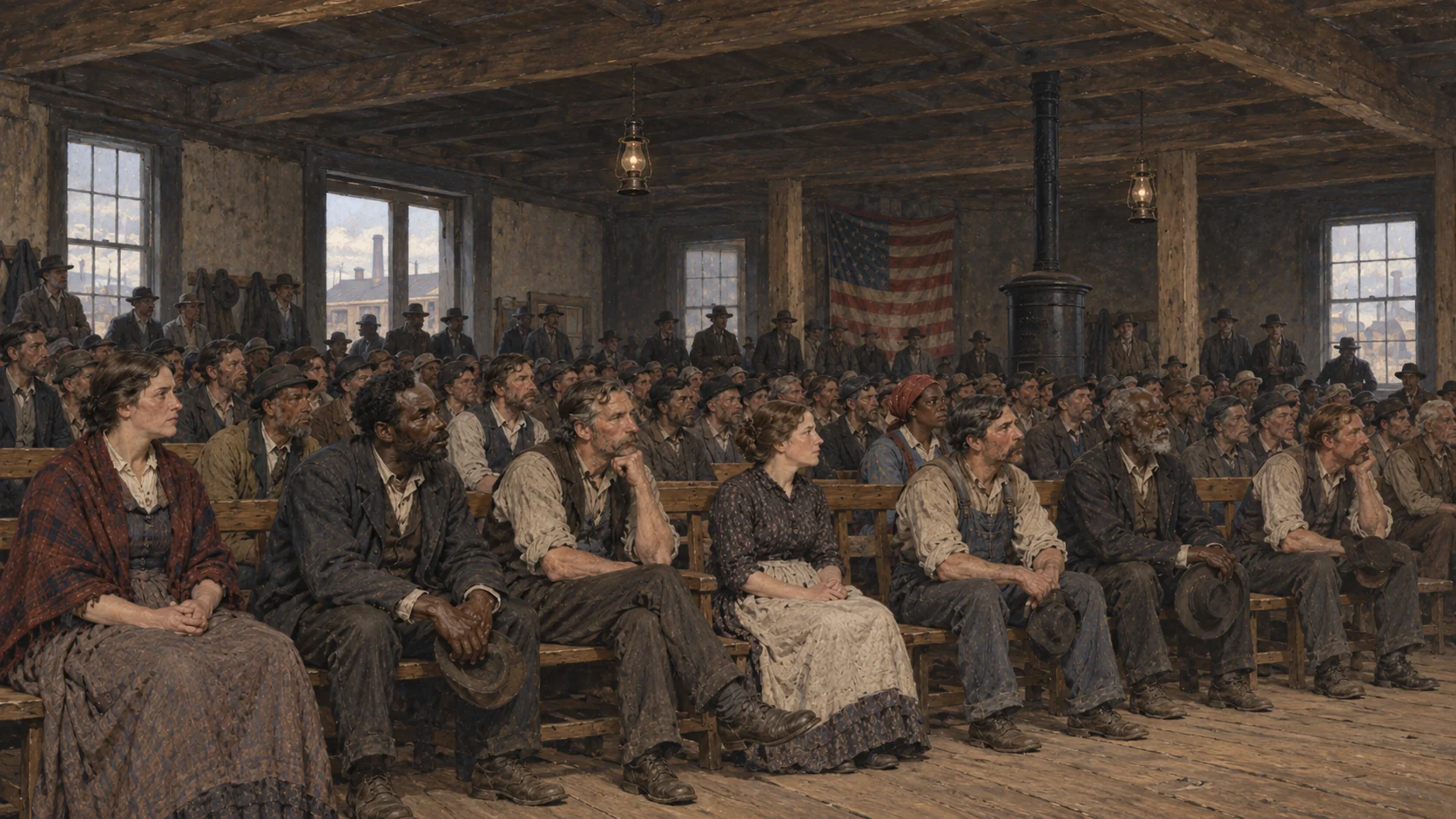
Illustrated labor meeting with women and Black and white workers
UNUSUALLY BROAD FOR ITS ERA

Who could enter

Women joined. Black workers joined. Skilled and unskilled workers joined. The Knights deliberately reached across divisions many nineteenth-century labor organizations treated as permanent.
THE LIMITS MATTER TOO

Who was still left out

Equality was inconsistent in practice; many local assemblies were segregated. The Knights excluded Chinese workers and also barred occupations they considered “nonproductive” or socially harmful, commonly including doctors, lawyers, bankers, liquor dealers, and gamblers.
Illustrated nineteenth-century cooperative store interior
BEYOND A PAY RAISE

What they actually wanted.

The Knights imagined workers gaining more control over economic life—not merely negotiating a slightly better wage inside the same arrangement.

Education.Mutual aid.Cooperation.Eight hours.

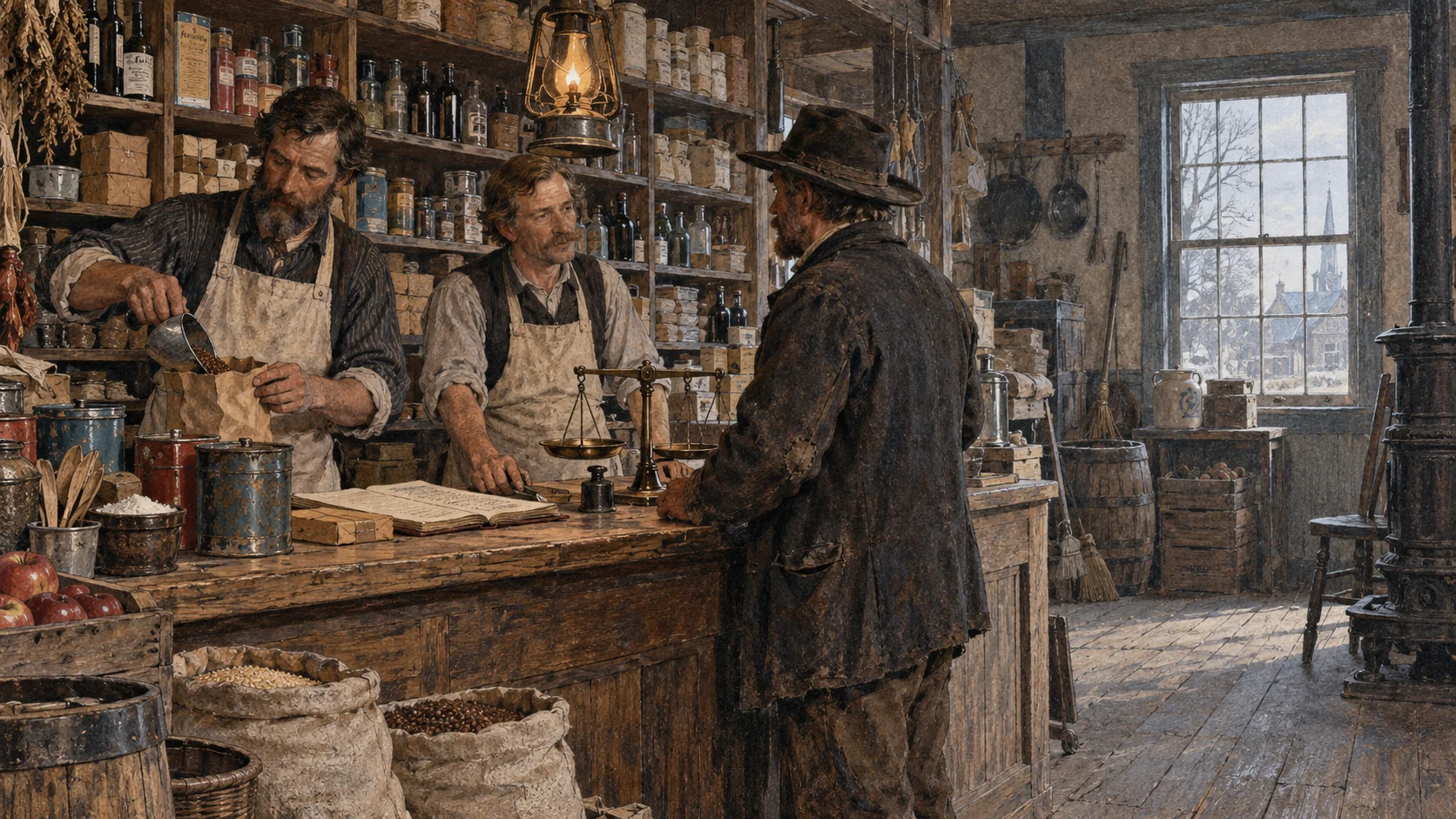
Their program also included worker cooperatives, restrictions on child and convict labor, equal pay for equal work, and reforms aimed at concentrated corporate power.

III
RISE · 1885–1886

Winning changes everything.

A victory against Jay Gould makes the Knights look capable of defeating national corporate power. Workers rush to join. Success creates strength—and a new problem of scale.
Stopped steam locomotive with workers standing along the snowy tracks
WABASH SYSTEM · 1885

They beat Jay Gould.

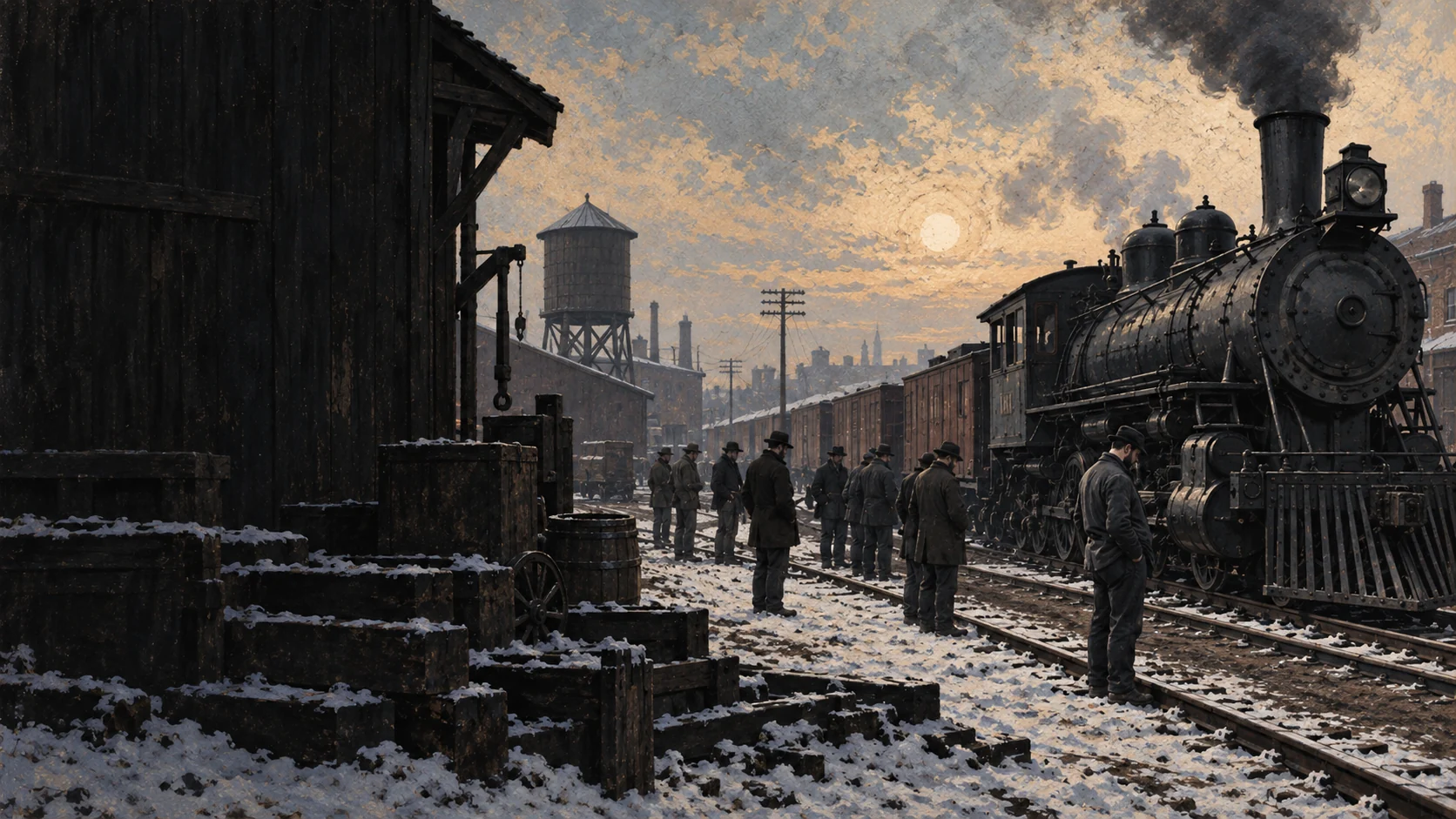
Workers affiliated with the Knights won a settlement against railroads controlled by one of the most powerful financiers in America. Earlier wage levels were restored, and striking workers could return without being punished simply for taking part.
A railroad makes money by moving. In 1885, the trains stopped.
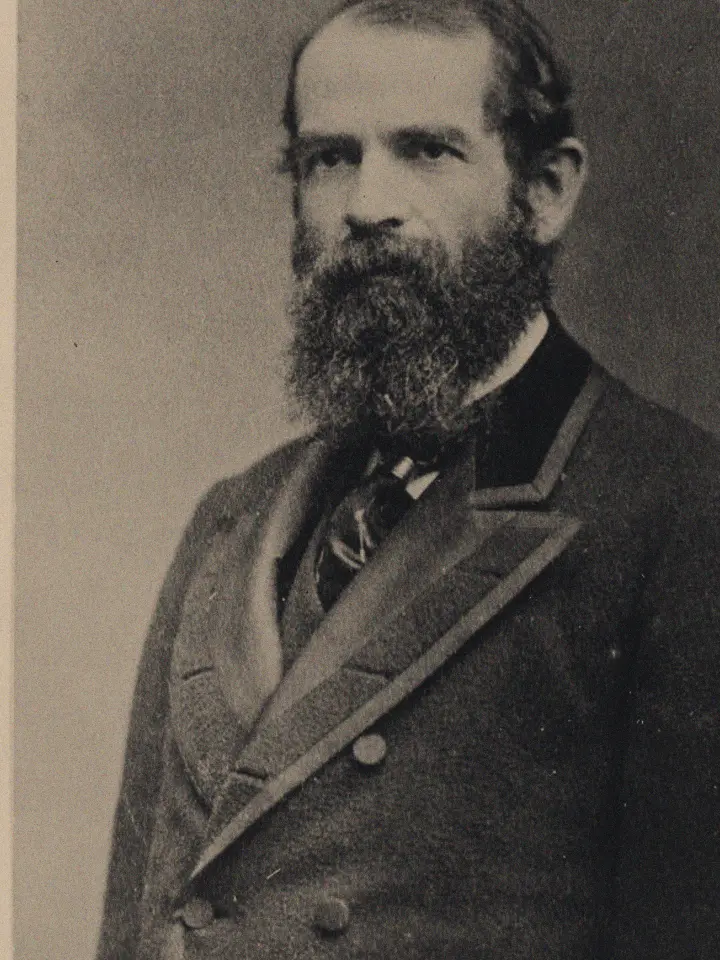
Archival photograph of Jay Gould, half-length portrait, facing left
Archival photographJay GouldLibrary of Congress, between 1865 and 1892. No known restrictions on publication. Tonally graded to sit with this page; nothing in the photograph itself is altered.Library of Congress record →
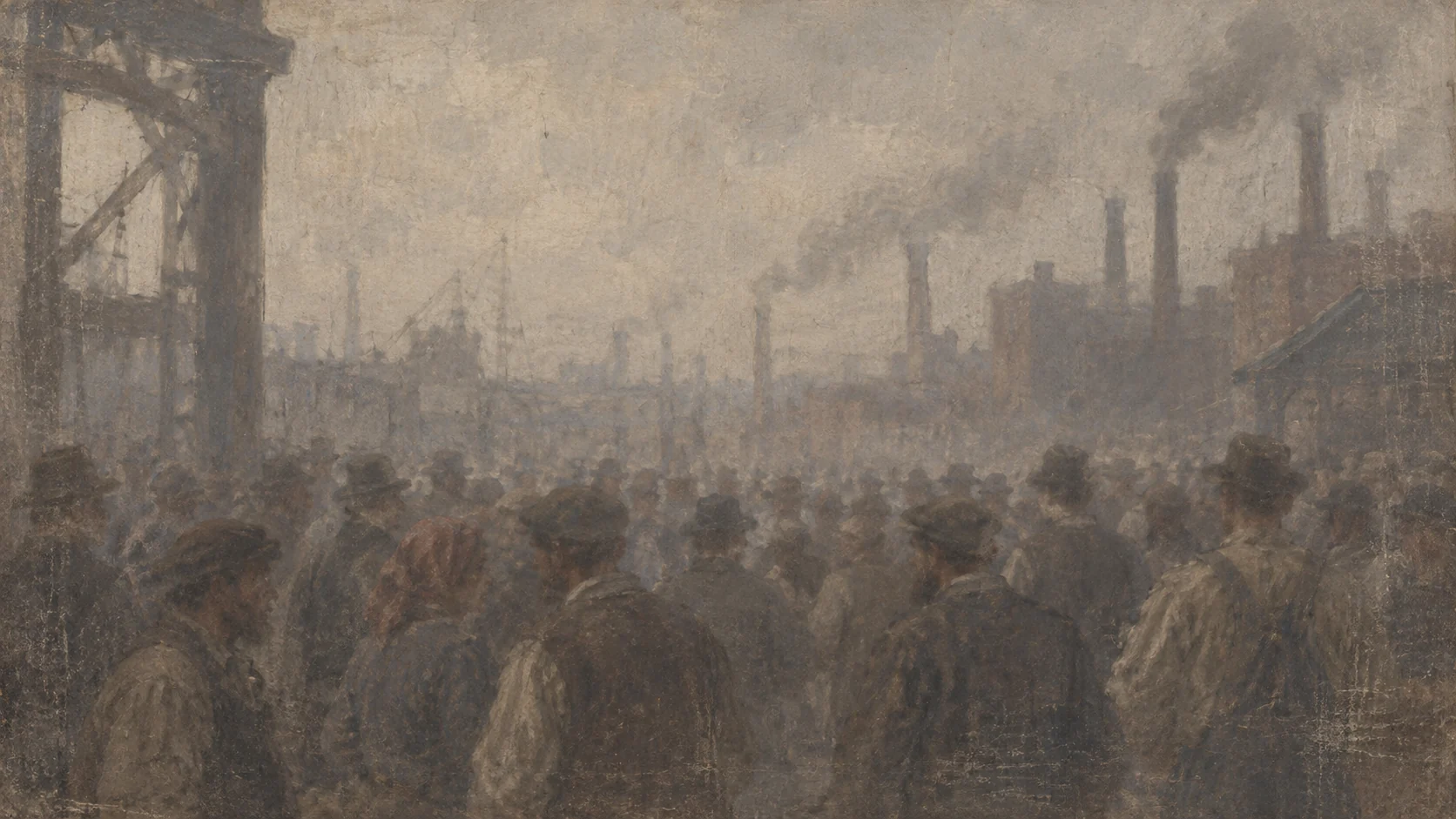
Low-contrast crowd of workers in an industrial landscape
MEMBERSHIP · APPROXIMATE TOTALS
110,000
720,000

From about 110,000 members in 1885 to roughly 720,000 by July 1886. Victory convinced workers that the Knights could matter.
But an organization can grow faster than its ability to govern itself.
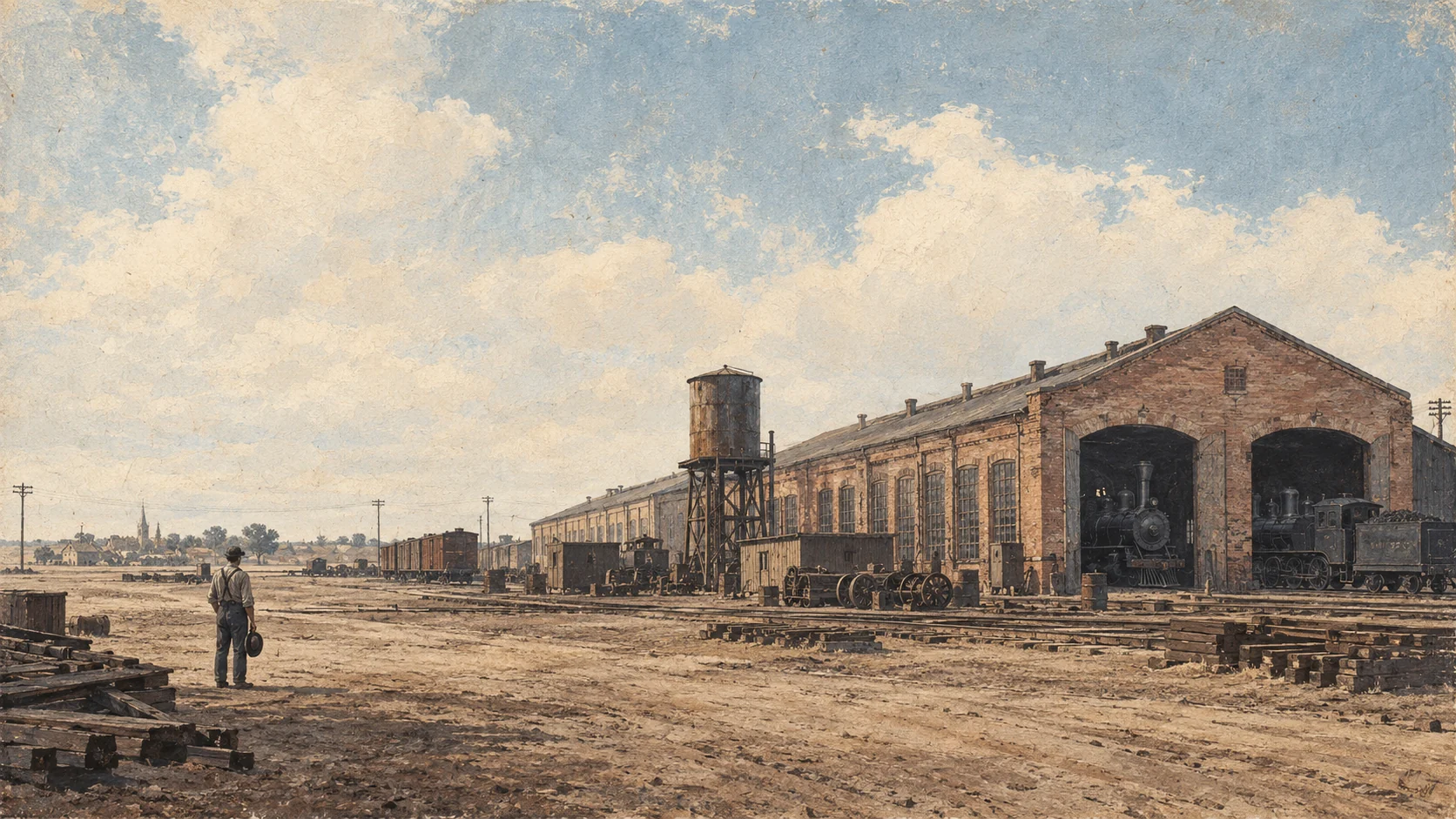
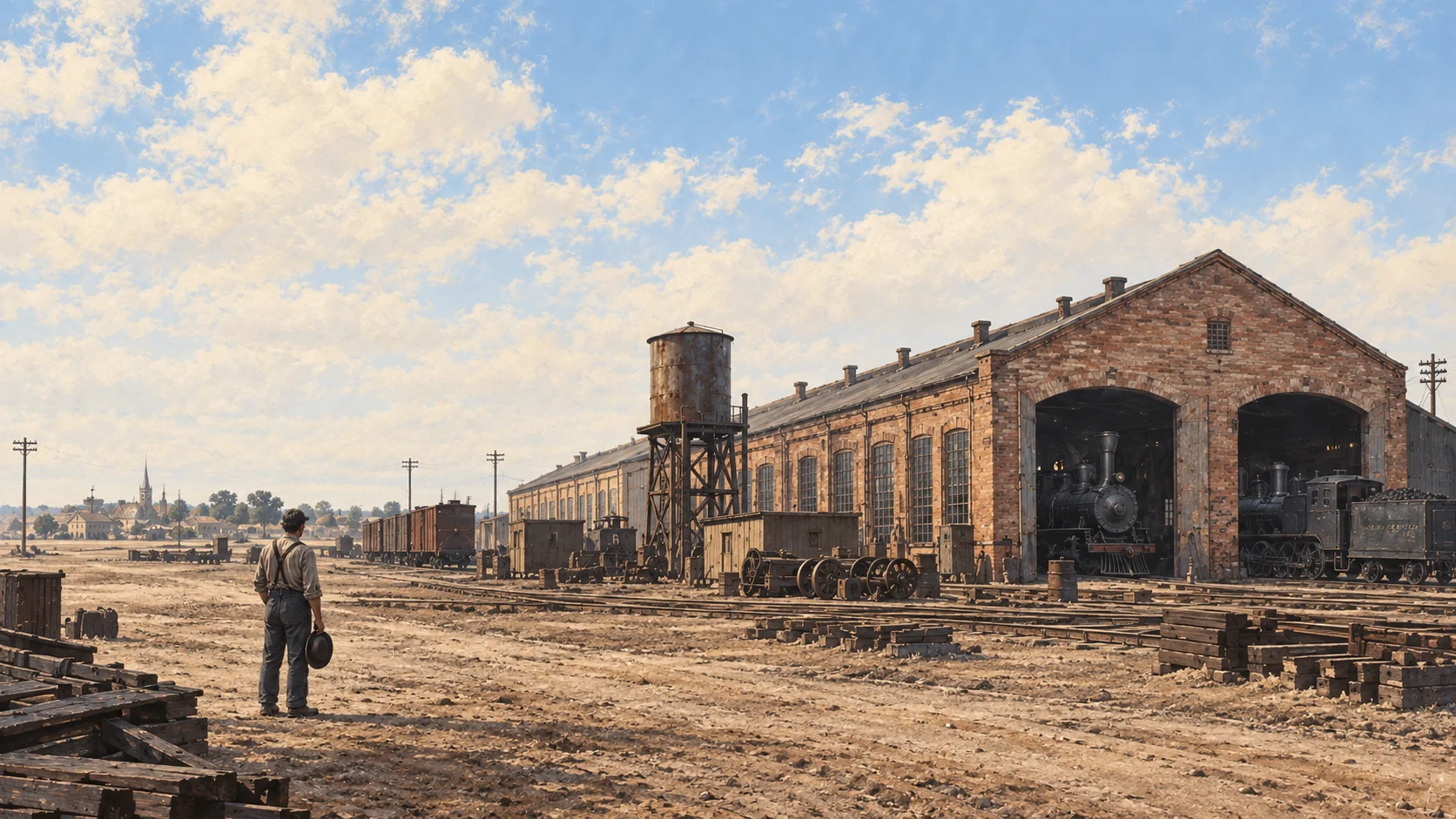
A lone worker standing outside a railroad machine shop in Marshall, TexasA somewhat closer view of a lone worker outside the railroad shop
MARSHALL, TEXAS · FEBRUARY 18, 1886

One firing becomes a five-state strike.

C. A. Hall, a Knights member at the Texas & Pacific shops in Marshall, was fired after attending a Knights meeting on company time. The union believed the firing violated the labor agreement won the year before.

IllinoisMissouriKansasArkansasTexas
IV
COLLAPSE · 1886

The trains keep moving.

The visual logic flips. In 1885, stopped trains meant union leverage. In 1886, trains continue running—and the Knights cannot force the railroad system to stop.
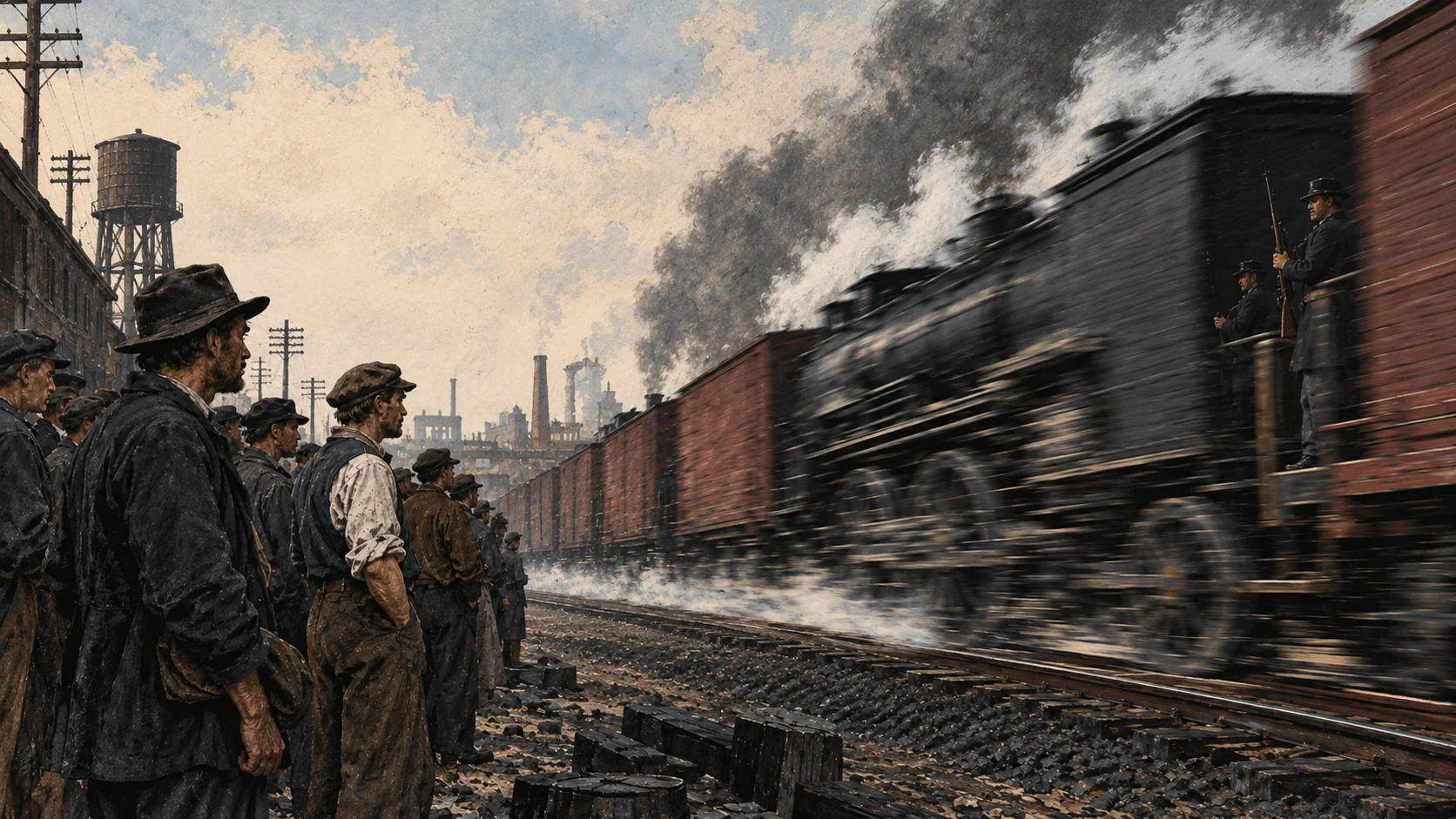
A moving steam train passes stationary workers while guards stand on the train
THE GREAT SOUTHWEST STRIKE · 1886

It was over by April.

Railroad brotherhoods did not fully join the strike, so trains kept running. Replacement workers, federal injunctions, armed deputies, railroad security, and state forces increased the pressure. Once the railroad could keep operating, time favored the company.
1885: stopped trains = leverage.
1886: moving trains = defeat.
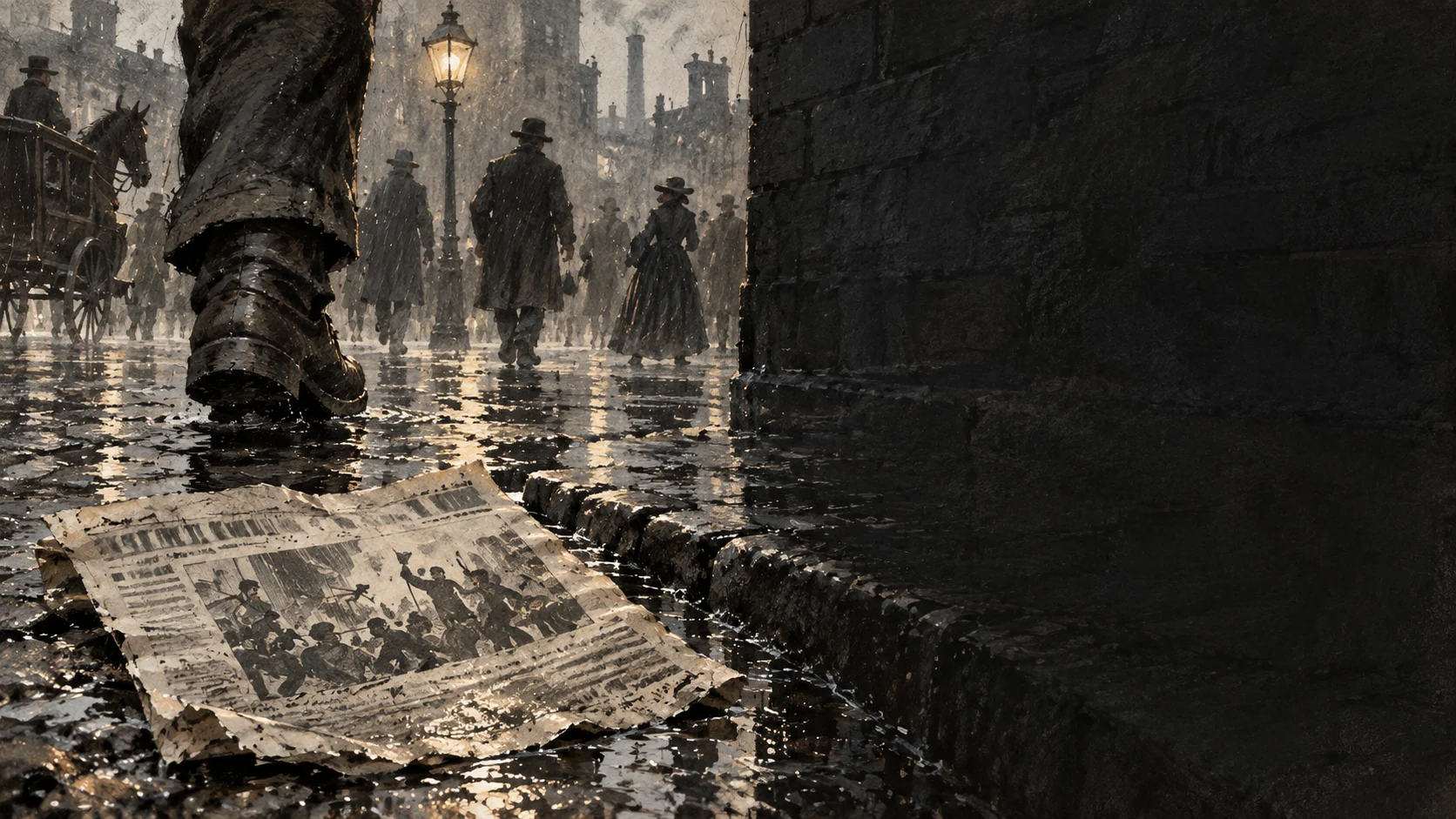
Rain-soaked newspaper in a nineteenth-century Chicago street gutter
CHICAGO · MAY 4, 1886

Then came Haymarket.

A labor rally at Haymarket Square ended catastrophically after a bomb was thrown as police moved in. The Knights of Labor did not organize or control the meeting.

Public reaction did not carefully distinguish among unions, anarchists, socialists, radical activists, and different labor organizations. The largest labor organization in the country absorbed part of the backlash while already weakened by the failed railroad strike.

KnightsUnionsSocialistsAnarchistsLabor unrest
V
LEGACY

Another model survives.

The Knights tried to unite a very broad workforce around sweeping reform. The American Federation of Labor chose a narrower craft-union structure and a tighter workplace focus.

DECEMBER 1886

The other model.

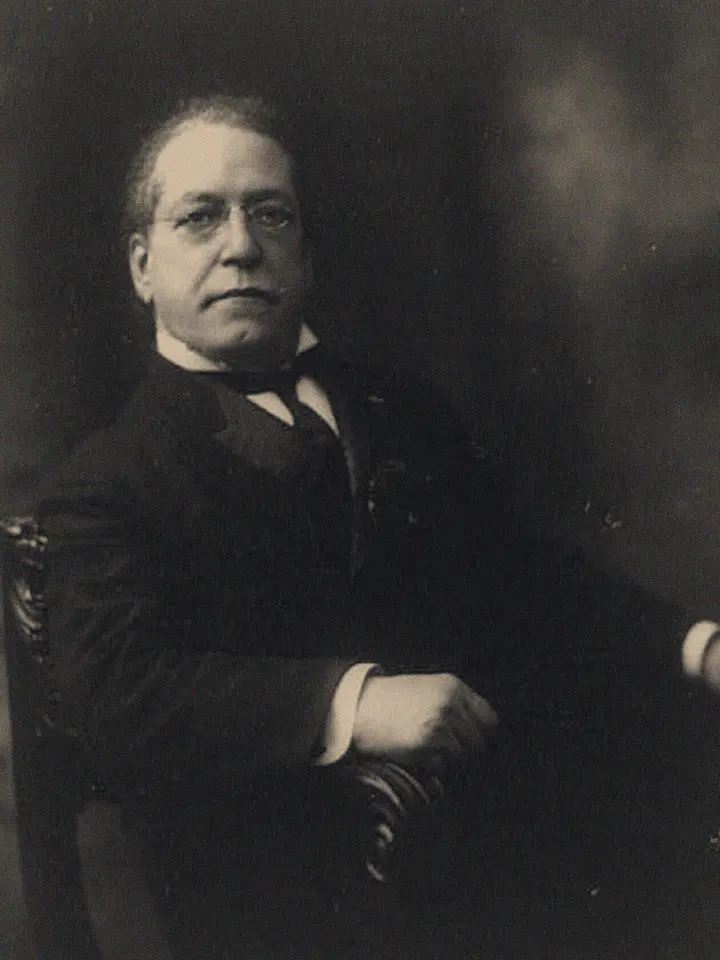
The AFL, founded in 1886 with Samuel Gompers as its first president, organized mainly through autonomous craft unions. That narrower structure could be easier to coordinate, but it also left many less-skilled and marginalized workers outside much of the early federation’s power.
Archival photograph of Samuel Gompers, seated half-length portrait
Archival photographSamuel GompersLibrary of Congress, c. 1902, during his AFL presidency. No known restrictions on publication. Tonally graded to sit with this page; nothing in the photograph itself is altered.Library of Congress record →
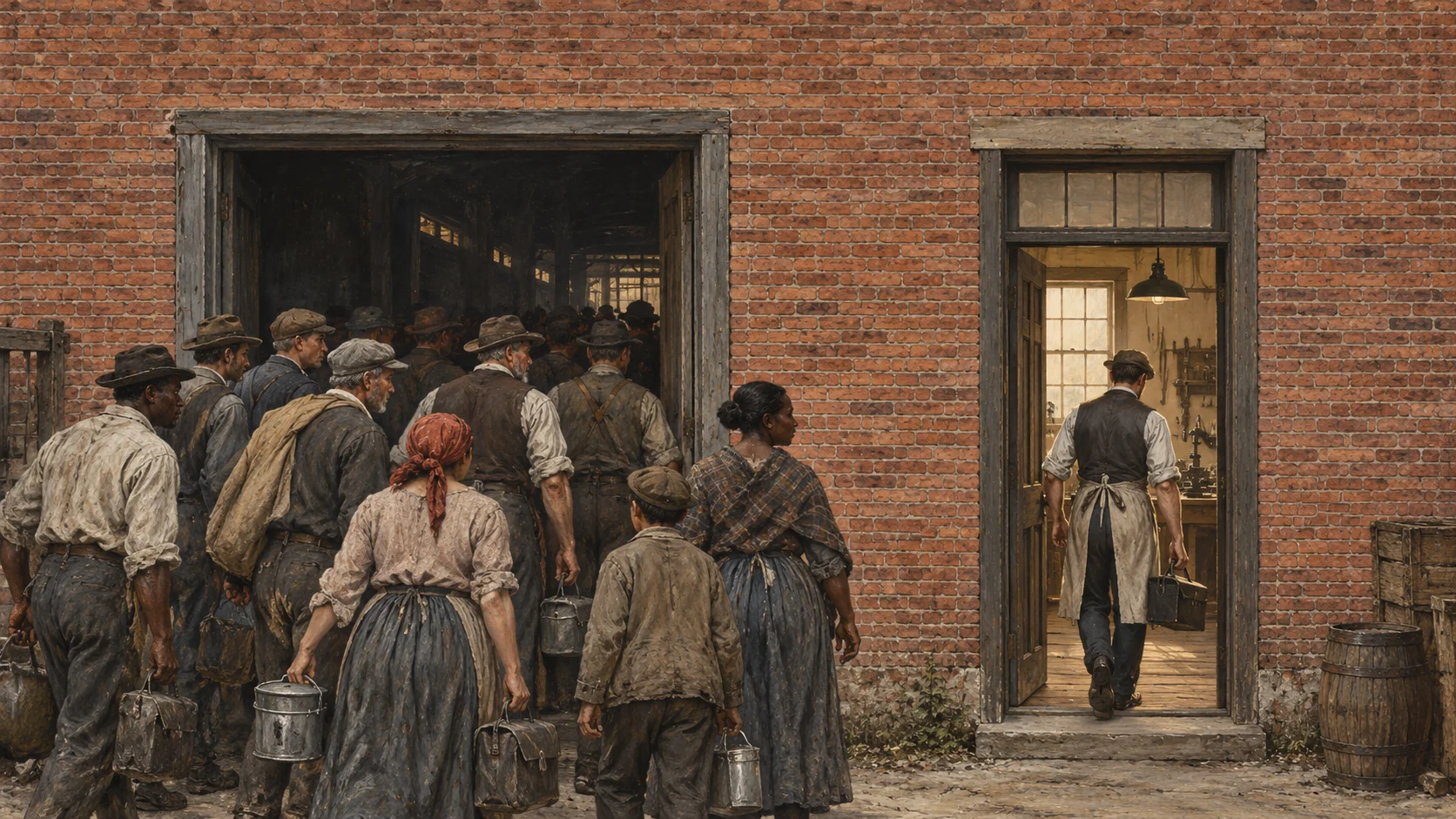
Two doors in a brick industrial wall, one broad and crowded and one narrow with a single skilled worker
Membership ideaSkilled + unskilled workers in a broad movement
Primary emphasisLabor power plus broad social and economic reform
StructureMixed assemblies and trade assemblies
Trade-offReach and breadth versus coordination

Knights

Membership idea
Skilled + unskilled workers in a broad movement
Primary emphasis
Labor power plus broad social and economic reform
Structure
Mixed assemblies and trade assemblies
Trade-off
Reach and breadth versus coordination

AFL

Membership idea
Primarily federated skilled craft unions
Primary emphasis
Wages, hours, conditions, and craft strength
Structure
Federation of autonomous craft unions
Trade-off
Cohesion and bargaining focus versus exclusion
The standalone AFL existed from 1886 until its 1955 merger with the CIO, forming the AFL-CIO. What proved especially durable was the federation’s institutional legacy and craft-union model.
REFERENCE · TAP A TERM FOR THE STORY CONNECTION

The words for what you just saw.

The vocabulary comes last because the story gives the words something to attach to. Every definition below is native HTML so it stays selectable, accessible, editable, and historically precise.

Workers negotiating as a group rather than one employee at a time.
In this story: the 1885 Wabash settlement shows organized workers gaining enough leverage to force a settlement.
A union organized around a particular skilled trade.
In this story: the AFL federated craft unions rather than trying to place nearly every kind of worker inside one broad organization.
A union that organizes workers across different jobs within the same industry.
In this story: the Knights foreshadowed this broad idea by organizing across skill lines, although their mixed-assembly structure was not identical to later CIO-style industrial unionism.
A court order directing people to do or stop doing something.
In this story: federal injunctions ordered strikers away from railroad property. Violating an injunction could lead to contempt sanctions imposed by a judge.
A worker used to keep an employer operating during a strike, often by replacing a striker.
In this story: replacement labor helped the railroad keep shops and trains functioning while Knights were off the job.
The Knights are often described as an early industrial union because of their broad membership ambitions. Their actual structure mixed broad local assemblies with trade-based assemblies and predates the later industrial-union model associated with the CIO.
THE FACTUAL SPINE

L014 Note Repair

The cinematic layer steps aside here. This is the compact sequence you should be able to reconstruct after moving through the story.

  • Knights of Labor founded in Philadelphia in 1869 by Uriah Stephens and eight other garment cutters—nine founders in total.
  • Terence Powderly served as Grand Master Workman from 1879 to 1893 and was elected mayor of Scranton in 1878.
  • Aims included education, mutual aid, cooperation, labor reform, and not only higher wages.
  • Women and Black workers participated; equality was inconsistent and important exclusions remained.
  • 1885: the Knights helped defeat Jay Gould’s railroad system in the Wabash conflict. Membership was about 110,000.
  • By July 1886: about 720,000 members.
  • February 18, 1886: C. A. Hall was fired in Marshall, Texas; the dispute helped trigger the Great Southwest Railroad Strike.
  • By April 1886 the strike was doomed. Moving trains, replacements, injunctions, and armed enforcement helped break it.
  • 1886: Haymarket damaged organized labor’s public standing. The Knights did not organize or control the meeting.
  • By 1893: roughly 75,000 members remained.
  • AFL founded in 1886: narrower craft-union structure, workplace focus, and a more durable institutional model.
The Knights proved that workers could build a national movement. They also exposed how hard it was to keep a huge, diverse movement coordinated against national corporate power.
Image