U.S. History 9 · Gilded Age · 1870s–1896
THE DEBT
DIDN’T MOVE
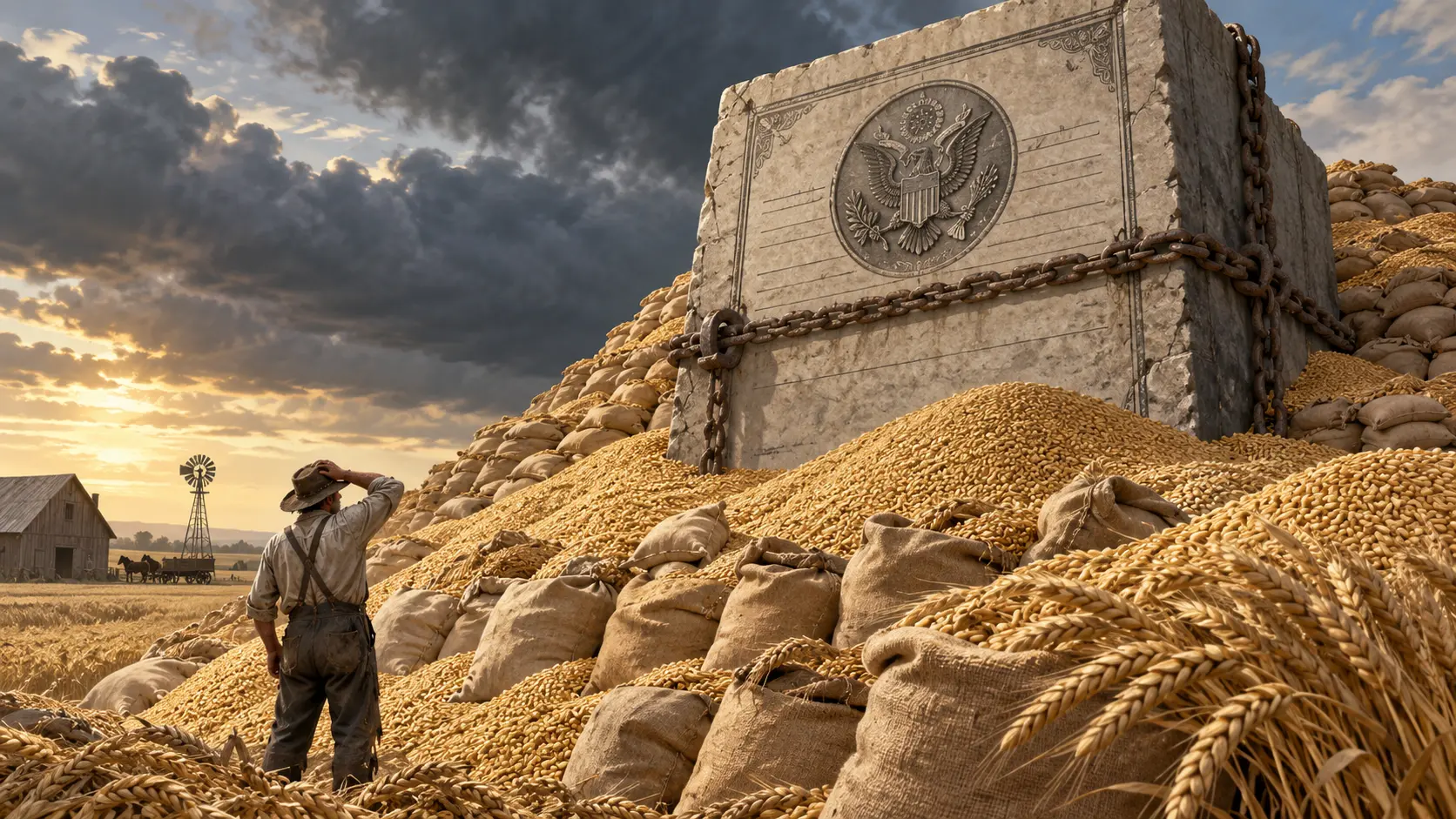
A farmer can own the soil under both boots and still discover that almost every important economic number is being set somewhere else.
What happens when the price of what you sell falls—but the number you owe refuses to change?
The number that didn’t move
WHEAT: 83.9¢ → 49.1¢. DEBT: STILL THE SAME NUMBER.
Forget political parties for a minute. Imagine you owe $500. The bank does not ask for wheat. It asks for dollars.
At 83.9¢ a bushel, it takes about 596 bushels to gross $500. At 49.1¢, it takes about 1,018. You can become a better farmer and somehow the hill gets steeper. That is the political meaning of deflation for somebody carrying fixed debt: the thing you sell gets cheaper while the dollars you owe get harder to earn.
MODELTHE DEBT DIDN’T MOVE
WHEAT PRICE83.9¢per bushel
DEBT$500fixed example
BUSHELS TO GROSS $500596baseline
Illustration — $500 is a fixed example, not a claim about the average farm mortgage.
More
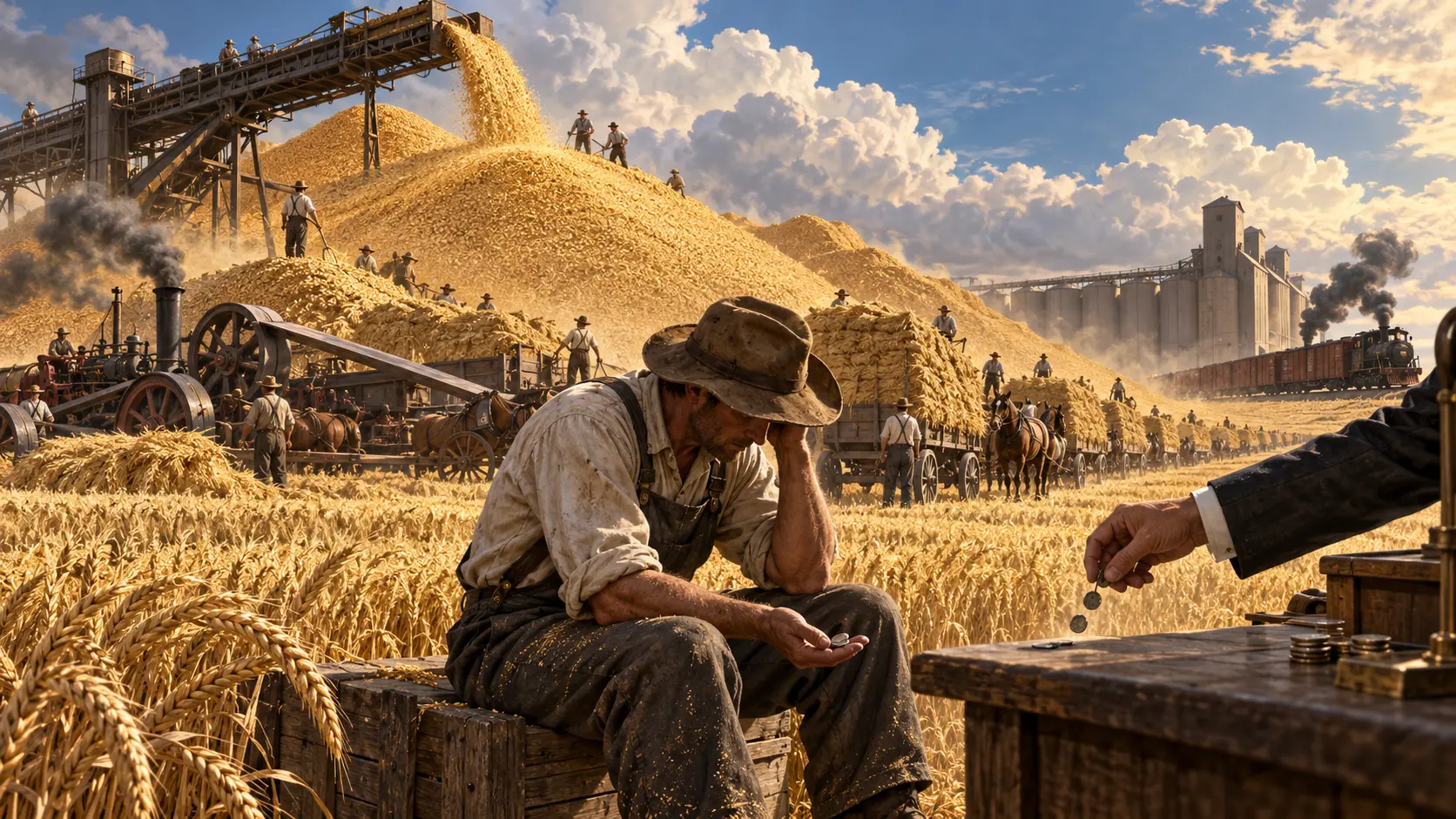
THE DISTURBING PART IS THAT THE FARM IS WORKING.
Industrialization did not happen only in factories. Farming became more productive too.
Better machinery, more cultivated acreage, rail access, and larger national and international markets helped American farms produce enormous quantities. That was real progress. It also meant supply could outrun demand. When many producers bring more of the same crop to market, the price of each unit can fall.
That is the paradox: more wheat does not automatically mean more money. A farmer can harvest more bushels, adopt modern equipment, work efficiently, and still watch the market value of those bushels shrink.
One way out
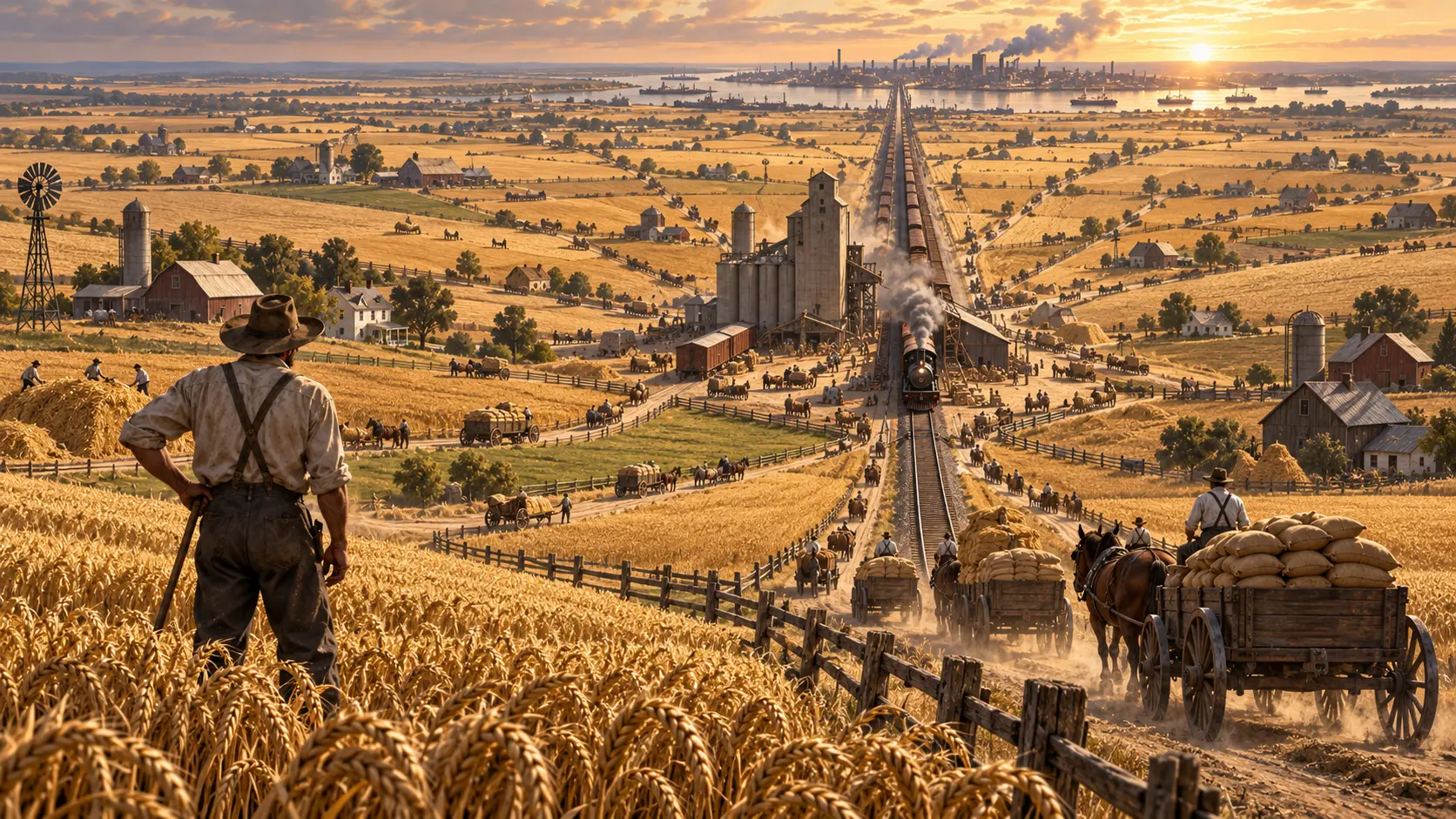
A HUGE LANDSCAPE. ONE NARROW EXIT.
A railroad can be both a miracle and a choke point. That is not a contradiction.
Railroads made commercial farming possible hundreds of miles from major cities. They moved equipment west and grain east. But harvest created a deadline: the crop had to leave the farm. Grain sitting in a barn does not pay a mortgage.
If several railroads compete for your business, you have leverage. If one line realistically reaches your market, the railroad has leverage. That dependence explains why freight rates, rebates, and discriminatory pricing became political questions instead of mere business complaints.
Two true things
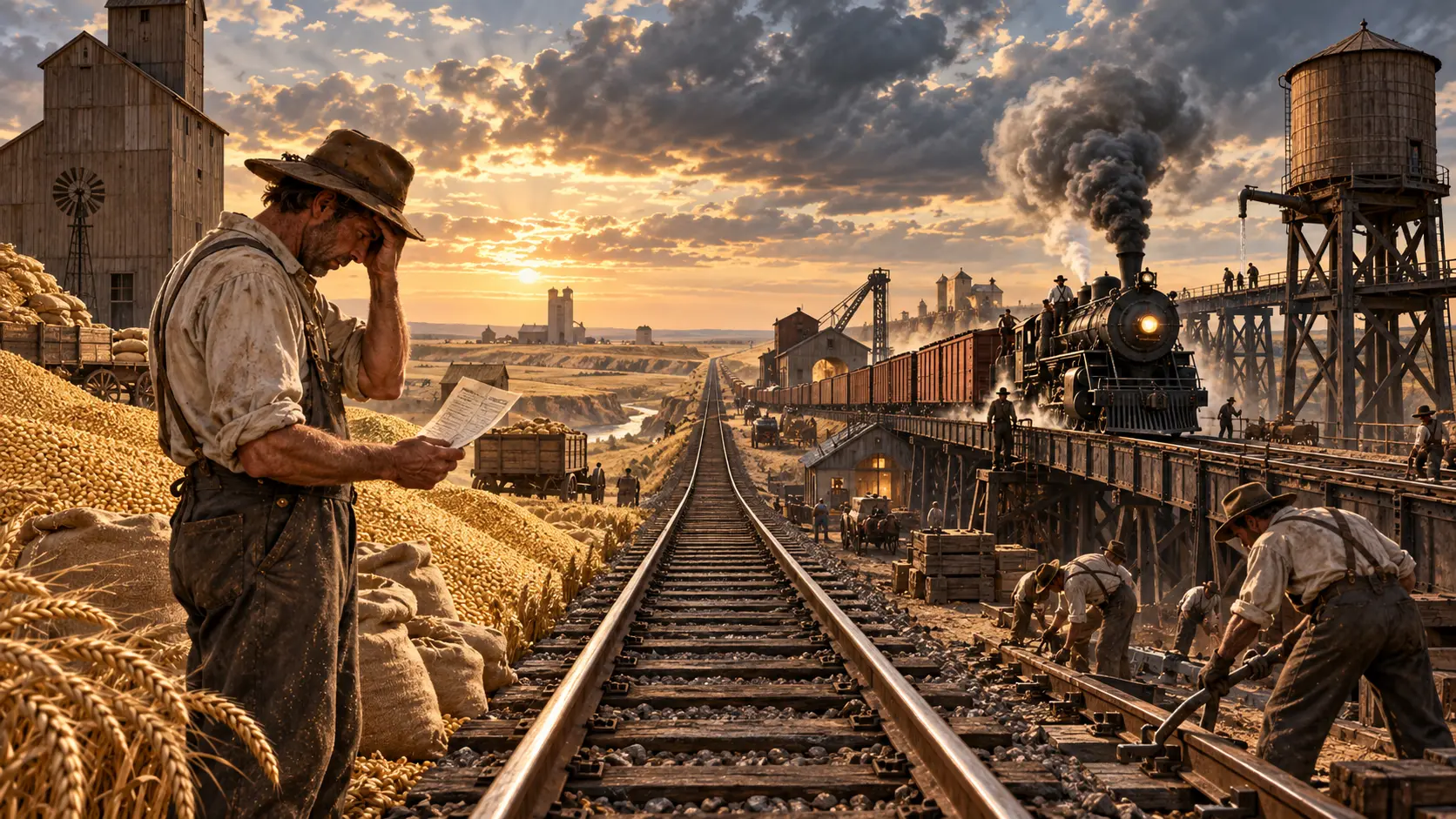
FARMER: I AM PAYING MORE. RAILROAD: I AM CARRYING LESS.
History gets better when the evidence refuses to give you a cartoon villain.
Interstate Commerce Commission data from the early 1890s show western railroads collecting higher average freight receipts per ton-mile than the national system. That supports farmer anger. The same data show dramatically lower freight traffic per mile of western railroad. That supports the railroad argument about fixed costs.
Tracks, bridges, locomotives, stations, and crews cost money whether a line is packed or lightly used. Both pressures can be real at once. The political question is what counts as a fair rate when one indispensable system has costs of its own.
DATA FIELD · NATIONAL AVERAGE = 100TWO TRUE THINGS
Read the historical index table
| Year | Freight rate | Traffic density |
|---|---|---|
| 1890 | 122 | 50 |
| 1891 | 136 | 50 |
| 1892 | 129 | 53 |
| 1893 | 125 | 58 |
| 1894 | 122 | 56 |
| 1895 | 139 | 48 |
They tried regulation first
COMMERCE HAD BECOME NATIONAL BEFORE REGULATION HAD.
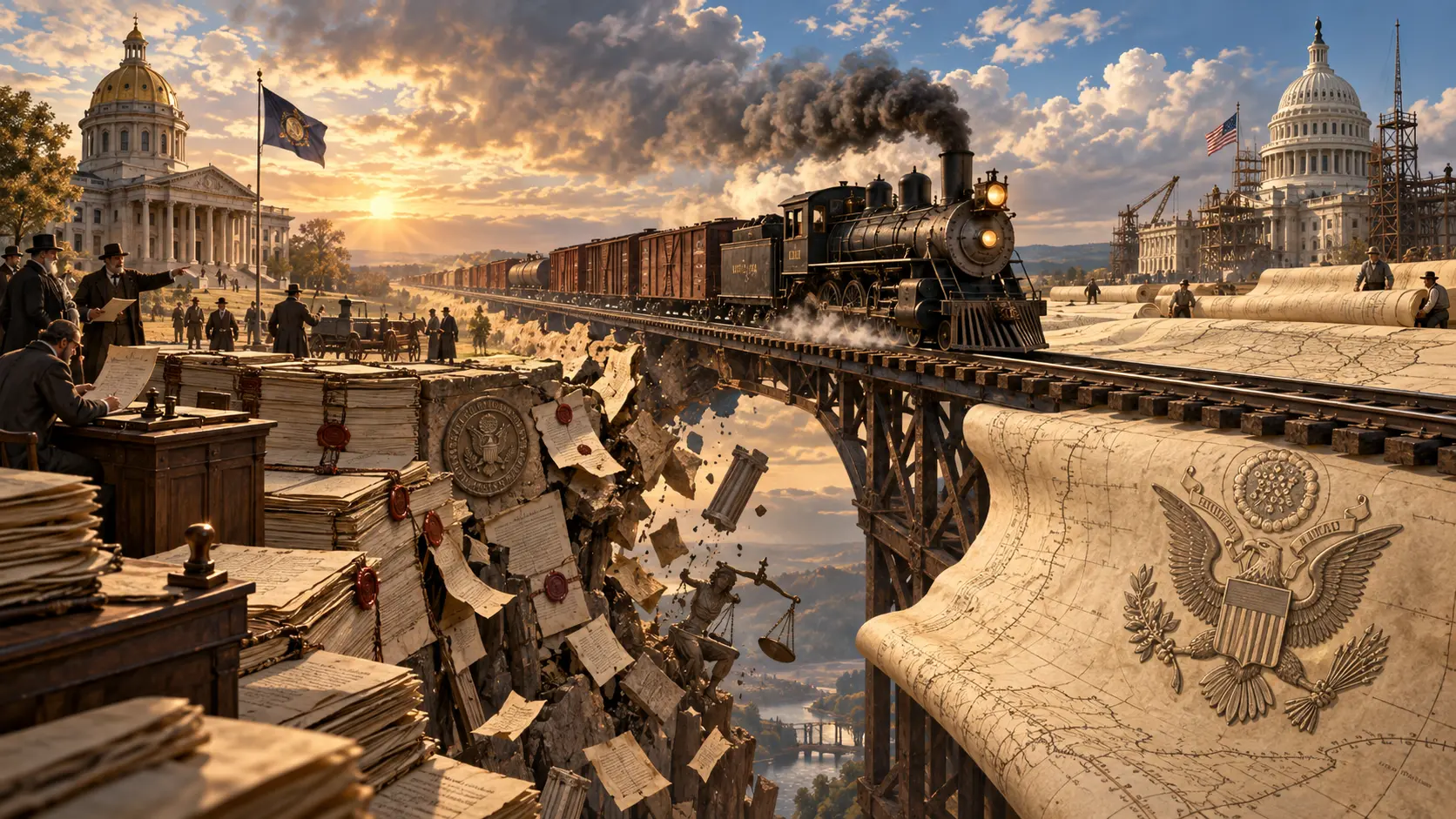
Imagine Michigan makes a rule for a train. Then the train crosses into Ohio. What happens to the rule?
The Granger movement pushed states toward railroad regulation in the 1870s. Munn v. Illinois upheld important state regulation in 1877. Then Wabash v. Illinois in 1886 restricted state power over interstate rail traffic. The train kept going; the state’s authority did not.
Congress answered with the Interstate Commerce Act of 1887 and the Interstate Commerce Commission. The early ICC had limited enforcement power, but the step mattered: the federal government accepted that a national market required national regulation.
JURISDICTIONTHE STATE LINE
▰
State authority can regulate activity inside the state.
First, help each other
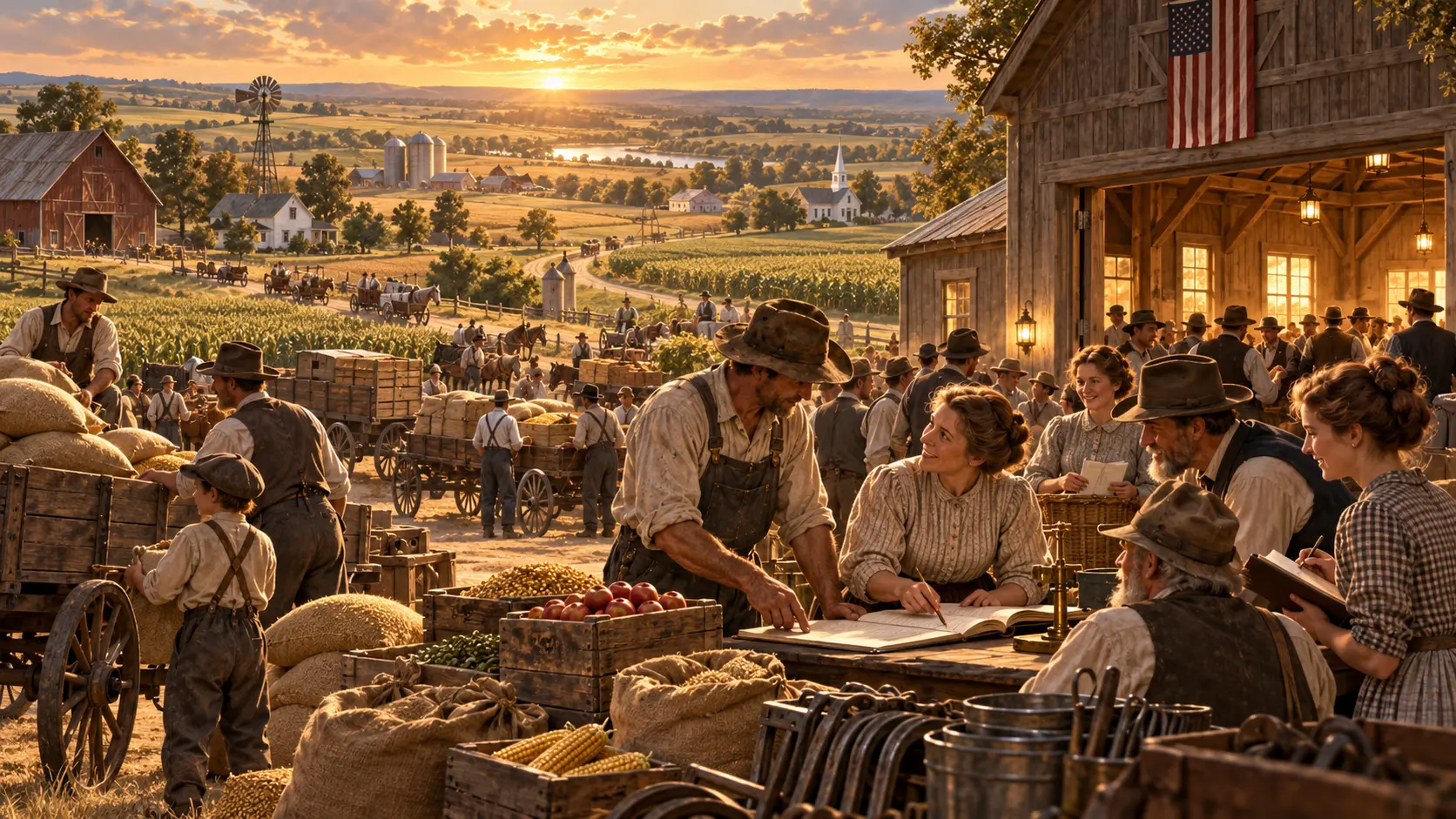
BEFORE FARMERS BUILT A PARTY, THEY BUILT NETWORKS.
If one farmer has almost no leverage, maybe a thousand farmers acting together do.
The Grange and Farmers’ Alliances mixed education, community, cooperative buying, crop marketing, shared information, and reform. Women participated as organizers and members rather than merely appearing behind the men. These organizations tried to create institutions one isolated household could not support on its own.
The logic should feel familiar after the union story: organization changes bargaining power. At first the answer was not “start a third party.” It was help each other survive the market.
The other alliance
ECONOMIC INTERESTS COULD PULL FARMERS TOGETHER. RACIAL POWER COULD PULL THEM APART.
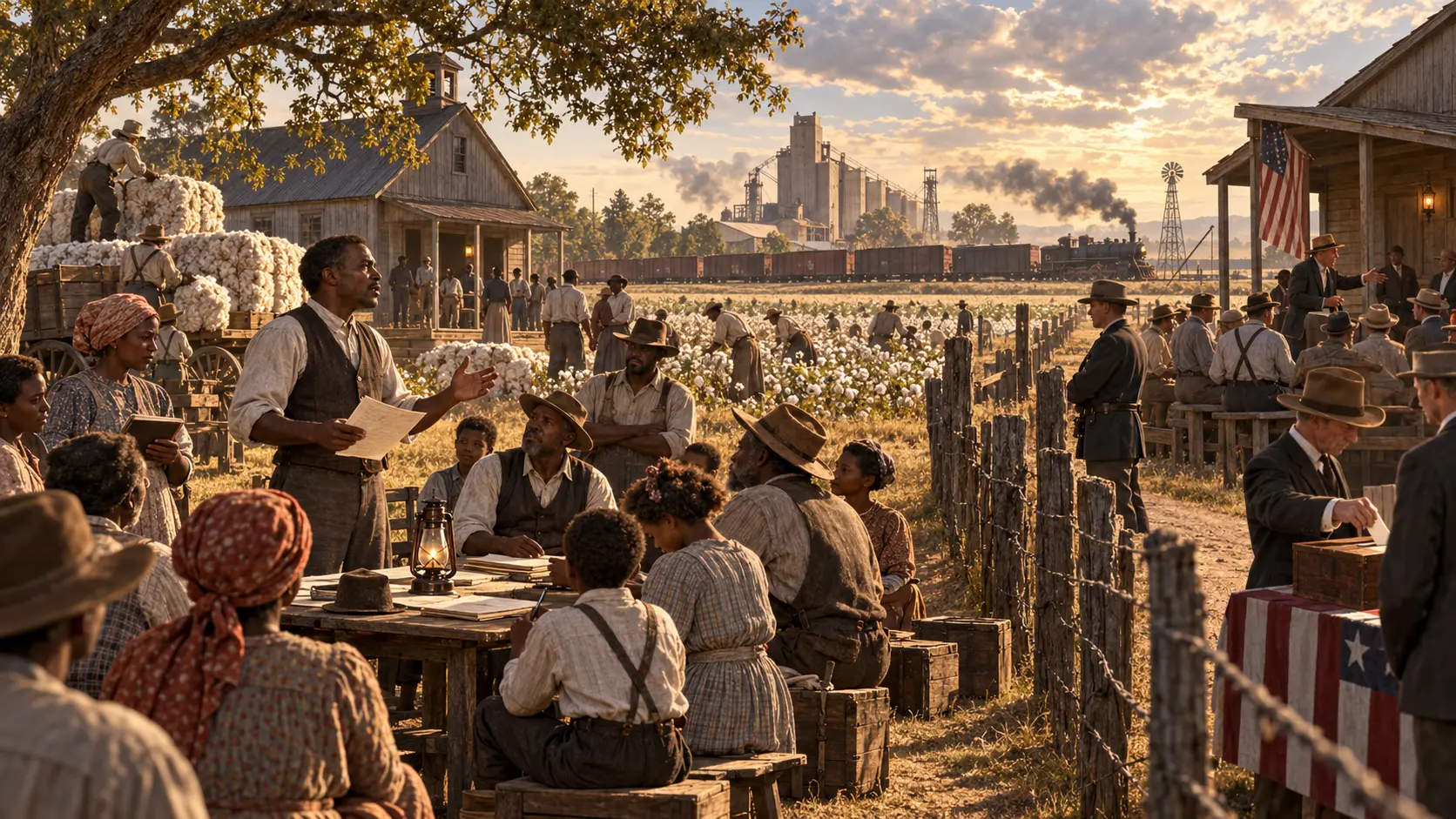
Black farmers were not standing outside the agrarian movement waiting to be included. They organized.
White southern Alliances excluded Black farmers, so Black farmers built the Colored Farmers’ Alliance, founded in 1886. It developed exchanges, education, mutual aid, political networks, and its own organizing power. Contemporary claims put its membership above one million by 1891, although historical membership figures should be treated cautiously.
The two movements faced many of the same forces: cotton prices, debt, rail dependence, credit, and merchants. That created real opportunities for cooperation. It also collided with segregation, disfranchisement, party loyalty, and violence. The Colored Farmers’ Alliance supported federal protection for voting rights when white Alliance leadership often would not. A cotton pickers’ strike tied to Black agrarian organizing was violently suppressed.
This is not a “diversity sidebar.” The limits of interracial coalition help explain what Populism could become—and what it could not overcome.
Wall Street
THE STORY FINDS A THEORY.
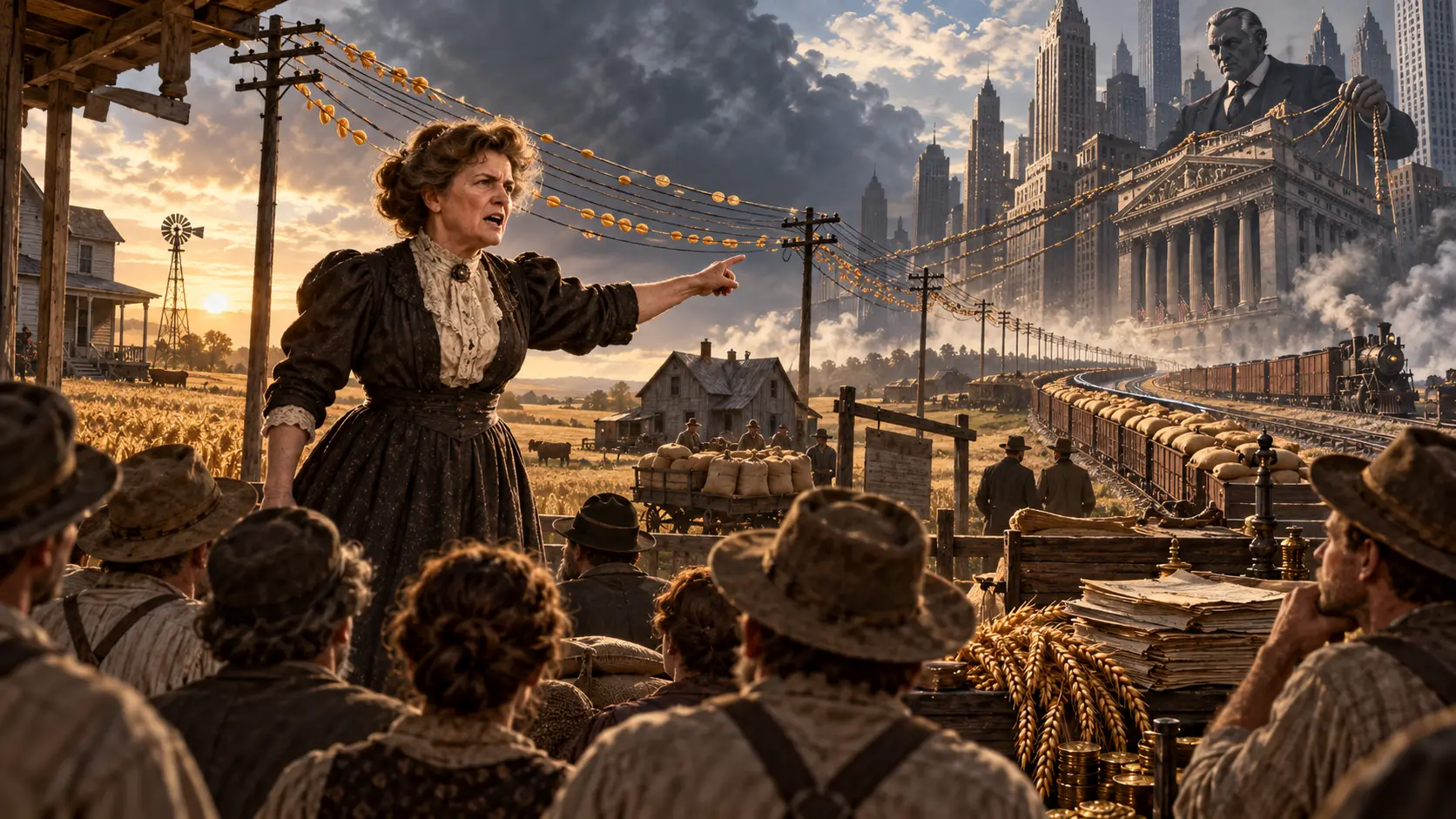
Mary Elizabeth Lease did not invent farm anger. She helped give it an explanation.
Mortgage debt looked local. Freight bills looked local. Crop prices looked local. Banks looked local. Populist speakers argued that these were not separate accidents. They were connections inside a larger national system of money, transportation, credit, and concentrated power.
Lease became one of the movement’s most famous voices in Kansas. A source warning matters here: the line “raise less corn and more hell” is commonly attributed to her, but historical research shows the phrase came through partisan newspaper reporting and was later embraced by Lease. It is memorable; it is not a clean verified quotation.
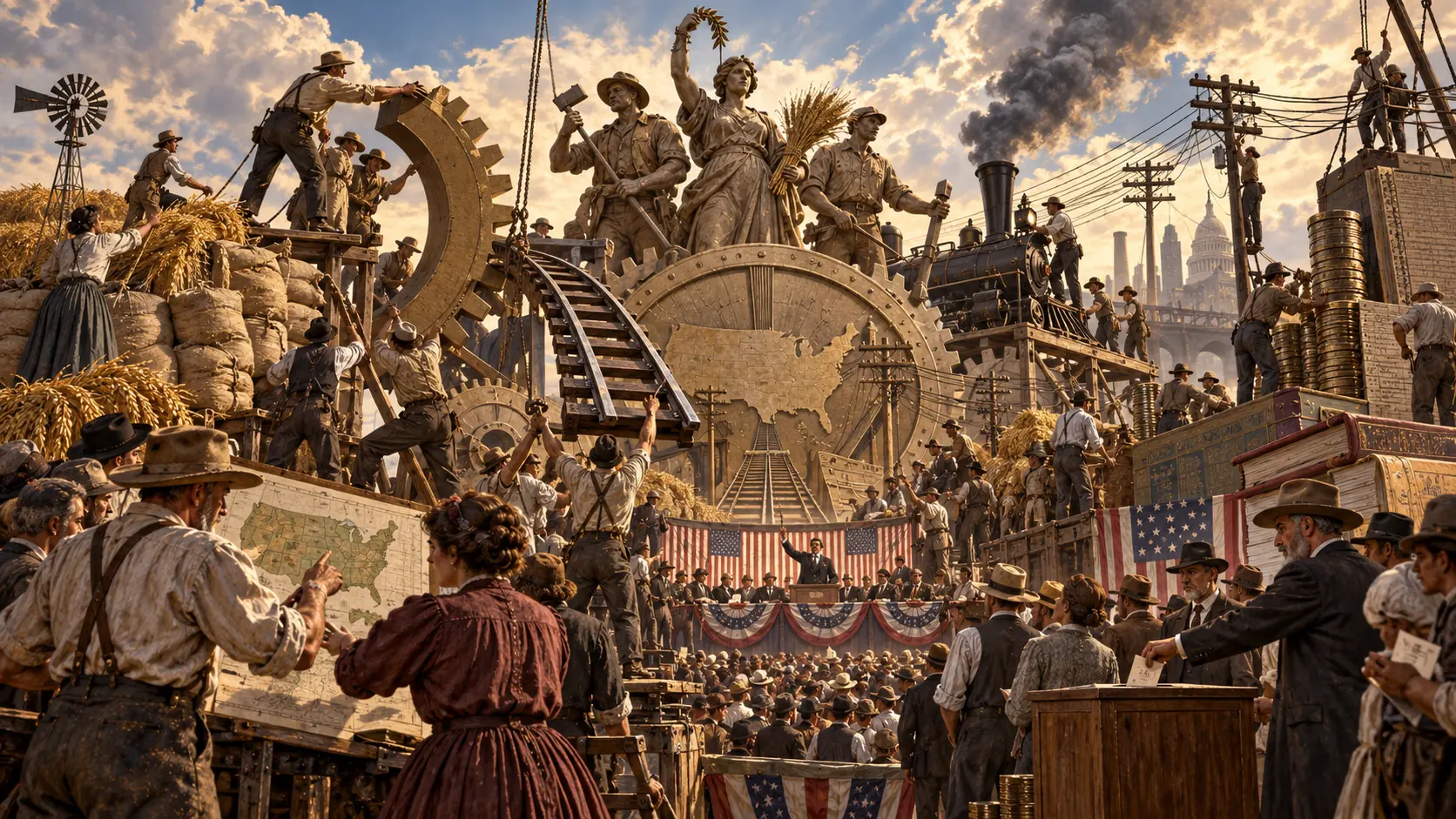
Omaha
A PLATFORM IS AN ATTEMPT TO REDESIGN THE RULES.
By 1892 the complaint was no longer just “farm life is hard.” The People’s Party had a program.
The Omaha Platform connected money to debt, railroads to public power, land to concentration, taxes to wealth, and democratic rules to representation. It called for free silver at 16:1, an expanded circulating currency, a graduated income tax, public ownership of railroads and national communications, land reform, and other democratic and labor measures.
That is what makes Populism historically important even before counting votes: it turned scattered economic grievances into a theory about who writes the rules of a national economy.
OMAHA · 1892BUILD THE PLATFORM
Open the grievances and connect them to the proposed rule.
0 / 6 connected
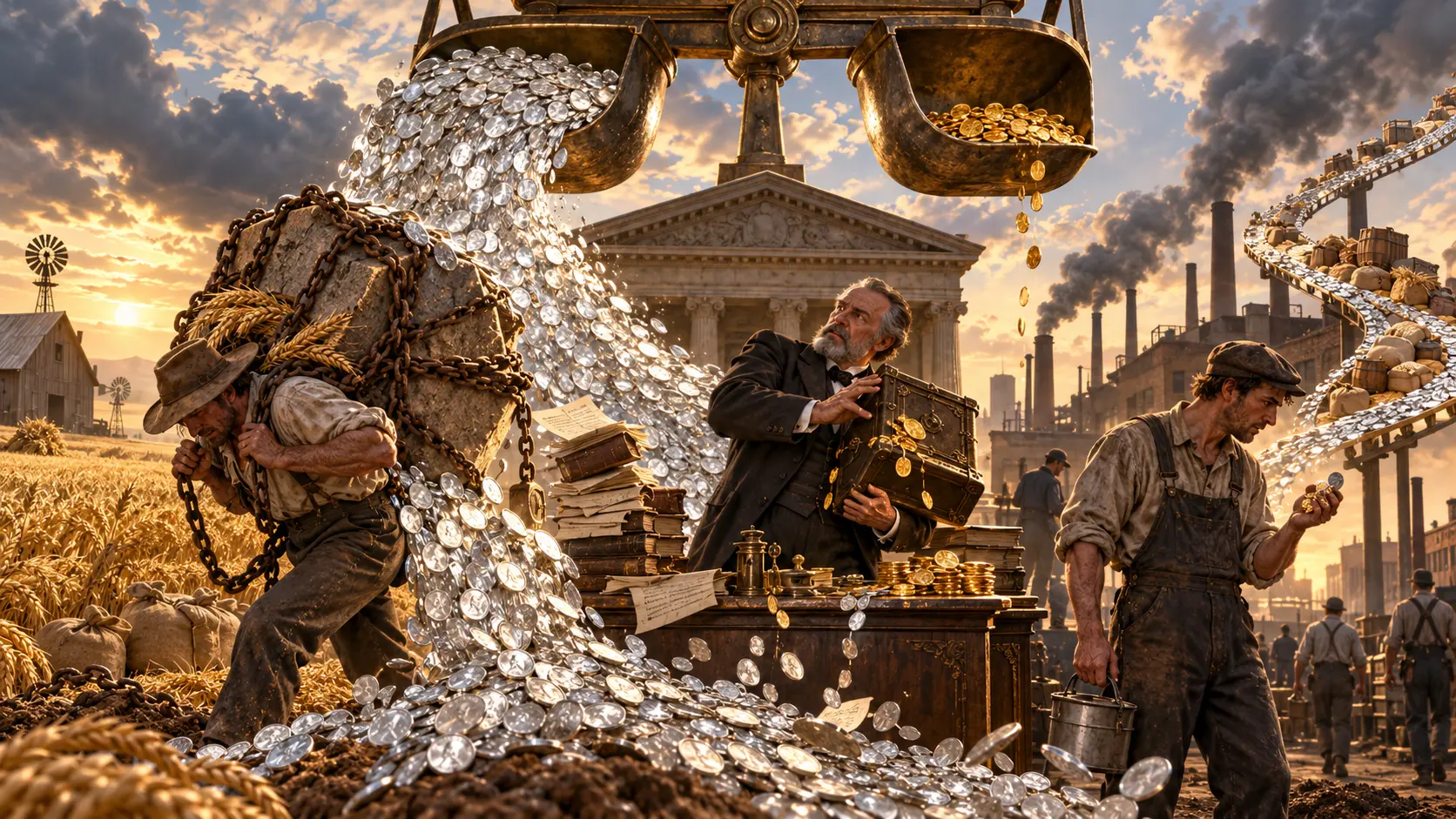
Sixteen to one
THE SAME DOLLAR CAN FEEL DIFFERENT DEPENDING ON WHICH SIDE OF THE DEBT YOU LIVE ON.
Free silver was not mainly about preferring one shiny metal to another.
Supporters wanted unrestricted coinage of silver at a legal ratio of 16 ounces of silver to 1 ounce of gold. Their economic hope was a larger money supply, easier credit, higher prices, and a lighter real burden on fixed debts. That made intuitive sense to many debtors who had just watched crop prices collapse.
But inflation is not a magic cure. A creditor can reasonably fear repayment in dollars with less purchasing power. A wage worker can reasonably worry that prices may move before wages do. Monetary policy redistributes pressure.
MONEYWHO LIKES THIS DOLLAR?
DEBTOR
More money and some inflation can make a fixed dollar debt easier to repay if farm prices rise.
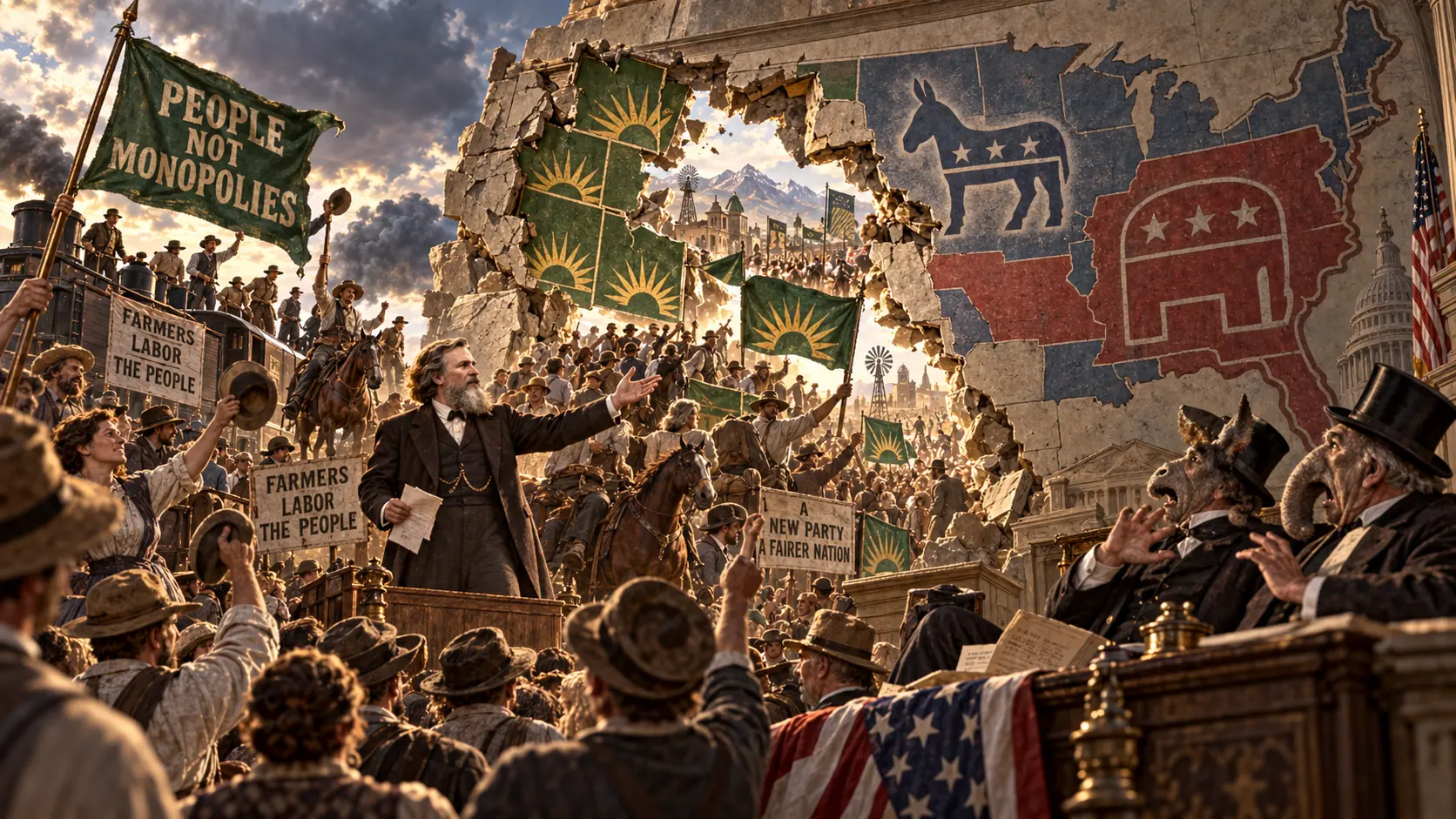
Twenty-two
THEY WERE SUPPOSED TO BE REGIONAL COMPLAINERS. THEN THEY PUT ELECTORAL VOTES ON THE MAP.
In 1892 the People’s Party nominated former Union general James B. Weaver for president.
Weaver won about 1.03 million popular votes, 8.5% of the national vote, and 22 electoral votes. That was nowhere close to winning the presidency. It was still a serious third-party arrival inside a political system built around two dominant parties.
The important feeling is not “almost victory.” It is visibility. Farmers and reformers who had been treated as scattered local trouble became a national political force with electoral geography.
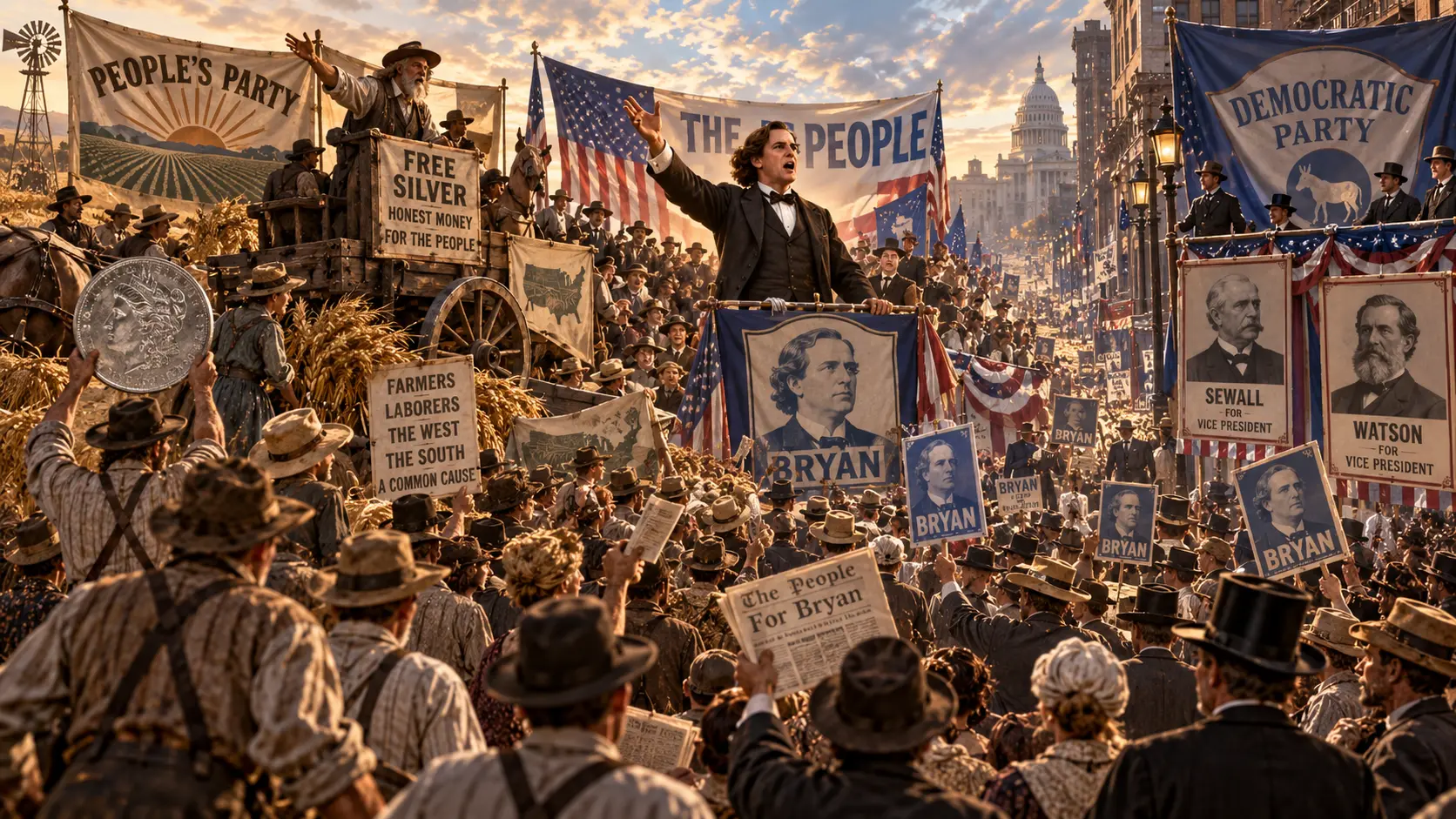
The deal
MORE POWER NOW. LESS INDEPENDENT IDENTITY LATER.
Then the larger Democratic Party adopted the Populists’ most electrifying issue.
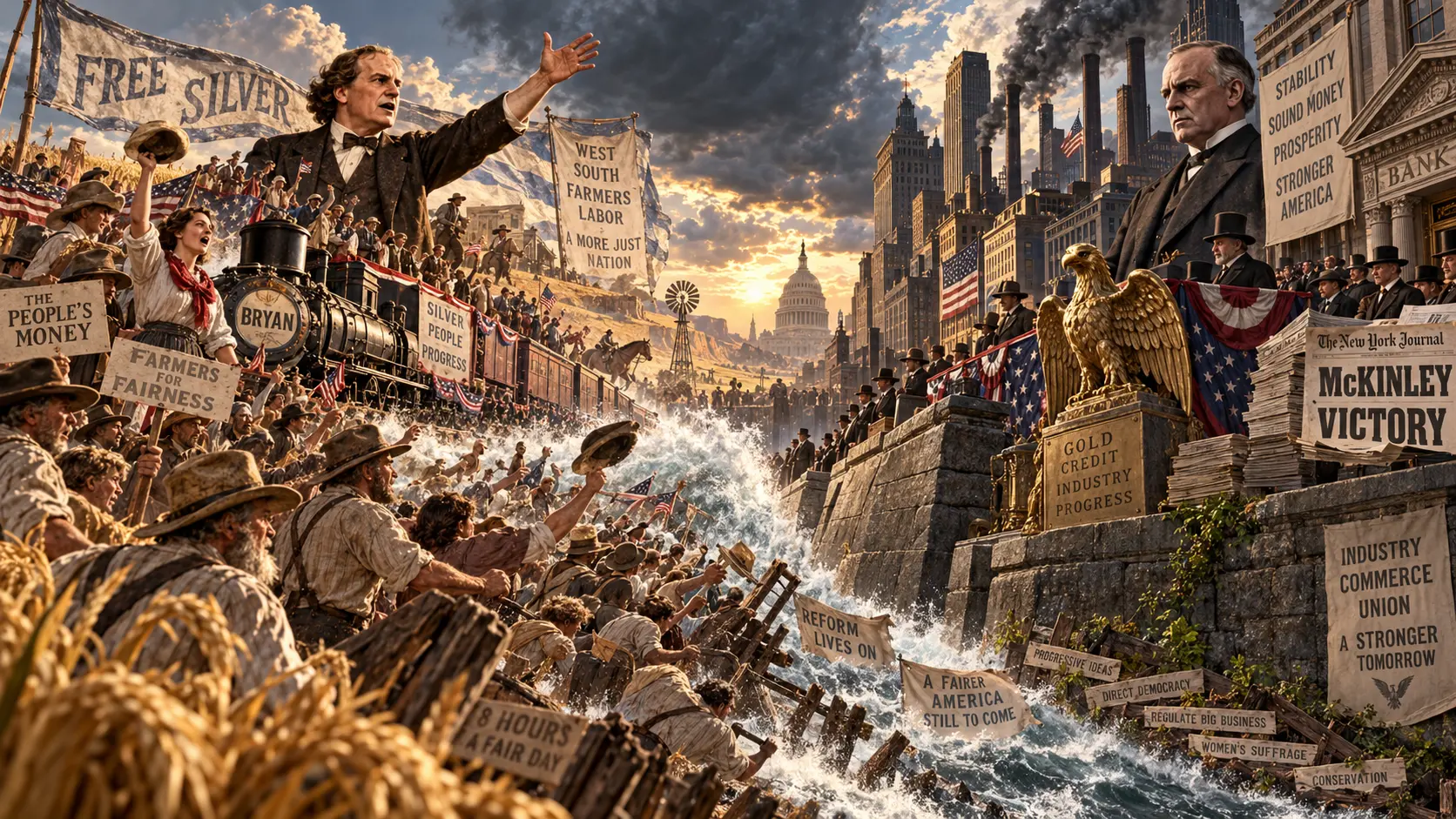
William Jennings Bryan, only 36, won the Democratic nomination in 1896 after his famous Cross of Gold speech and became the national face of free silver. Populists faced an ugly strategic choice: run separately and split the silver vote, or endorse Bryan and risk disappearing inside a larger party.
They chose fusion. Bryan remained a Democrat. Populists endorsed him while nominating Thomas Watson for vice president instead of Democratic running mate Arthur Sewall, creating one of the strangest tickets in American presidential history.
1896FUSION
PEOPLE’S PARTY
DEMOCRATIC SILVER
INDEPENDENCE
Protect the party’s identity, but risk splitting the free-silver vote and remaining a smaller national force.
November 3
ELECTORAL DEFEAT IS NOT THE SAME THING AS INTELLECTUAL DISAPPEARANCE.
Bryan campaigned with astonishing energy. McKinley’s coalition was stronger where the electoral arithmetic mattered.
McKinley won 271 electoral votes to Bryan’s 176. Industrial cities, business organization, eastern finance, newspapers, and gold-standard politics helped anchor the Republican coalition. Bryan carried much of the South and West but fell short.
For the People’s Party, fusion became a trap. Their biggest issue now belonged to a much larger party, and defeat weakened the reason for remaining separate. But ideas do not disappear simply because a ballot count ends.
Some numbers moved
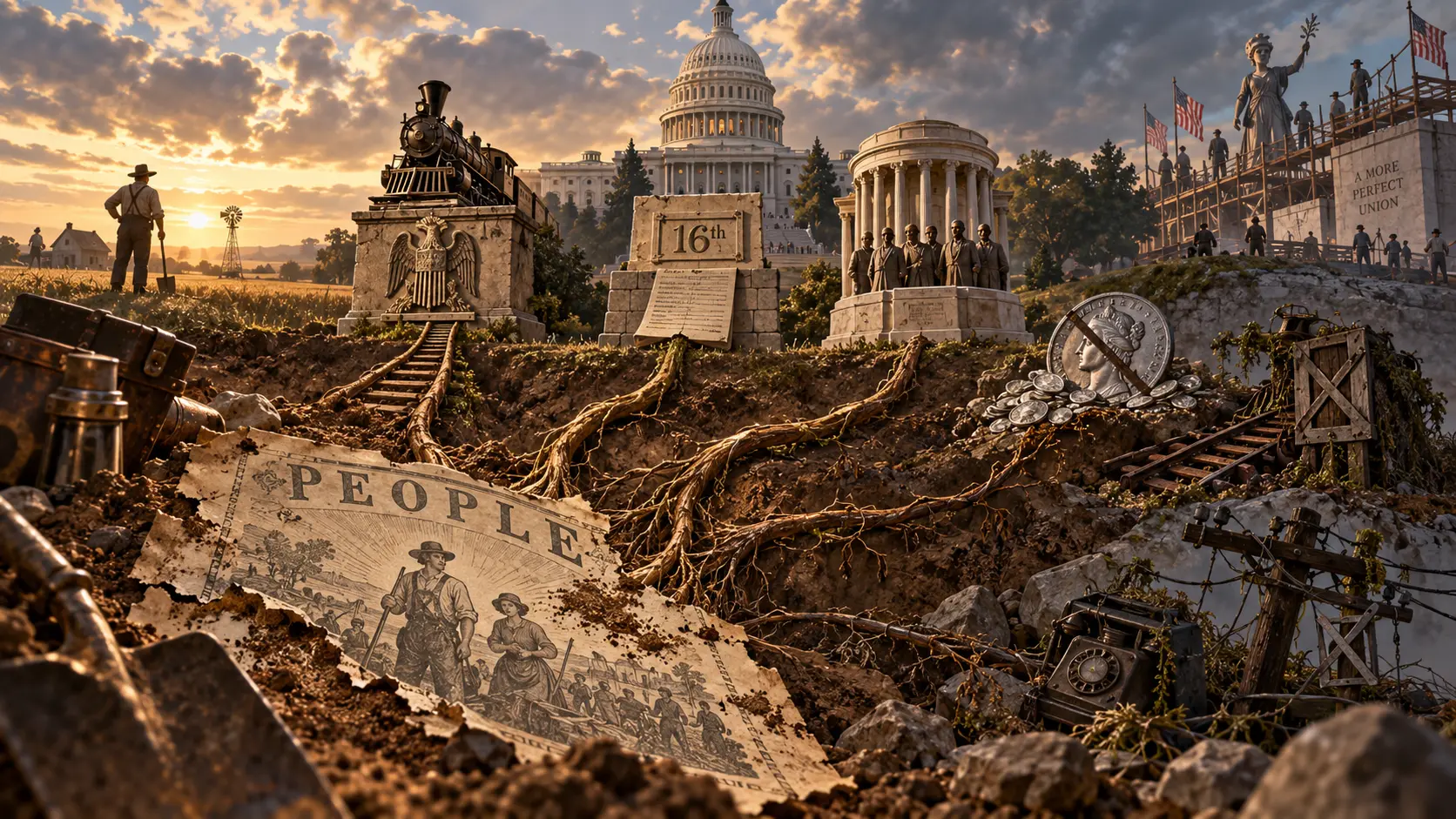
THE PARTY DIED. SOME OF THE ARGUMENT ENTERED THE FUTURE.
The cleanest ending is not “the Populists won later.” They did not.
Free silver did not become the permanent monetary system. Federal ownership of the national rail network did not become normal policy. Public ownership of national telegraph and telephone systems did not become the American model.
But stronger federal railroad regulation grew. Constitutional authority for a federal income tax arrived with the Sixteenth Amendment. Direct election of senators arrived with the Seventeenth. Populists did not single-handedly cause those reforms, but they had helped move those arguments from the edge toward the center of national politics.
AFTER THE PARTYWHAT MOVED?
The words make more sense now
| Term | Plain-language meaning |
|---|---|
| deflation | A broad fall in prices; each dollar buys more, which can make fixed debts harder for debtors to repay. |
| mortgage | A loan secured by property such as a farm. |
| freight rate | The price charged to transport goods. |
| rebate | Money or a discount returned to a customer, often giving large shippers a better effective rate. |
| Grange | The Patrons of Husbandry, a farmer organization begun in 1867 mixing education, community, cooperation, and reform. |
| Farmers’ Alliance | Farmer organizations that developed cooperative economic programs and increasingly demanded political reform. |
| Populism | Here, the farmer-labor political movement organized through the People’s Party around monetary, transportation, land, tax, and democratic reforms. |
| bimetallism / free silver | Using gold and silver as monetary metals; free silver demanded unrestricted silver coinage, especially at 16:1. |
| graduated income tax | A tax whose rate increases at higher income levels. |
| Interstate Commerce Commission | The federal commission created in 1887 to regulate interstate railroad commerce. |
| fusion | Two political groups cooperating behind the same candidate. |
Before you leave, fix the story
| Easy story | Better historical version |
|---|---|
| Farmers hated new technology. | Farmers adopted productivity-enhancing technology. Greater output could still coexist with falling prices and financial pressure. |
| Populists were just angry rural people. | They built a detailed program about money, transportation, land, taxes, credit, labor, and representation. |
| Farmers wanted silver because silver was cheaper. | Free silver was mainly a strategy for expanding money and creating easier monetary conditions for debtors. |
| Railroad complaints were made up. | Western farmers often paid higher freight rates. |
| Railroads charged more simply because they were evil. | Western lines also had much lower traffic density and high fixed costs. The conflict had real economics on both sides. |
| The ICC immediately fixed railroad abuse. | The 1887 law was a major federal step, but early regulatory power and enforcement were limited. |
| All farmers were part of one movement. | White southern Alliances excluded Black farmers, who built the Colored Farmers’ Alliance. Economic cooperation collided with racism and voting-rights politics. |
| Lease definitely said “raise less corn and more hell.” | The famous line came through partisan newspaper embellishment and was later embraced by Lease; it is not a clean verified quotation. |
| Bryan founded the Populist Party. | James B. Weaver was the People’s Party nominee in 1892. Bryan was a Democrat whom Populists backed through fusion in 1896. |
| Populists nearly won in 1892. | Weaver won 8.5% and 22 electoral votes—remarkable third-party performance, but nowhere near the presidency. |
| The party disappeared, so nothing mattered. | The party faded while some reforms it championed later entered mainstream law. Other major demands never did. |
Sources & evidence
Historical wheat prices: Encyclopaedia Britannica historical series — source
Interstate Commerce Act: National Archives — source
Kansas rail rate and traffic data: Kansas Historical Society — source
Farmers’ Alliance: Texas State Historical Association — source
Colored Farmers’ Alliance: Texas State Historical Association — source
Mary Elizabeth Lease quotation audit: Kansas History — source
Omaha Platform: Teaching American History — source
1892 election: American Presidency Project — source
1896 election: National Archives — source
Later reform echoes: National Archives — Hepburn Act · 16th Amendment · 17th Amendment
Art note: All narrative images are generated interpretive StoryHub art. They are not presented as authentic historical photographs or primary sources. The public StoryHub uses optimized 1672×941 WebP derivatives made from the archived full-resolution L018 originals.