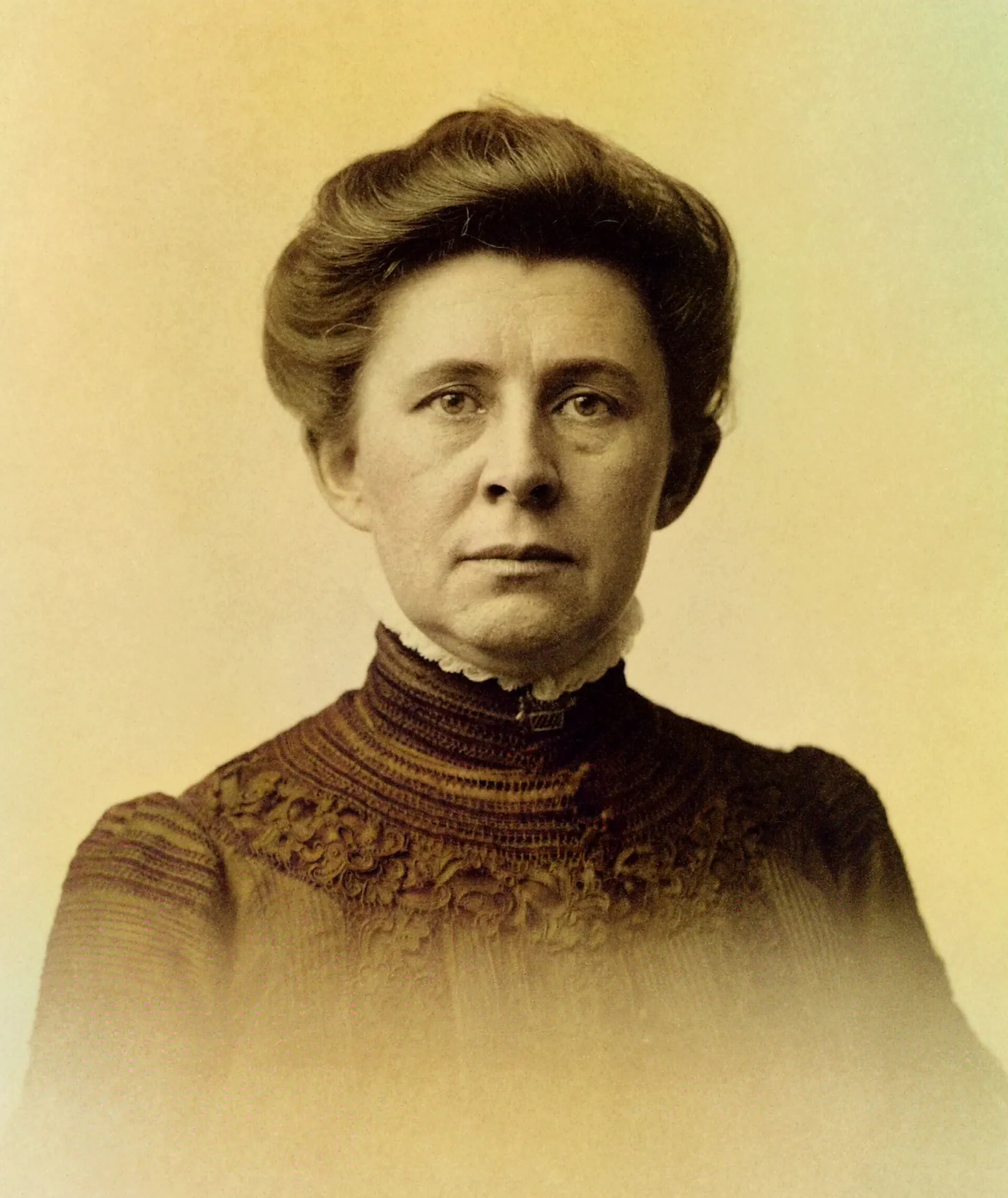
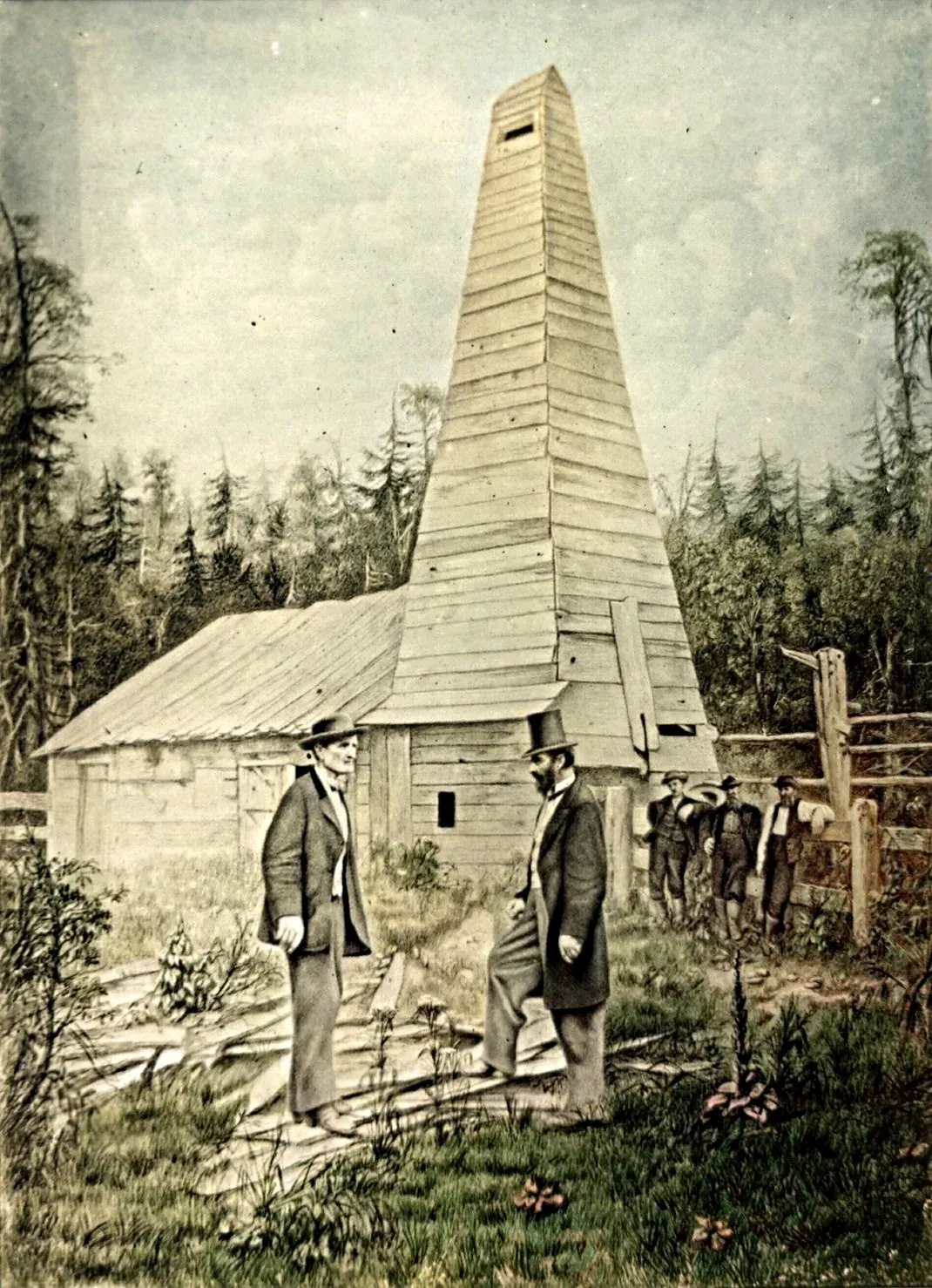
Ida Tarbell grew up in the oil fields of western Pennsylvania, where her father built storage tanks and drilled wells. In 1872, when she was 14, word leaked that John D. Rockefeller's Standard Oil and three railroads had signed a secret deal. The oil region rose up against it. Thirty years later Tarbell went back to that deal with a notebook, and she started with the freight bill.
WHAT A REBATE ACTUALLY DID
Say two kids sell candy at school and both buy it from the same corner store. The store's price is a dollar a bag. Then the store quietly tells one kid: you pay a dollar like everyone else, but I'll hand you back forty cents later. Oh, and every time your rival buys a bag, I'll hand you forty cents of his money too.
How long does the rival last? He's paying full price, you're paying sixty cents, and he's funding you every time he restocks. That's a rebate plus a drawback. Here's where the comparison breaks. A kid can walk to a different store. In 1872 an oil refiner in Cleveland had no other way to get his oil to New York. The railroads were the only road, and three of them signed the deal together.
Read the freight bill.
Under the secret deal, the listed rate to ship a barrel of oil from Cleveland to New York was 2 dollars and 56 cents. Members got 1 dollar and 6 cents back on every barrel they shipped. They also got a drawback of 1 dollar and 6 cents on every barrel shipped by anyone outside the deal. You run an independent refinery. Set the shipments and read the bill.
Your bill
| Item | Dollars |
|---|---|
| Freight at 2.56 a barrel | |
| Rebate | 0.00 |
| You pay |
Standard's bill
| Item | Dollars |
|---|---|
| Freight at 2.56 a barrel | |
| Rebate, 1.06 on its own oil | |
| Drawback, 1.06 on your oil | |
| Standard pays |
The oil region found out in late February 1872. Producers held mass meetings, formed a union, and refused to sell crude to anyone tied to the deal. On April 2, 1872, Pennsylvania suspended the company's charter. The rebate plan was dead. Rockefeller had already used the threat of it.
Twenty two of twenty six.
While the rebate deal hung over the city, Standard Oil bought 22 of the 26 refineries in Cleveland in about six weeks. The same facts can be read two ways. Switch between them.
Kerosene, price per gallon
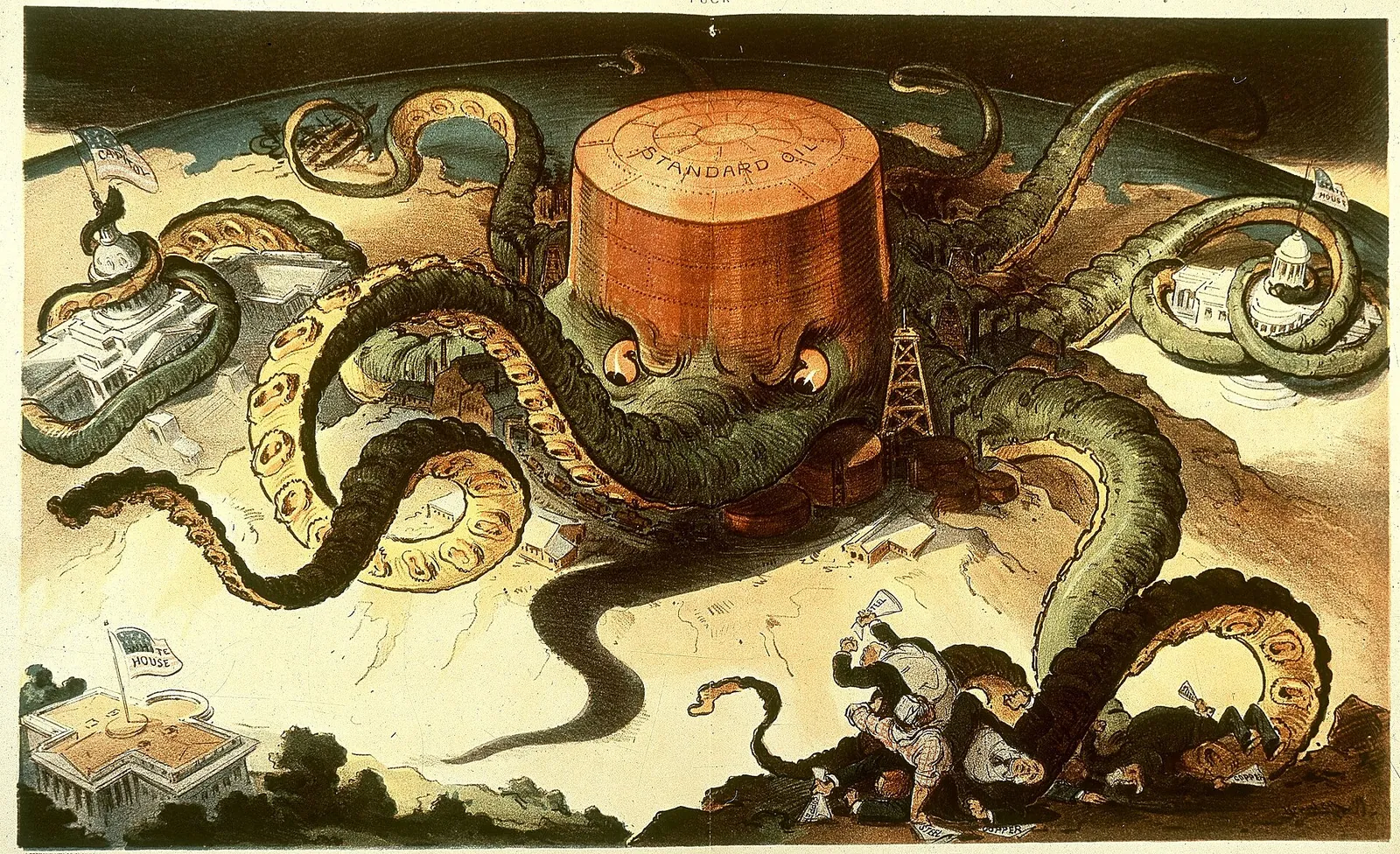
What is the octopus grabbing?
While Tarbell's series was still running, the cartoonist Udo Keppler drew Standard Oil as an octopus whose head is an oil storage tank. He titled it Next! Tap each glowing spot to read what the tentacles have hold of.
Print it or hold it?
Tarbell spent about five years on the series with her assistant John Siddall. They dug through lawsuits, state investigations and congressional hearings, much of it sworn testimony by Standard's own officers. Henry H. Rogers, a top Standard executive, met with her many times starting in 1902 through his friend Mark Twain and handed over documents. Tarbell's rule was simple. If she could not prove it, it did not run. Standard Oil never sued her. You are the editor. Decide each claim.
One company, thirty four pieces.
By 1880 Standard Oil refined about 90 percent of the oil in the United States. In 1906 Theodore Roosevelt's Justice Department sued it under the Sherman Antitrust Act of 1890. On May 15, 1911, the Supreme Court ordered the company broken apart.
One company controls the refining of nearly all American oil.
Tarbell used documents. The next writer told the truth inside an invented story, and it changed what you eat.
- Ida M. Tarbell, The History of the Standard Oil Company, McClure, Phillips and Co., 1904. Two volumes, first serialized in McClure's Magazine, November 1902 to October 1904.
- Ida M. Tarbell, All in the Day's Work: An Autobiography, Macmillan, 1939.
- Ron Chernow, Titan: The Life of John D. Rockefeller, Sr., Random House, 1998. Cleveland purchases of 1872.
- Standard Oil Co. of New Jersey v. United States, 221 U.S. 1, decided May 15, 1911.
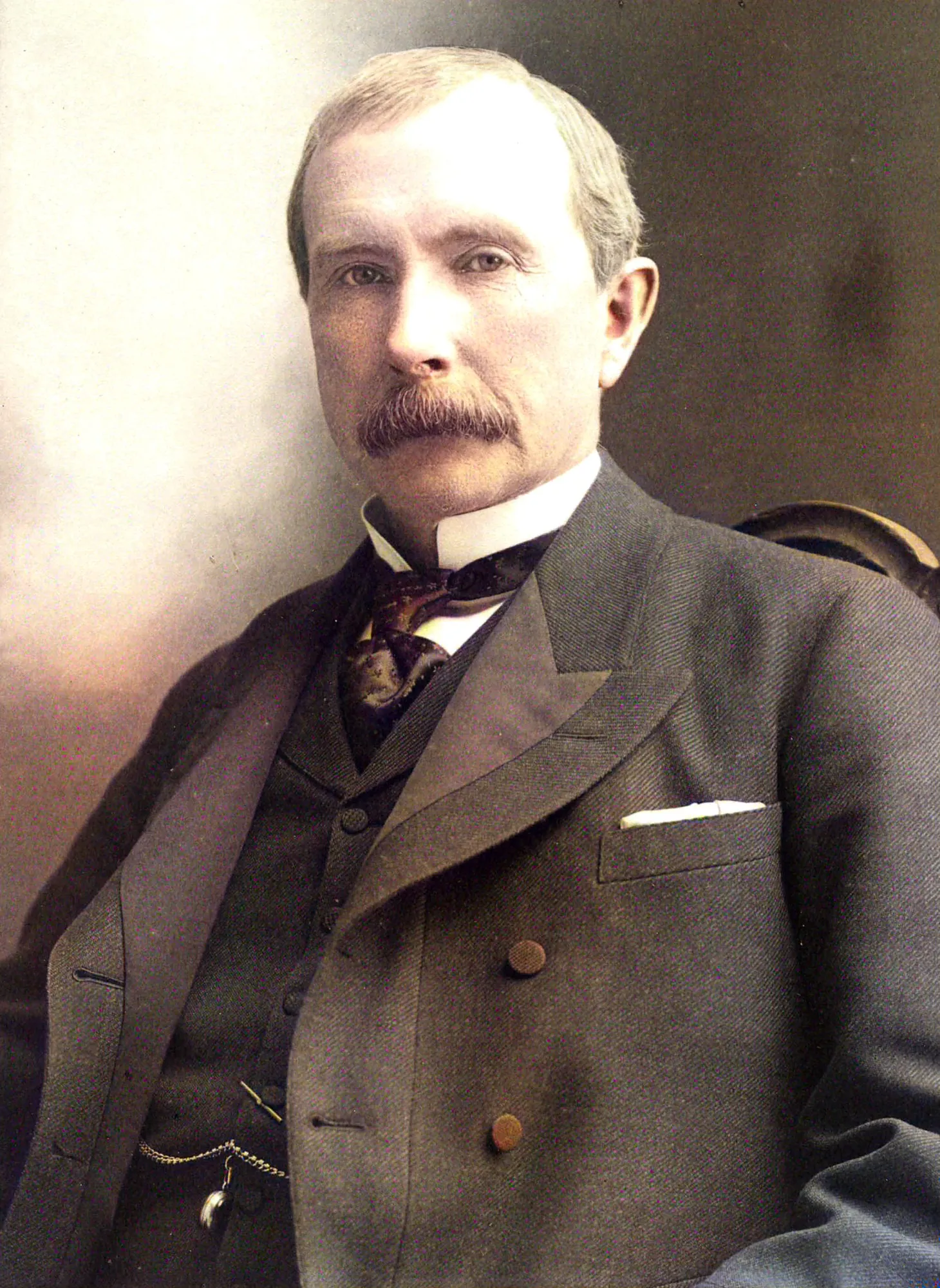
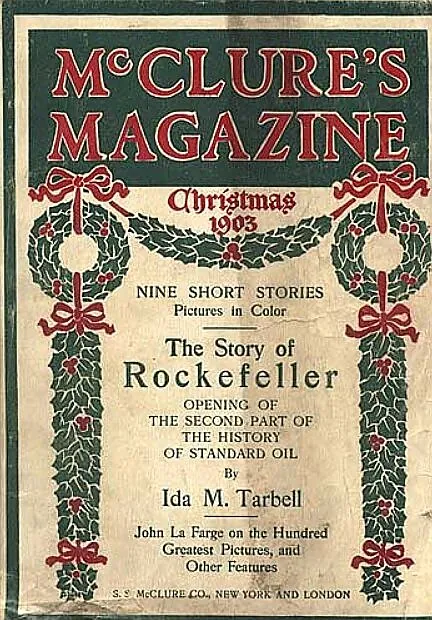
- Udo J. Keppler, Next!, Puck, September 7, 1904, Library of Congress. McClure's Magazine cover, December 1903. Engraving of the Drake well. Portraits of Tarbell and Rockefeller. All public domain, via Wikimedia Commons. Photographs colorized for this lesson with the DDColor model, so colors are an educated guess.