
Beyond the Scoreboard · Cinematic Ink

The Route
Treewild routes to the NFL

Nobody drew these routes up.

A teacher. A night-shift stocker. A wounded veteran. Ten people who reached the NFL through a door nobody was watching.

10
different routes
7
never drafted
6
no college football

Real photographs. Illustrated turning points. The evidence stays in view.

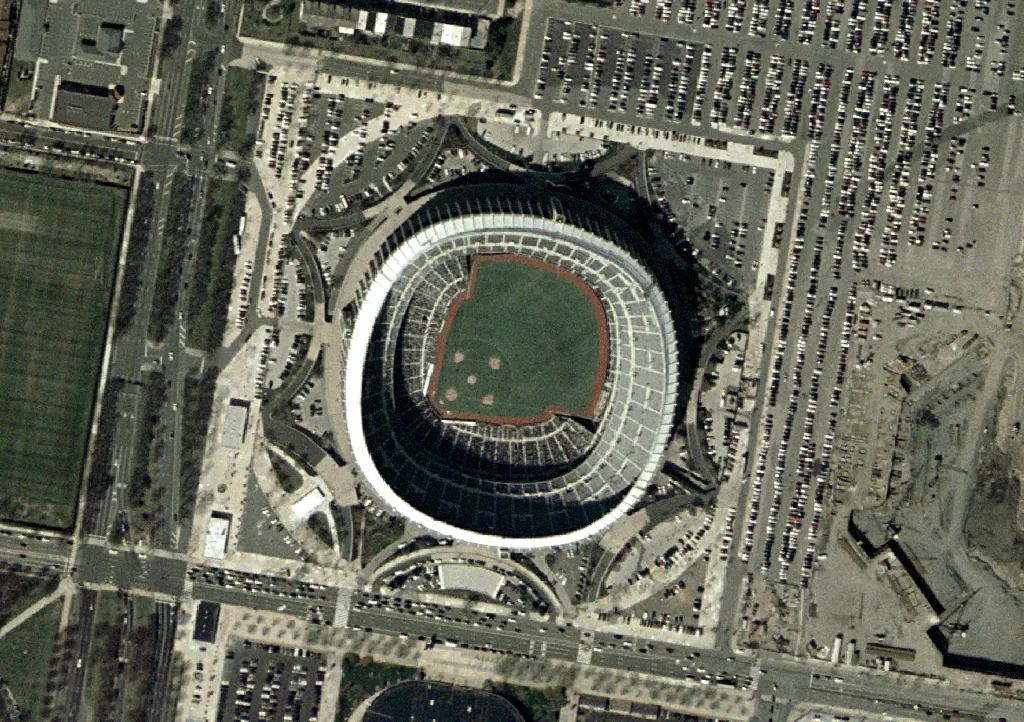
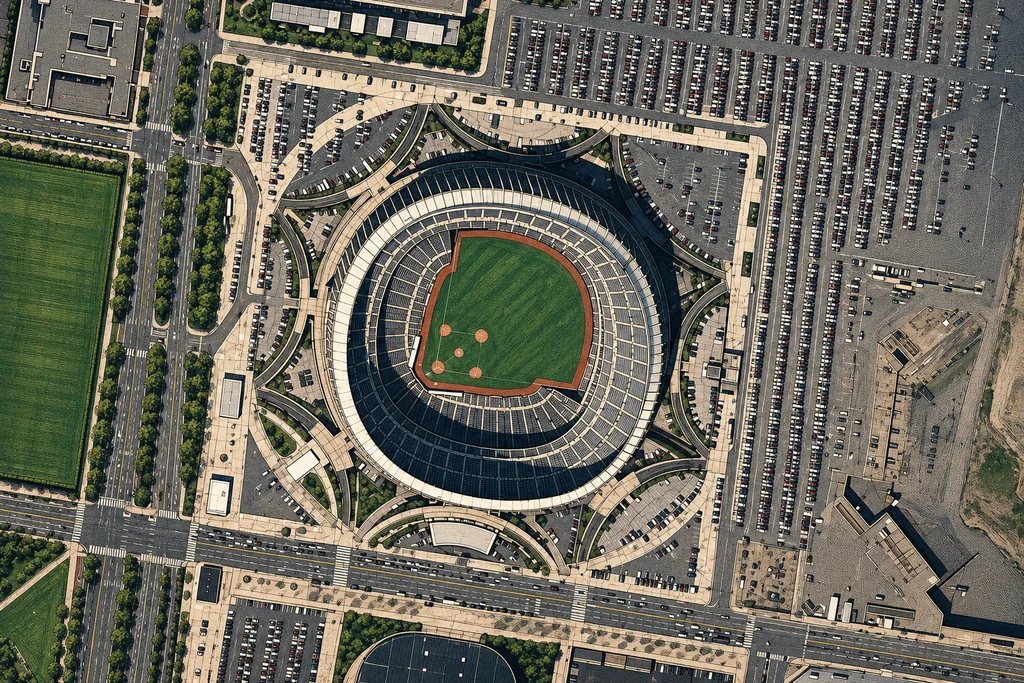
NASA overhead photograph of Veterans Stadium in baseball configuration in 2002.
Illustrated overhead interpretation of Veterans Stadium and its surrounding parking lots.
Source-derived illustration · 2002

The place is real. The surface is ink.

Veterans Stadium, Philadelphia, seen from above in 2002. The baseball configuration belongs to the source date; this is not a view of the 1976 tryout.

Source: NASA World Wind, public domain. AI-assisted overpainting for the desk. Original record.

Source photograph & what changedNASA overhead photograph of Veterans Stadium in baseball configuration in 2002.

The 2002 NASA image establishes the stadium and surrounding roads. The overpainting interprets surfaces and small details; it is not a precise map. Compare the bowl and parking lots, then look for details the illustration changes.

Earth 1976 Route 9: Go

The Vet, 1976

A go route is the simplest route in football. Run straight down the field as fast as you can. Vince Papale's route looked that simple on screen in Invincible. The real one had more stops.

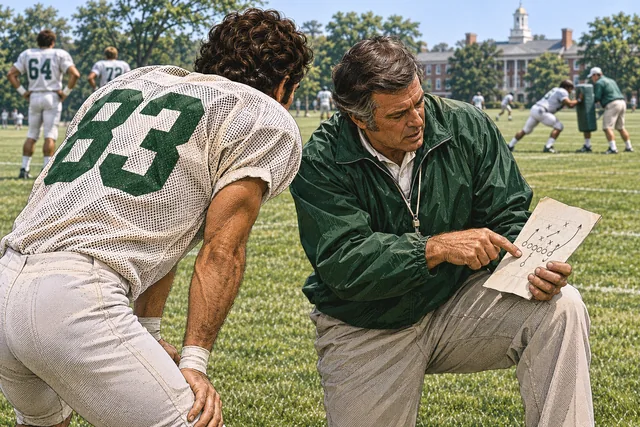
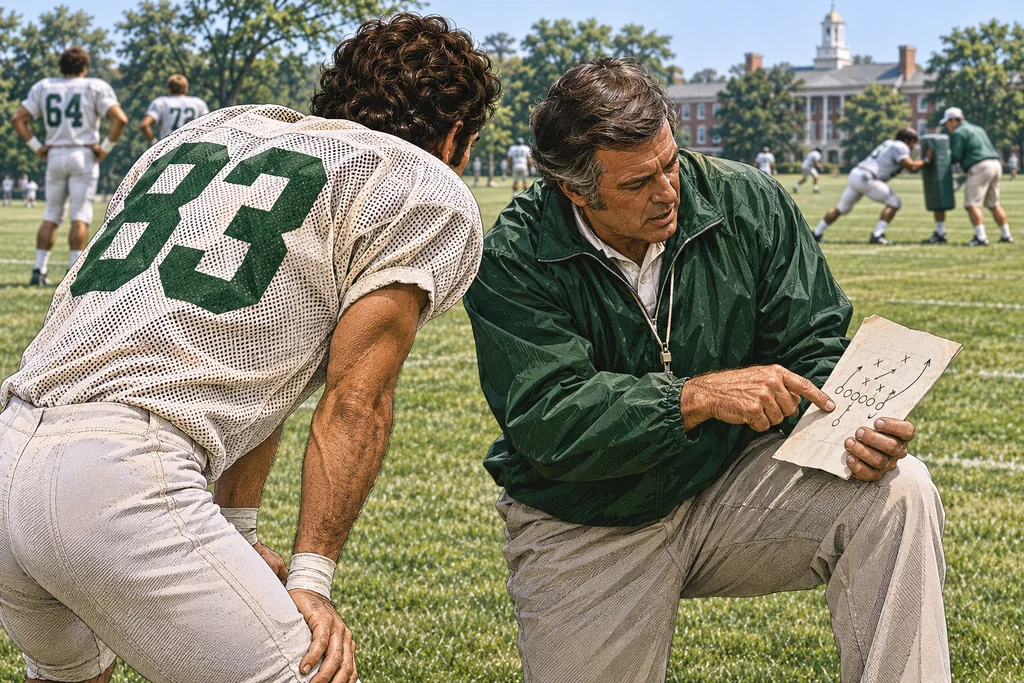
A number 83 player leans toward a coach pointing to a play sheet on a college practice field.
Artistic reconstruction

Earn the next rep.

An imagined coaching exchange at Widener’s 1976 Eagles camp. Papale had already played for the Philadelphia Bell. Making this roster took more than showing up.

AI-assisted reconstruction. The exchange, people and building details are interpreted, not a recorded moment. Camp history.

Vince Papale was born in 1946 in Glenolden, Pennsylvania, just outside Philadelphia. At Interboro High School he played only one varsity football season. He went to Saint Joseph's University on a track scholarship as a pole vaulter, because the school had no football team.

He became a teacher at Interboro and coached the junior varsity. He played semipro ball for the Aston Green Knights, plus tackle games in neighborhood leagues around Philadelphia. In 1974, at 28, he made the Philadelphia Bell of the new World Football League. He told the team he was 24. He caught the first pass in the history of that league. The WFL folded in October 1975.

In 1976 the Eagles hired a new coach, Dick Vermeil. General manager Jim Murray invited Papale to a workout. He made the team at 30, the oldest rookie in NFL history who was not a kicker and had never played college football. He played in 41 of 44 games over three seasons, mostly on special teams. His teammates voted him special teams captain. A shoulder injury ended his career, and he retired in 1979.

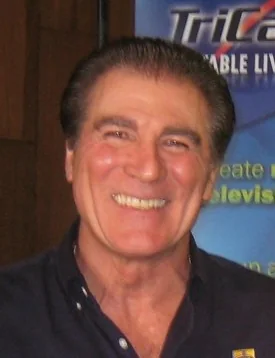
Vince Papale in January 2009, more than thirty years after his rookie season. Photo: Philip Nelson, Live Streaming Expert (philipnelson.org).
Vince PapaleTeacher at Interboro High. Eagles rookie at 30.
Vince Papale in January 2009, more than thirty years after his rookie season. Photo: Philip Nelson, Live Streaming Expert (philipnelson.org). Philip Nelson, Live Streaming Expert (philipnelson.org). CC BY-SA 2.0. Resized WebP; display crop only. Adaptation shared under the same license. Source · License · Philip Nelson
24

The age Papale told the Philadelphia Bell he was in 1974. He was really 28.

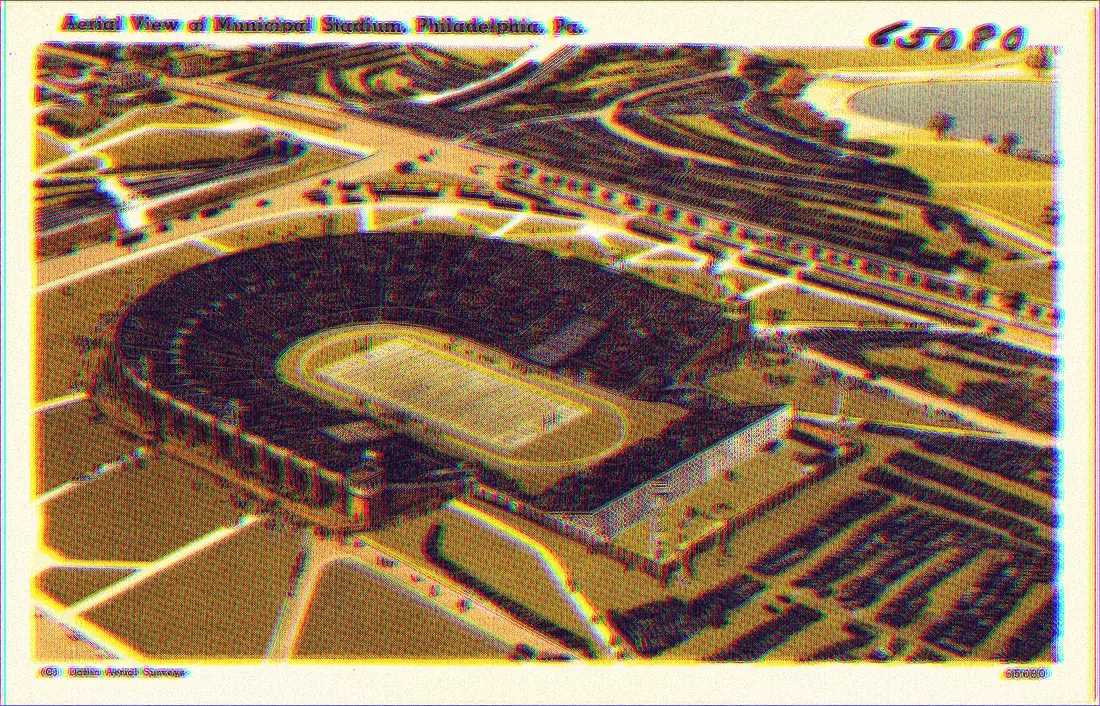
Old postcard view from above of Municipal Stadium in Philadelphia, a horseshoe stadium surrounded by parking lots
Philadelphia's Municipal Stadium on an old postcard. Renamed JFK Stadium, it was home to the Bell in 1974. Postcard by Art View Card Distributors, public domain, via Wikimedia Commons. Color treatment for this page.
1946

Born in Glenolden, Pennsylvania.

1968

Graduates from Saint Joseph's, a pole vaulter with no college football.

1974

Makes the Philadelphia Bell at 28 and catches the first pass in WFL history.

1976

Makes the Eagles at 30 after a workout for Dick Vermeil.

1978

Named the Eagles' Man of the Year for his charity work.

2006

Disney releases Invincible on August 25. It opens at number one.

Reel vs Real

Watch both. Then sort the claims below.

Reel: Invincible, 2006

Mark Wahlberg as Vince PapaleOpen on YouTube

Real: Papale on the 1976 news

The real Vince PapaleOpen on YouTube
6 FT 2

The real Vince Papale with the Eagles. In high school he was about 5 feet 7.

5 FT 8

Mark Wahlberg, who played him. Closer to the high school Papale than the Eagles one.

Hollywood or History?

Every true story movie changes things. Each claim below is something Invincible shows or says. Call it History if it really happened that way, Hollywood if the movie made it up, or Remixed if a real event got moved or changed.

0 of 10 called

Q1
The math of a long shot

The Odds

Most NFL players take the same route. They star in high school, earn a college scholarship, play four or five years of college football, get drafted, and sign. The NCAA counts how many players make it through each step.

NCAA figures for 2018 and 2019: 1,006,013 high school football players, 73,712 NCAA players, 254 players drafted. Each year's draft class is compared with about a quarter of the high school total, one graduating class, which comes to about one drafted player for every 1,000 seniors.

Pick a route

The Route Tree

Receivers learn routes as a numbered tree. Every route starts with the same few steps off the line, then breaks a different way. The ten people in this story all started somewhere the NFL was not looking. Tap a number to jump into that universe, or use the doors to find a pattern.

What opened the door?

Pick a door to light up every route that went through it.

    Route 2 · SlantEarth 1952Los Angeles Rams

    Night Train Lane

    A slant is three steps and a hard cut. Lane cut his bus ride short and walked into the Rams office.

    Dick Lane played one season of junior college football in Nebraska, then spent four years in the Army. At Fort Ord in California he caught 18 touchdown passes for the base team in 1951.

    Out of the Army in 1952, he worked at an aircraft plant in Los Angeles, lifting heavy sheets of metal out of a bin and feeding them into a press. His bus to work passed the office of the Los Angeles Rams, the defending NFL champions. One day he got off, walked in with a scrapbook of old newspaper clippings, and asked for a tryout.

    The Rams tried him at receiver and then moved him to defense. In 12 games that fall he intercepted 14 passes. Teams now play 17 games, and nobody has passed him. He finished his career with the Detroit Lions from 1960 to 1965 and went into the Hall of Fame in 1974.

    Michigan connection: six seasons with the Lions

    "Lane came out here to make the ball club. Well, last night he got himself a job."

    Rams coach Joe Stydahar, after Lane's first scrimmage, August 1952
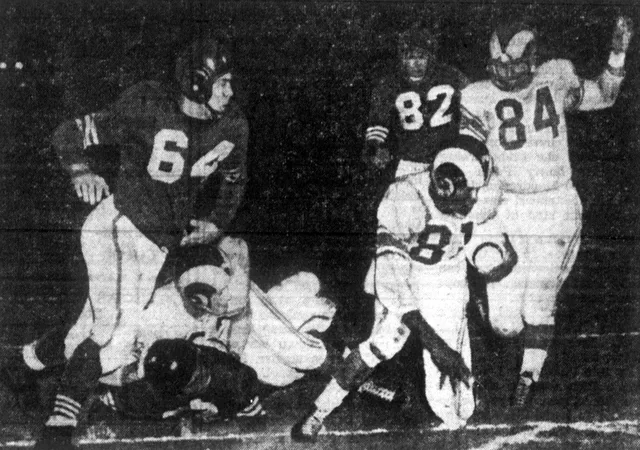
    Lane is number 81, center right, recovering a fumble against the 49ers, September 3, 1953. Full frame retained; his identity is established by the source caption.
    Night Train LaneAircraft plant worker with a scrapbook.
    Lane is number 81, center right, recovering a fumble against the 49ers, September 3, 1953. Full frame retained; his identity is established by the source caption. Unknown photographer / Los Angeles Daily News. Public domain in the United States (published without copyright notice). Resized WebP; display crop only. Source · License
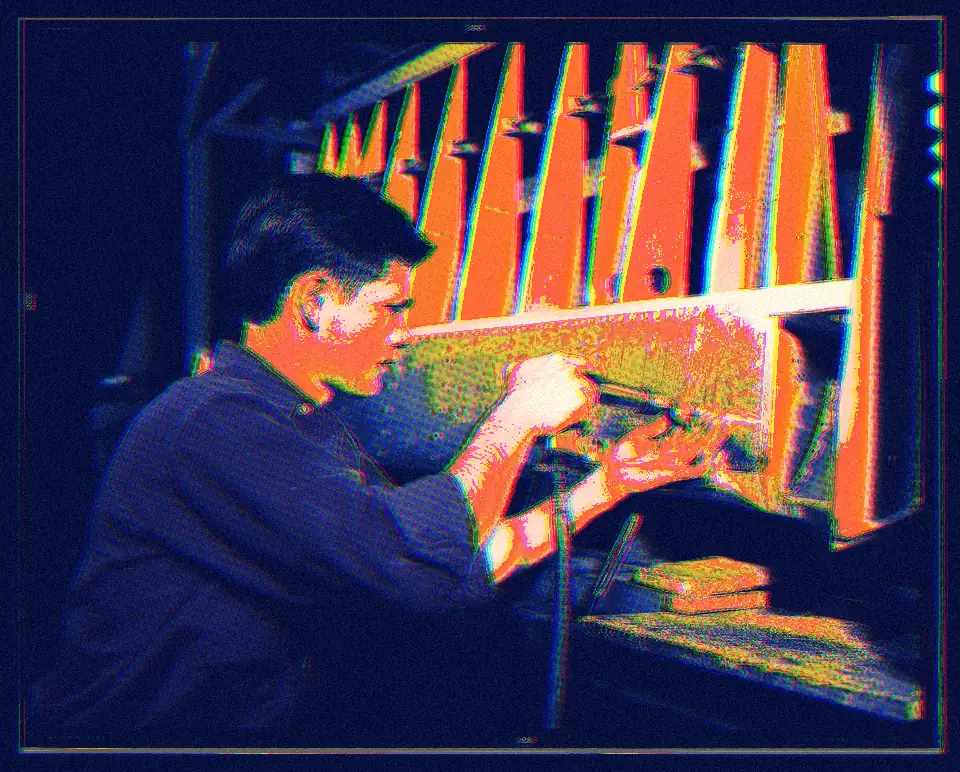
    A worker riveting an aircraft part inside a factory, recolored in bright yellow, red and blue comic tones
    Inside a Douglas Aircraft plant in Long Beach, California, early 1940s. Lane worked in a Los Angeles plant like this one a decade later. Photo: Alfred T. Palmer, Library of Congress, public domain, via Wikimedia Commons. Color treatment for this page.
    Start

    Army veteran at an aircraft plant

    Door

    A scrapbook and a walk in

    Result

    14 interceptions, still the record

    Route 0 · HitchEarth 1955Baltimore Colts

    Johnny Unitas

    A hitch runs five yards, stops, and turns back for the ball. His hometown team stopped Unitas cold, and he turned around for one more throw.

    Earth 1955 editionPittsburgh, PennsylvaniaPay: $6 a game

    The Pittsburgh Steelers drafted Johnny Unitas out of Louisville in the ninth round in 1955, the 102nd pick. He had grown up in Pittsburgh. The team cut him before he ever played in a preseason game, and he hitchhiked home.

    He took a construction job as a pile driver to support his wife and the baby they had on the way. On weekends he played for the Bloomfield Rams, a sandlot team on a field beneath the Bloomfield Bridge, for $6 a game. He played quarterback and safety and did the punting. The field was covered in rocks and broken glass.

    In 1956 the Baltimore Colts needed a backup quarterback. Their long distance call to Pittsburgh cost about 80 cents. Two years later Unitas led the Colts to the 1958 NFL title in overtime against the New York Giants, a game people still call the Greatest Game Ever Played.

    He made ten Pro Bowls. His number 19 was retired by the Colts, and he went into the Hall of Fame in 1979.

    "We sort of made up the plays as we went along."

    Johnny Unitas on the Bloomfield Rams, as told to NFL Films
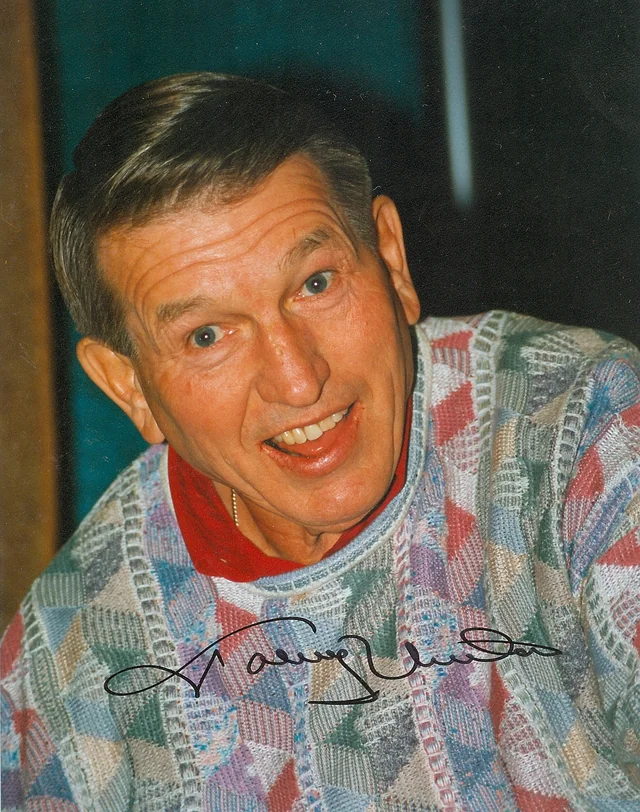
    Johnny Unitas at Harborplace, Maryland, January 20, 1996. Later portrait, not his 1955 sandlot season.
    Johnny UnitasPile driver. Six dollars a game on the sandlot.
    Johnny Unitas at Harborplace, Maryland, January 20, 1996. Later portrait, not his 1955 sandlot season. John Mathew Smith / Kingkongphoto. CC BY-SA 2.0. Resized WebP; display crop only. Adaptation shared under the same license. Source · License
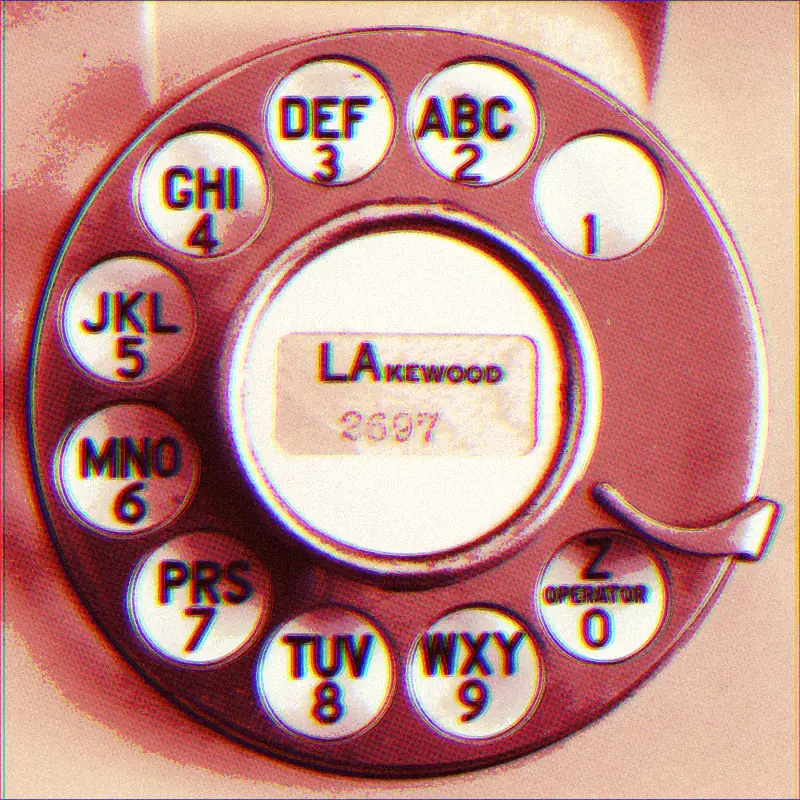
    Close view of an old rotary telephone dial with letters and numbers, in red and cream
    A Bell System rotary dial from the 1940s. The call that brought Unitas to Baltimore cost about 80 cents. Photo: Kbrose, CC BY-SA 4.0, via Wikimedia Commons. Adapted with a color treatment, shared under the same license.
    Start

    Cut by his hometown team

    Door

    An 80 cent phone call

    Result

    1958 champion, Hall of Fame

    Route 3 · ComebackEarth 1969Pittsburgh Steelers

    Rocky Bleier

    A comeback runs deep, then turns back toward the ball. Bleier went to war and came back to the same team.

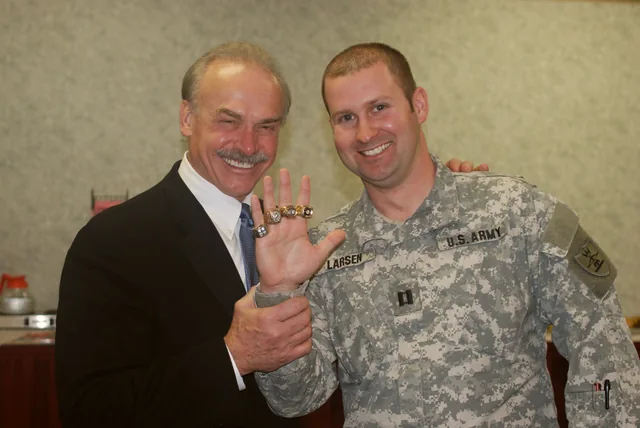
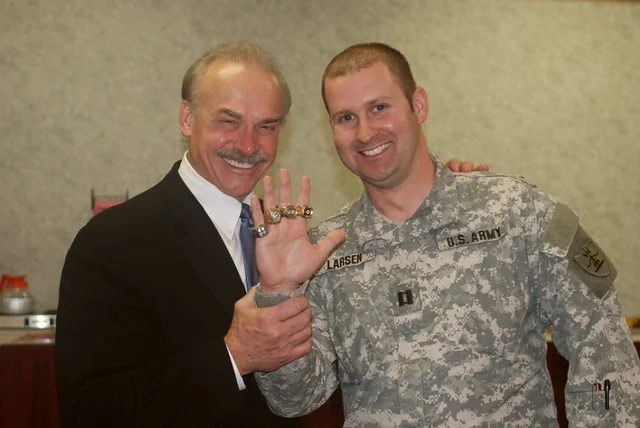
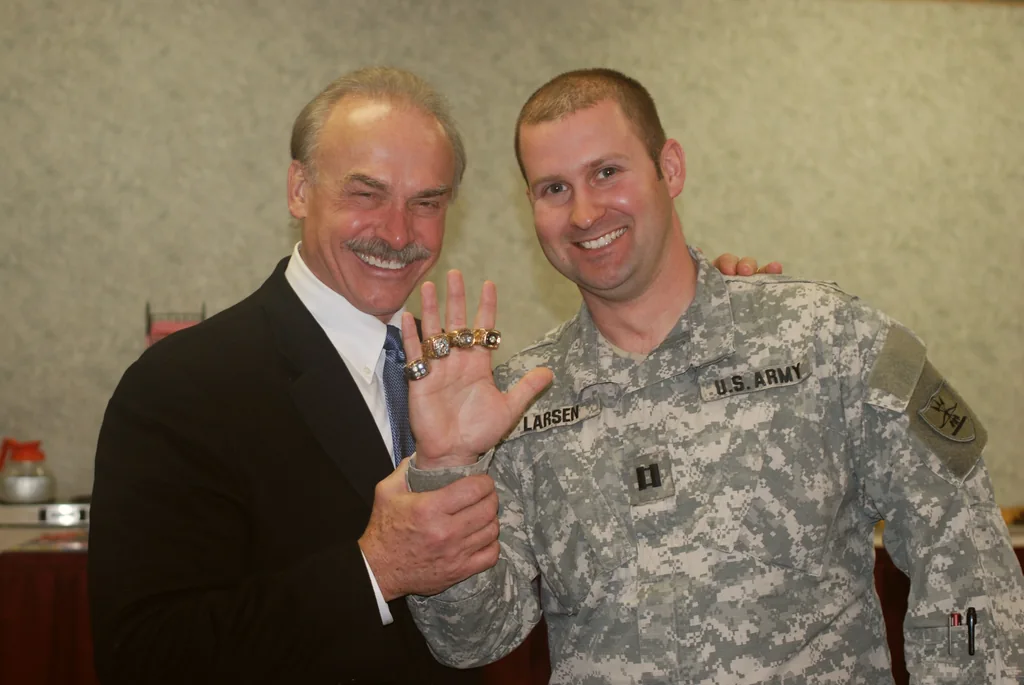
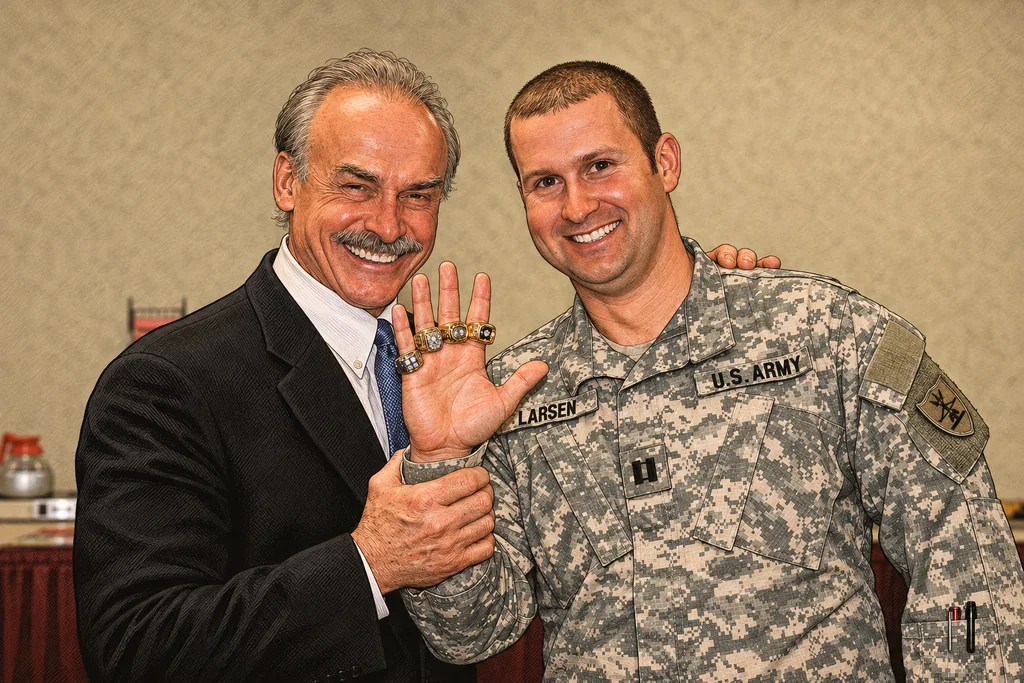
    Original 2009 photograph of Rocky Bleier with Doug Larsen showing Bleier’s four Super Bowl rings.
    Ink overpainting of Rocky Bleier beside Doug Larsen, who holds up four fingers wearing four Super Bowl rings.
    Photographic overpainting · 2009

    Four rings. One long comeback.

    Rocky Bleier (left) with Capt. Doug Larsen at a National Guard conference in Bismarck, January 24, 2009. Larsen is trying on the four Super Bowl rings Bleier won after returning from Vietnam.

    Photo: Bill Prokopyk / U.S. Army, public domain in the United States. AI-assisted overpainting. Original record.

    Source photograph & what changedOriginal 2009 photograph of Rocky Bleier with Doug Larsen showing Bleier’s four Super Bowl rings.

    This is a later photograph, not a scene from Bleier’s 1969 recovery. The photograph documents the two men, four rings and gesture. The ink version reinterprets faces, fabric and small details. Use the photograph as the visual evidence.

    The Steelers took Rocky Bleier with the 417th pick in the 1968 draft. He had been team captain at Notre Dame. After his rookie season the Army drafted him, and in May 1969 he shipped out to Vietnam with the 196th Light Infantry Brigade.

    On August 20, 1969, his unit came under attack near Hiep Duc. A bullet went through his thigh, and a grenade blast tore into his right leg and foot. Doctors removed more than 100 pieces of shrapnel. In a hospital in Tokyo they told him he would not play football again. He received the Bronze Star and the Purple Heart.

    While he recovered, a postcard arrived from Steelers owner Art Rooney. Bleier reported to camp in 1970 at about 180 pounds and could not walk without pain. The team kept him on injured reserve. By 1974 he was a starting running back. He won Super Bowls IX, X, XIII and XIV, and he caught a touchdown pass from Terry Bradshaw in Super Bowl XIII.

    The team's not doing well. We need you.
    Art Rooney's postcard to Bleier in the hospital, in Rooney's words. Recreated for this page.
    Rocky Bleier (left) with Doug Larsen at the National Guard conference in Bismarck, January 24, 2009.
    Rocky BleierWounded in Vietnam. Four Super Bowl rings.
    Rocky Bleier (left) with Doug Larsen at the National Guard conference in Bismarck, January 24, 2009. Bill Prokopyk / U.S. Army. Public domain in the United States (U.S. Army official photograph). Resized WebP; display crop only. Source · License
    American soldiers in helmets wading through a flooded rice paddy beside jungle, in olive and gold tones
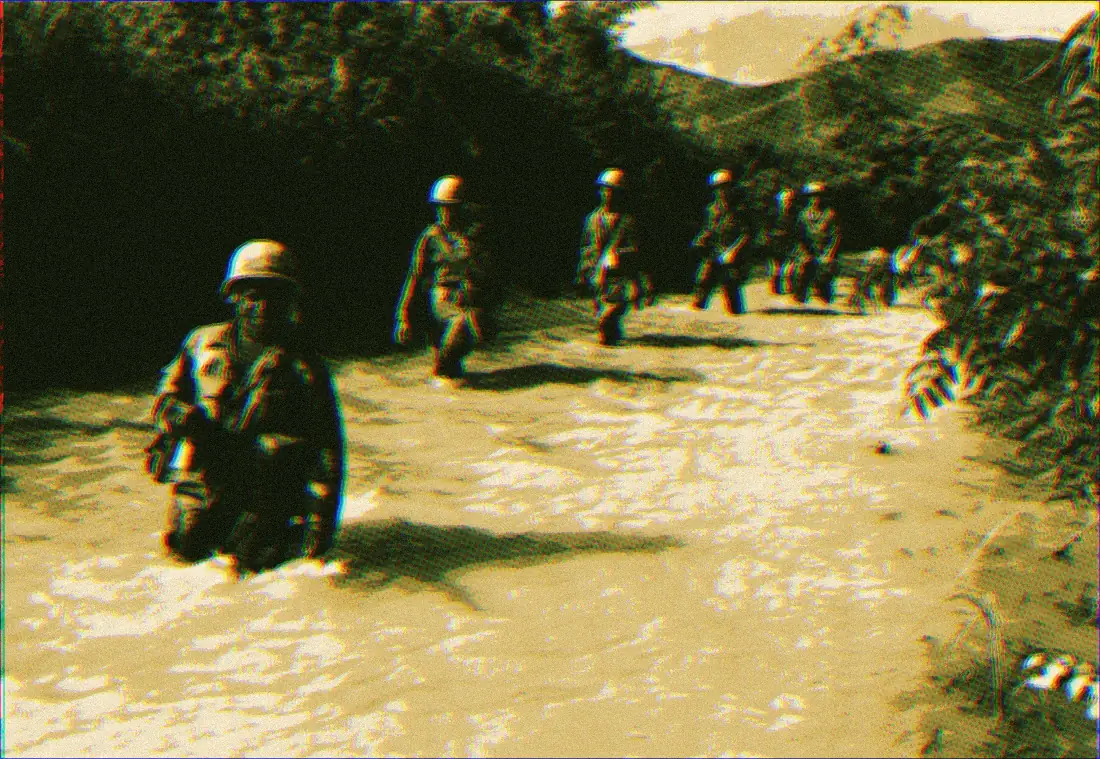
    Soldiers of the 1st Cavalry Division cross a rice paddy in Vietnam, October 1966. Bleier's brigade patrolled ground like this three years later. U.S. Army photo by SSG Howard C. Breedlove, public domain, via Wikimedia Commons. Color treatment for this page.
    Start

    Pick 417, then drafted by the Army

    Door

    A postcard from the owner

    Result

    Four Super Bowl rings

    Route 4 · CurlEarth 1994St. Louis Rams

    Kurt Warner

    A curl runs upfield, then stops in open space and waits for the ball. Warner waited five years.

    Reconstructed scene of young Kurt Warner looking at a can as he stocks a grocery shelf beside a cardboard case.
    Artistic reconstruction

    Before the spotlight, the night shift.

    Cedar Falls, Iowa, circa 1994. Warner stocked shelves after the Packers cut him. This scene reconstructs that work; it does not reproduce a photograph of his shift.

    AI-assisted reconstruction using John Trainor’s 2007 Warner portrait as a likeness reference, CC BY 2.0. Age, clothing and store interior interpreted. Historical account.

    Kurt Warner sat on the bench at Northern Iowa until his senior year. No team drafted him in 1994. The Green Bay Packers brought him to training camp and cut him.

    He went back to Cedar Falls, Iowa, and stocked shelves on the night shift at a Hy-Vee grocery store for $5.50 an hour. In 1995 he signed with the Iowa Barnstormers of the Arena Football League and played there through 1997. The St. Louis Rams signed him in 1998 and sent him to play for the Amsterdam Admirals in NFL Europe.

    In the 1999 preseason, Rams starter Trent Green tore his ACL. Warner took over and threw 41 touchdown passes. He won the NFL MVP award. In Super Bowl XXXIV he threw for 414 yards, a Super Bowl record at the time, and won that game's MVP too. He went into the Hall of Fame in 2017. Hollywood told his story in American Underdog in 2021.

    $5.50/HR
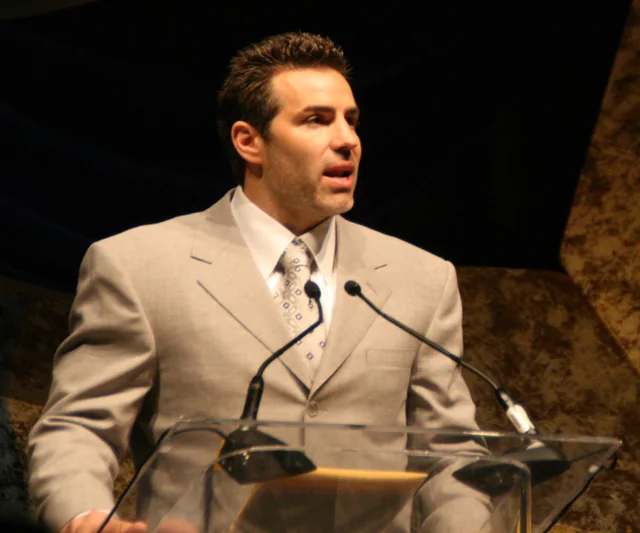
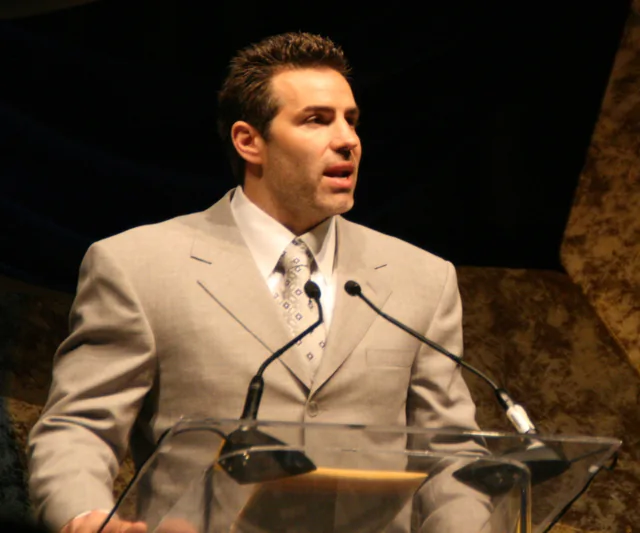
    Kurt Warner speaking in April 2007. Later identity photograph, not a photograph of his grocery work.
    Kurt WarnerNight shift at Hy-Vee. NFL MVP.
    Kurt Warner speaking in April 2007. Later identity photograph, not a photograph of his grocery work. John Trainor. CC BY 2.0. Resized WebP; display crop only. Source · License
    Front of a small town grocery store with a painted sign reading Wheatland Grocery, in neon purple, teal and yellow
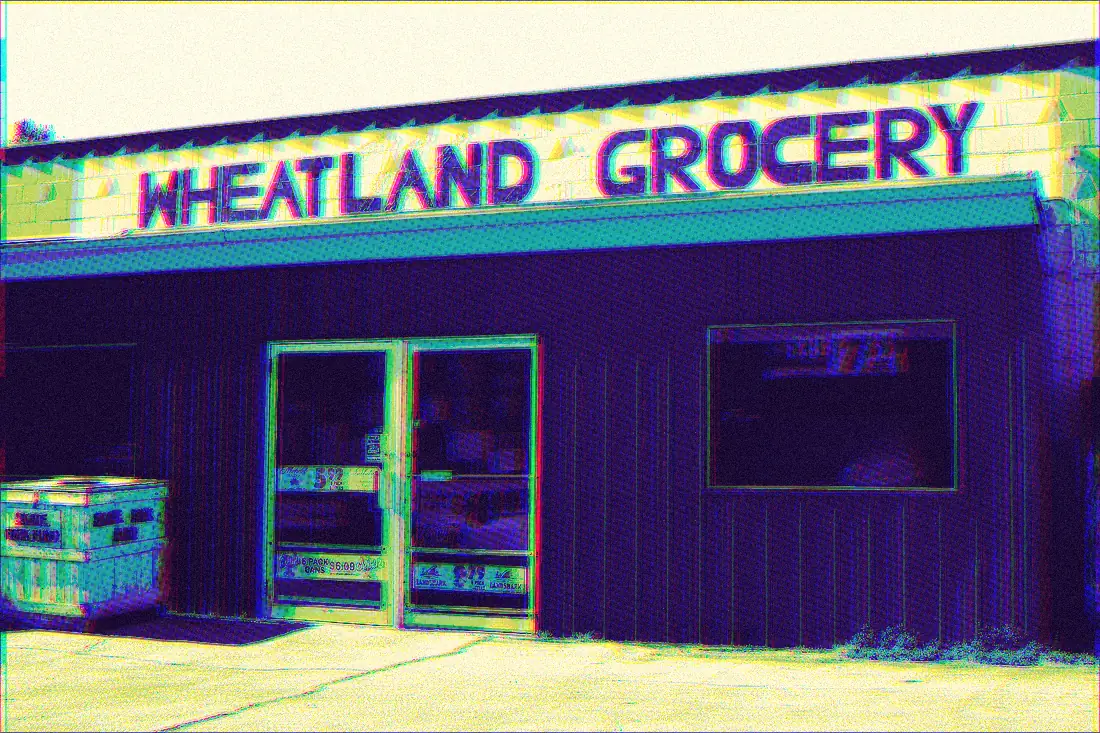
    A small grocery in Wheatland, Iowa, 2009. Warner worked nights at a much bigger Hy-Vee in Cedar Falls. Photo: Richc80, CC BY-SA 3.0, via Wikimedia Commons. Adapted with a color treatment, shared under the same license.

    CEDAR FALLS, IOWA

    1994 NFL draftNOT PICKED
    1994 Packers campCUT
    1994 Hy-Vee, nights$5.50/HR
    1995 to 1997 BarnstormersARENA
    1998 Amsterdam AdmiralsNFL EUROPE
    1999 NFL and Super BowlMVP x2
    Route 1 · FlatEarth 2001New Orleans Saints

    Michael Lewis

    The flat stays short and close to the sideline. Lewis never left home. His delivery route ran past the stadium.

    Michael Lewis grew up in New Orleans and never went to college. He drove a delivery truck for a Budweiser distributor, and his route ran a short distance from the Superdome, where the Saints played. Fans would later call him the Beer Man.

    He kept playing football in semipro leagues and in arena football as a kick returner. In 2000 his hometown Saints gave him a tryout and a spot on the practice squad. He also played for the Rhein Fire in NFL Europe. In 2001, at 29, he made the Saints roster as a return man.

    In 2002 he returned kickoffs for 1,807 yards and punts for 625. The total, 2,432 return yards in one season, set an NFL record. He made the Pro Bowl and first team All Pro. The Saints put him in their Hall of Fame in 2015.

    "I took the long route to get here."

    Michael Lewis, Saints training camp, August 2006
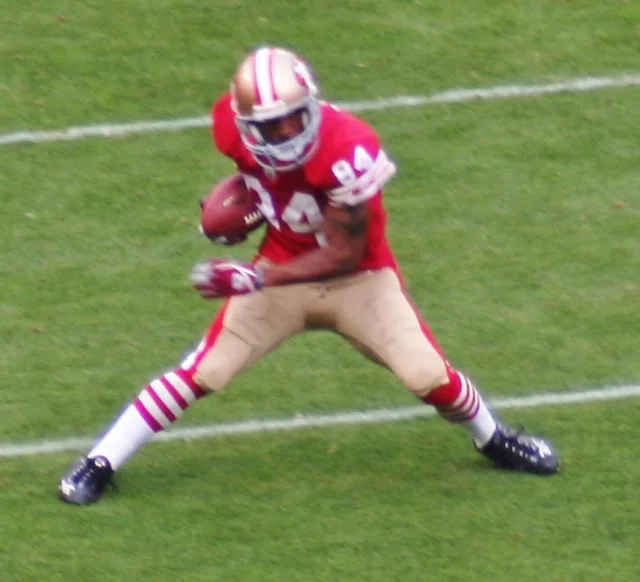
    Michael Lewis, the wide receiver and return specialist, with San Francisco on November 18, 2007. This is his later 49ers season, not his Saints debut.
    Michael LewisThe Beer Man. Drove a delivery route past the Superdome.
    Michael Lewis, the wide receiver and return specialist, with San Francisco on November 18, 2007. This is his later 49ers season, not his Saints debut. John Pavliga; source crop by Arbor to SJ. CC BY 2.0. Resized WebP; display crop only. Source · License

    Original illustration for this page.

    Start

    Beer truck driver, no college

    Door

    A tryout with his hometown team

    Result

    2,432 return yards, an NFL record

    Route 5 · OutEarth 2001New England Patriots

    Stephen Neal

    An out route breaks hard toward the sideline. Neal broke out of a different sport completely.

    Stephen Neal never played college football. At Cal State Bakersfield he was a heavyweight wrestler. He went 156 and 10 and won two NCAA titles. In the 1999 NCAA final he beat Brock Lesnar, who later became a WWE champion. That same year Neal won the world freestyle championship.

    He had not played football since high school in San Diego when the New England Patriots signed him in July 2001 after a special workout. He said the helmet felt like it weighed 20 pounds. The Patriots cut him in August. He spent that fall on the Philadelphia Eagles practice squad, and in December the Patriots signed him back.

    He learned to play guard and stayed in New England through 2010. He started 81 of his 86 games and won Super Bowls XXXVI, XXXVIII and XXXIX.

    1999 NCAA heavyweight final
    Stephen Neal, Cal State Bakersfield
    WIN
    Brock Lesnar, Minnesota
    2nd
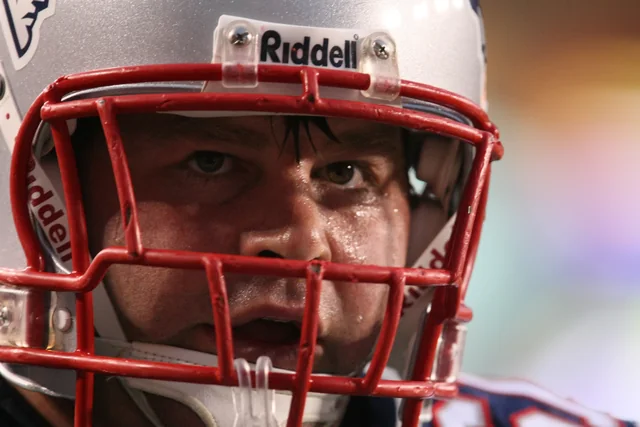
    Stephen Neal with New England against Washington, August 28, 2009. Later NFL photograph, not the 1999 wrestling final.
    Stephen NealBeat Brock Lesnar for an NCAA title. Never played college football.
    Stephen Neal with New England against Washington, August 28, 2009. Later NFL photograph, not the 1999 wrestling final. Keith Allison. CC BY-SA 2.0. Resized WebP; display crop only. Adaptation shared under the same license. Source · License
    A college wrestling match on a mat in the middle of a crowded arena, in red, black and cream
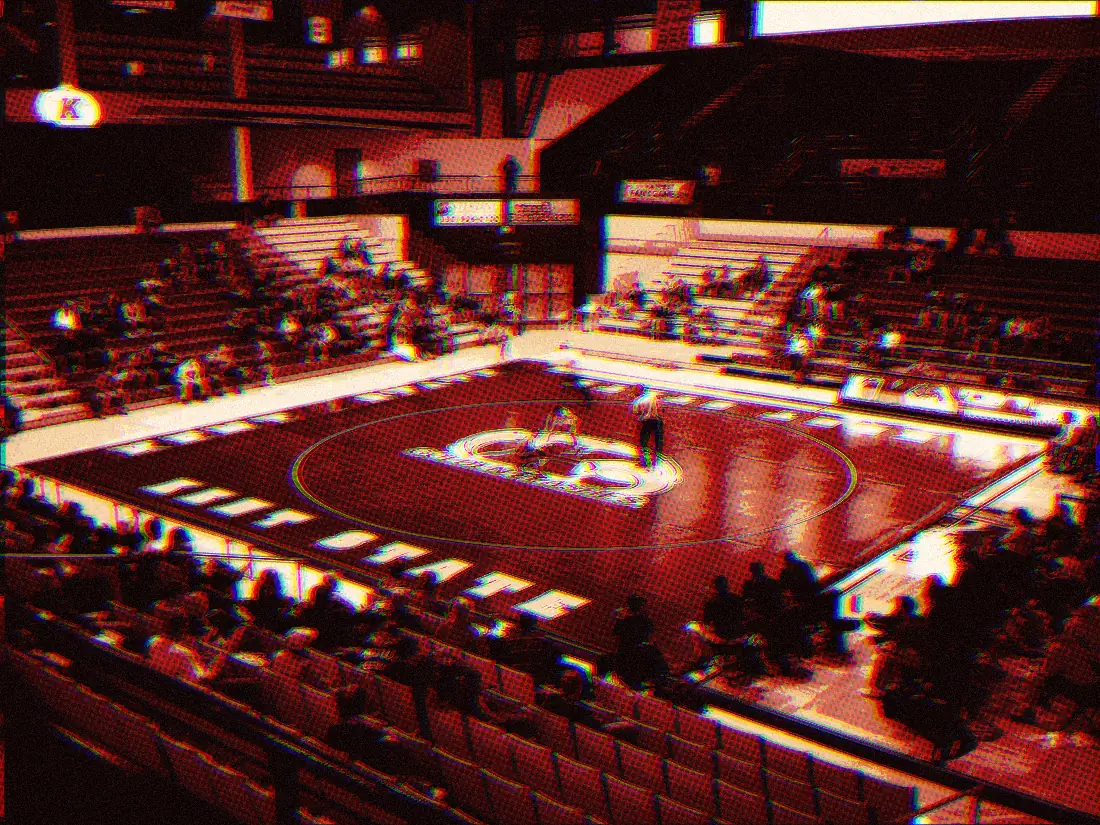
    A college wrestling dual at Kent State, 2009. Neal won his titles on mats like this one. Photo: JonRidinger, CC BY 3.0, via Wikimedia Commons. Color treatment for this page.
    Start

    World champion wrestler

    Door

    A private workout for the Patriots

    Result

    Three Super Bowl rings at guard

    Route 6 · DigEarth 2003San Diego Chargers

    Antonio Gates

    A dig cuts flat across the middle of the field. Gates crossed over from the basketball court.

    Antonio Gates starred in football and basketball at Detroit Central High School. In college he chose basketball. After short stops at Michigan State and Eastern Michigan, he landed at Kent State. In 2002 he helped the Golden Flashes reach the Elite Eight of the NCAA tournament.

    He never played a down of college football. After his last basketball season in 2003 he worked out for NFL scouts. The San Diego Chargers signed him as an undrafted free agent, and he played 16 seasons for them.

    He caught 116 touchdown passes, an NFL record for a tight end, and made eight Pro Bowls. In 2025 he became the first player in the Pro Football Hall of Fame who never played college football.

    Michigan connection: Detroit Central High School

    "NFL teams and scouts will never look at college basketball players the same again."

    Antonio Gates, Hall of Fame speech, August 2, 2025
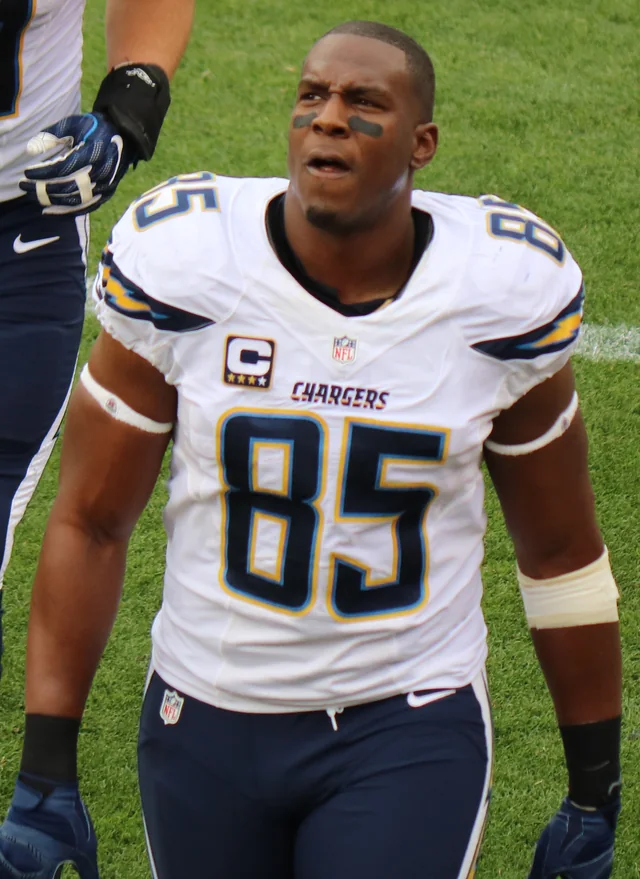
    Antonio Gates before a San Diego Chargers game, October 30, 2016. Later NFL photograph, not his college basketball years.
    Antonio GatesKent State basketball. Zero college football snaps.
    Antonio Gates before a San Diego Chargers game, October 30, 2016. Later NFL photograph, not his college basketball years. Jeffrey Beall. CC BY 4.0. Resized WebP; display crop only. Source · License
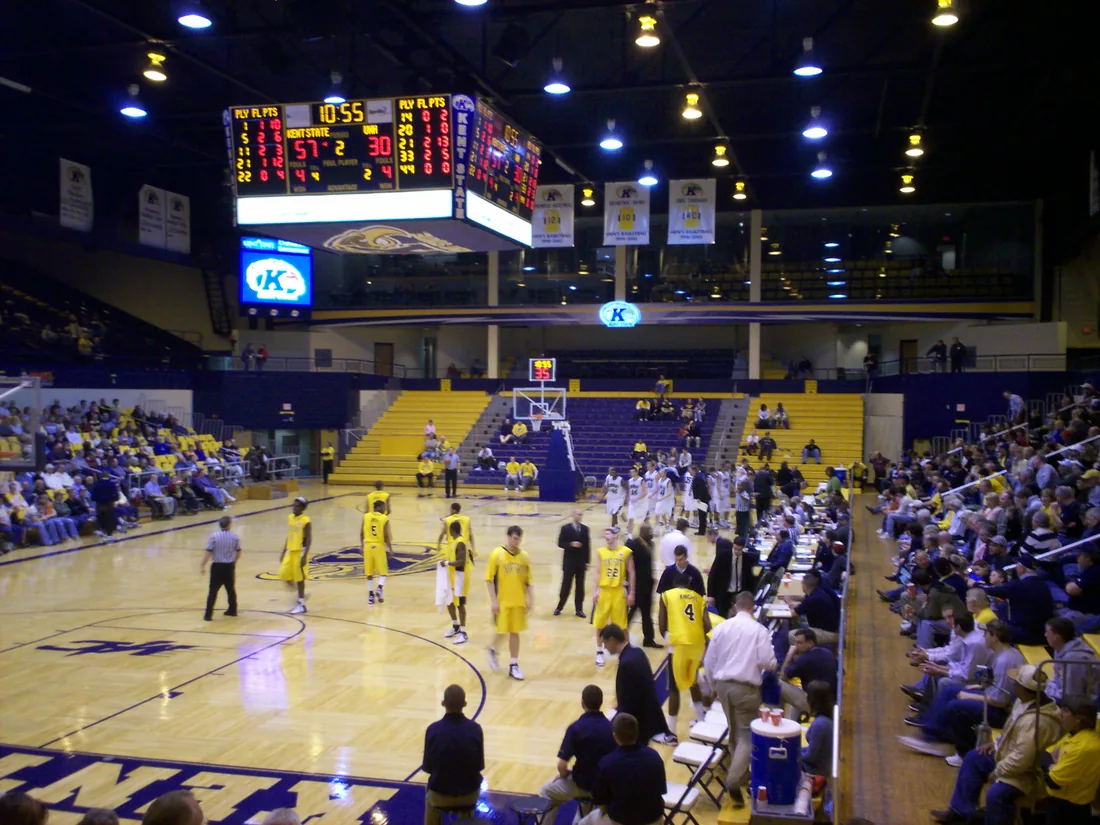
    A December 2006 basketball game inside Kent State’s Memorial Athletic and Convocation Center.
    Kent State’s Memorial Athletic and Convocation Center, December 30, 2006. Gates played here from 2001 to 2003; this later photograph records the venue, not one of his games. Photo: JonRidinger, CC BY 3.0, via Wikimedia Commons. Resized and encoded as WebP; photographic color retained.
    116NFL TDs
    0College football games
    8Pro Bowls
    16Seasons
    Route 8 · PostEarth 2018Philadelphia Eagles

    Jordan Mailata

    The post goes deep, the longest throw on the tree. Mailata's route started about 9,900 miles away.

    Jordan Mailata grew up in Bankstown, a suburb of Sydney, Australia, playing rugby league. He came up through the South Sydney Rabbitohs junior teams but never played a top level NRL game. He watched one NFL game a year, the Super Bowl.

    In 2018 the NFL invited him to its International Player Pathway program, which trains athletes from other countries at IMG Academy in Florida. He had never played a down of American football. He stood 6 feet 8 and weighed 346 pounds. The Philadelphia Eagles, Papale's old team, traded up in the seventh round and took him with the 233rd pick.

    He spent two years learning to block. In 2021 he won the starting left tackle job and signed a four year, $64 million extension. In 2024 he signed another for three years and $66 million. In February 2025 he won Super Bowl LIX with the Eagles.

    "I thought it was an instruction manual to build a spaceship."

    Mailata on his first NFL playbook, The Ringer, 2023
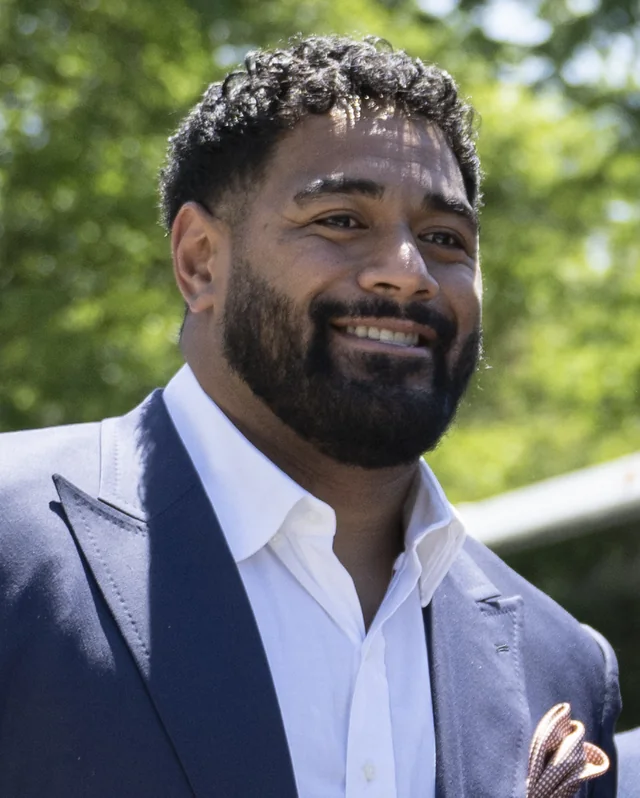
    Jordan Mailata visiting Arlington National Cemetery, April 28, 2025. Later portrait, not a scene from his 2018 draft.
    Jordan MailataRugby league kid from Bankstown. Never played a down.
    Jordan Mailata visiting Arlington National Cemetery, April 28, 2025. Later portrait, not a scene from his 2018 draft. Elizabeth Fraser / U.S. Army / Arlington National Cemetery; Commons crop by Diddykong1130. Public domain in the United States (U.S. Army official photograph). Resized WebP; display crop only. Source · License
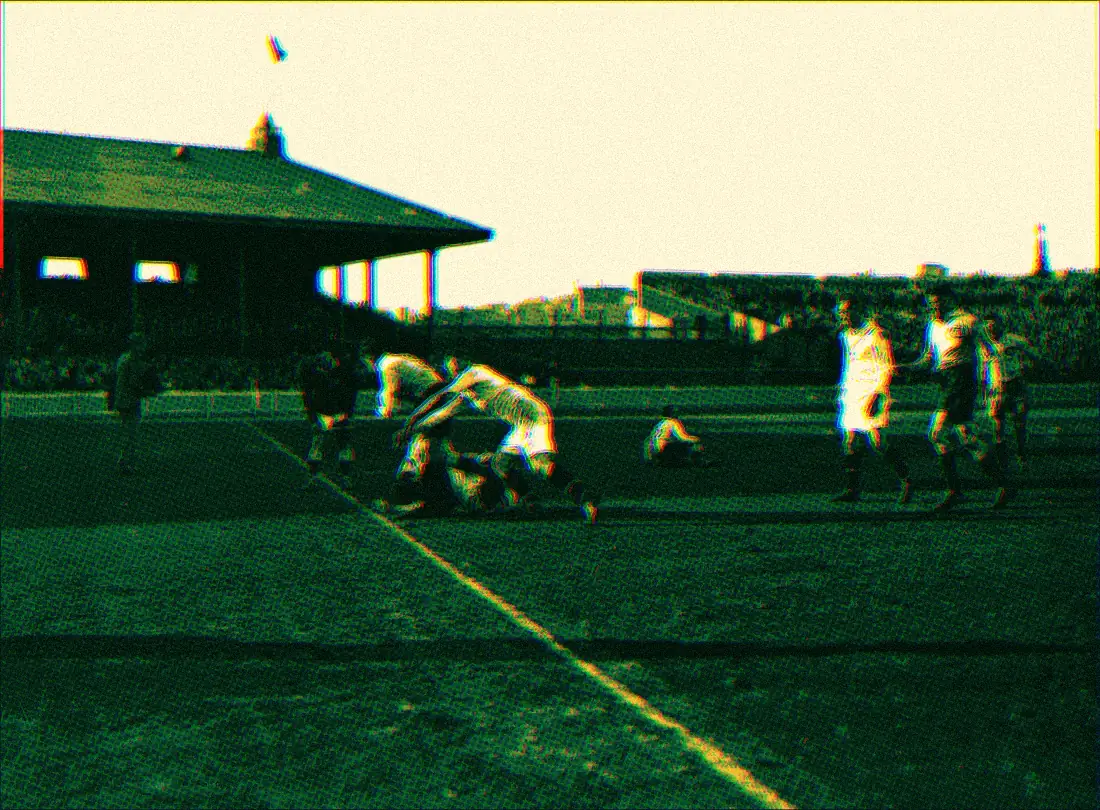
    An old photo of a rugby league scrum on a grass field in front of a grandstand, recolored green and gold
    Rugby league at the Sydney Cricket Ground in the 1930s. The game Mailata grew up on is about a century older in Sydney than he is. Photo: Sam Hood, State Library of New South Wales, public domain, via Wikimedia Commons. Color treatment for this page.
    Route 7 · CornerEarth 2023Dallas Cowboys

    Brandon Aubrey

    A corner route angles for the far pylon, away from everybody else. Aubrey took an angle nobody had tried.

    Brandon Aubrey won a national championship playing soccer at Notre Dame. Toronto FC took him in the first round of the 2017 MLS draft, but he never played a game for them. After a lower league club released him in 2018, he went to work as a software engineer at GM Financial.

    He had never kicked a football in a game. One day he and his wife Jenn bought a kicking tee and went to a high school field. He lined up a 60 yard field goal and made it. He found a kicking coach, Bryan Egan, and kept training while he worked. He kicked for the Birmingham Stallions of the USFL, and the Dallas Cowboys signed him in 2023.

    He made the first 35 field goals of his NFL career, a league record. In 2024 he made 14 field goals of 50 yards or longer, the most ever in one season. In September 2025 he hit a 64 yarder against the Giants to force overtime, then kicked the winner.

    // career.js, Earth 2023
    soccer("Notre Dame") // national champion
    draft("Toronto FC", round: 1) // never played
    job("software engineer")
    kick(yards: 60, attempt: 1) // good
    sign("Dallas Cowboys", 2023)
    streak(35) // NFL record
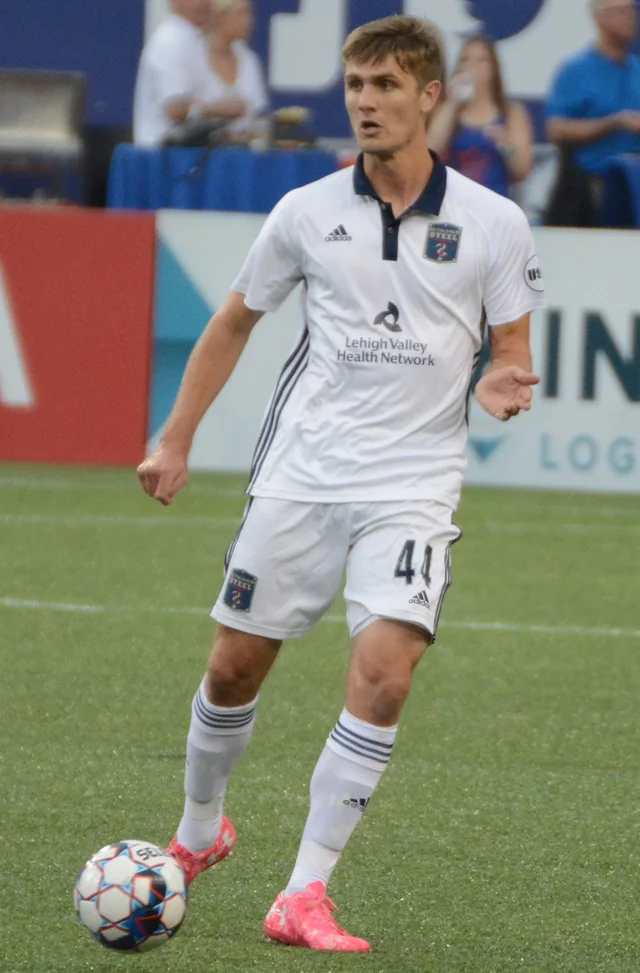
    Brandon Aubrey playing soccer for Bethlehem Steel FC against Cincinnati, June 13, 2018. A photograph from the sport he left before becoming an NFL kicker.
    Brandon AubreySoftware engineer who bought a kicking tee.
    Brandon Aubrey playing soccer for Bethlehem Steel FC against Cincinnati, June 13, 2018. A photograph from the sport he left before becoming an NFL kicker. Hayden Schiff; Commons crop by IagoQnsi. CC BY 2.0. Resized WebP; display crop only. Source · License
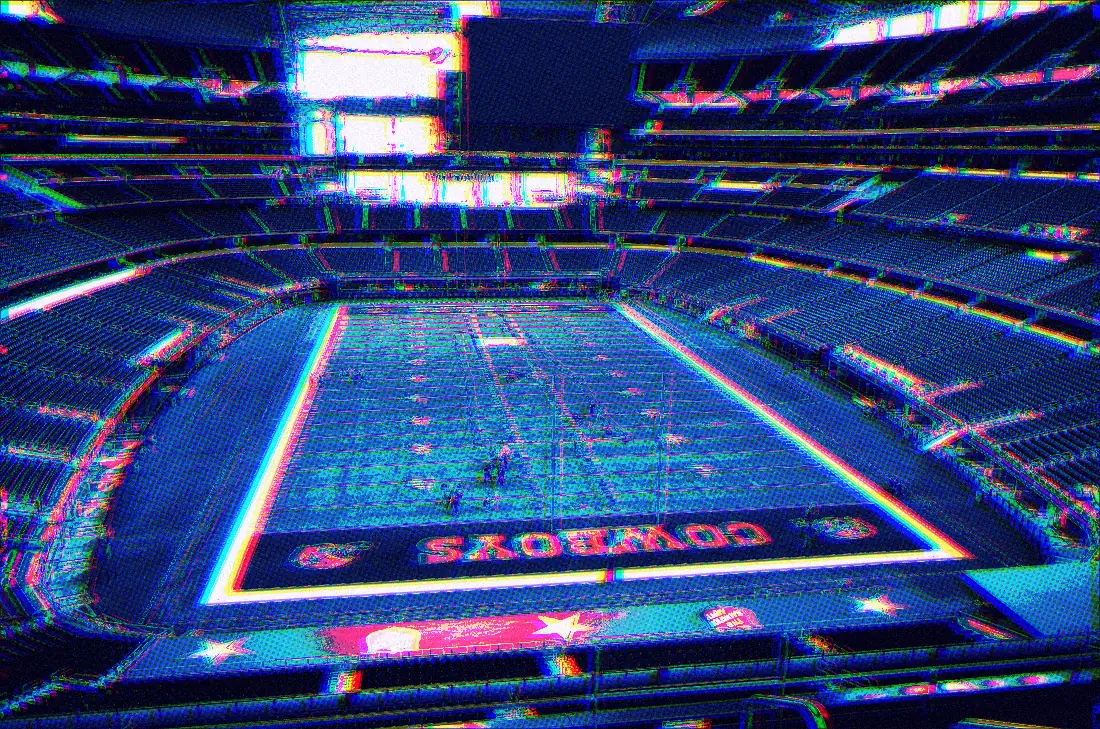
    Inside AT and T Stadium, the Dallas Cowboys home field, shown in glitchy cyan and magenta
    AT&T Stadium in Arlington, Texas, home of the Cowboys, 2022. Photo: edwarddallas, public domain, via Wikimedia Commons. Color treatment for this page.

    "We were like, okay. We have something here."

    Jenn Aubrey on his first 60 yard kick, NBC DFW
    Q2
    Where they were picked

    The Draft Board

    The NFL draft is supposed to sort every player by how good he will be. Here is where it put the people in this story, next to two famous late picks for comparison.

    30

    Rounds in the 1955 draft, when the Steelers took Unitas in round 9.

    17

    Rounds in the 1968 draft. Bleier went in round 16, pick 417.

    7

    Rounds in every draft since 1994. Warner went unpicked that first year.

    7 / 10

    People in this story who were never drafted at all.

    Q3
    Meanwhile, in other universes

    Other Sports

    Football does not own the wild route. Hockey and baseball each have a story strange enough to beat anything on the tree.

    Earth 2020 · Hockey

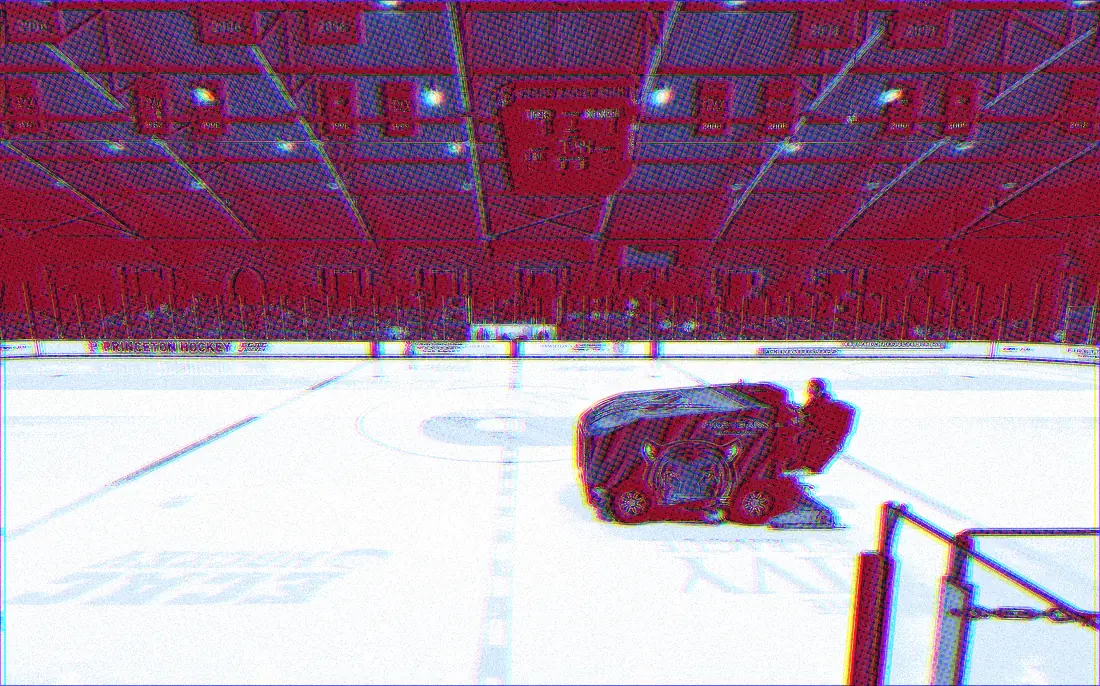
    The Zamboni Driver

    An ice resurfacing machine smoothing a hockey rink inside an arena, in icy blue with red dots
    An ice resurfacer at work between periods, Princeton, 2024. Photo: Kenneth C. Zirkel, CC BY 4.0, via Wikimedia Commons. Color treatment for this page.

    Dave Ayres was 42 and worked maintenance and drove the Zamboni for the Toronto Marlies, the Maple Leafs' minor league team. He was also the emergency backup goalie for NHL games in Toronto, available to either team. Fifteen years earlier he had a kidney transplant.

    On February 22, 2020, both Carolina Hurricanes goalies, James Reimer and Petr Mrazek, got hurt against the Leafs. Ayres pulled on a Carolina jersey with number 90 and went in during the second period. The first two shots went in. He stopped the next eight. Carolina won 6 to 3. He was the first emergency goalie ever to win an NHL game and the oldest goalie to win his regular season debut.

    Earth 1999 · Baseball

    The Science Teacher

    Inside Tropicana Field, a domed baseball stadium with a slanted roof, in teal and orange
    Tropicana Field, home of the Tampa Bay Rays, 2024. It was the Devil Rays' park when Morris debuted. Photo: Quintin Soloviev, CC BY 4.0, via Wikimedia Commons. Color treatment for this page.

    Arm injuries ended Jim Morris's minor league career in the late 1980s. He became a physical science teacher and baseball coach at Reagan County High School in Big Lake, Texas. His players made him a deal. If they won the district title, he would try out for a major league team. They won.

    In June 1999, at 35, he went to a Tampa Bay Devil Rays tryout and threw 98 miles per hour, about 12 faster than he had thrown ten years before. On September 18, 1999, he struck out Royce Clayton of the Texas Rangers on four pitches. Disney told his story in The Rookie in 2002, four years before Invincible. Like Papale, he was a teacher.

    Q4
    The story behind the story

    Behind the ink

    A movie changes a life into a story. An illustrated history makes choices too. This page should show you its choices.

    First came the routes.

    The first Route Tree followed ten careers through a comic-book multiverse: cuts, phone calls, injuries and doors nobody expected to open. It began with Invincible and a problem historians know well: a memorable version of a life can crowd out the real one.

    Then came a different kind of ink.

    The visual breakthrough was a player listening to a coach. A believable exchange mattered more than a heroic pose. That became the rule for this revision: documentary reality, graphic-novel execution. Real photographs establish people and places; expressive contours, selective crosshatching and fine halftone give the artwork its surface.

    The evidence stayed in the frame.

    The opening, Papale, Warner and Bleier became the first four illustrated scenes. Authentic photographs now anchor all ten NFL stories. Original sources remain separate, later portraits carry dates, and imagined scenes say so. Images whose provenance could not be verified were left out. The source controls let you challenge the finished artwork instead of simply trusting it.

    Three images. Three different claims.

    The authentic later photograph of Kurt Warner speaking in 2007.
    01 · Authentic photograph

    A real person, at a particular time.

    John Trainor’s 2007 Warner photograph is an identity anchor. It was also the likeness reference for the younger, reconstructed grocery worker.

    Does this photograph prove the night shift?

    No. It records Warner in 2007, not his work in 1994. The grocery account needs written historical evidence; the store scene remains an artistic reconstruction. Return to Warner’s story and sources.

    Photo: John Trainor, CC BY 2.0. Resized as WebP. Original record.

    The original 2009 photograph of Rocky Bleier and Doug Larsen with the four rings.
    02 · Photographic overpainting

    A recorded moment, reinterpreted.

    Bill Prokopyk’s photograph records Bleier and Capt. Doug Larsen with four Super Bowl rings on January 24, 2009. The ink version starts with that specific source.

    Which version is the historical evidence?

    The original photograph. The overpainting interprets expressions, textures and small details; those generated pixels do not add evidence. Compare the hands, rings and uniforms, then check what the caption actually dates. Try Bleier’s source-to-ink comparison.

    Photo: Bill Prokopyk / U.S. Army, public domain in the United States. Resized as WebP. Original record.

    The artistic reconstruction of a number 83 player and a coach studying a play sheet at camp.
    03 · Artistic reconstruction

    A researched possibility, not a captured event.

    The Papale scene imagines a coaching exchange at Widener’s 1976 Eagles camp. It uses researched context, but no photograph authenticates this particular exchange.

    Could we quote the coach from this image?

    No. We do not know that this conversation happened. The setting helps us imagine the work of making a roster; the gestures, people and building details are interpreted. Return to the documented Papale account.

    AI-assisted reconstruction for the desk. The label remains part of the illustration wherever it appears on this page.

    Earth now

    Your Route

    Pick anything you want to chase. A job, a team, a trade, a school, a stage. Fill in the card and it draws itself. Then write about which route on the tree your plan looks like.

    Your route on the tree
    Earth nowRoute ?

    Your Name Here

    Start
    Headed for
    The door
    The cut
    Q5