Ulysses S. Grant & Rutherford B. Hayes · 1869 to 1881
The General and His Fraudulency
Grant won the Civil War and later got pulled over for speeding. Hayes lost the popular vote by about 250,000 and moved into the White House anyway.
Tap a card to flip it.
The Kid Who Could Not Bargain
Grant grew up in Georgetown, Ohio, where his father turned animal hides into leather. Grant wrote that he "detested the trade." He loved horses. At about eight he wanted a neighbor's colt. The neighbor, Mr. Ralston, wanted $25. His father thought $20 was plenty and sent him over with a plan.
Papa's plan: offer $20. If Ralston says no, offer $22.50. Pay $25 only if you have to. What do you say?
"Papa says I may offer you twenty dollars for the colt, but if you won't take that, I am to offer twenty-two and a half, and if you won't take that, to give you twenty-five."Grant, Personal Memoirs, 1885
On the way to West Point in 1839 he hoped for "a steamboat or railroad collision" to keep him out. None came. He finished 21st of 39.
Ten Thousand Cigars
In February 1862 Grant trapped a Confederate army at Fort Donelson, Tennessee, and demanded "unconditional and immediate surrender." Newspapers loved it. They also said he smoked a cigar through the battle. He was really just holding a dead one.
"Many persons ... sent me boxes of the choicest brands from everywhere in the North. As many as ten thousand were soon received."Grant, to his aide Horace Porter
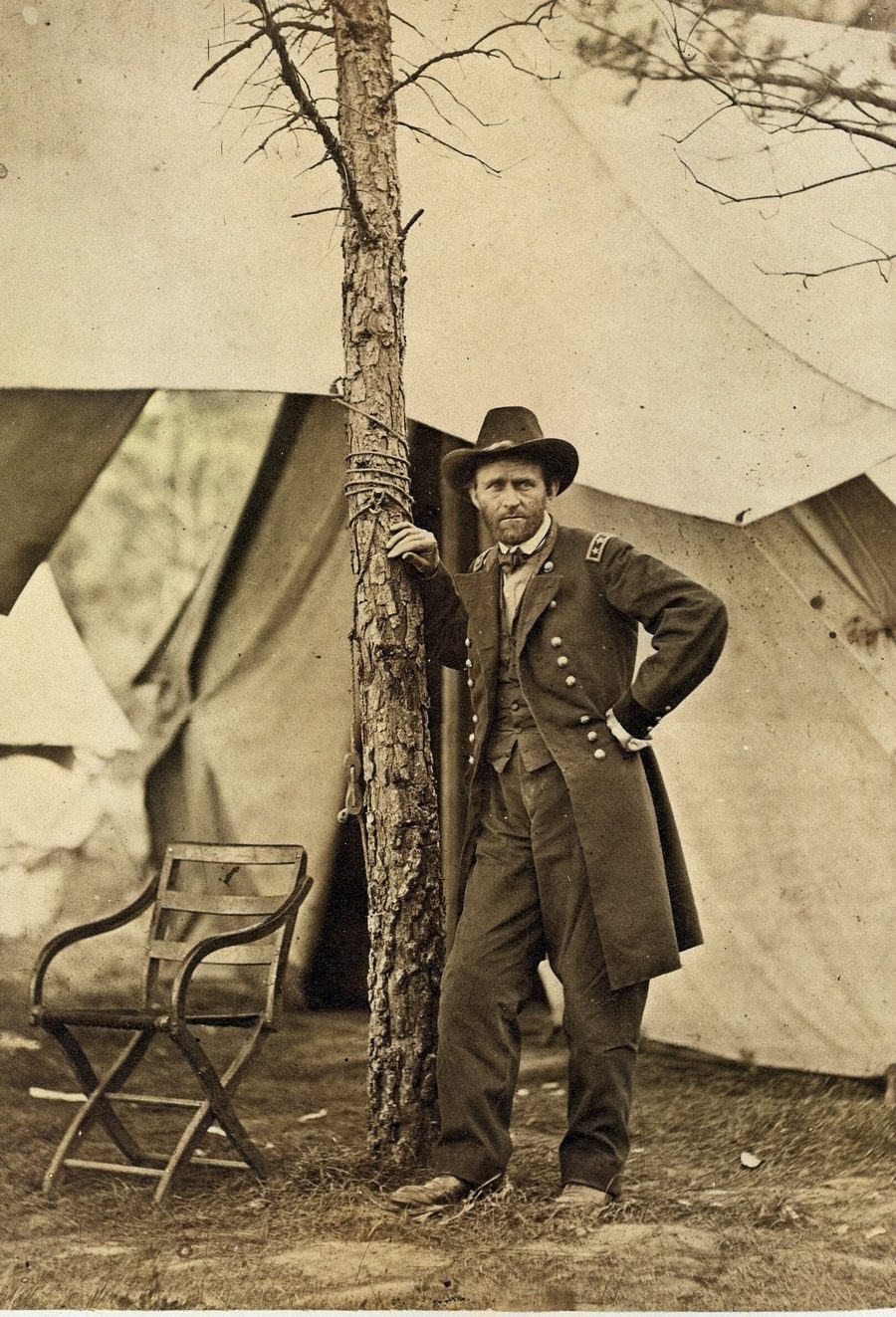
Each stick is 200 cigars. Pale sticks are one year of smoking. His record was about 20 in one day, May 6, 1864. Breakfast that morning was a cucumber in vinegar.
Lee surrendered to him in April 1865. In 1868, at 46, Grant became the youngest president up to that time.
The President Who Took On the Klan
The Fifteenth Amendment said no state could deny a man the vote because of his race. Grant called it
"the most important event that has occurred since the nation came into life."Grant, message to Congress, March 30, 1870
The Ku Klux Klan answered by whipping and murdering Black voters and their white allies. Grant went after it.
By 1872 the first Klan was broken. New armed groups took its place within two years.
Pulled Over at 13th and M
People on 13th Street in Washington were tired of drivers racing their carriages. Officer William West, a Black Union Army veteran, was put on the corner of 13th and M.
Night one
A speeding team has just knocked down a woman and a child. West flags the next fast carriage. The driver is the President.
- West
- "Your fast driving, sir, has set the example for a lot of other gentlemen."
- Grant
- "I am very sorry, and I'll promise that hereafter I will hold my team down to the regulation speed."
Night two
The next evening Grant flies past again. It takes him a full block to stop.
- Grant
- "Hang it, officer, these animals of mine are thoroughbreds, and there is no holding them."
You are Officer West. What do you do?
What happened
"I am very sorry, Mr. President, to have to do it, for you are the chief of the nation, and I am nothing but a policeman, but duty is duty, sir."William West, Evening Star, 1908
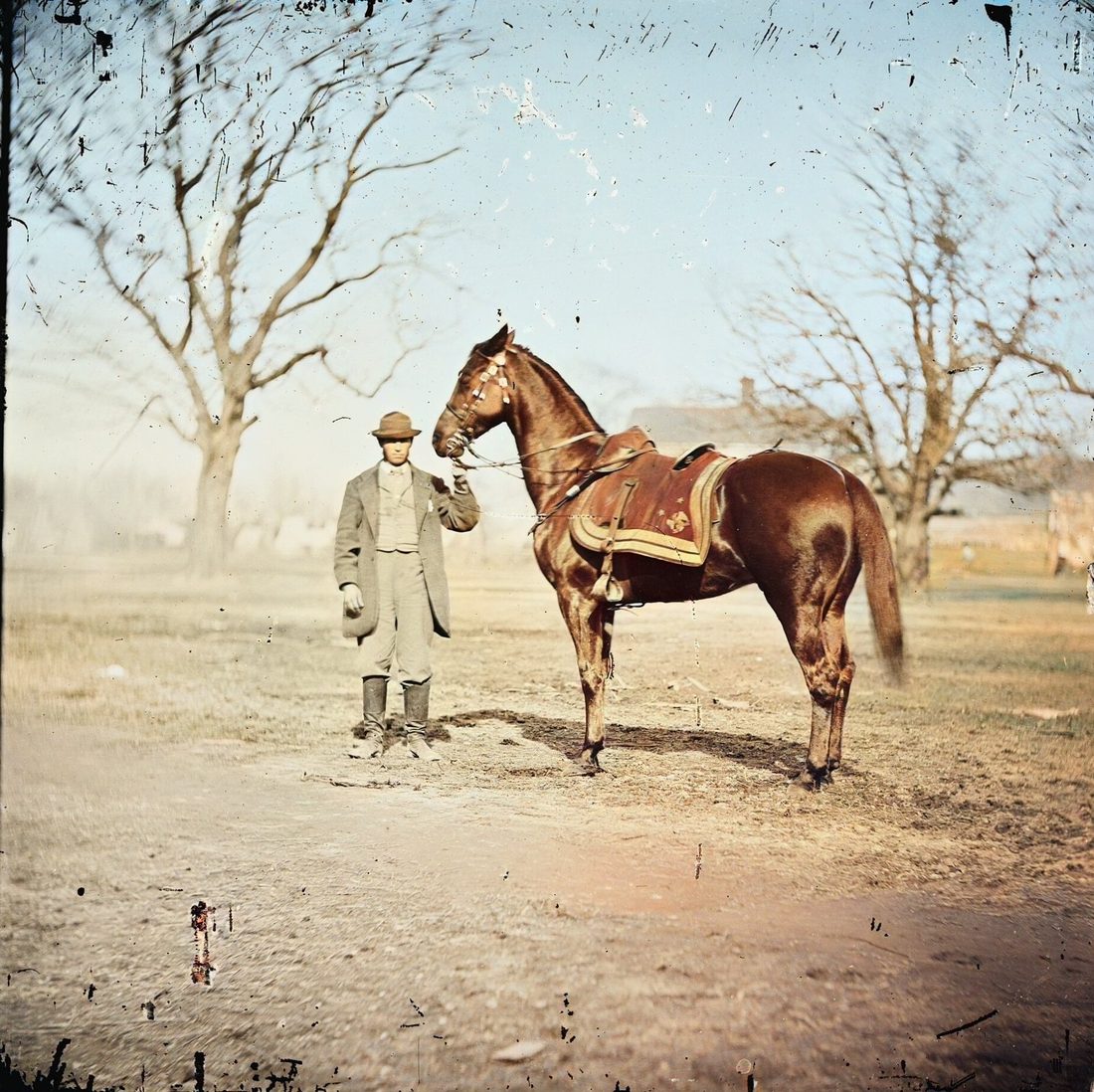
Grant owned his own mistakes. He was bad at catching other people's.
In 1875 the Whiskey Ring was caught stealing millions in liquor taxes. Grant wrote "Let no guilty man escape." Then his own secretary was charged, and Grant defended him.
The Election Nobody Won
In 1876 Republicans ran Hayes, the governor of Ohio. Democrats ran Samuel Tilden, the governor of New York. On election night Hayes went to bed sure he had lost.
"We soon fell into a refreshing sleep and the affair seemed over."Hayes, diary, November 1876
By morning Tilden had 184 electoral votes, one short of 185. Hayes had 165. Twenty were in dispute.
Tap a state to give it to Tilden, then Hayes, then back.
Congress handed the fight to a commission of 15: seven Democrats, seven Republicans and one independent justice. The independent dropped out and a Republican took his seat. Every state went to Hayes, 8 to 7, at about 4 a.m. on March 2, 1877. Democrats called him "Rutherfraud."
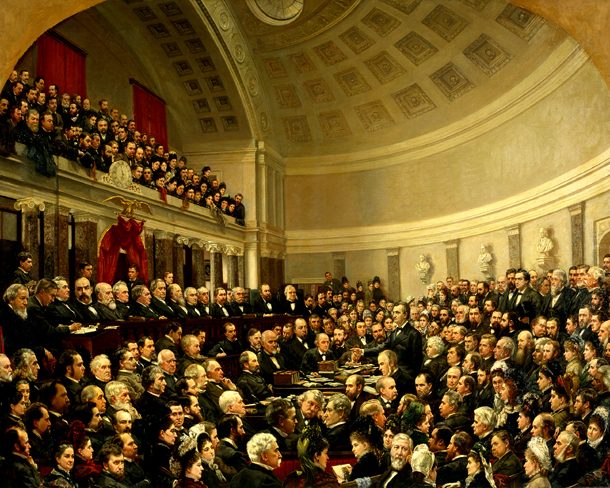
The Deal
Southern Democrats could have stalled the count. They let it finish. Historians tie that to the Compromise of 1877: Hayes would pull federal troops out of the South. No written copy was ever found.
March 4 fell on a Sunday, so Hayes took the oath secretly on Saturday night in the White House Red Room. The public ceremony came Monday.
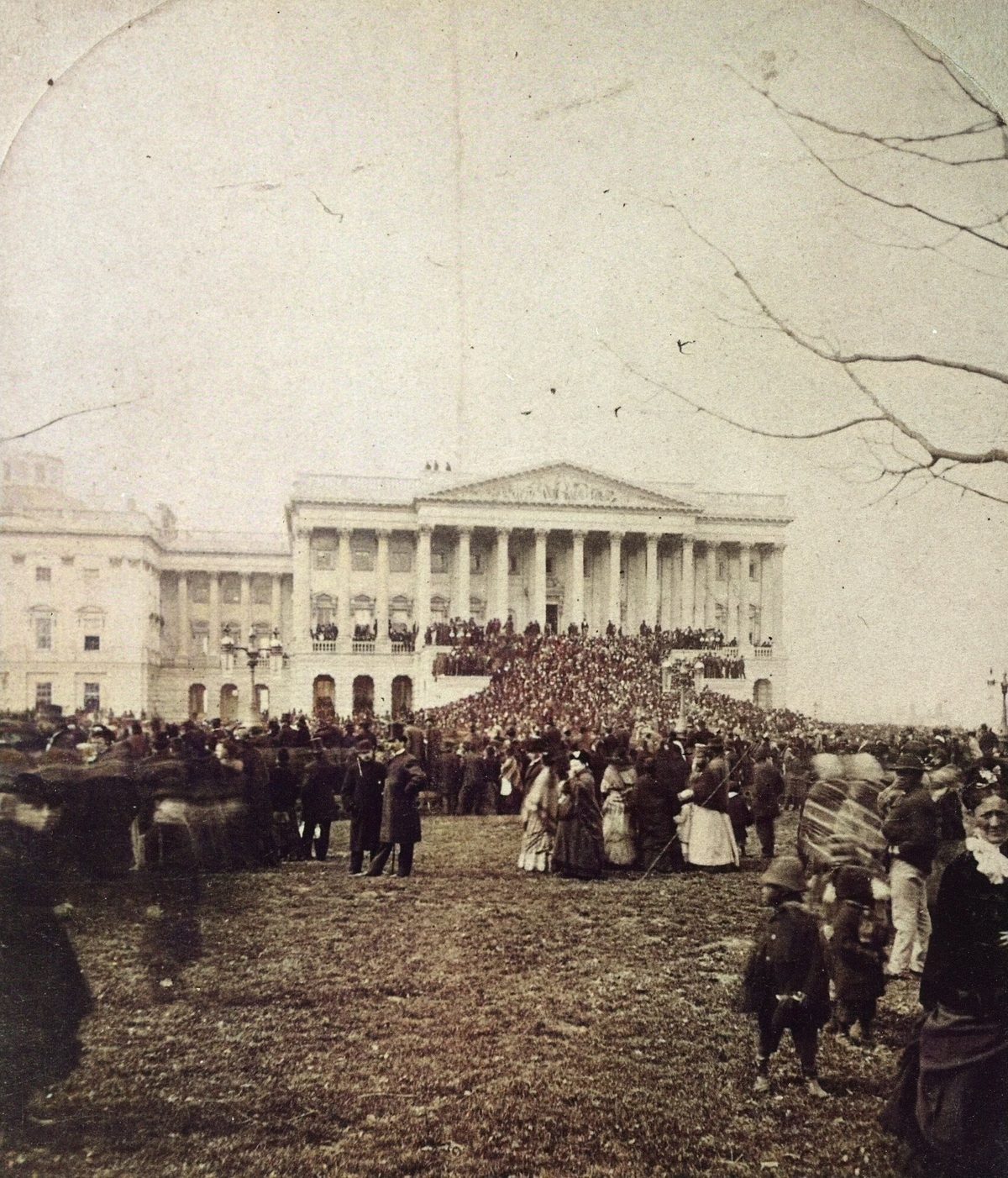
In April Hayes pulled the soldiers guarding the statehouses in South Carolina and Louisiana. The last Republican governments in the South fell. Reconstruction was over.
On election night Hayes had predicted what a Democratic win would do to the South:
"There the Amendments will be nullified."Hayes, diary, November 1876
He won, and it happened anyway. Southern states used poll taxes and literacy tests to take the vote from most Black men.
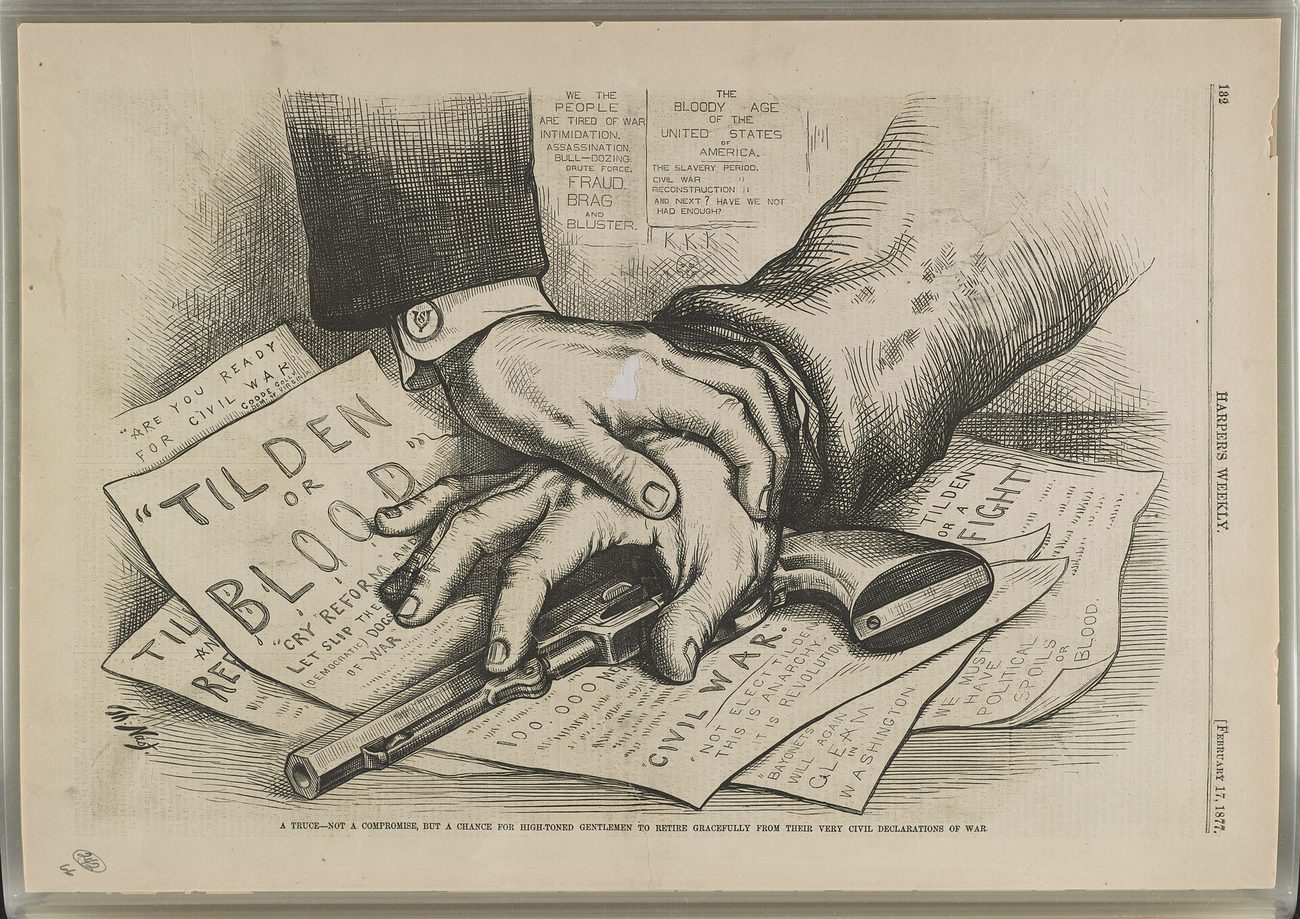
That July Hayes sent troops against the Great Railroad Strike. That story is in Who Showed Up.
Real or Fake?
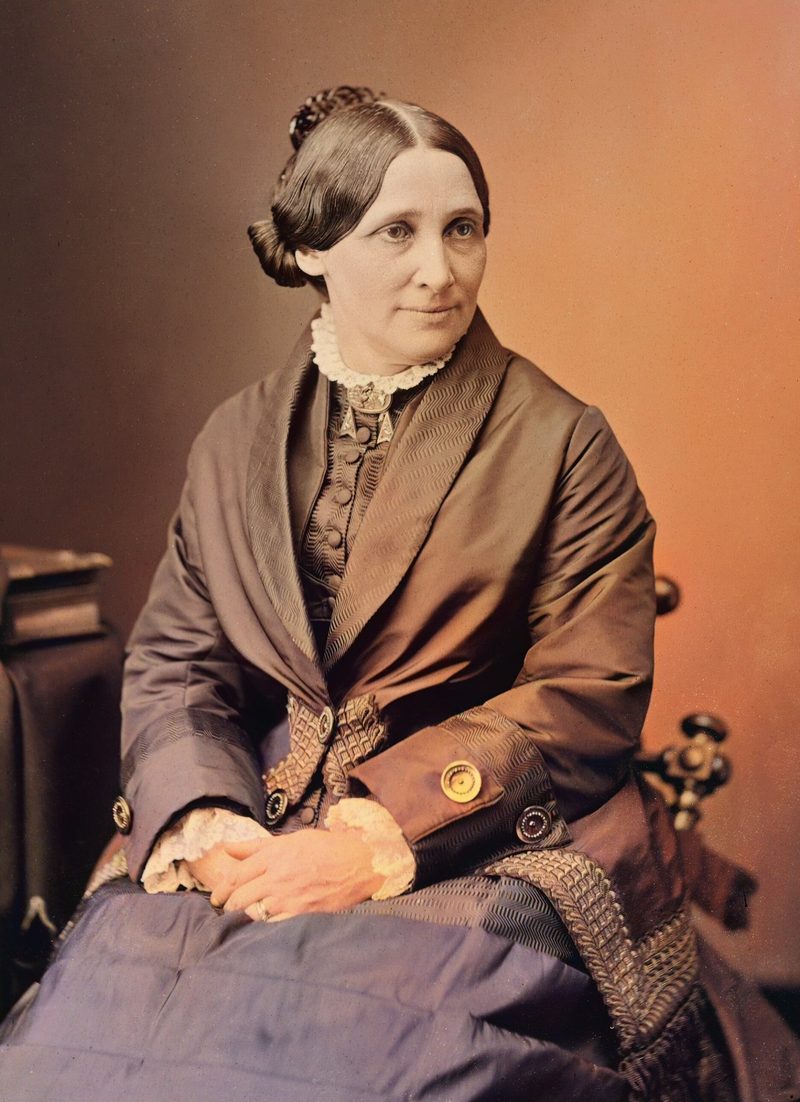
Call each one before you look.
Grant's Last Race
After leaving office Grant's Wall Street partner ran a fraud, and in May 1884 Grant went broke. That fall doctors found throat cancer.
To leave his wife Julia money, he raced to write his memoirs for Mark Twain's publishing company. By summer he could barely speak, so he wrote notes to his doctor.
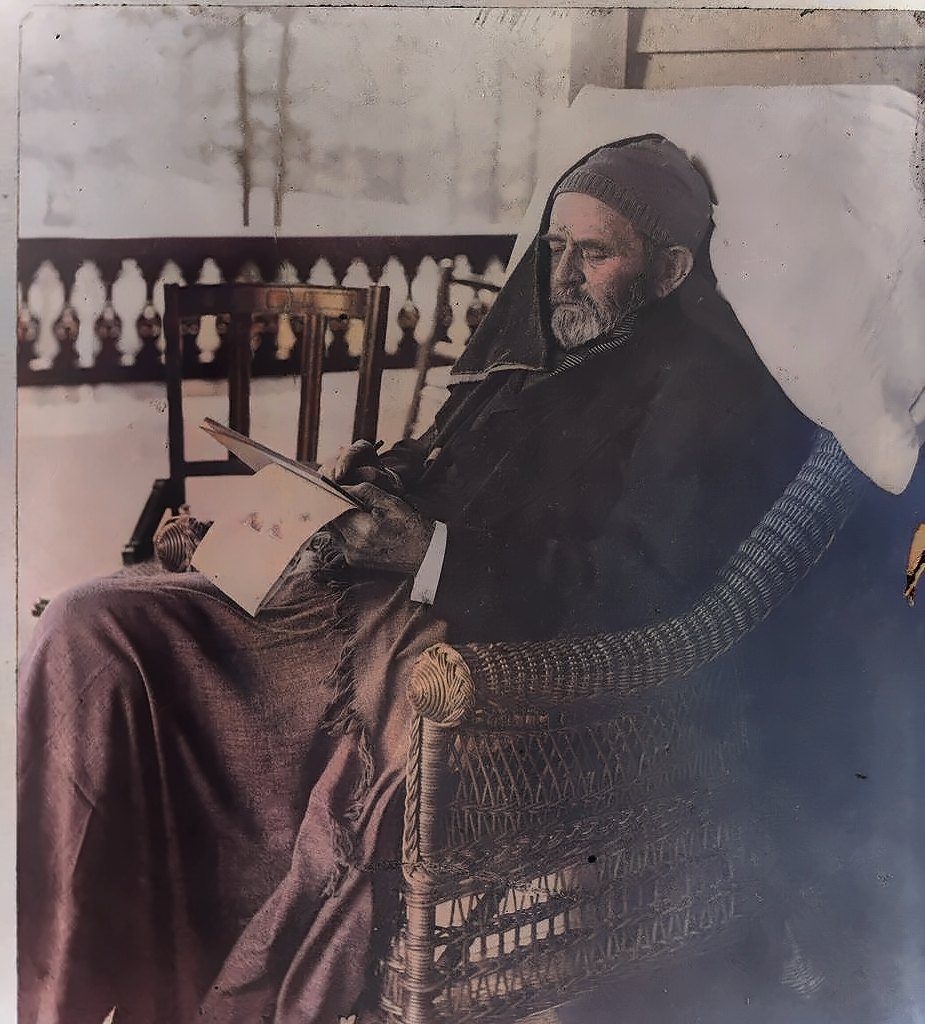
"The fact is I think I am a verb instead of a personal pronoun. A verb is anything that signifies to be; to do; to suffer. I signify all three."Grant, note to his doctor, July 1885
- May 1884Broke
- Fall 1884Cancer
- Early 1885Signs with Twain
- June 1885Moves to the mountains
- July 20, 1885Finishes
- July 23, 1885Dies at 63
He beat the clock by three days. The book earned Julia more than $450,000.
Back of the Card
Write the back of a trading card
Pick Grant or Hayes. In 50 to 100 words, give two facts that mattered and one weird one.
Copy everything and paste it into the Classroom assignment. Your work saves in this browser as you type.