Thirty Miles From Paris
On September 2, 1914, German cavalry rode within about thirty miles of Paris. That night the French government loaded its files onto trains and left for Bordeaux. Ten days later the German army was marching the other way, and soldiers on both sides were digging the first trenches of the Western Front.
This is the story of how that turned around. It involves a general who changed direction, a pilot who noticed, six hundred taxicabs, and a lieutenant colonel in a staff car who carried an order to retreat that nobody ever wrote down.
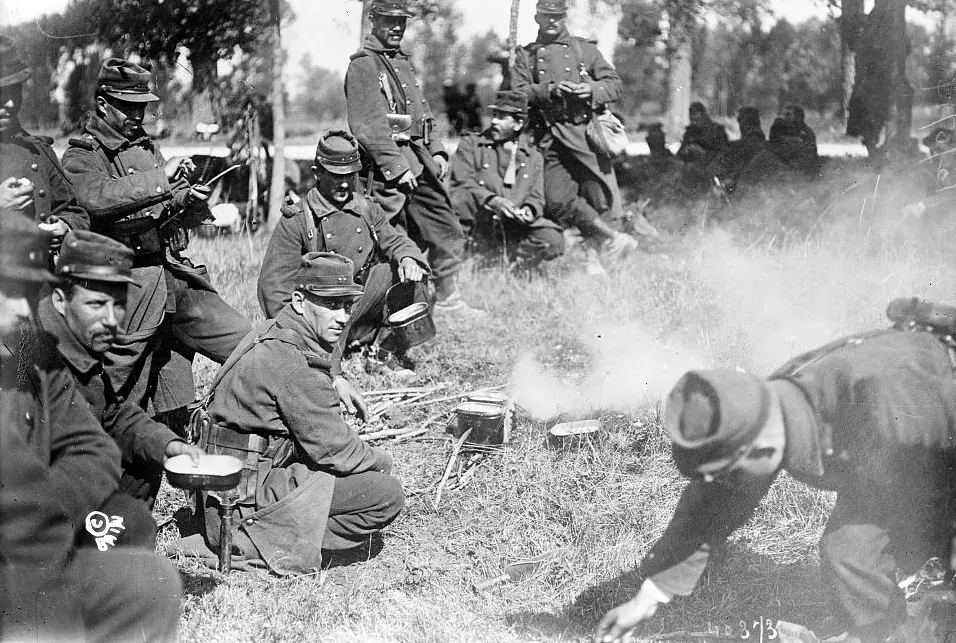
The ledger
- Soldiers in the battle
- About 2 million1,080,000 French, about 100,000 British, 750,000 to 900,000 German
- Killed, wounded, missing
- About 500,000French about 250,000 · British 12,733 · German about 250,000 to 300,000
- Length
- 8 daysSeptember 5 to 12, 1914
- Closest German approach
- About 30 miles48 km from the center of Paris
Casualty counts from 1914 are estimates. Armies counted losses in different ways and some records were lost, so historians’ totals differ by tens of thousands.
August 1914 · the plan
Six weeks to beat France
Germany’s generals knew they might have to fight France in the west and Russia in the east at the same time. Their answer was speed. Beat France in about six weeks, before Russia’s huge army was ready, then send the troops east by train.
Seven German armies went west. The biggest ones swung through neutral Belgium so they could curl around Paris from the west and pin the French army against its own border. You traced that plan on the map in ByteSize no. 7, Thirty Seven Days.
France had a plan of its own. Attack straight east into Lorraine, the province Germany had taken in 1871. French soldiers went in wearing dark blue coats and bright red trousers, colors their army had worn for decades. On August 22, 1914, about 27,000 French soldiers were killed. It is still the deadliest single day in French military history.
By the last week of August the French and British were retreating south. Every day of marching brought the Germans closer to Paris.
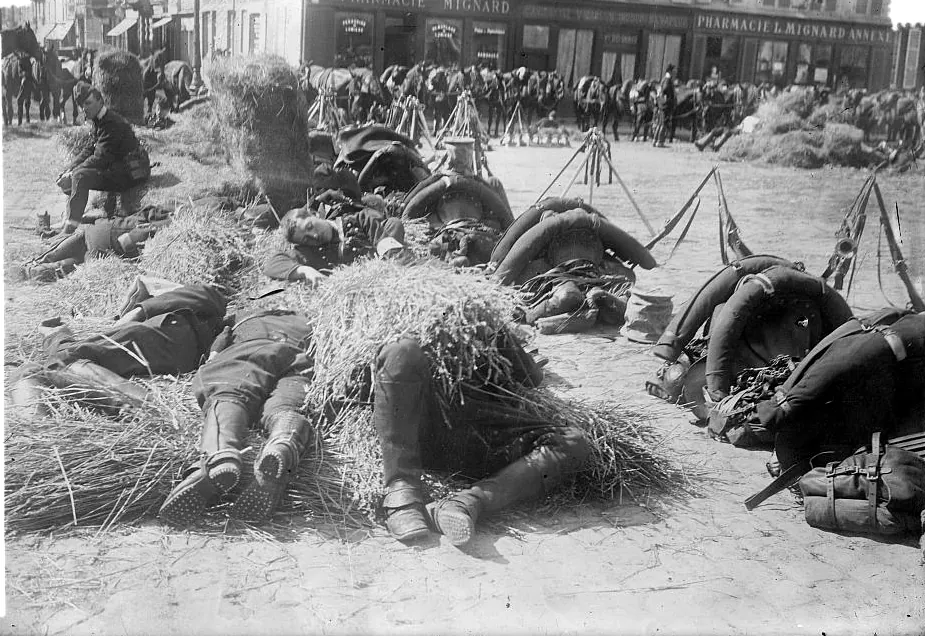
September 2 and 3 · the city
The government left. Gallieni stayed.
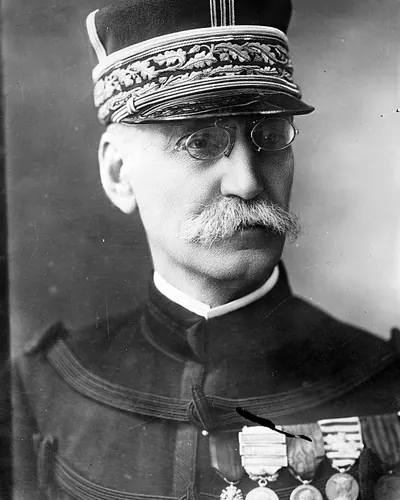
Joseph GallieniSixty five years old, retired, and called back on August 26 to command the defense of Paris. He had spent his career running French colonies in Africa and Madagascar.
Paris in early September was emptying. Ministers, bankers and families with somewhere to go crowded the train stations headed south. The government left for Bordeaux on the night of September 2. Gallieni had orders to defend the city, and the city had forts, trenches still being dug, and a few divisions of reservists.
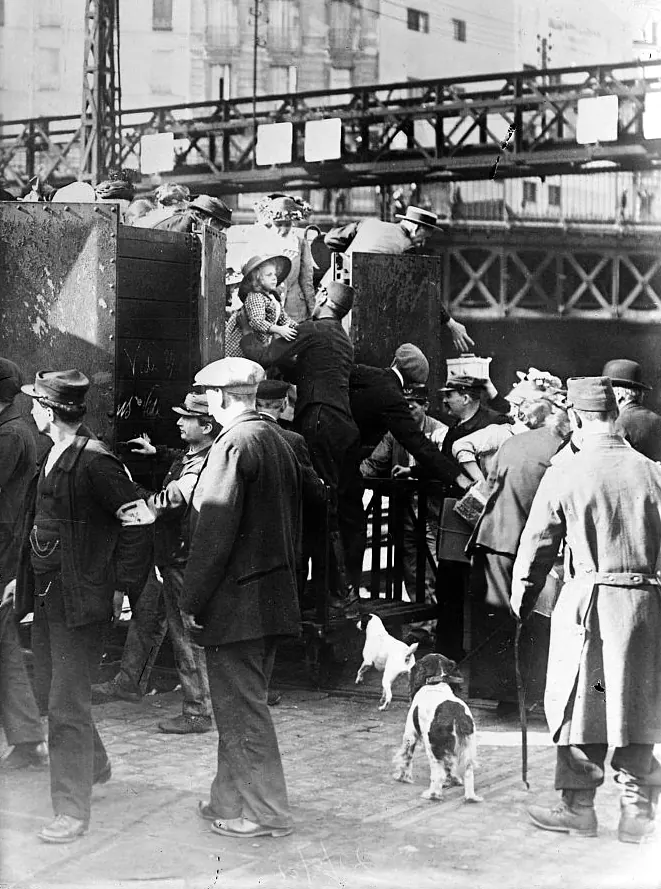
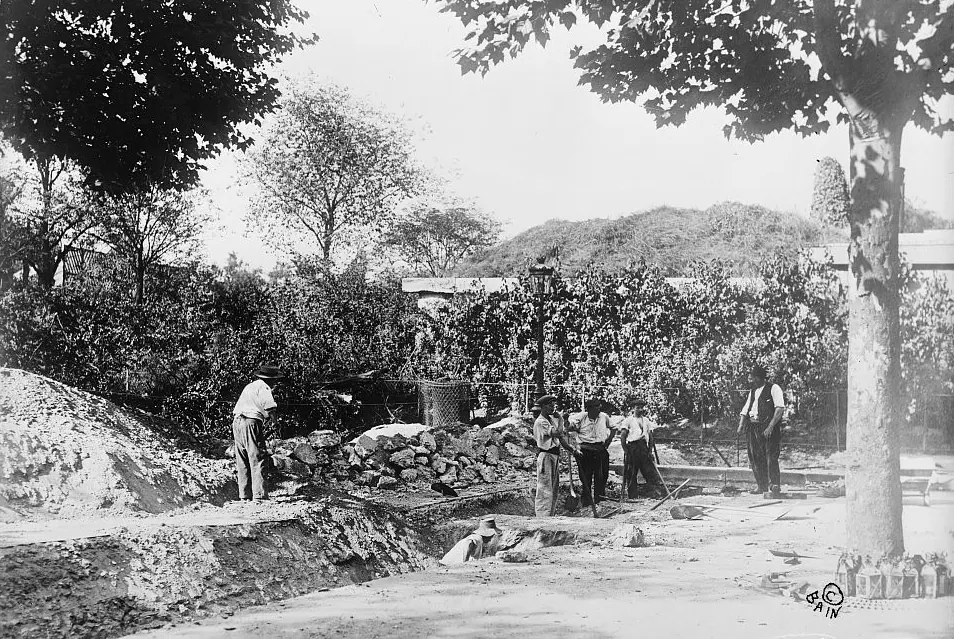
On the morning of September 3, Parisians found this notice pasted on walls across the city.
People of Paris
The members of the Government of the Republic have left Paris to give new energy to the national defense. I have received the order to defend Paris against the invader. I will carry out that order to the end.
The same day, reports from airmen reached Gallieni’s headquarters. The German army nearest Paris was not coming at the city. It was marching past it.
September 3 to 13 · the sand table
Watch the gap open
Officers planned battles on sand tables, moving wooden blocks across a map. Here is the Marne on one. Each block is an army of tens of thousands of men. Step through the dates, drag to turn the table, and tap a block to meet its commander.
Commander
Tap an army
Each block on the table has a commander. Tap one to see who was giving the orders.
Read every step as text
Positions are simplified. A real army stretched across ten or more miles of front, and the rivers and towns are drawn from their actual locations.
September 6 and 7 · after dark
Six hundred taxis
On the evening of September 6, Paris police stopped taxis in the street and told the drivers to report to the Esplanade des Invalides. About six hundred cabs lined up, most of them small Renaults. The army needed the men of the 62nd Division at the front by morning, and the trains were full.
The first group of about 350 cabs pulled out at 10 p.m. A second group of about 250 followed an hour later. They drove in the dark toward Nanteuil le Haudouin, about thirty miles northeast, five soldiers to a cab. The meters kept running. When it was over, the French Treasury paid the bill: 70,012 francs.
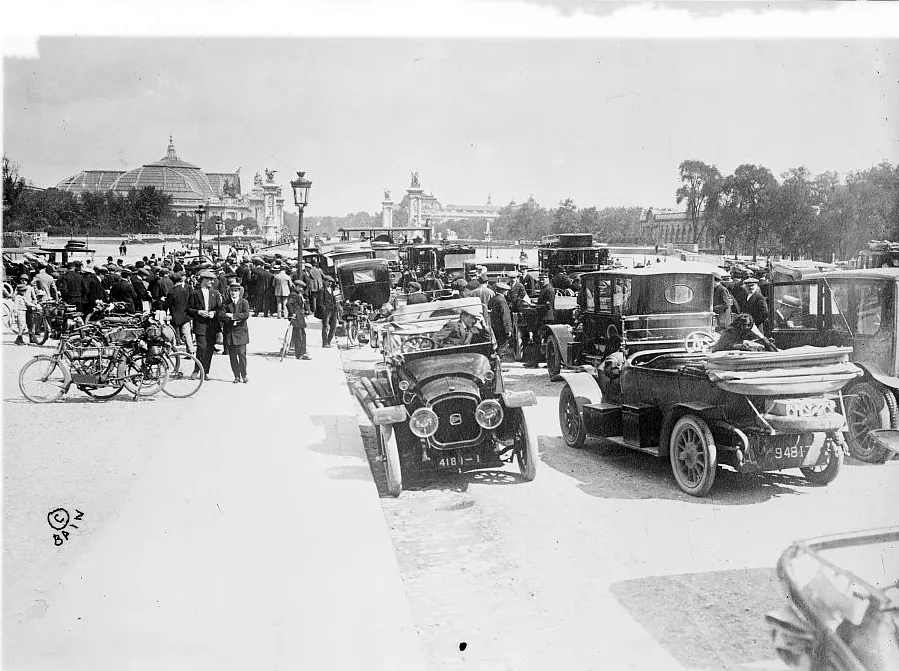
Four soldiers rode in back and one sat beside the driver. Their rifles and packs came along.
September 8 and 9 · the staff car
The man in the car
Germany’s commander, Helmuth von Moltke, ran the war from a schoolhouse in Luxembourg, about 150 miles from the fighting. Telephone lines and radio links to the front were poor. Messages reached him hours late, and some never arrived. By September 8 he could not tell whether his armies were winning or losing.
So he sent a staff officer to look. Lieutenant Colonel Richard Hentsch left by car that morning with spoken instructions and nothing in writing. If the armies needed to fall back to close the gap, he could tell them to.
That evening Hentsch reached the 2nd Army’s headquarters at Montmort. General Karl von Bülow told him his army was worn down to “cinders.” Bülow decided to pull back. At 11:30 the next morning Hentsch reached the 1st Army’s headquarters and told Kluck’s chief of staff, Hermann von Kuhl, that the 1st Army had to retreat as well. Kuhl was stunned. He agreed anyway.
An officer who was not even a general, carrying spoken orders, had turned back two German armies. In 1917 a German army inquiry looked into what he had done and decided he had acted within his orders. Hentsch died in Romania in 1918.
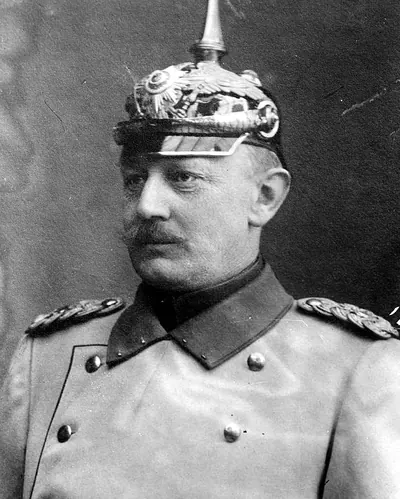
Helmuth von MoltkeChief of the German General Staff. Nephew of the field marshal who beat France in 1871. Replaced on September 14, 1914.
Richard HentschLieutenant colonel and head of intelligence on Moltke’s staff. Age 44 in September 1914.
Two commanders, three days apart
At the moment a battle begins on which the safety of the country depends, everyone must remember that the time for looking back is over. Every effort must go into attacking and driving back the enemy. A unit that can no longer advance must hold the ground it has taken, whatever the cost, and be killed where it stands rather than fall back.
Joffre commanded all French armies. This order was read to soldiers along the whole front on the first morning of the attack.
Things have not gone well. The fighting east of Paris has not gone in our favour, and we shall have to pay for the damage we have done.
Written the night the retreat began. Translation as printed by Winston Churchill in The World Crisis.
Evidence check
Legend or record?
Big battles collect stories. Some are in the documents. Some showed up years later and got repeated until everyone believed them. Make your call on each one, then see what historians can actually prove.
September 13 and after
What the Marne made
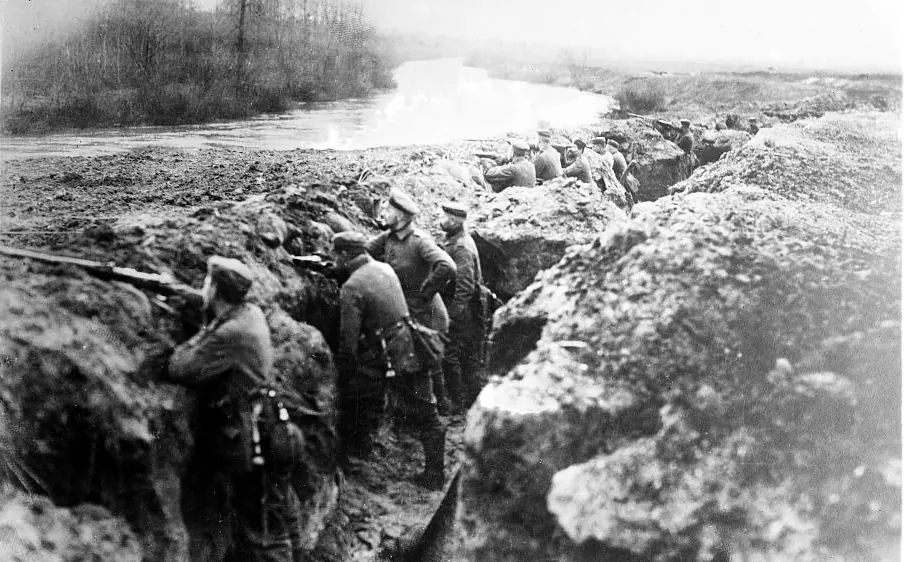
The Germans stopped about forty miles north, on the high ground above the Aisne River, and started digging. When the French and British attacked up the slopes, machine guns and artillery firing from the new trenches cut them down. The war of marching armies was over in a week.
Each side then tried to get around the other’s open end to the north. They kept extending their trenches until they hit the sea in Belgium. By November 1914 a line of trenches ran about 440 miles, from the Swiss border to the North Sea. It barely moved for the next three and a half years.
Paris was safe. Germany’s six week plan was dead, and Germany now faced the long war on two fronts its plan was built to avoid. Moltke was replaced on September 14 by Erich von Falkenhayn. Germany still held almost all of Belgium and a strip of northern France with much of France’s coal and iron.
Every battle that comes after this one in Front Lines happened on the map the Marne left behind.
Watch
The week the war turned
Taxi to the Front
The Great War, a history channel that covered the war week by week a hundred years later, on the Marne. Watch for Kluck’s turn and the taxis, then compare what the video says about the taxis with what you found above.
The battle on a moving map
An animated map version from the channel Moving Fronts, if you want to see the armies move in more detail.
Your turn
Four questions
Short answers are fine. Use names, dates and places from the page.
Sources
- Holger H. Herwig, The Marne, 1914: The Opening of World War I and the Battle That Changed the World (Random House, 2009). Army strengths, the Hentsch mission, Bülow’s “cinders,” Kuhl’s reaction.
- Wikipedia, First Battle of the Marne, which summarizes Herwig, Sumner and other casualty estimates: en.wikipedia.org/wiki/First_Battle_of_the_Marne
- Wikipedia, Renault Taxi de la Marne, for the number of cabs, the two departure groups, the 62nd Division and the 70,012 franc reimbursement: en.wikipedia.org/wiki/Renault_Taxi_de_la_Marne
- National Army Museum, First Battle of the Marne: ww1.nam.ac.uk/timeline/first-battle-marne
- Air & Space Forces Magazine, “The Influence of Airpower on the Marne,” July 2011, for Breguet’s flight and the British reconnaissance reports: airandspaceforces.com/article/0711marne
- Gallieni’s proclamation of September 3, 1914, and Joffre’s order of the day of September 6, 1914, translated for this page from the French texts.
- Moltke’s letter of September 9, 1914, as quoted in Winston Churchill, The World Crisis, 1911 to 1918 (Free Press edition, 2005), p. 168.
- Jean Michel Steg, Le jour le plus meurtrier de l’histoire de France: 22 août 1914 (Fayard, 2013), for the August 22 death toll.
Images and map notes
- All photographs are period black and white images from the Bain News Service and Harris & Ewing collections at the Library of Congress, which lists no known restrictions on publication. Each was cropped and resized for this page. None are colorized and none are generated.
- No reliable photograph of Richard Hentsch could be cleared for this page, so he appears without one.
- The sand table is a simplified reconstruction. Rivers and towns follow real coordinates. Army blocks mark the rough center of each army, not its full front. Dates in the steps follow Herwig.
- The 3D taxi is an interpretive model of a Renault AG1 Landaulet, built for this page from photographs of the surviving cab in the Musée de l’Armée in Paris. It is not a scan.