Three thousand railroad workers struck in 1867 for higher pay and shorter hours.
LABOR. SCAPEGOATING. FEDERAL POWER.
THE ONE
THAT
PASSED.
Workers asked for shorter hours.
They asked for their wages back.
They asked to keep other workers out.
One of these became federal law.
THE ANSWER: Politicians did not solve the workers’ problems with employers. They redirected the anger toward Chinese workers—and built exclusion into federal law.
START EPISODE ↓USH9 · LECTURE 16AABOUT 25 MINUTES
01JUNE 1867
CHINESE WORKERS STRIKE
Chinese railroad workers join the labor fight for fairer hours and pay.
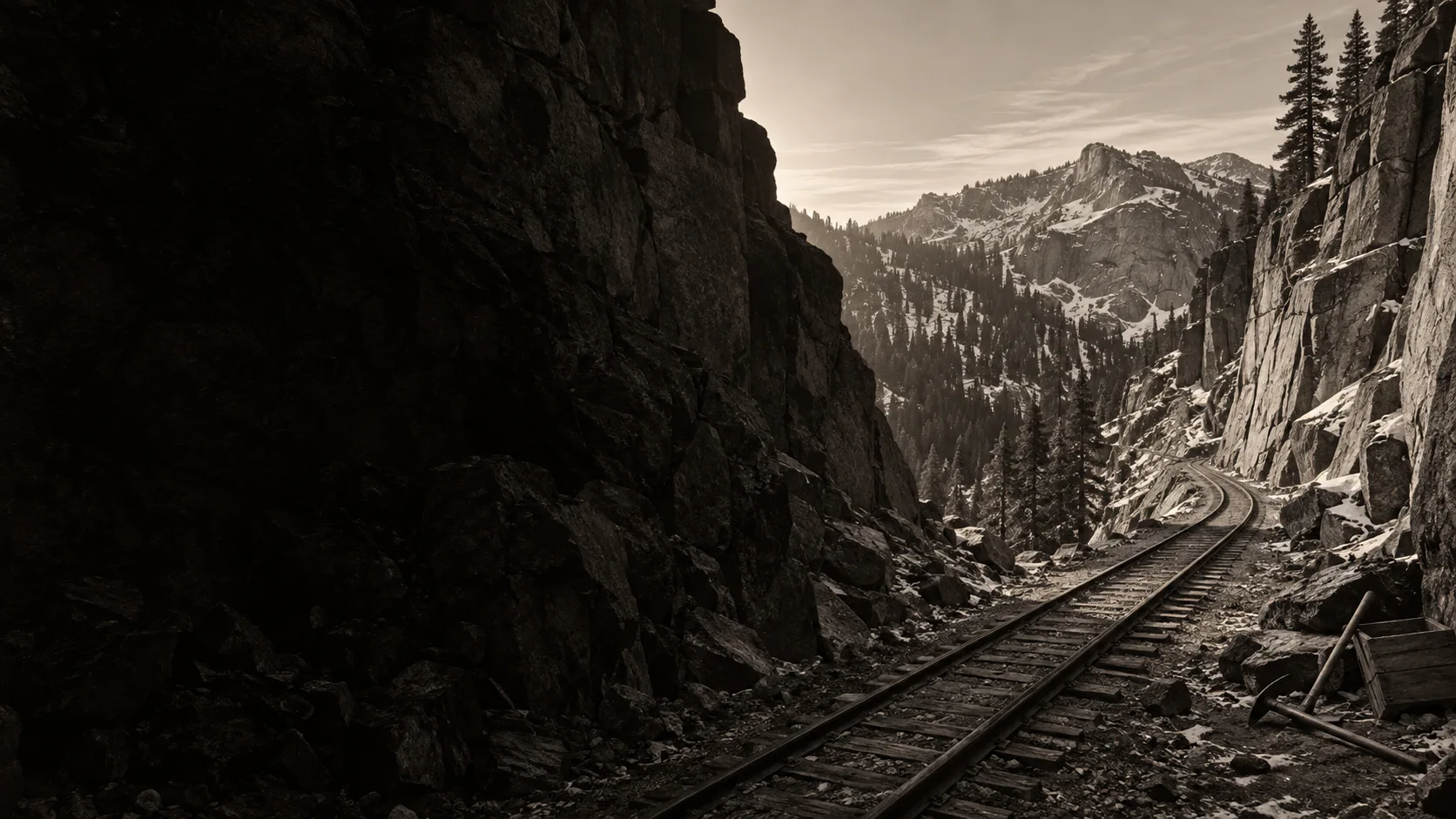
Three thousand workers walked off the Central Pacific Railroad high in the Sierra Nevada.
They wanted the day cut from eleven hours to ten, shorter shifts inside the tunnels, and forty dollars a month.
Charles Crocker stopped the supply wagons. All of them.
Eight days later they went back.
10HOURS A DAY
$40A MONTH
8DAYS UNTIL RETURN
What this proves +
Nineteen years before Haymarket, three thousand Chinese workers made the same demand American labor would build a movement around, and they were already part of the labor struggle. They lost it in a week because their employer controlled the road that carried their food. This is who these workers were before any law was written about them.
Go deeper +
By early 1867 the Central Pacific employed more than eleven thousand Chinese workers, roughly nine in ten of everyone on the line. They cut the grade, set the black powder, and drove the tunnels through granite at Donner Summit. They earned between one half and two thirds of what white workers earned, and unlike white workers they bought their own food out of that pay.
On June 24 they stopped. The demand was a raise to forty dollars a month, a reduction of the workday from eleven hours to ten, and shorter shifts for the men working inside the tunnels, where the danger was worst. Some accounts add a demand that the overseers stop beating them.
Crocker did not negotiate. He cut off the supply wagons carrying provisions into the mountains, arranged for armed men to be available, and let the camps sit. There was no violence and no sabotage. The men stayed in their camps and did not work. After eight days, with no food coming up the road, they went back on the company's terms.
Crocker later described the strike this way.
SOURCE TEXT
This strike of the Chinese was just like Sunday all along the work.
Charles Crocker, on the June 1867 strike
Wages for experienced Chinese workers went up quietly some time afterward. Nothing was announced and nothing was signed.
02JULY 23, 1877
A RALLY TURNS ON IMMIGRANTS
Economic anger is redirected from railroad owners toward Chinese workers.
Eight thousand San Francisco workers gathered near City Hall to support the railroad strikers back east.
The speakers refused to blame Chinese immigrants. The crowd kept shouting for it anyway.
By the third night, four people were dead and twenty Chinese laundries had been burned.
A wagon driver named Denis Kearney helped put the riot down. Three months later he built a political party on it.
THE SLOGAN · HISTORICAL RACIST LANGUAGE
“The Chinese
must go.”
Denis Kearney · Workingmen’s Party of California · 1877
What this proves +
The Great Railroad Strike reached San Francisco as a sympathy rally. It turned into three nights of attacks on Chinese homes and businesses. The man who came out of it with a movement had been on the other side of the line, carrying a pick handle for the committee that broke up the riot.
Go deeper +
The rally on the evening of July 23 was called by the Workingmen's Party of the United States, which had been reading the same telegraph reports out of Pittsburgh and Baltimore that had lit up eleven other cities that week. Roughly eight thousand people came. The organizers had promised the meeting would not be about the Chinese. From the crowd came shouts to talk about the Chinese anyway. A group of perhaps two hundred young men broke off from the meeting and went into the nearby Chinese quarter.
The violence ran three nights. Four people were killed. Around twenty Chinese owned laundries were destroyed, and the Chinese Methodist Mission was damaged. On the second night a crowd moved on the Pacific Mail Steamship docks, the pier where Chinese immigrants arrived, and settled for burning a lumberyard at the Beale Street Wharf when they found the docks guarded.
The guarding was done by a Committee of Safety under the merchant William T. Coleman, which put somewhere between one thousand and four thousand armed volunteers into the streets carrying hickory pick handles, alongside two hundred fifty police and twelve hundred state militia. Denis Kearney, an Irish immigrant who drove a wagon for a living, served in that pick handle brigade.
He then tried to join the Workingmen's Party of the United States and was turned down. In October 1877 he founded his own organization and gave it a sentence to shout.
SOURCE TEXT
The Chinese must go.
Denis Kearney, Workingmen's Party of California, from October 1877
Within two years his party held a third of the seats at California's constitutional convention.
03FIVE DEMANDS
FIVE DEMANDS. ONE BECAME LAW.
Four demands challenged employers. The demand aimed at Chinese workers won federal power.
Between 1877 and 1894 American workers pushed these five demands, at employers and at Congress.
The record of what happened to each one is below.
Stamp it yourself.
LABOR DEMANDS / OUTCOME REGISTER1877—1894
What they asked for
Drag the stamp onto a row, or press each outcome box.
01
The eight hour day
Between 300,000 and 500,000 workers nationally, May 1, 1886
02
Wages restored after a cut
Railroad crews 1877, Homestead steelworkers 1892, Pullman workers 1894
03
A signed contract with a recognized union
The Amalgamated Association at Homestead, 1892
04
The right to refuse to handle a company's cars
The American Railway Union, June 1894
05
Chinese laborers barred from the United States
The Workingmen's Party of California from 1877, then both national party platforms in 1880
Five selected records. These outcomes do not mean that every other labor campaign failed.
What this proves +
Workers lost four of these selected demands aimed at employers. The fifth was granted. Laid out in one column, the pattern is not subtle, and it is the argument of this episode.
Go deeper +
Put five records beside one another: what workers asked for and what happened in the cases shown. This is a comparison of selected struggles, not a claim that labor never won anything else. The Knights’ 1885 railroad victory is one counterexample.
The eight hour day was demanded nationally on a set date in May 1886 by somewhere between three hundred thousand and five hundred thousand workers. Congress did not set a general standard workweek for private industry until the Fair Labor Standards Act of 1938, fifty two years later, and even then it worked by making longer hours expensive rather than by forbidding them.
Wage restoration was the demand at Martinsburg in 1877, at Homestead in 1892, and at Pullman in 1894. In each case the cut stood.
Union recognition was the demand at Homestead. The Amalgamated Association was destroyed there, and union power in the steel industry was severely weakened.
The right to refuse to handle a company's cars was tested at Pullman in 1894 and answered with a federal injunction on July 2 and a Supreme Court ruling on May 27, 1895.
Exclusion of Chinese labor was demanded by the Workingmen's Party of California from 1877, adopted by both national parties in their 1880 platforms, and signed into law on May 6, 1882.
04MARCH 3, 1875
THE PAGE ACT TARGETS WOMEN
Before the 1882 act, federal officers were already restricting Chinese immigration.
Seven years before the Chinese Exclusion Act, Congress passed a law barring the entry of women brought for immoral purposes.
Inspectors could not easily prove why a woman was traveling. They could easily tell she was a woman.
CENSUS / POPULATION BY SEX04
Who was here
Set the census year. Each figure represents approximately one person in a sample of 200.
The Page Act took effect March 3, 1875. Counts and ratios are approximate.
What this proves +
The Page Act is the first restrictive federal immigration law in American history, and on paper it is about trafficking. In practice it was the instrument that kept Chinese women out. A population that cannot form families does not replace itself, which is why the law that came seven years later did not need to be permanent in order to be permanent.
Go deeper +
The Page Act took effect on March 3, 1875. It did three things. It made it a crime for an American citizen to bring a person from Asia into the country for forced labor. It barred anyone convicted of a crime who had not finished a sentence. And in Section 3 it forbade bringing women into the United States for the purposes of prostitution.
The first two provisions required an official to establish something about a contract or a criminal record on the far side of the Pacific. The third required an official to look at a person and form an opinion. Consular officers in Hong Kong were given authority to decide whether a woman was traveling for what the statute called lewd and immoral purposes, and a woman who could not satisfy them did not board the ship.
The effect shows up in the census within five years. In the early 1870s there were roughly seventy eight Chinese women in the United States for every thousand Chinese men. By 1880 the figure was about forty seven per thousand.
Chinese men in America were already living apart from wives and children by economics. After 1875 that separation was policy. The community that grew in American cities through the 1880s was overwhelmingly male, aging, and severely restricted in its ability to form families and raise a second generation of citizens by birth.
05THE VOTES
CONGRESS PASSES EXCLUSION
The Chinese Exclusion Act wins overwhelming national support.
House: 202 to 37.
Senate: 32 to 15.
President Chester A. Arthur signed it.
The law suspended Chinese laborers from entering the country for ten years and barred every Chinese immigrant already here from ever becoming a citizen.
HOUSE OF REPRESENTATIVES202—37
UNITED STATES SENATE32—15
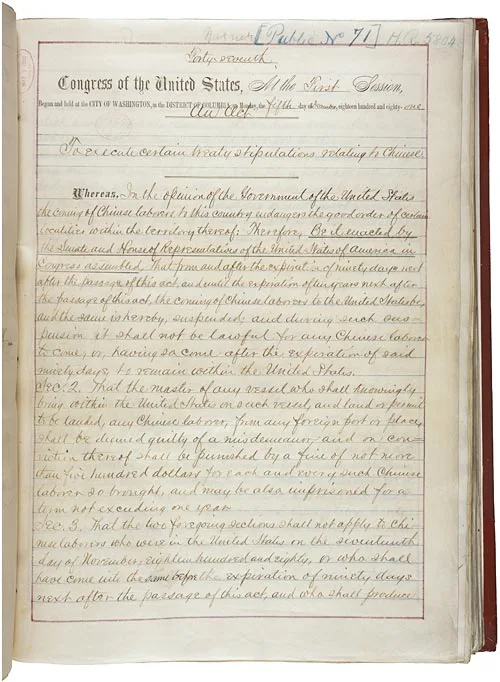
Chinese Exclusion Act, first page. National Archives, General Records of the United States Government, Record Group 11. Original document scan; no compositional alterations.
Inspect the National Archives record ↗What this proves +
This was a major federal law explicitly barring Chinese laborers as a group. It was not close, it was not fringe, and it was not a southern or western oddity. It passed the House by better than five to one and the Senate by better than two to one and was signed by a Republican president from New York.
Go deeper +
Arthur had already vetoed one version. In April 1882 Congress sent him a bill suspending Chinese immigration for twenty years, and he returned it, arguing it violated the Angell Treaty the United States had signed with China two years earlier, which permitted the United States to limit but not to prohibit Chinese immigration. Congress rewrote the term from twenty years to ten and sent it back. He signed it on May 6.
The act suspended the immigration of Chinese laborers, skilled and unskilled, for ten years. It required Chinese residents who wanted to leave and return to obtain certificates. And it stated that no state or federal court could admit a Chinese person to citizenship. Merchants, students, teachers, diplomats, and travelers were exempt on paper, and the burden of proving membership in one of those categories fell on the person claiming it.
The argument for the bill had been made most memorably three years earlier by Senator James G. Blaine of Maine, a former Speaker of the House and a future Secretary of State, in language the American Federation of Labor was still reprinting in 1902.
SOURCE TEXT
You cannot work a man who must have beef and bread alongside of a man who can live on rice.The result is not to bring up the man who lives on rice to the beef and bread standard, but to bring down the beef and bread man to the rice standard.
Senator James G. Blaine, 1879, quoted approvingly in Meat vs. Rice, American Federation of Labor, 1902
The clearest voice against it belonged to Senator George Frisbie Hoar of Massachusetts, an abolitionist who had spent his career on civil rights and who had argued in Congress for the eight hour day and for the right to strike.
SOURCE TEXT
Nothing less than the legalization of racial discrimination.
Senator George Frisbie Hoar of Massachusetts, on the Chinese Exclusion Act
He lost.
06THE POPULATION
EXCLUSION SHRINKS A COMMUNITY
The Chinese population falls while the United States nearly doubles.
In 1880 there were 105,465 Chinese people in the United States.
In 1920 there were 61,639.
DECENNIAL CENSUS / 1860—194006
What the census counted
The recorded line is fixed. Add a comparison using the population’s growth rate before exclusion.
━ Counted┄ Arithmetic comparison
The second line is an exercise, not a prediction. It is not an estimate of people “missing” because of the law. The first line is the census.
Between 1880 and 1920 the population of the United States grew from about 50 million to about 106 million. The Chinese population fell.
Read the census figures
| Year | Population |
|---|---|
| 1860 | 34,933 |
| 1870 | 63,199 |
| 1880 | 105,465 |
| 1890 | 107,488 |
| 1900 | 89,863 |
| 1910 | 71,531 |
| 1920 | 61,639 |
| 1930 | 74,954 |
| 1940 | 77,504 |
What this proves +
Between 1890 and 1920 the Chinese population of the United States fell by nearly half while the population of the country grew sharply. The law did not merely stop growth. It reversed it, and it kept reversing it for thirty years.
Go deeper +
The census counted 34,933 Chinese people in the United States in 1860 and 105,465 in 1880. Over those twenty years the community had tripled. It peaked at 107,488 in 1890, eight years after exclusion, and then began falling. It was 89,863 in 1900, 71,531 in 1910, and 61,639 in 1920.
Nothing about that decline was mysterious. Men who left could not come back. Men who stayed grew old in a population with almost no women and almost no children. Men who died were not replaced. The community shrank by subtraction, one funeral at a time, as the population declined.
The population did not pass its 1890 level again until after the Second World War.
07SEPTEMBER 2, 1885
MASSACRE WITHOUT JUSTICE
Twenty-eight Chinese miners are killed. No one is indicted.
The Union Pacific coal mines in Wyoming Territory employed 331 Chinese miners and about 150 white miners.
The white miners were organized. The Chinese miners were paid less.
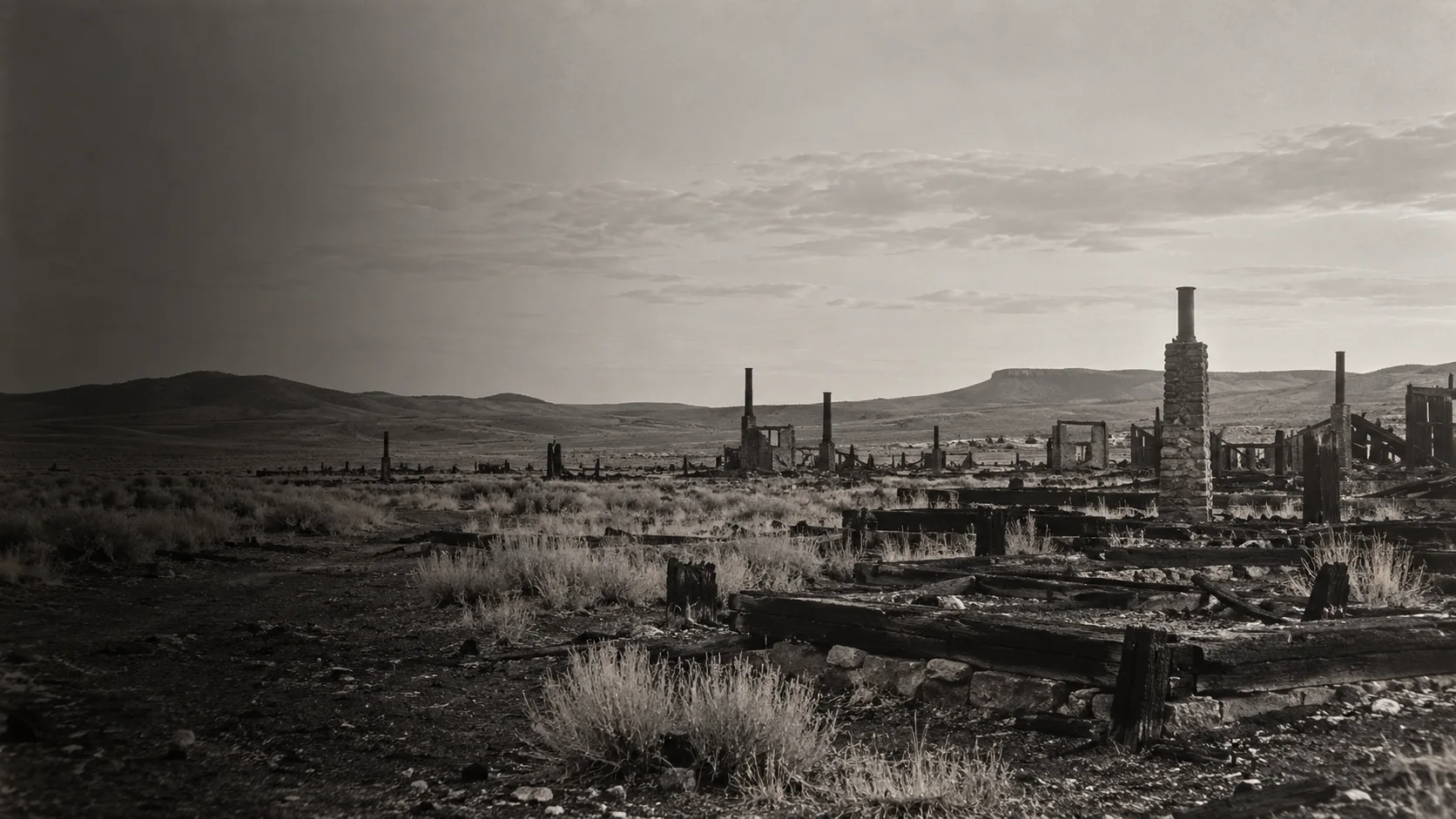
By that evening 28 Chinese miners were dead, 15 were wounded, and 79 homes had burned.
Sixteen men were arrested. A grand jury declined to indict any of them.
28KILLED · AT LEAST
79HOMES BURNED
0INDICTMENTS
What this proves +
Exclusion did not calm the West. It ratified the position that Chinese workers did not belong, and the three years after 1882 were the most violent in the entire history of Chinese settlement in America. Rock Springs was one of the deadliest attacks, and its aftermath showed how the people responsible could escape prosecution.
Go deeper +
The Union Pacific Coal Department worked its Wyoming mines with two labor forces. Chinese miners, 331 of them by 1885, worked for less. White miners, most of them Cornish, Irish, Swedish, and Welsh, had formed a Knights of Labor local in 1883 and had watched the company use the wage difference against them for years.
On the morning of September 2 a dispute over which crew had the right to work a particular room in Number Six mine turned into a beating. By afternoon armed white miners had gathered, given the Chinese camp an hour to leave, and then opened fire on it. They burned it as people ran. At least twenty eight Chinese miners were killed, fifteen were wounded, and seventy nine houses were destroyed. Survivors walked toward Evanston, about a hundred miles west, and some were picked up along the tracks by trains.
Federal troops of the Seventh Infantry arrived on September 5. On September 9 six companies escorted the surviving Chinese miners back to Rock Springs, where they were put back to work under military guard. Federal protection did not bring the attackers to justice.
Sixteen men were arrested. A Sweetwater County grand jury heard the case and returned no indictments. Its statement to the court is the primary source for this section.
SOURCE TEXT
We have diligently inquired into the occurrence at Rock Springs ... though we have examined a large number of witnesses, no one has been able to testify to a single criminal act committed by any known white person that day.
Sweetwater County grand jury, Wyoming Territory, 1885
The arrested men were released on October 7. Congress later appropriated $147,748.74 and paid it to the Chinese government. The payment was for property. It was not compensation for the dead, and the United States attached a statement that it was made as a matter of generosity rather than obligation.
AI-authored scene · illustrative reconstruction
✓EPISODE ONE / THE ANSWERS
WHAT YOU NOW KNOW.
Anti-Chinese organizers redirected workers’ anger away from employers and toward immigrants.
The Page Act targeted Chinese women seven years before the Chinese Exclusion Act.
The House voted 202–37 and the Senate 32–15 for exclusion.
The Chinese population fell while the total U.S. population grew sharply.
At least 28 Chinese miners were killed at Rock Springs. No one was indicted.
THREE STORIES TO REPAIR
Continue to Episode Two: They Said No →“The Chinese Exclusion Act barely passed.”
It passed the House by more than five to one and the Senate by more than two to one.
“The 1882 act was the first federal restriction.”
The Page Act had already restricted immigration from China in 1875, especially the entry of women.
“Organized labor opposed exclusion.”
Important western labor organizations demanded it, and both major national parties adopted exclusion in 1880.
Open the source register ↗
Primary records
- Chinese Exclusion Act · May 6, 1882 · 22 Stat. 58
- Page Act · March 3, 1875 · 18 Stat. 477
- Scott Act · October 1, 1888
- Geary Act · May 5, 1892 · 27 Stat. 25, Sections 3, 4, 6 and 7; McCreary amendment · November 3, 1893.
- Magnuson Act · December 17, 1943
- Yick Wo v. Hopkins · 118 U.S. 356 (1886)
- Chae Chan Ping v. United States · 130 U.S. 581 (1889)
- Fong Yue Ting v. United States · 149 U.S. 698 (1893)
- United States v. Wong Kim Ark · 169 U.S. 649 (1898)
- Wong Wing v. United States · 163 U.S. 228 (1896)
- Sweetwater County grand jury statement · 1885
- Samuel Gompers and Herman Gutstadt, Meat vs. Rice, AFL, 1902; quoting James G. Blaine, 1879.
- Charles Crocker’s account of the 1867 strike; Jacob Weisbach’s Tacoma speech, February 21, 1885.
- Angel Island barracks wall poetry, 1910–1940, in translation.
Research & counting
- U.S. Census · decennial counts, 1860–1940. Sex counts are rounded estimates.
- Library of Congress · This Month in Business History, the 1867 railroad strike.
- National Archives · Chinese American records guide
- National Park Service · San Francisco Maritime, Page Act history.
- Angel Island Immigration Station Foundation · By the Numbers. Updated detention estimates and documented 756-day detention.
- The Tacoma Method project · expulsion histories.
- Jean Pfaelzer, Driven Out: The Forgotten War Against Chinese Americans (2007).
How to read this two-part story
The railroad, mining camp, and steamship scenes are AI-authored illustrations. They are not archival photographs. Document interfaces are teaching reconstructions. The statute scan is an authentic National Archives document.
Primary records, court opinions, and institutional histories support the narrative. The comparative growth line is arithmetic, not a historical prediction or a causal estimate. The outcome column compares five selected records.
Historical racist statements appear as attributed evidence. No invented portraits or decorative Chinese writing are used.