Find the open door
Trace the obstacle, the door and the work that followed. Use dates, photographs and clear comparisons to explain five unexpected NFL routes.
Complete Assignment A only. A and B are alternative assignments, not two required parts.
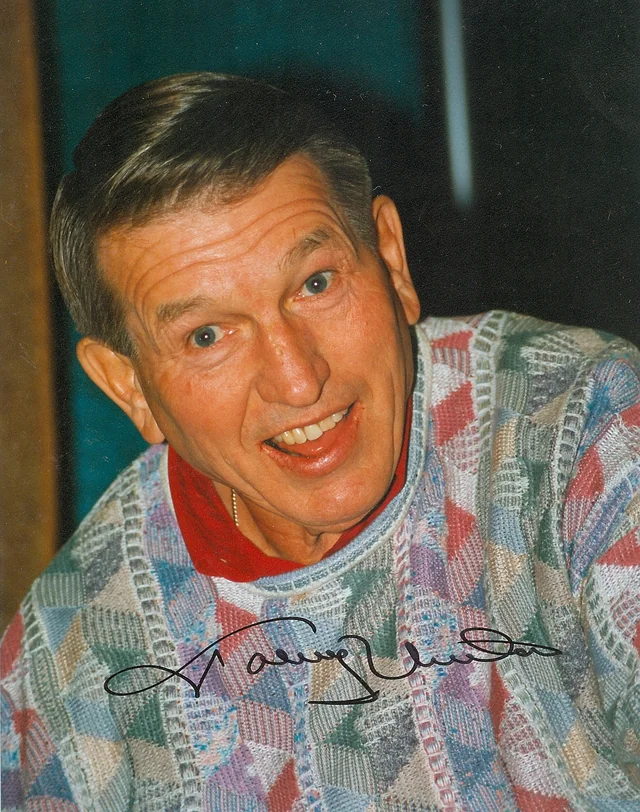
Johnny Unitas, beyond the setback.
This is a verified later portrait of Unitas, not a photograph of his 1955 sandlot season.
Photo: John Mathew Smith / Kingkongphoto, CC BY-SA 2.0. Photograph and license record.

- 01Read your five cases.
- 02Explore the odds and image evidence.
- 03Check five claims and one other sport.
- 04Write three responses and Turn In.
Who opened the door?
Talent does not arrive neatly labeled. These five cases ask how someone reached a roster when the usual route did not work—or did not exist for them. Look for what the person could control and what depended on somebody else.
Johnny Unitas
Johnny Unitas, beyond the setback.
This is a verified later portrait of Unitas, not a photograph of his 1955 sandlot season.
Photo: John Mathew Smith / Kingkongphoto, CC BY-SA 2.0. Photograph and license record.
The Pittsburgh Steelers drafted Johnny Unitas out of Louisville in the ninth round in 1955, the 102nd pick. He had grown up in Pittsburgh. The team cut him before he ever played in a preseason game, and he hitchhiked home.
He took a construction job as a pile driver to support his wife and the baby they had on the way. On weekends he played for the Bloomfield Rams, a sandlot team on a field beneath the Bloomfield Bridge, for only a few dollars a game. He played quarterback and safety and did the punting. The field was covered in rocks and broken glass.
In 1956 the Baltimore Colts needed a backup quarterback. Their long distance call to Pittsburgh cost about 80 cents. Two years later Unitas led the Colts to the 1958 NFL title in overtime against the New York Giants, a game people still call the Greatest Game Ever Played.
He made ten Pro Bowls. His number 19 was retired by the Colts, and he went into the Hall of Fame in 1979.
"We sort of made up the plays as we went along."
Johnny Unitas on the Bloomfield Rams, as told to NFL Films
- StartCut by his hometown team
- DoorAn invitation from Baltimore
- Result1958 NFL champion
Vince Papale
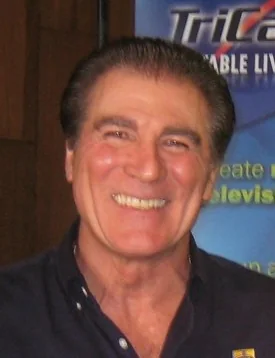
The real Vince Papale.
Papale's route to the Eagles included semipro football and the Philadelphia Bell. This later portrait is not a photograph of his 1976 training camp.
Photo: Philip Nelson, CC BY-SA 2.0. Photograph and license record.

Vince Papale was born in 1946 in Glenolden, Pennsylvania, just outside Philadelphia. At Interboro High School he played only one varsity football season. He went to Saint Joseph's University on a track scholarship as a pole vaulter, because the school had no football team.
He became a teacher at Interboro and coached the junior varsity. He played semipro ball for the Aston Green Knights, plus tackle games in neighborhood leagues around Philadelphia. In 1974, at 28, he made the Philadelphia Bell of the new World Football League. He told the team he was 24. He caught the first pass in the history of that league. The WFL folded in October 1975.
In 1976 the Eagles hired a new coach, Dick Vermeil. General manager Jim Murray invited Papale to a workout. He made the team at 30, the oldest rookie in NFL history who was not a kicker and had never played college football. He played in 41 of 44 games over three seasons, mostly on special teams. His teammates voted him special teams captain. A shoulder injury ended his career, and he retired in 1979.
Invincible compresses this route. The movie omits the Philadelphia Bell seasons and turns an invited workout into an open-tryout story. A clearer underdog plot is not the same thing as a complete historical account.
- StartTeacher, track athlete and WFL receiver
- DoorAn invited Eagles workout
- ResultSpecial teams captain
Michael Lewis
Michael Lewis grew up in New Orleans and never went to college. He drove a delivery truck for a Budweiser distributor, and his route ran a short distance from the Superdome, where the Saints played. Fans would later call him the Beer Man.
He kept playing football in semipro leagues and in arena football as a kick returner. In 2000 his hometown Saints gave him a tryout and a spot on the practice squad. He also played for the Rhein Fire in NFL Europe. In 2001, at 29, he made the Saints roster as a return man.
In 2002 he returned kickoffs for 1,807 yards and punts for 625. The total, 2,432 return yards in one season, set an NFL record. He made the Pro Bowl and first team All Pro. The Saints put him in their Hall of Fame in 2015.
"I took the long route to get here."
Michael Lewis, Saints training camp, August 2006
- StartDelivery driver, no college
- DoorA hometown Saints tryout
- ResultRecord return yardage
Antonio Gates
Antonio Gates starred in football and basketball at Detroit Central High School. In college he chose basketball. After short stops at Michigan State and Eastern Michigan, he landed at Kent State. In 2002 he helped the Golden Flashes reach the Elite Eight of the NCAA tournament.
He never played a down of college football. After his last basketball season in 2003 he worked out for NFL scouts. The San Diego Chargers signed him as an undrafted free agent, and he played 16 seasons for them.
He caught 116 touchdown passes, an NFL record for a tight end, and made eight Pro Bowls. In 2025 he became the first player in the Pro Football Hall of Fame who never played college football.
"NFL teams and scouts will never look at college basketball players the same again."
Antonio Gates, Hall of Fame speech, August 2, 2025
- StartKent State basketball player
- DoorAn NFL scouting workout
- ResultHall of Fame, 2025
Jordan Mailata
Jordan Mailata grew up in Bankstown, a suburb of Sydney, Australia, playing rugby league. He came up through the South Sydney Rabbitohs junior teams but never played a top level NRL game. He watched one NFL game a year, the Super Bowl.
In 2018 the NFL invited him to its International Player Pathway program, which trains athletes from other countries at IMG Academy in Florida. He had never played a down of American football. He stood 6 feet 8 and weighed 346 pounds. The Philadelphia Eagles, Papale's old team, traded up in the seventh round and took him with the 233rd pick.
He spent two years learning to block. In 2021 he won the starting left tackle job and signed a four year, $64 million extension. In 2024 he signed another for three years and $66 million. In February 2025 he won Super Bowl LIX with the Eagles.
"I thought it was an instruction manual to build a spaceship."
Mailata on his first NFL playbook, The Ringer, 2023
- StartAustralian rugby league prospect
- DoorInternational Player Pathway
- ResultSuper Bowl LIX champion
Keep the odds in view.
NCAA 2018–2019 comparisons, rounded: about 73 of 1,000 high school players reach NCAA football, and about one senior in 1,000 is drafted. These compare cohort totals; they do not follow one group of 1,000 individuals. NFL success is not guaranteed by persistence.
| Player | NFL draft | Route year |
|---|---|---|
| Johnny Unitas | 102 · 1955 | 1955 |
| Vince Papale | Not drafted | 1976 |
| Michael Lewis | Not drafted | 2001 |
| Antonio Gates | Not drafted | 2003 |
| Jordan Mailata | 233 · 2018 | 2018 |
The route year marks the story’s turning point, not necessarily a draft, debut or photograph date. The five people are selected exceptions, not a representative sample of everyone who tried.
Use the table to find a concrete comparison, then use the case text to explain what happened after the door opened.
Look beyond the surface.
John Mathew Smith / Kingkongphoto. CC BY-SA 2.0. Resized WebP; display crop only. Adaptation shared under the same license. Source · License
A later portrait is not a photograph of the earlier struggle.
The Unitas portrait was made in 1996. The record documents Unitas’s construction work and sandlot football in 1955, but this 1996 photograph cannot show how his 1955 practices looked.
What can each image actually establish?
The photograph provides a reliable later likeness. It does not record his construction shift or the 1955 practice. A later authentic portrait establishes his likeness in 1996, not the setting or appearance of a particular 1955 practice.
Use this evidence move.
“The source establishes ___. The storyteller has added ___. To confirm ___, I would need ___.” Use dates and the image label before drawing a conclusion.
Does the evidence support it?
Supported means the claim is established by your readings. Contradicted means the record conflicts with it. Needs context means a compressed statement omits steps or limits that matter. Make a call, check the evidence and revise if needed. These calls prepare your writing; they are not a separate Turn In.
0 of 5 evidence calls checked.
1. Papale never played college football.
Read the evidence check
Supported. He attended Saint Joseph’s on a track scholarship; the university had no football team. His later WFL experience still matters.
2. Being cut by the Steelers ended Unitas’s football career.
Read the evidence check
Contradicted. He kept playing sandlot football, joined Baltimore in 1956 and led the Colts to the 1958 title.
3. Michael Lewis took the usual college-football route into the NFL.
Read the evidence check
Contradicted. He never went to college. His path included delivery work, semipro and arena football, NFL Europe and a Saints tryout.
4. Papale’s route can be described simply as teacher to NFL player.
Read the evidence check
Needs context. Those endpoints are real, but the shorthand hides semipro football and two Philadelphia Bell seasons before the invited 1976 Eagles workout.
5. Mailata was drafted before he had played a down of American football.
Read the evidence check
Supported. The Eagles selected him in 2018 through a route involving the International Player Pathway; he then spent two years learning to block.
Jim Morris: the science teacher
Arm injuries ended Jim Morris's minor league career in the late 1980s. He became a physical science teacher and baseball coach at Reagan County High School in Big Lake, Texas. His players made him a deal. If they won the district title, he would try out for a major league team. They won.
In June 1999, at 35, he went to a Tampa Bay Devil Rays tryout and threw 98 miles per hour, about 12 faster than he had thrown ten years before. On September 18, 1999, he struck out Royce Clayton of the Texas Rangers on four pitches. Disney told his story in The Rookie in 2002, four years before Invincible. Like Papale, he was a teacher.
Connection: Like Papale, Morris was a teacher. An agreement with his players opened a chance, but he still had to demonstrate the skill.
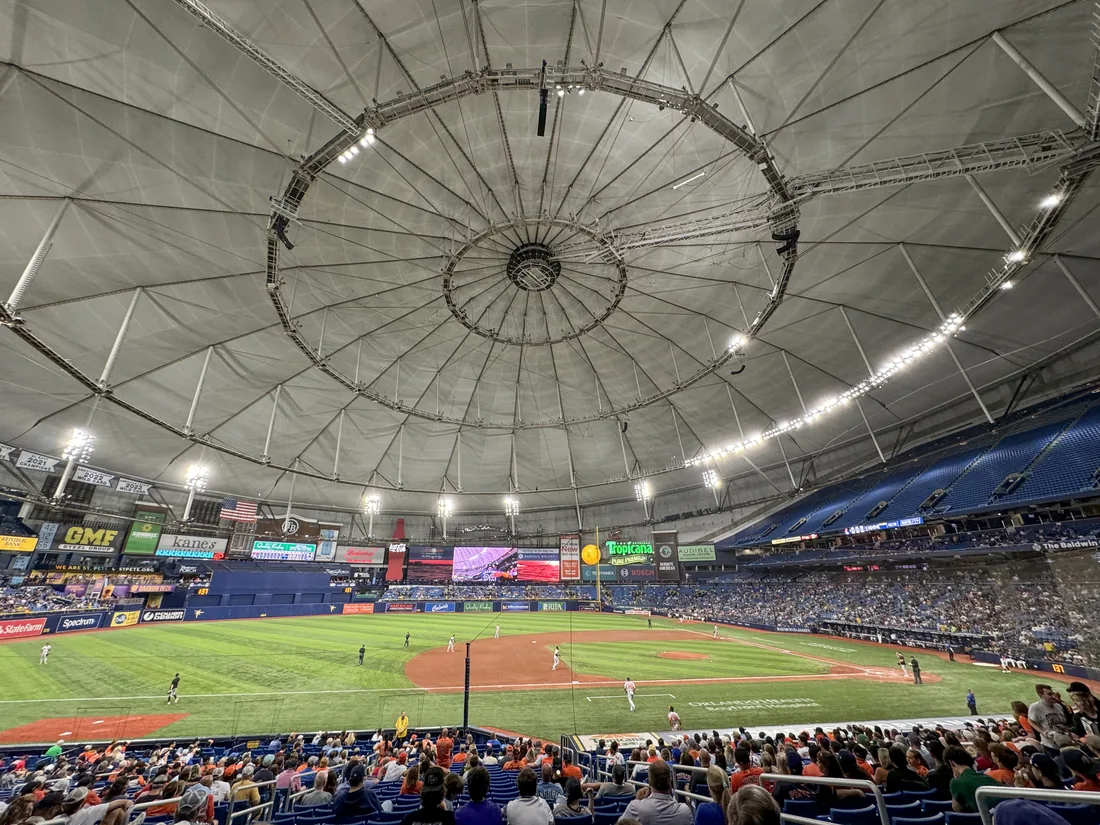
CC BY 4.0, Quintin Soloviev. Original photographic color or monochrome retained; resized as WebP. Source · License record.

Three responses. About 300 words.
Complete all three. Each targets 90–110 words. Use the readings and image labels as evidence. You do not need to complete the other assignment.
Build your answer
Start: “For ___, the obstacle was ___. The door opened when ___ in ___. By contrast, ___.” Use the Start / Door / Result strips to find your evidence.
Build your answer
Include the Philadelphia Bell and the invitation to work out. The 2009 photograph documents Papale years later, not a conversation or workout at the 1976 camp.
Build your answer
Use four moves: my goal; the obstacle; the door and who might open it; my next step if I get cut. Explain the historical connection instead of only saying “never give up.”
Assignment A saves and turns in separately. Use your usual Hall Pass PIN. Work already started in the earlier full edition remains in the preserved original assignment.