James A. Garfield & Chester A. Arthur · 1881 to 1885
The Dark Horse and the Gentleman Boss
Garfield was president for 199 days, and he spent nearly 80 of them dying. The man who took over was a party boss nobody trusted, and he turned out to be the biggest surprise of the decade.
Tap a card to flip it.
The Canal Boy Who Did Math
Garfield was born in a log cabin in Ohio, the last president who was. His father died when he was a baby. At sixteen he took the worst job on the Ohio canal, walking beside the mules that pulled the boats.
"As canaling was at the bottom of sailing, so driving was at the bottom of canaling. I took the job."Garfield, remembering his six weeks on the canal
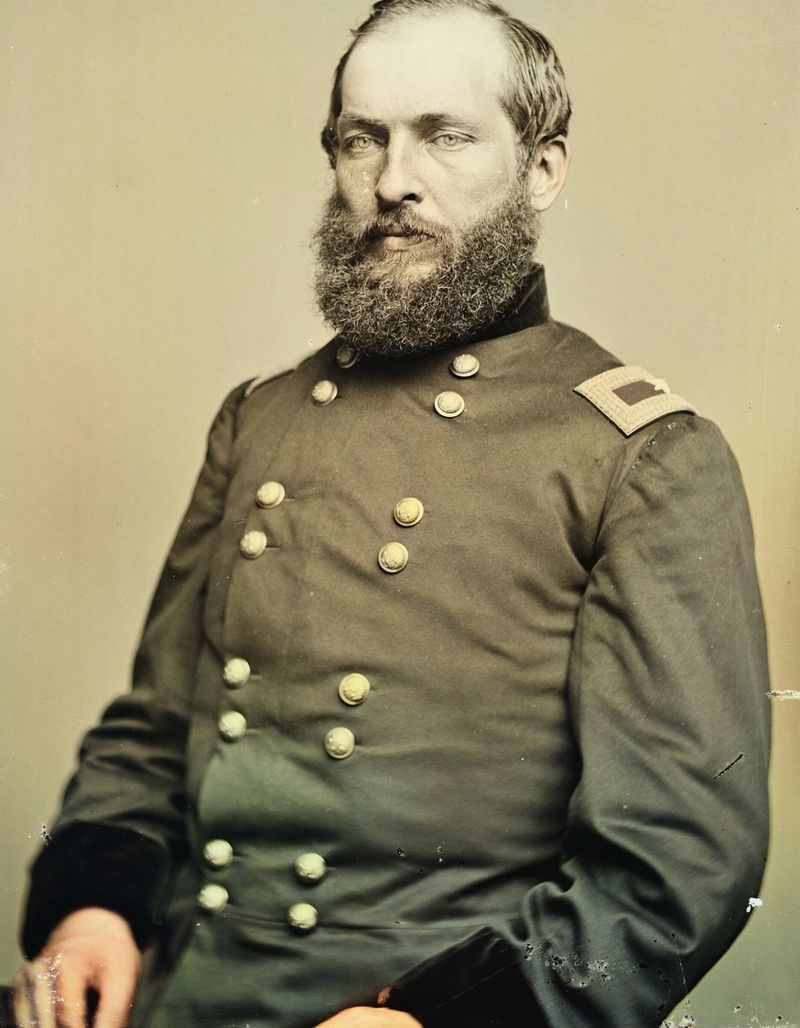
He quit, went to school, and by his mid twenties was running a small Ohio college. After the Civil War he spent 17 years in Congress, where in 1876 he came up with a new proof of the Pythagorean theorem.
Garfield laid two copies of the same right triangle end to end and closed the shape. Change the sides and watch the two areas.
The trapezoid always equals its three triangles, and the algebra boils down to a² + b² = c². A teachers' journal printed it as "something on which the members of both houses can unite without distinction of party."
The Dark Horse
Garfield went to the 1880 Republican convention to nominate another Ohio man, John Sherman, for president. The delegates deadlocked for days. On the 36th ballot they picked Garfield instead, a candidate nobody saw coming. That is what a dark horse is.
To keep the party's machine wing happy, they added Chester Arthur as vice president, the same Arthur whom President Hayes had fired two years earlier. Garfield won the popular vote by fewer than 10,000 out of about 9 million.
An Office or Your Life
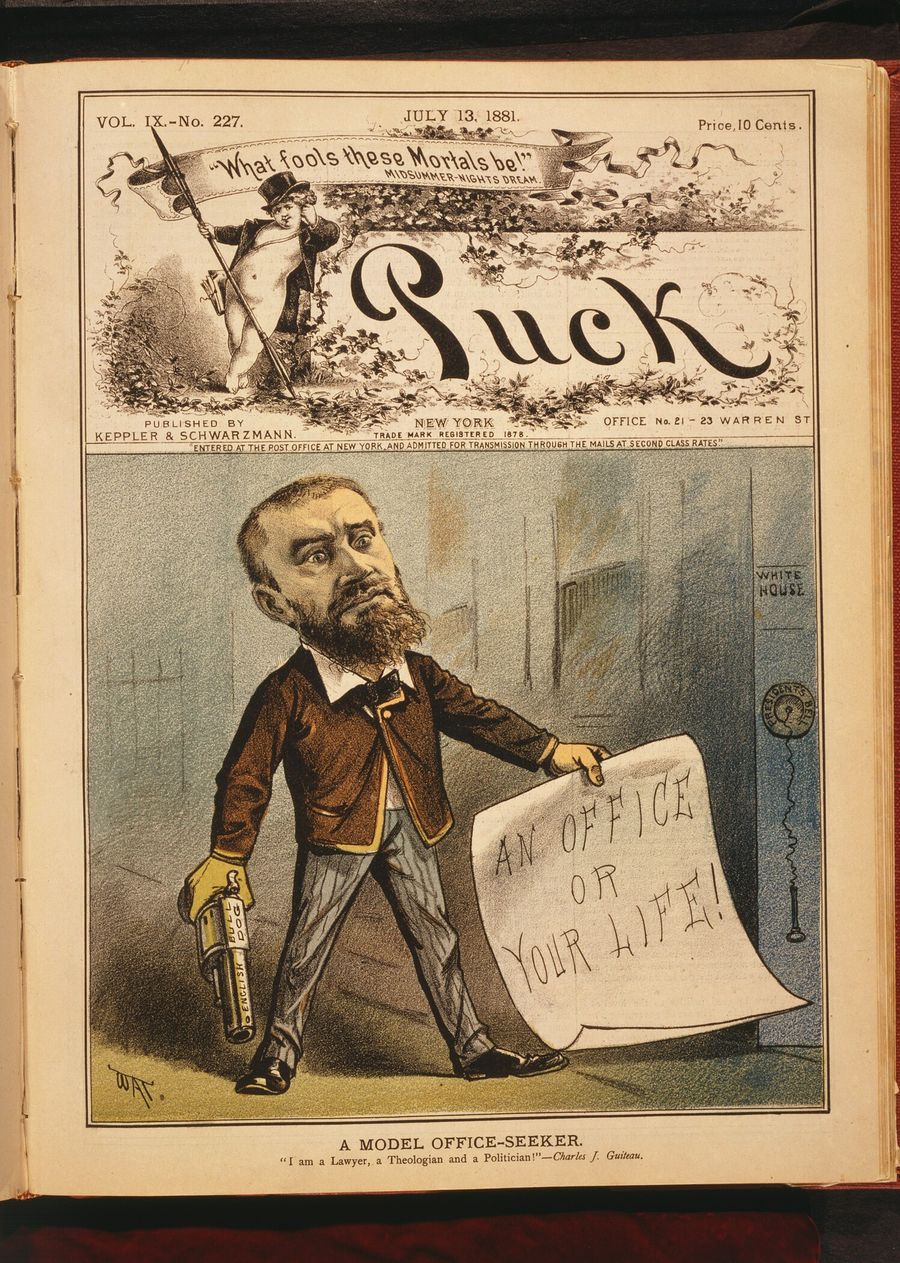
In 1881 many government jobs still went to people who had helped the winning party, so job hunters swarmed the new president. One of them was Charles Guiteau.
Guiteau had written a campaign speech almost nobody heard and decided it won the election. He kept asking to be made U.S. consul in Paris. On May 14 the Secretary of State told him to stop. Guiteau decided the president had to die.
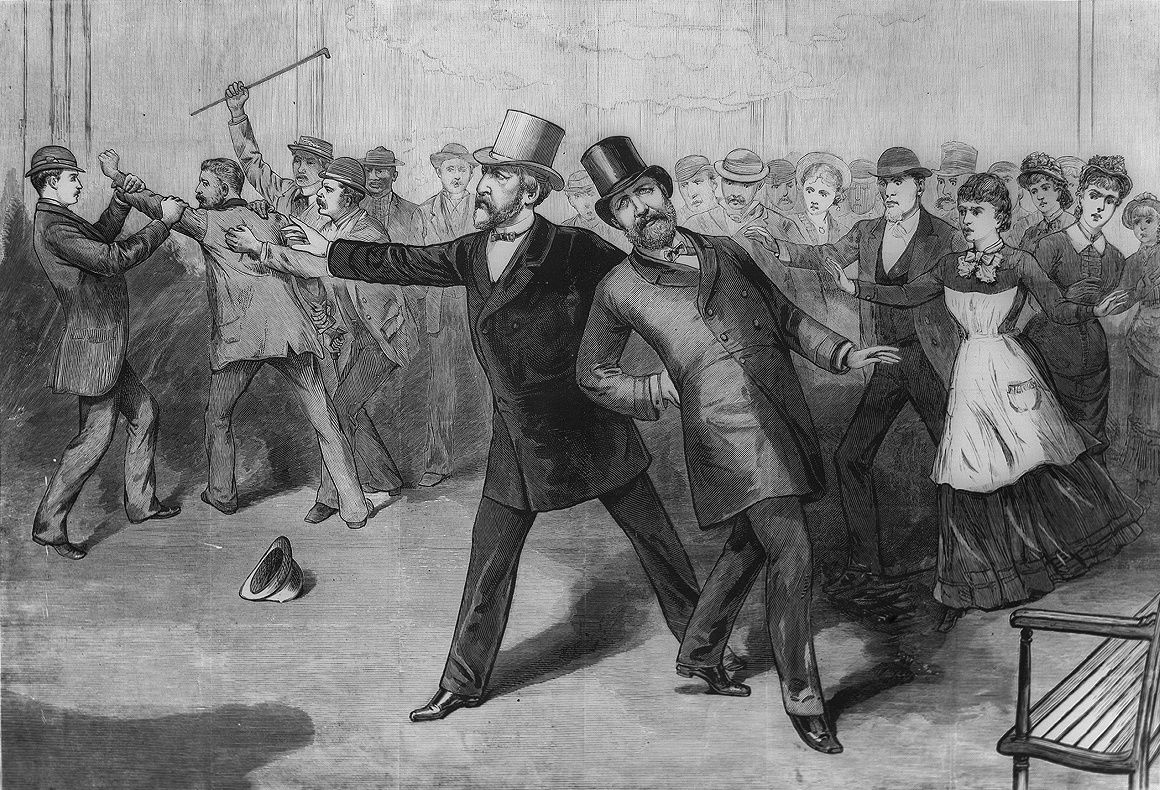
On the morning of July 2, 1881, Garfield walked into a Washington train station to leave for a summer trip. Guiteau shot him twice from behind, then shouted:
"I am a Stalwart of Stalwarts. Arthur is President now!"Charles Guiteau, July 2, 1881
Stalwarts were Arthur's wing of the party. Arthur had nothing to do with the shooting, but now the country eyed him with suspicion.
The Whole Country Took His Pulse
One bullet grazed his arm. The other went into his back and stayed there. Garfield lived for 80 more days while his doctors hunted for it.
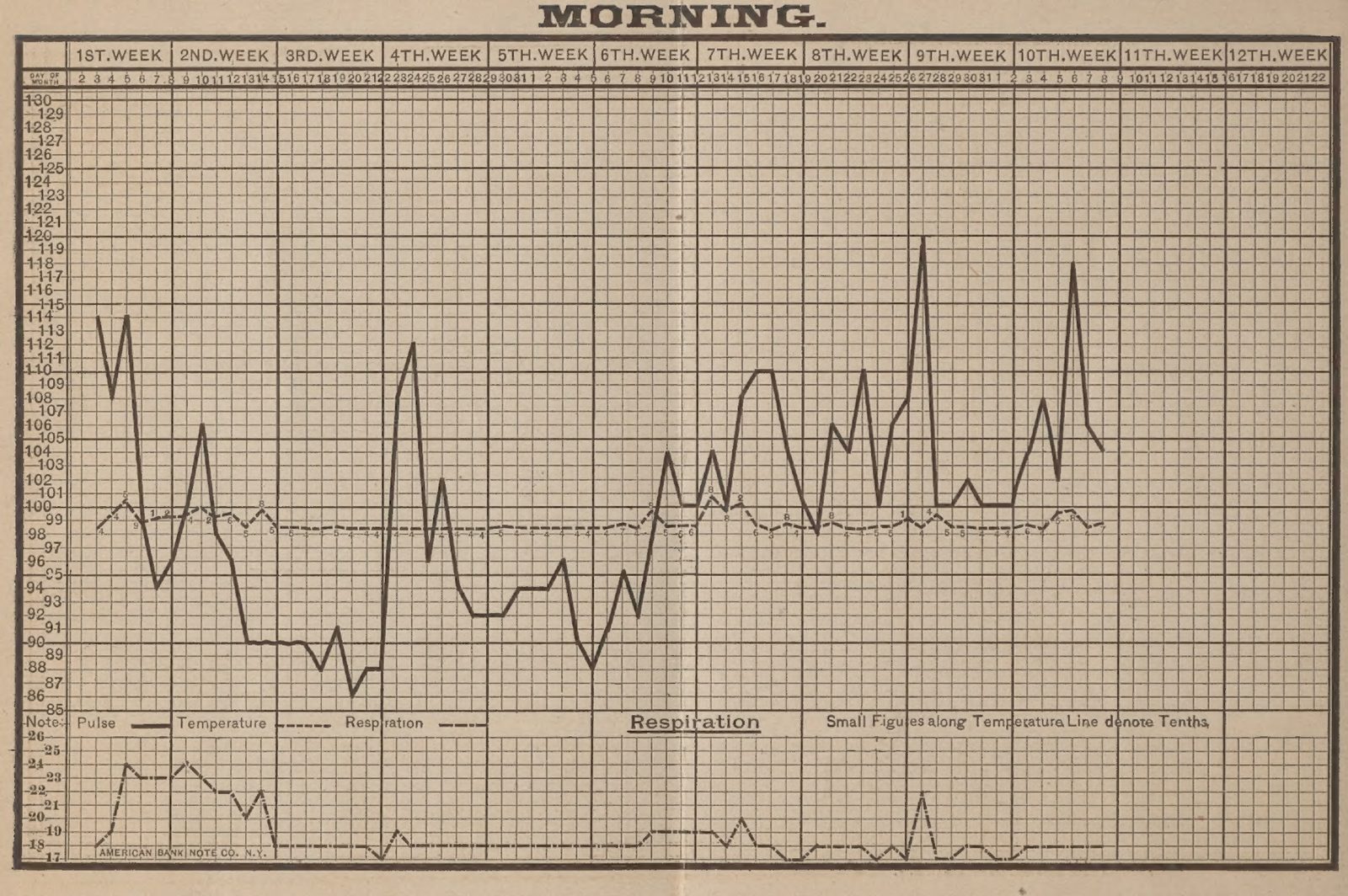
Three times a day the doctors released an official bulletin with his pulse, temperature and breathing. Newspapers printed every one. A railroad printed cards like this one with blank space so families could keep drawing the line at home.
This is the real card, the morning chart. Slide through the days. The dark solid line is his pulse.
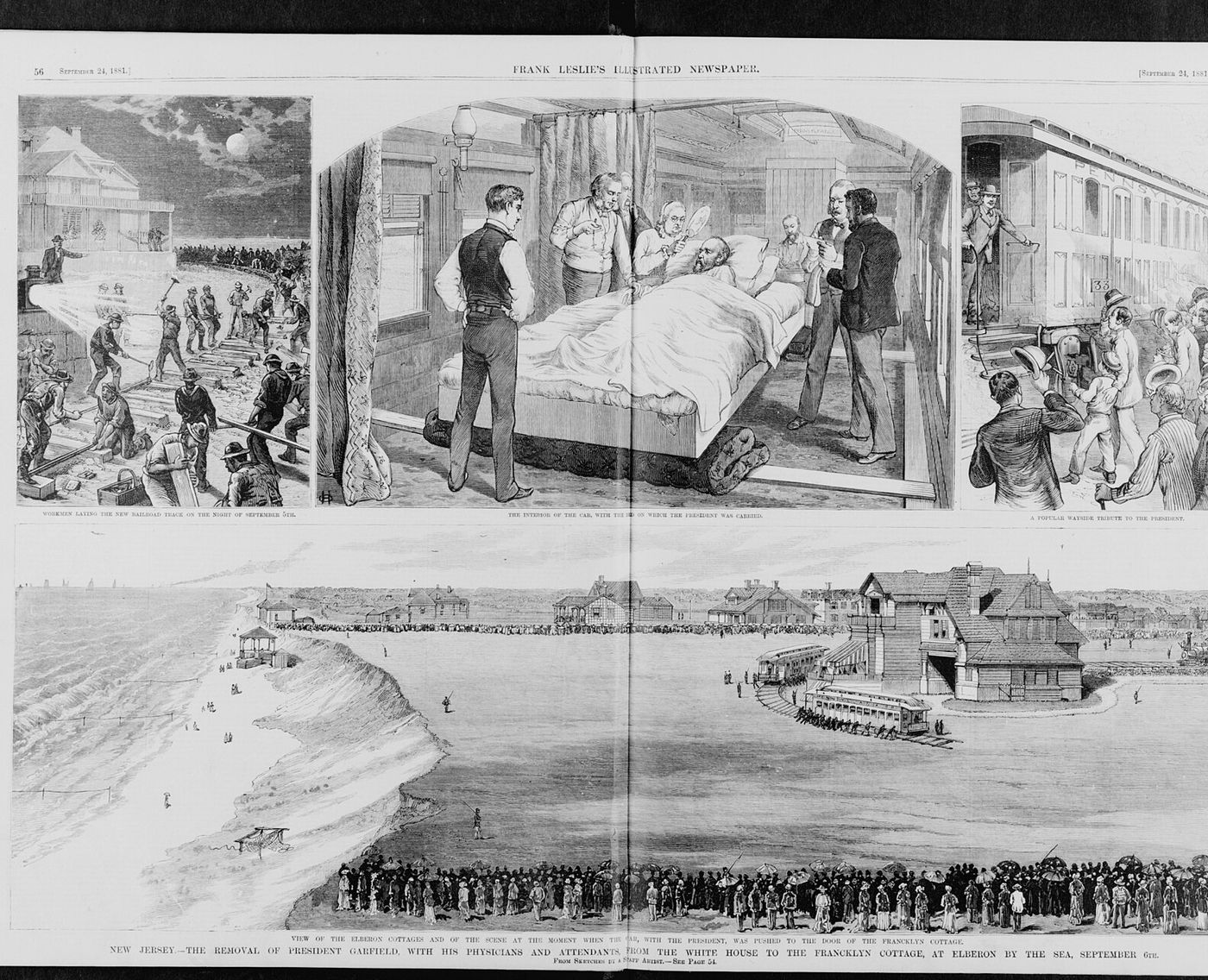
In the heat, Navy engineers rigged a machine that blew air through ice soaked cloth into his bedroom and cooled it to about 80 degrees, one of the first air conditioners. On September 6 he was carried by train to a cottage on the New Jersey shore. He died there on September 19, 1881.
Find the Bullet
The doctors poked into the wound with unwashed fingers and metal probes. They were sure the bullet had gone down toward the front of his body, on the right side. Alexander Graham Bell, the inventor of the telephone, built a metal detector to find it.
Drag the coil, or click the body and use the arrow keys.
Sweep the coil over him like Bell did on August 1. Listen for the hum.
Silent
The autopsy found the bullet on the left side, below the pancreas, about two and a half inches from the spine. Too deep for Bell's machine. The track the doctors had followed toward the right groin was not the bullet's path at all.
"This channel, now known to be due to the burrowing of pus from the wound, was supposed during life to have been the track of the ball."Official autopsy bulletin, September 20, 1881
The faint hum you heard over the right side was the same kind of thing Bell heard. He admitted later that
"the general expectation that the bullet would be found in that part of the body might have led me to imagine a difference that did not exist."Alexander Graham Bell, 1882
Most historians blame the doctors more than the bullet. Infection from all that probing spread through his body. Historian Kenneth Ackerman put it simply: "Had the doctors simply cleaned the wound and nursed Garfield back to health, he likely would have lived."
The Man Nobody Wanted
Arthur had never been elected to anything before vice president. People knew him as a party boss who handed out jobs and wore expensive suits. Around 2 a.m. on September 20, 1881, a judge swore him in at his house in New York City.
That August, while Garfield was dying, a woman Arthur had never met wrote him a letter. Julia Sand was 33, sick and mostly stuck at home in New York.
"The hours of Garfield's life are numbered… before this meets your eye, you may be President. But making a man President can change him!"Julia Sand to Chester Arthur, August 27, 1881
She wrote him 23 letters. He never wrote back. In August 1882 his carriage pulled up at her door and the President of the United States came in to visit.
Predict the Boss
Arthur came up through the job machine. You know his past. Guess what he did as president.
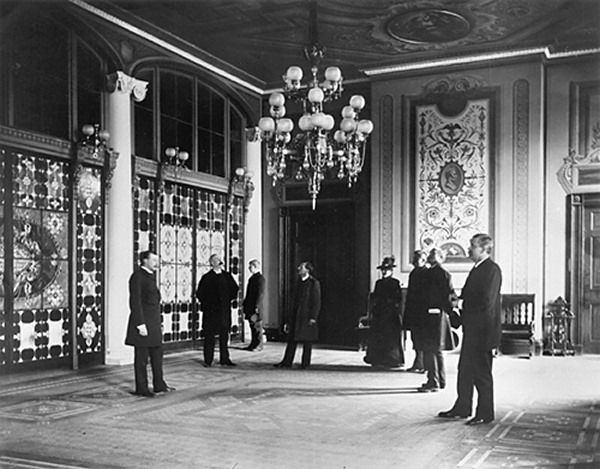
Arthur also redecorated. He had Louis Comfort Tiffany install a wall of colored glass in the White House entrance hall.
He left office in 1885 and died the next year, on November 18, 1886. The day before he died, he had most of his papers burned.
Real or Fake?

Call each one before you look.
Back of the Card
Write the back of a trading card
Pick Garfield or Arthur. In 50 to 100 words, give two facts that mattered and one weird one.
Copy everything and paste it into the Classroom assignment. Your work saves in this browser as you type.